REVIEW · NAPLES
Walking Tour of Herculaneum with Local Guide
Book on Viator →Operated by Worldtours · Bookable on Viator
Herculaneum packs a punch fast. This 2-hour guided walk is an efficient way to see the site’s biggest moments, and I like that the prebooked entry ticket helps you waste less time in lines. The guide keeps you moving straight to the highlights, but one thing to consider is language: the tour is listed in English, and bilingual options depend on the group.
What makes this tour work so well is the pacing. You’re not stuck wandering or guessing where to look. Instead, you get a clear route through standout spaces, plus a guide to explain what you’re seeing as you go.
It’s also a practical choice for a Naples visit. Herculaneum is spread out, and a short schedule can turn into a long day if you plan poorly. This format is built for moderate-footing travelers who want the key sights without turning the whole trip into a stamina test.
In This Review
- Key Highlights at a Glance
- Why Herculaneum Works So Well in Just Two Hours
- Price, Group Size, and What You Actually Get for $48.16
- Getting Oriented at the Herculaneum Ticket Office
- Salone della Barca di Ercolano: The Roman Boat Stop
- Antiquarium di Ercolano: Furniture, Jewels, and Daily Clues
- Casa dei Cervi: A Patrician Villa That Still Reads Like Home
- Casa del Rilievo di Telefo: Short Visit, Big Impression
- Grande Taberna: Roman Fast Food, Ancient Style
- Vestibolo della Palestra: Gym and Swimming Pool Fun Facts
- Partem Domus lignea and the Wooden Door Story
- Terme Del Foro: Thermal Baths in Plain Terms
- Casa di Nettuno e Anfitrite: The Mosaic Moment
- Guides, Language, and the Value of Clear Explanations
- Practical Tips: Make the Two Hours Feel Worth It
- Should You Book This Herculaneum Walking Tour?
- FAQ
- FAQ
- How long is the Walking Tour of Herculaneum?
- What’s included in the tour price?
- What language is the tour offered in?
- Where do I meet, and when does the tour end?
- Is the tour accessible for people with mobility concerns?
- Does it run in bad weather?
- Can I cancel for a refund?
Key Highlights at a Glance
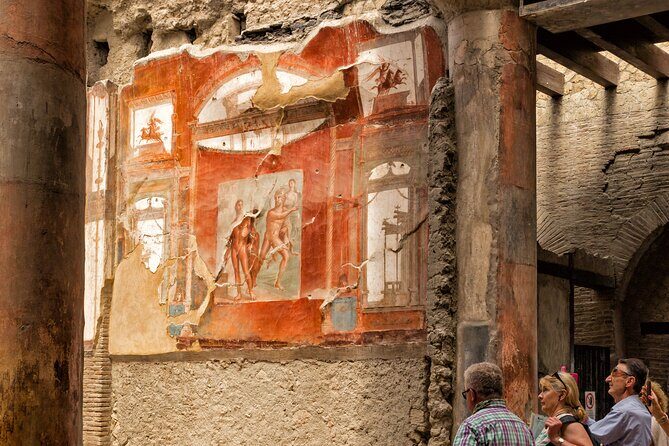
- A fast, focused route through Herculaneum’s most famous buildings and rooms
- Prebooked entry included, so you start sightseeing sooner
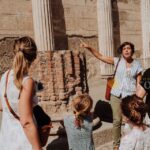
- Licensed local guide to translate the ruins into real daily life
- Compact walking plan (about 2 hours) with short, meaningful stops
- Small group size with a maximum of 20 people
- Multiple indoor/outdoor highlights, so you’re not stuck with only one type of scenery
Why Herculaneum Works So Well in Just Two Hours
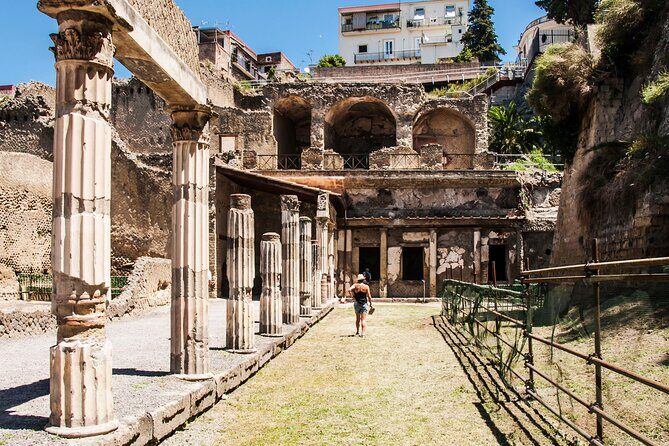
If your Naples days are tight, Herculaneum can feel like a tough choice. You want the payoff, but you don’t want to lose half a day to logistics. This walking tour is built for that reality. In about two hours, you’re guided through a sequence of high-impact stops, each one short enough that you keep momentum.
And Herculaneum itself is a different vibe than Pompeii. It feels less like a battlefield of ruins and more like a lived-in place that happened to freeze in time. The point of a guided, express-style route is that you get the “what am I looking at?” answers quickly, without needing hours to research every doorway and mosaic.
Other Herculaneum guided tours and tickets we've reviewed at Vesuvius & the Bay of Naples

Price, Group Size, and What You Actually Get for $48.16
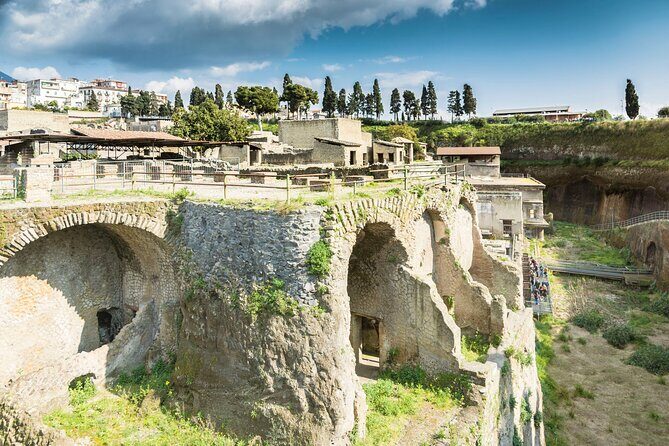
At about $48.16 per person, the value comes from what’s bundled, not just the headline number. You’re paying for three big things:
- A licensed guide
- A walking tour inside the archaeological site
- Herculaneum entry included (so you’re not buying tickets separately)
That ticket inclusion matters here. Getting into major archaeological sites is usually the slow part. Prebooking helps you spend your energy on the ruins, not on waiting.
The group size is also a plus. With a maximum of 20 travelers, you’re less likely to feel like you’re trapped in a crowd. Also, you’ll hear the guide’s English clearly enough for it to be useful, not just background noise.
One more practical detail: this is commonly booked around 18 days in advance on average, which is a hint that dates can fill up. If you have a specific day, it’s smart to book early.
Getting Oriented at the Herculaneum Ticket Office
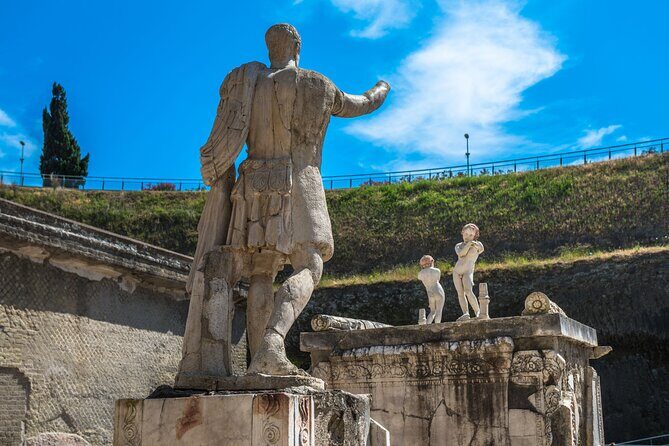
You meet back at the Herculaneum Ticket Office in Ercolano (80056). The tour ends back there too, which is handy. You don’t have to solve the “where do I end up?” puzzle after you’ve already walked.
Starting on-site rather than at a distant pickup also helps the timing. When your experience is roughly two hours, shaving off travel time is a real benefit. You’ll also get the rhythm of the place right away: you’re not easing in with a lecture; you’re walking and learning as you go.
Salone della Barca di Ercolano: The Roman Boat Stop
Your first stop is the Salone della Barca di Ercolano, a small museum designed around one standout object: an ancient Roman boat, displayed in excellent condition.
This is a smart opening move. Before you even enter the densest parts of the excavation, you’re anchored in a concrete artifact. Boats were essential in the Bay of Naples world—movement, trade, daily travel. Seeing the vessel up close gives context that you’ll carry into the rest of the site.
Trade-off to note: it’s only about 10 minutes. That’s enough time to see it and hear the basics, but not enough for people who want museum-style, slow reading.
Antiquarium di Ercolano: Furniture, Jewels, and Daily Clues
Next comes the Antiquarium di Ercolano, an exhibition of furnishings, furniture, and jewels found in Herculaneum during the excavations.
I like this stop because it changes how you look at the buildings. When you later see rooms and household spaces, you’re not just thinking ruins—you’re thinking belongings, status, and everyday routines. It’s the difference between staring at stone and understanding that this place once held real life.
The stop is about 20 minutes, which is a good balance. You get enough time to grasp the “what was found here” story, without losing momentum in your overall two-hour schedule.
Other walking tours we've reviewed in Naples
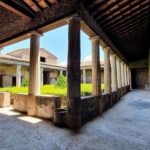
Casa dei Cervi: A Patrician Villa That Still Reads Like Home
Then you reach Casa dei Cervi, one of Herculaneum’s best-preserved buildings and an ancient patrician villa.
This is where the tour becomes visually satisfying fast. Patrician villas aren’t just architecture—they’re social signals. You can often “read” rooms through layout: where people gathered, how spaces connected, and how the household expressed status.
Why this stop matters: the better preserved the house, the more you can understand how people moved through their own environment. Even with a short visit, you come away with a sharper sense of how elite households operated.
About 15 minutes here means you’ll see key parts, but you won’t get a slow wander. If you’re the type who wants to photograph every corner, you may want extra independent time on a separate visit.
Casa del Rilievo di Telefo: Short Visit, Big Impression
Another patrician villa follows: Casa del Rilievo di Telefo. This stop is about 5 minutes, so it’s quick, but it’s strategically placed for a high-impact hit.
Short stops can work well when you have a guide. You’re not left to interpret alone. You get just enough context to make the details meaningful, not random.
Consideration: because it’s brief, you may want to keep your camera ready but not obsessed. Treat this like the moment you learn what to notice, then move on.
Grande Taberna: Roman Fast Food, Ancient Style
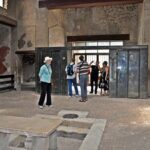
At Grande Taberna, you step into what’s described as Roman “fast food”—a thermopolium-style spot from Roman times. This is one of the fun stops because it breaks the stereotype that ancient sites are only about temples and big speeches.
A place like this is about routines: quick meals, regular customers, the flow of money and conversation. It also helps you understand the site as a living economy, not just a set of wealthy homes.
This stop is only about 5 minutes, but it’s the right kind of short. It gives you variety and keeps the tour from feeling like nonstop house-and-hallway viewing.
Vestibolo della Palestra: Gym and Swimming Pool Fun Facts
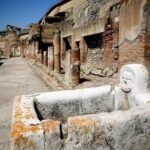
Then comes Vestibolo della Palestra, described as a gymnasium and swimming pool area.
When you visit an archaeological site, it’s easy to think ancient people only worked or worshipped. This kind of stop nudges you toward the human side: exercise, leisure, social habits. Even in a short visit, it helps the ruins feel less distant.
Again, expect about 5 minutes. It’s not meant to be a long “study session.” It’s meant to give you a quick mental upgrade: people had routines for fitness and fun, too.
Partem Domus lignea and the Wooden Door Story
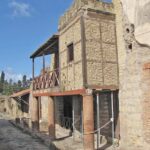
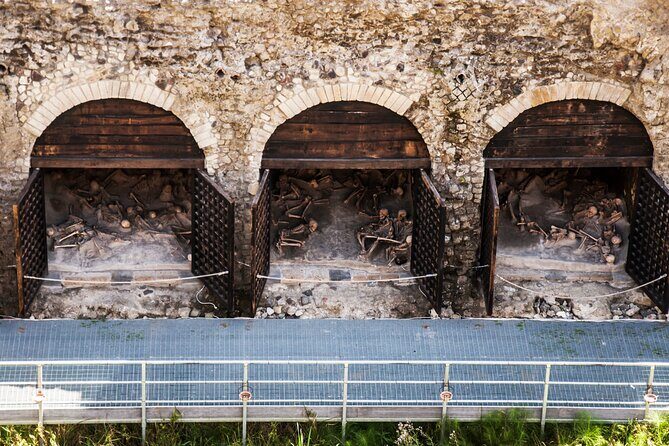
One of the most distinctive stops is Partem Domus lignea – Casa del Tramezzo di Legno, an ancient Roman house area where wooden doors and beams have been preserved.
This is a big deal because wood usually doesn’t survive for this long. Seeing preserved wooden elements changes the scale of what you’re imagining. You’re no longer picturing a ruined shell—you’re picturing materials and craftsmanship that still carry texture.
This stop is about 10 minutes, which feels just right. You need enough time to register what’s unusual here, then you move forward with that new lens.
Terme Del Foro: Thermal Baths in Plain Terms
You’ll then reach Terme Del Foro, the thermal baths. Baths are one of those Roman institutions that sound obvious in textbooks and then surprise you on the ground.
In this context, the thermal baths stop is valuable because it offers social meaning. Bathing wasn’t only about hygiene—it was also about time, conversation, and shared space.
You’ll spend about 10 minutes here. That’s plenty to understand what the baths were for and how this part of town worked, without turning the tour into a longer detour.
Casa di Nettuno e Anfitrite: The Mosaic Moment
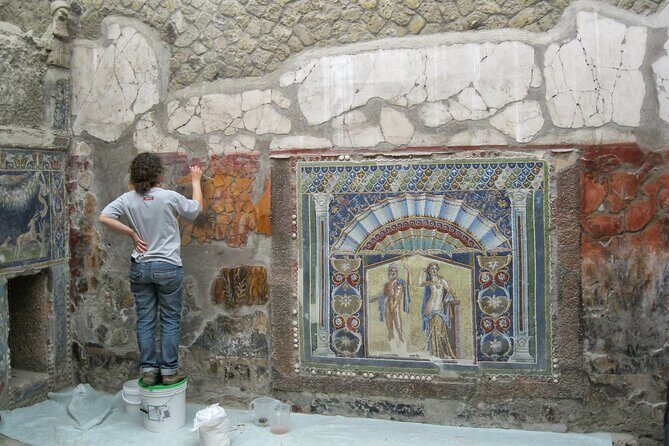
Finally, you get Casa di Nettuno e Anfitrite, noted for one of the most beautiful mosaics of the excavations.
If you’re trying to pick one “wow” stop, mosaics are often it. They’re detailed, expressive, and usually easier to appreciate even in a brief visit. This is also a moment where a guide’s pacing really matters, because you’ll know where to look instead of scanning blindly.
This stop is about 5 minutes. That may sound short, but mosaics tend to deliver fast impact when you’re guided to the right elements.
Guides, Language, and the Value of Clear Explanations
One review highlight mentioned a guide named Mr Raphael, and that matters because the tone of the experience depends heavily on the guide’s clarity. A strong guide turns stone into routine: where people walked, how spaces worked, and what objects meant.
The tour is offered in English, and the group experience can sometimes vary. One caution from the provided feedback is that language expectations can be tricky if you booked with a different language in mind. If English works for you, this tour style is usually a strong fit. If you need a specific language, double-check what’s actually running on your date.
Overall, the selling point is easy communication while walking. You’re not stuck reading signs. You hear key explanations at the moment you can actually look at the thing being described.
Practical Tips: Make the Two Hours Feel Worth It
This tour is short, so your preparation matters. A moderate physical fitness level is recommended, and you’re doing a walking route across the site. Here’s how to set yourself up to enjoy it:
- Wear comfortable walking shoes with good grip (archaeological surfaces can be uneven)
- Dress for all weather conditions and plan for rain or sun since the tour runs in all conditions
- Bring water if you’re sensitive to heat, even though food and beverages aren’t included
- Keep your pace steady. The stops are timed, so you’ll slow down everyone if you linger too long at one corner
Also, because the tour is about 2 hours, it’s a great choice if you’re pairing it with other Naples plans. You’ll get a major dose of Herculaneum without swallowing your whole day.
Should You Book This Herculaneum Walking Tour?
I’d book it if you want:
- A time-efficient introduction to Herculaneum’s biggest sights
- Entry ticket included so you don’t lose time at the start
- A licensed guide to explain the highlights as you walk
- A manageable walking commitment rather than an all-day archaeological marathon
I would hesitate if:
- You need a specific language other than English on your date
- You strongly prefer long, unscripted exploration with lots of independent wandering
For most people doing Naples on a schedule, this is a smart way to see Herculaneum’s key rooms, museums, and standout features without turning the trip into a logistics project.
FAQ
FAQ
How long is the Walking Tour of Herculaneum?
It’s approximately 2 hours.
What’s included in the tour price?
Your ticket includes entrance to Herculaneum, an expert licensed tour guide, and a walking tour inside the archaeological site.
What language is the tour offered in?
The tour is offered in English.
Where do I meet, and when does the tour end?
You meet at the Herculaneum Ticket Office in 80056 Ercolano, and the tour ends back at the same meeting point.
Is the tour accessible for people with mobility concerns?
The tour is recommended for travelers with a moderate physical fitness level.
Does it run in bad weather?
Yes, it operates in all weather conditions, so you should dress appropriately.
Can I cancel for a refund?
Yes. You can cancel for a full refund if you cancel up to 24 hours before the experience’s start time.