REVIEW · NAPLES
From Naples: Pompeii & Herculaneum with Archaeologist Guide
Book on GetYourGuide →Operated by Askos Tours · Bookable on GetYourGuide
Two buried cities, one volcanic shock.
This Naples shore excursion connects Pompeii and Herculaneum in a single day, with an archaeologist guide and skip-the-line entry that keeps you moving instead of waiting. You’ll travel in a modern minibus, tour in a small group (up to 20 people), and end back near Naples Central Station in time for your next plan.
I especially liked two things: the archaeologist guide approach and the skip-the-line advantage. The guide doesn’t just point at ruins; they explain how people lived, including the small visual details that make the sites feel real.
The one real drawback to plan for is physical effort. This tour is not recommended for people with limited mobility because you’ll tackle stairs and uneven grades in both sites.
In This Review
- Key things I’d prioritize on this tour
- Meet Starhotels Terminus and start with momentum
- Skip-the-line at Herculaneum: the city buried in 20 meters of mud
- Carbonized wood, intact paintings, and mosaics (yes, really)
- The Herculaneum stops worth your time: Augustali, skeleton beach, and more
- The short transfer and a Pompeii break that keeps your day realistic
- Pompeii’s two-hour walk: Marina Gate, Basilica, and the Forum
- Private houses and street-level scenes: Faun, brothel, bakery, and more
- Why the small group pace helps you see more (without sprinting)
- Price and value: what $168.79 buys you in real time
- What to bring (and what to leave behind) for a smoother day
- Should you book this Pompeii and Herculaneum day trip?
- FAQ
- How long is the Pompeii and Herculaneum tour?
- What languages are available for the tour guide?
- Is this tour a small group?
- Where does the tour start in Naples?
- Are skip-the-line tickets included?
- Is lunch included?
- What should I bring with me?
- Is there a luggage limit?
- Is the tour accessible for wheelchair users?
- Does the tour run in bad weather?
Key things I’d prioritize on this tour
- Archaeologist-led walkthroughs that focus on how Romans lived, not just big monuments
- Skip-the-line entry with a Pompei Express ticket that helps you beat the worst queues
- Herculaneum’s 20-meter mud burial and the chance to see preserved paintings, mosaics, and carbonized wood
- Pompeii’s “best hits” in about two hours so you get the core sights without a marathon day
- Small group size (up to 20), which usually means a better pace and easier question time
Meet Starhotels Terminus and start with momentum
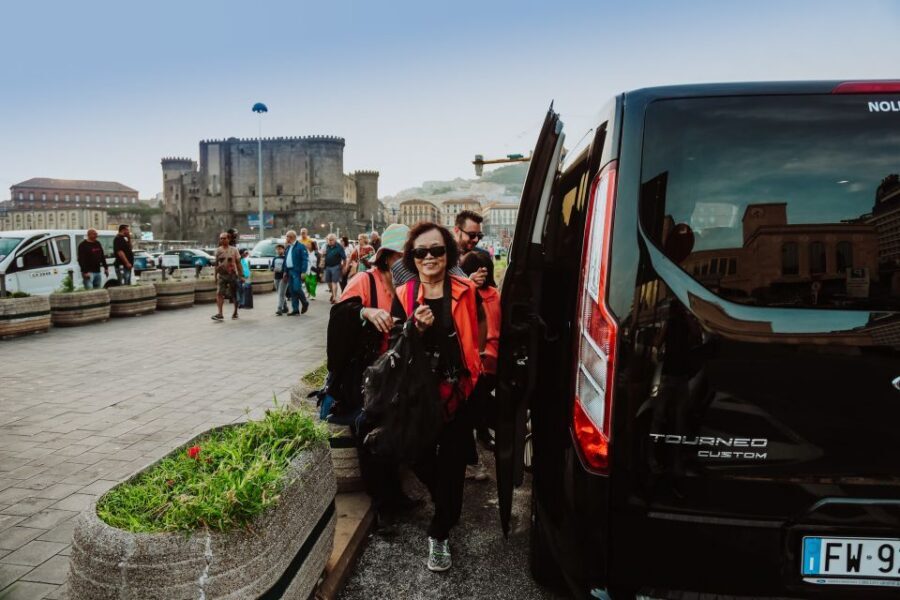
The day starts at Starhotels Terminus, across from Naples Central Station. You meet the guide in front of the hotel entrance, and they’ll be holding an Askos Tours sign so you can spot them quickly.
From there, you’re not stuck figuring out transport or routing on your own. You ride a modern minibus with a professional English-speaking driver, which matters in Campania where timing can get messy fast. Expect a comfortable transfer toward Herculaneum before the first guided portion begins.
The group format is part of why this works for day-trippers. With a small group capped at 20, the logistics feel controlled, and your guide can keep everyone together on the walk-heavy ground.
Other Herculaneum guided tours and tickets we've reviewed at Vesuvius & the Bay of Naples

Skip-the-line at Herculaneum: the city buried in 20 meters of mud
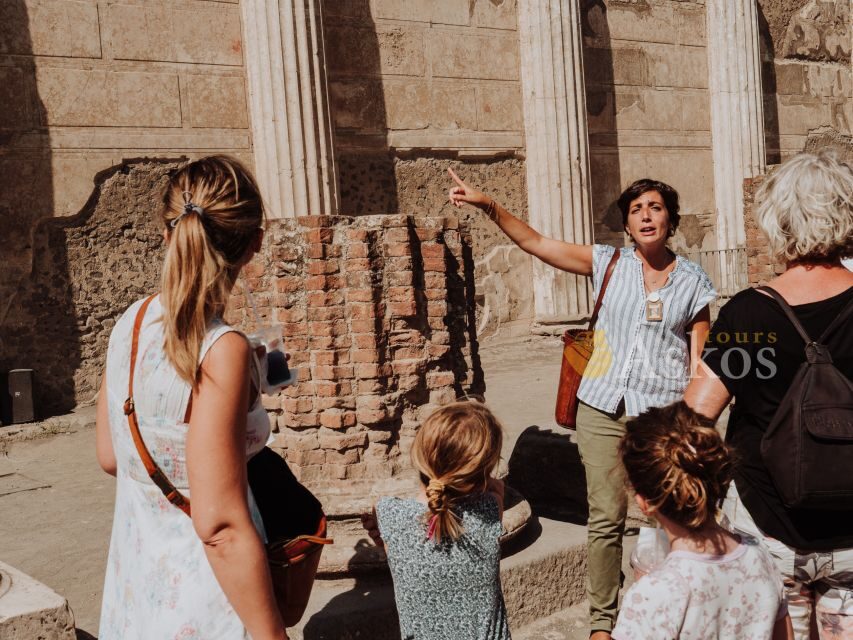
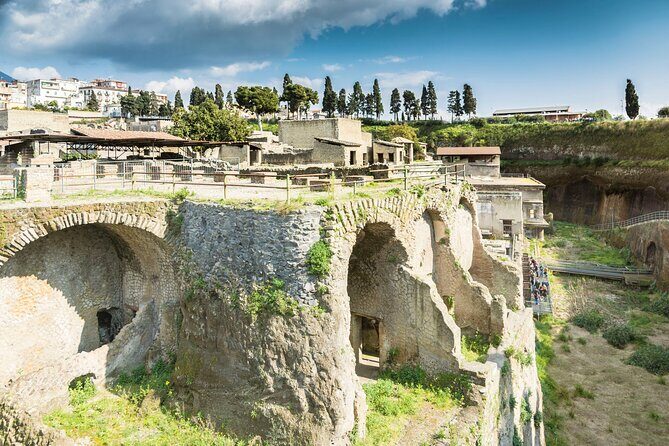
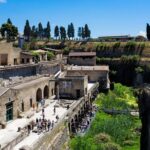
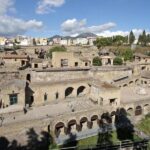
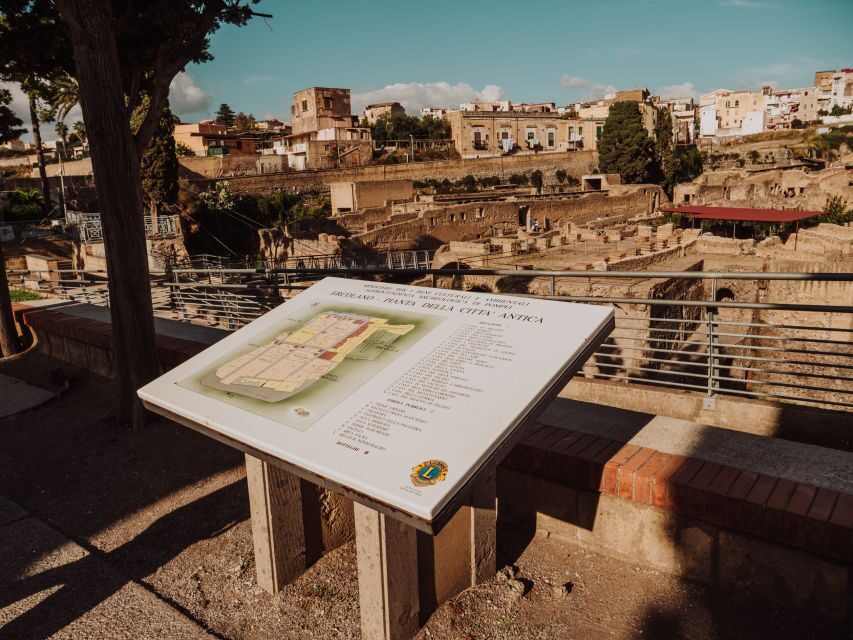
Herculaneum is the opening act for your “how did this happen?” brain. The site was buried under a landslide of mud, reported here as up to 20 meters deep, which is a huge reason the preservation feels so different from Pompeii.
The payoff is what you can still see. With skip-the-line entry, you spend more time inside the site and less time scanning ticket lines. Once you’re in, your guide walks you through major stops while explaining what the mud burial protected, and why that makes the ruins feel intimate instead of distant.
One practical tip: this is a walking day. Even though the guided time in Herculaneum is set at about two hours, you’ll still be moving between highlights, and that means shoes matter.
Carbonized wood, intact paintings, and mosaics (yes, really)
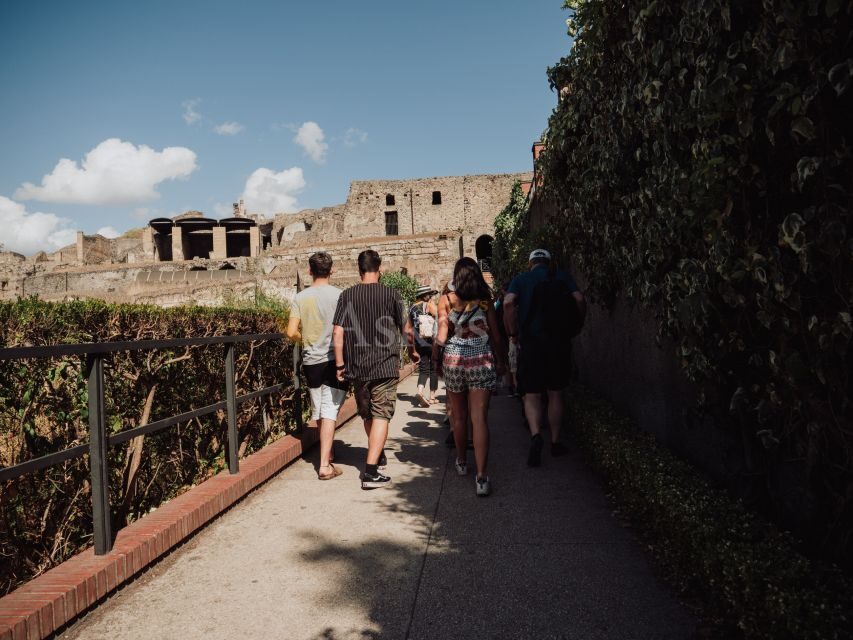
If Pompeii is about scale, Herculaneum is about survival. This tour focuses on the kinds of details you usually don’t get when you rush through on your own.
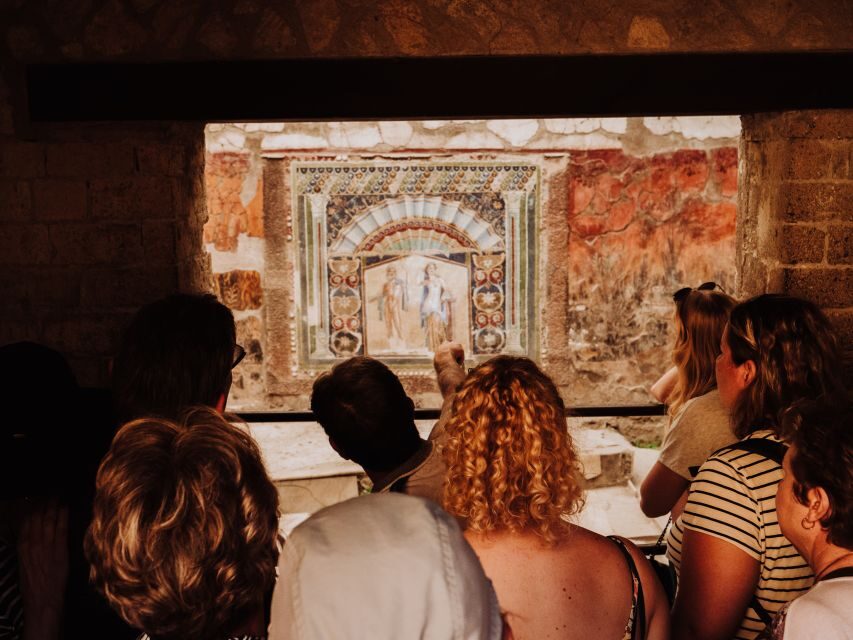
You’ll be shown preserved elements such as carbonized wooden objects, intact paintings, and mosaics that remain visible because of the way the mud sealed and preserved the site. It’s a powerful contrast: you’re not just looking at broken walls, you’re seeing evidence of daily life that stayed in place.
These details also make the archaeology less abstract. When your guide connects what you’re seeing to how people worked, shopped, ate, prayed, or relaxed, the ruins stop being “pretty rocks.” You start noticing why certain rooms had particular functions and how the town was laid out.
The Herculaneum stops worth your time: Augustali, skeleton beach, and more
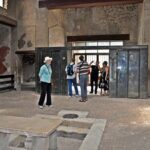
The Herculaneum portion is guided and designed around recognizable anchor points. You’ll hit major areas including the Temple of the Augustali, the Thermal Baths, and the Forum area.
One stop that tends to stay with people is the beach area where more than 300 skeletons were found. Even without being graphic, it’s an unforgettable reminder that this wasn’t a controlled evacuation—it was chaos, and the shoreline became a place where people gathered.
Other planned highlights include the Samnite House, the Gymnasium, and the House of the Dears. These sound like “name-only” stops at first, but your guide’s job is to connect each one to how a community organized itself—public space versus private living, and places for work, training, and leisure.
Important reality check: because the site includes stairs and changing grades, this isn’t a gentle stroll. If you struggle with uneven ground, plan for extra difficulty in both Herculaneum and Pompeii, not just one of them.
The short transfer and a Pompeii break that keeps your day realistic
After Herculaneum, you shift gears with a transfer back toward Pompeii. The timing here is built to avoid a full-day bottleneck, and you’ll have a break period of about 40 to 45 minutes related to downtime and lunch.
Meals are not included, so this is where you either buy something on-site or bring a plan. If you’re trying to control costs, consider packing a snack. One practical review-style takeaway you can take seriously here: it can be easy to spend extra money once you’re hungry and inside the tourist flow, so having your own backup bites helps.
You also shouldn’t assume you’ll be able to fully “shop” Pompeii on this schedule. The break is meant to reset you for the next guided block, not replace meals for long sit-down lunches.
Other tours departing from Naples we've reviewed at Vesuvius & the Bay of Naples



Pompeii’s two-hour walk: Marina Gate, Basilica, and the Forum
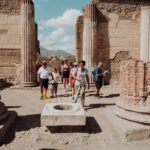
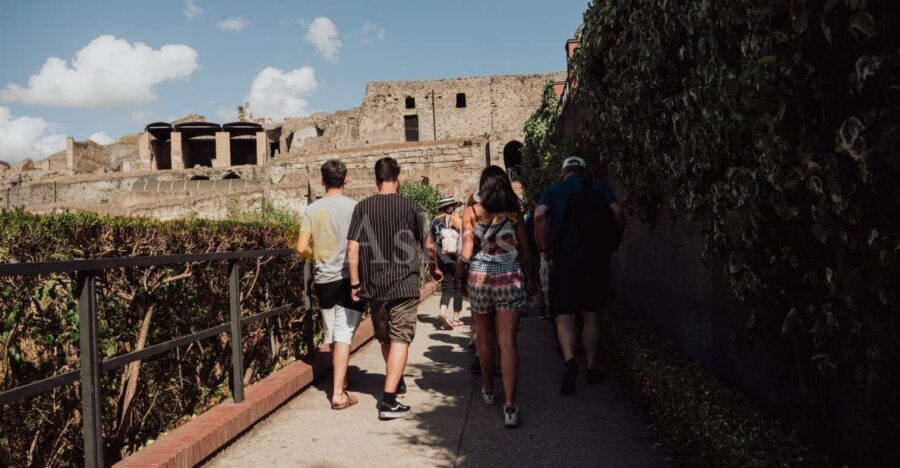
Pompeii is the headline, and this tour treats it that way. You get a skip-the-line entry experience, then settle into a two-hour guided walk through the most important public buildings and standout neighborhoods.
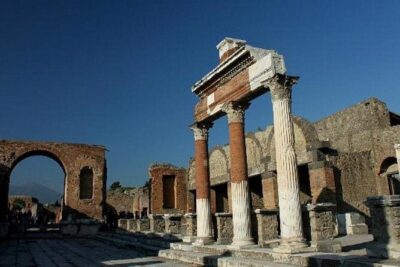
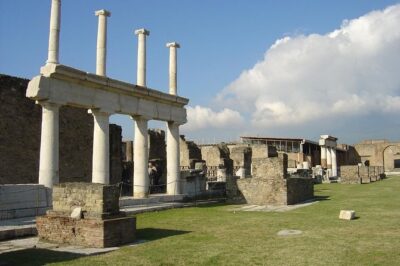
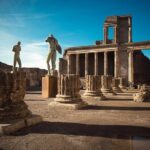
Early on, you’ll see major anchor points such as the Marina Gate and move into the classic civic core: the Basilica and the Forum. These spaces help you understand the town’s rhythm. Pompeii wasn’t just houses on a hillside—it was a functioning city with public decision-making, trade, and social life.
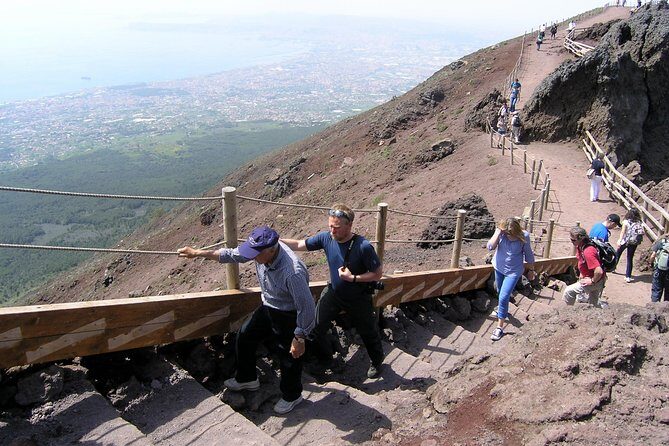
Your guide explains how the town was buried by volcanic ashes from Mount Vesuvius in 79 AD. That context matters because the ruins aren’t random. You’re looking at the consequences of a sudden disaster, preserved while daily routines were still in motion.
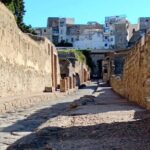
Even in a short visit, the guide’s focus helps you “read” Pompeii. You start to grasp why the Forum was central, why baths sat where they did, and how smaller details—doorways, courtyards, and room layouts—match what people would have done there.
Private houses and street-level scenes: Faun, brothel, bakery, and more
The guided Pompeii walk includes both public structures and private life, which is where Pompeii can feel most surprising.
Highlights on this schedule include the Forum Baths, the Lupanar (brothel), the Bakery, and the Termopolium Capuano. If you’re used to ruins that feel sterile, this is the opposite. These stops push you to imagine real routines: meals, quick drinks, bargaining, and everyday entertainment.
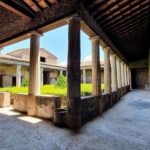
You’ll also visit famous house areas such as the House of Faun and the House of the Tragic Poet. These are valuable because they show how Roman homes worked as more than just living space. They had social status built into layout and decoration.
A final element that can add emotion to the day: the plaster casts. Seeing them helps you connect the scale of the disaster to individual bodies, and it makes the eruption story feel personal instead of historical.
Why the small group pace helps you see more (without sprinting)

The tour keeps a tight structure: transfers, guided time blocks, and breaks. That structure is what makes it work for people with limited time in Naples.
In practice, a small group helps your guide do two things well:
- Control the flow through crowds so you don’t lose time getting oriented
- Answer questions without the group feeling like a traffic jam
Some guides on this type of experience also use headsets, which can be a big help when Pompeii gets loud and chaotic. Even if you’re standing just off the main route, you still get the explanations tied to what you’re seeing.
Transport timing also feels deliberate. The driver can wait up to five minutes if you’re late, which is generous compared with many day tours that leave you behind the moment you hit a wrong staircase.
Price and value: what $168.79 buys you in real time
At about $168.79 per person, this isn’t a bargain-bus excursion. It is priced more like a “you pay for your day to run smoothly” experience.
Here’s what you’re actually getting for the money:
- Shared minibus transportation in a modern vehicle
- Skip-the-line tickets, including a Pompei Express entrance ticket
- Herculaneum entrance ticket included
- An archaeologist guide
- Tolls and parking expenses covered
If you tried to piece this together alone—tickets, timed entry, guides, and the realities of getting around—your cost could easily creep upward, and your time could shrink. The skip-the-line advantage is the big reason this can feel worth it. In Pompeii especially, time lost standing in queues is time you’ll never get back.
The main “cost surprise” risk is food. Meals aren’t included, and the Pompeii break is relatively short. If you want a full sit-down lunch, you may end up paying extra or modifying expectations.
What to bring (and what to leave behind) for a smoother day
The essentials are simple:
- Bring your passport or ID card.
- You should wear comfortable walking shoes. This is not a low-effort tour.
Luggage rules matter too. Large bags and luggage aren’t allowed on this experience, so travel light. If you’re coming from a cruise, use your port luggage system carefully so you don’t show up with something oversized.
Weather is another factor. The tour runs rain or shine, so bring a raincoat even if the forecast looks calm. Waterproof gear beats a “just deal with it” attitude on uneven ruins.
Also, the tour is not recommended for people with limited mobility and isn’t suitable for wheelchair users. If you’re unsure where you fall on that spectrum, be honest about your walking tolerance before booking.
Baby seats are available upon request, which is useful if you’re traveling with a small child and need to plan ahead.
Should you book this Pompeii and Herculaneum day trip?
Book it if you want the highlights without spending your whole day hunting for them. This works especially well if:
- You like archaeology but don’t want a three-to-four-day commitment
- You value skip-the-line access in peak season
- You want an archaeologist guide who connects what you’re seeing to everyday Roman life
- You prefer a small group size (up to 20) over a huge crowd
Skip it if:
- Stairs and grades are a problem for you
- You need long, unstructured time to wander and stare at details for hours
- You don’t want to manage food on your own during the short break
If you fit the first list, this is a strong way to experience two cities shaped by the same catastrophe, one preserved by mud and the other frozen under volcanic ash.
FAQ
How long is the Pompeii and Herculaneum tour?
The duration is 7 hours.
What languages are available for the tour guide?
The tour guide speaks English.
Is this tour a small group?
Yes. It’s limited to 20 participants.
Where does the tour start in Naples?
You meet in front of the Starhotels Terminus entrance, located opposite the station, and you should look for the guide holding an Askos Tours sign.
Are skip-the-line tickets included?
Yes. You get skip-the-line entry, including a Pompei Express entrance ticket.
Is lunch included?
No. Meals are not included.
What should I bring with me?
Bring your passport or ID card.
Is there a luggage limit?
Luggage or large bags are not allowed.
Is the tour accessible for wheelchair users?
No. It’s not suitable for wheelchair users or people with mobility impairments.
Does the tour run in bad weather?
Yes, it runs rain or shine. Bring a raincoat if needed. Baby seats are available upon request.