REVIEW · NAPLES
Herculaneum small group tour with an archaeologist – skip the line
Book on Viator →Operated by PompeiIn · Bookable on Viator
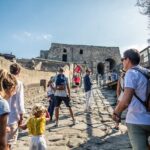
Volcano dust turns ruins into stories. This skip-the-line Herculaneum tour with an archaeologist-led guide focuses on the eruption moment—how residents faced the choice to flee or stand their ground—while you walk through houses and public spaces preserved under ash.
I really like the combo of skip-the-line admission (so you don’t burn time waiting at the gate) and the tight group size, capped at 20. It also means the guide can explain the big picture and still leave room for questions.
One thing to plan for: the tour is only about 2 hours, with each stop clocking in around 10–15 minutes, so if you like to linger slowly, you may feel the pace. Also, double-check the meeting point details ahead of time, since some people find the start location confusing.
In This Review
- Key things to know before you go
- Why Herculaneum Feels Different From Pompeii
- The Archaeologist-Led, 2-Hour Format (and what you gain)
- Price and Skip-the-Line Value at Herculaneum
- Walking Through the Town: 11 Stops in Order
- Casa dei Cervi (The House of the Stags)
- La Terrazza di M. Nonio Balbo (Benefactor Terrace with an Inscription)
- College of the Augustales (Cult of Augustus and Civic Power)
- Casa del Rilievo di Telefo (A House with a Hidden Convenience)
- Partem Domus lignea (The Wooden Partition That Still Matters)
- House of the Skeleton (Human Remains and a Startling History)
- Central Thermae (Bathing Life, Men and Women Separate)
- Casa del Salone Nero (Luxury, and Carbonized Doorposts)
- Casa Sannitica (Atrium, Gallery, Ionic Columns, Frescoes)
- Casa del Bel Cortile (Stairway Court with a Stone Balcony)
- House of the Grand Portal (Charred Remains Everywhere)
- The Stories the Guide Makes Real: Eruption, Materials, and Daily Life
- Don’t Let the Sun Beat You: Comfort Tips for Ercolano
- Finding the Meeting Point Fast (So You Don’t Stress)
- Who Should Book This Small-Group Tour
- Should You Book? My Straight Answer
- FAQ
- How long is the Herculaneum small group tour with an archaeologist?
- How much does the tour cost?
- Is skip-the-line entry included?
- What’s the maximum group size?
- Where does the tour start and end?
- What ticket do I receive?
- Can I cancel and get a full refund?
Key things to know before you go
- Skip-the-line entry included keeps your visit moving fast once you arrive at the park.
- Small group (max 20) makes it easier to hear the guide and ask questions.
- Archaeologist-led explanations connect everyday Roman life to what the ruins reveal.
- Wood, carbon, and preservation details are front-and-center, not an afterthought.
- Hot-weather practical tip: bring sun protection; the site doesn’t exactly hide you from the glare.
Why Herculaneum Feels Different From Pompeii
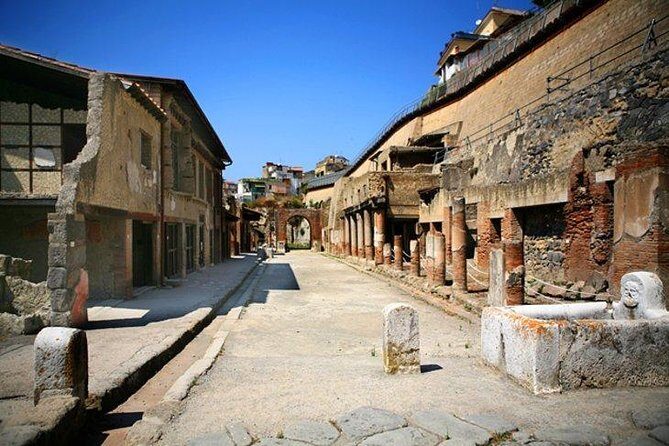
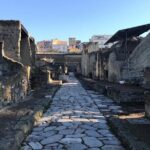
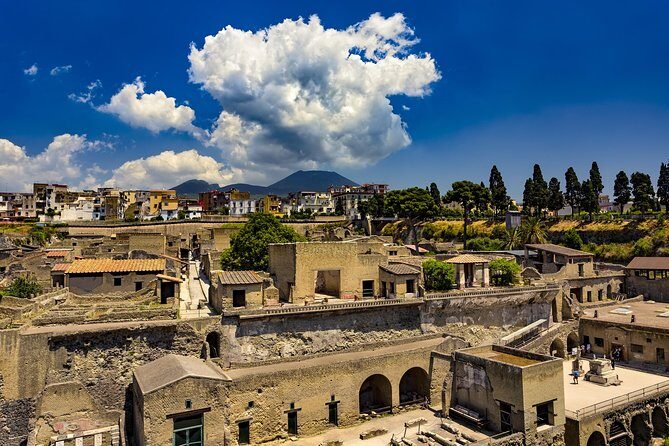
If you’ve been to other famous Roman sites, Herculaneum may surprise you in a good way. Pompeii often gets framed with broad drama and crowds. Herculaneum tends to land more like a snapshot of real life—because so much material was sealed and preserved under volcanic ash for millennia.
On this tour, the guide’s job is to help you read that preservation. The story isn’t only what happened in the eruption, but how people lived right before it. You’ll hear how residents weighed whether to run or stay, and you’ll see Roman architecture and daily routines that would normally be lost to time.
And here’s a practical benefit: with an archaeologist talking you through what you’re seeing, your brain stops treating the ruins like random walls. You start noticing entrances, household layouts, and the purpose of each building—so the whole site makes more sense.
Other Herculaneum guided tours and tickets we've reviewed at Vesuvius & the Bay of Naples

The Archaeologist-Led, 2-Hour Format (and what you gain)
This is a guided walk that runs about 2 hours. The pacing is deliberate: you cover a sequence of major highlights without turning your day into a marathon. Each stop typically lasts around 10 minutes, with a few getting a touch longer, like the bath complex and the skeleton house.
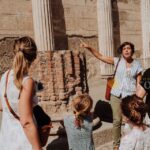
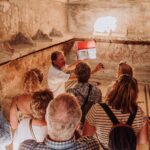
The small-group size matters more than it sounds. When you’re in a group capped at 20, the guide can actually pause and respond instead of talking into the void. You also get more chances to ask the practical questions that pop up naturally when you’re standing in front of carbonized doorposts or a preserved wooden partition.
Another real advantage: you’re not just doing a self-guided circuit. The guide adds context that helps you interpret what you see fast—especially at a site like Herculaneum where the details can be subtle.
Price and Skip-the-Line Value at Herculaneum
The price is $57.26 per person, and it’s often booked about 42 days in advance. For that cost, you’re paying for two things at once:
1) Skip-the-line admission fees
2) 2 hours of live guidance by a licensed archaeologist guide
For value, skip-the-line is the big lever. Herculaneum isn’t huge, but waiting around while everyone shuffles forward can eat up your best hours of the day—especially in the sun. When you avoid that friction, you get more guided time and fewer “standing and staring” minutes.
If you’re the kind of traveler who wants more than photos—someone who likes understanding why a place is laid out the way it is—this price can feel like a smart trade. You’re essentially buying time efficiency plus interpretation.
If you’re already perfectly happy touring ancient sites without a guide (or you hate being on any schedule), you might feel the 2-hour structure is limiting. But for most people, it’s a strong fit.
Walking Through the Town: 11 Stops in Order
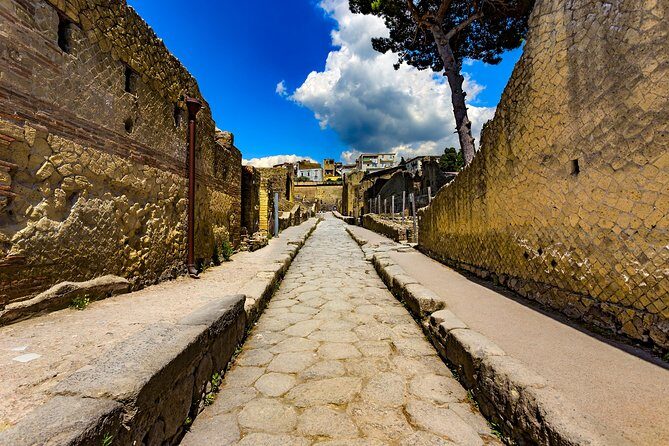
Below is what you can expect at each part of the route, and what makes each stop worth your time.
Casa dei Cervi (The House of the Stags)
This stop takes you to the Casa dei Cervi, named for marble statues of stags (deer) found in the peristyle. In Roman houses, the peristyle isn’t just pretty landscaping—it’s a key part of daily flow. Seeing this name connect to actual finds helps you understand how archaeology turns guesswork into evidence.
Why it’s special: the household décor ties directly to the room’s layout and the owner’s taste.
Other small group tours we've reviewed at Vesuvius & the Bay of Naples



La Terrazza di M. Nonio Balbo (Benefactor Terrace with an Inscription)
Next is the La Terrazza di M. Nonio Balbo. The city’s major benefactor, M. Nonius Balbus, is remembered not only for restoring and building public buildings, but also for the honors listed after his death. That long inscription on a funeral altar is part of what you’ll be pointed to.
Why it’s special: it connects private memory to public life. You’re learning how civic “branding” worked in the Roman world.
Possible drawback: if inscriptions aren’t your thing, this stop may feel more text-heavy than visual.
College of the Augustales (Cult of Augustus and Civic Power)
Then you’ll reach the College of the Augustales. It’s thought to have served as a center for the cult of Emperor Augustus and possibly as the headquarters of the Collegium Augustalium—or even the local curia.
Why it’s special: it gives you a sense of how Roman religion and local governance could overlap in the same spaces.
This is one of those stops where the guide’s explanation can make the layout click, even if the building has lost much of its original look.
Casa del Rilievo di Telefo (A House with a Hidden Convenience)
At Casa del Rilievo di Telefo, the house is believed to have belonged to a leading benefactor—possibly Marcus Nonius Balbus. What’s unusual here is that it has its own private access to the adjoining Suburban Thermae to the south.
Why it’s special: it’s a clear example of how comfort and status worked. In Rome, baths weren’t just cleaning—they were social life.
Tip for your eyes: watch how access points connect buildings. That’s the kind of detail that makes a guide’s pointing so valuable.
Partem Domus lignea (The Wooden Partition That Still Matters)
This stop centers on Partem Domus lignea – Casa del Tramezzo di Legno, important because the elegant wooden partition remained. Even when you’re looking at ruins, this is a reminder that Roman homes weren’t only stone and fresco. Wood played a major role in how rooms felt and functioned.
Why it’s special: it’s tangible proof of the materials that shaped daily life.
House of the Skeleton (Human Remains and a Startling History)
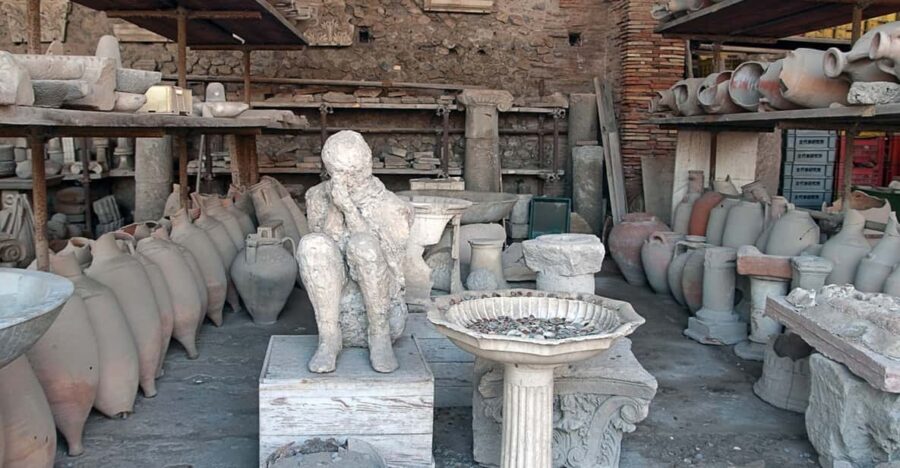
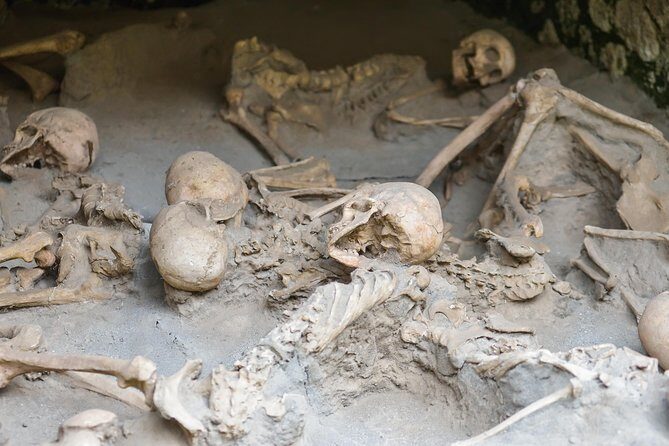
Then comes the House of the Skeleton. The name comes from human remains discovered in a second-floor room in 1831, after which the story of the house became part of modern archaeology.
Why it’s special: it turns the eruption from a vague disaster into a human event with visible traces—handled with care, but still very real.
This is also where many people end up learning about how carbonized traces can reveal more than you’d think. If you’re the type who wants the story behind the darkest details, you’ll likely rate this stop high.
Central Thermae (Bathing Life, Men and Women Separate)
The Central Thermae are built around the beginning of the 1st century AD and were divided—like many bath complexes—into men’s and women’s baths, each with separate entrances.
Why it’s special: you’re not just seeing a “bath room.” You’re seeing the social rules built into architecture.
If you’ve ever wondered how Romans structured public space, this is a strong answer in stone and layout.
Casa del Salone Nero (Luxury, and Carbonized Doorposts)
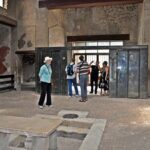
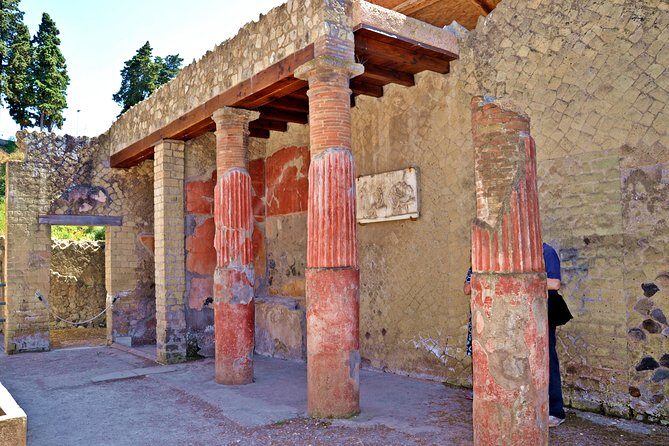
Next is Casa del Salone Nero, the House of the Black Hall, described as one of Herculaneum’s more luxurious mansions. Here, the monumental entrance is still showing carbonised remains of the doorposts and lintel.
Why it’s special: it’s one of the most dramatic examples of preservation. You can literally picture what it looked like before the ash sealed everything.
If you like those details where “the ruin tells you what happened,” this stop does that.
Casa Sannitica (Atrium, Gallery, Ionic Columns, Frescoes)
At Casa Sannitica, you’ll see an arrangement typical of the Samnites. The splendid atrium sits alongside a gallery with Ionic columns, and the rooms feature frescoes.
Why it’s special: it shows how different cultures influenced architecture even within a Roman setting.
Casa del Bel Cortile (Stairway Court with a Stone Balcony)
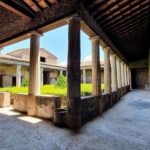
Then there’s Casa del Bel Cortile, one of the more original houses at Herculaneum. Instead of an atrium, it has a courtyard with a stairway and a stone balcony.
Why it’s special: small layout choices can change how light and movement feel in a home. This is where you stop thinking of these ruins as uniform boxes.
House of the Grand Portal (Charred Remains Everywhere)
Finally, the House of the Grand Portal sits in the centre of the archaeological area. You’ll see various environments, collonnati, frescoes—plus the charred remains of wooden parts.
Why it’s special: it’s a strong “final impression” stop. You walk away with a sense of both the grandeur and the loss.
If you’ve been keeping mental notes, this stop is also where all the house features start connecting into a single picture.
The Stories the Guide Makes Real: Eruption, Materials, and Daily Life
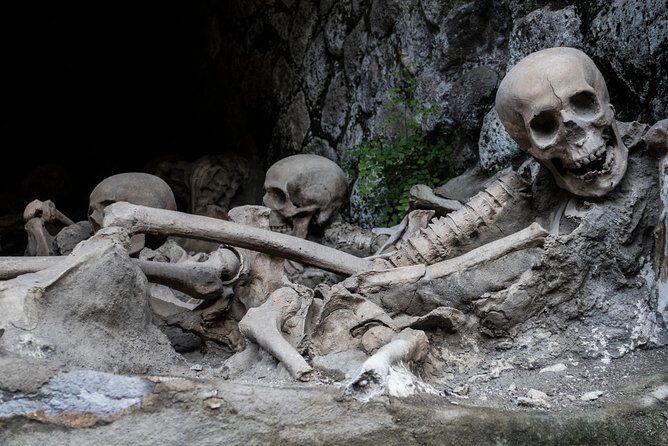
The most praised part of this experience is the guide’s storytelling and knowledge, especially around the eruption’s physical traces. You’ll hear interpretations that connect volcanic ash preservation with what archaeologists can learn: not just big structures, but everyday material life.
A standout theme is the role of carbonised and surviving materials. You get examples of that idea from stops like the House of the Black Hall (carbonised door parts) and the skeleton house history, where preservation changes how you understand the event.
You’ll also learn the practical human side: not everyone behaved the same way in a crisis. The tour frames the eruption as a decision moment for residents, not just a one-way tragedy. That context makes the houses feel closer—like you’re stepping into a town that was functioning right up until it wasn’t.
Don’t Let the Sun Beat You: Comfort Tips for Ercolano
Quick reality check: this is an outdoor site. Even if you enjoy history, your body still has needs.
One review tip that’s worth taking seriously: bring a cap or hat. The sun can be intense, and shaded spots aren’t guaranteed at every stop. I’d also plan to have water with you (even if it’s not part of the tour kit), and wear shoes that handle uneven ground.
If you’re the type who gets tired easily in heat, you’ll appreciate that the tour is only about 2 hours. You get a lot of ground covered without turning it into a full-day slog.
Finding the Meeting Point Fast (So You Don’t Stress)
The meeting point is at the Archaeological Park of Herculaneum, Corso Resina, 187, 80056 Ercolano NA, Italy, and the tour ends at the same place.
Here’s the practical point: some people find the start confusing if the tour details on their ticket don’t match what they’re expecting. My advice is simple—check the exact address before you go, arrive a bit early, and use Google Maps to verify the gate/entrance area you’re targeting.
If you’re traveling during busy hours, being early helps you find your guide without panic.
Who Should Book This Small-Group Tour
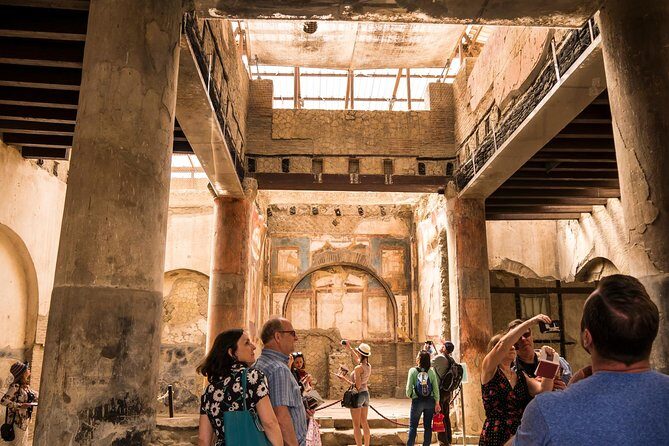
I think this tour fits best if you want:
- A guided, evidence-based explanation rather than just “look at that wall”
- An experience that covers multiple key houses and public buildings in a 2-hour window
- A group size that stays small enough for real questions
- Skip-the-line help so your day stays on track
It’s also a good option for first-timers to Herculaneum who want a structured introduction. You’ll leave with a clearer sense of what each building was for: home life, baths, civic religion, and the role of wealthy patrons.
If you already know a lot and want maximum time in a single room or fresco, you might prefer a self-guided visit. But if you want a coherent storyline across the site, this route is designed for that.
Should You Book? My Straight Answer
Book it if you value guided interpretation, small-group pacing, and skip-the-line entry. At $57.26 for 2 hours with a licensed archaeologist guide, you’re buying both time savings and real context—especially around the preservation details that make Herculaneum so compelling.
Skip it only if you strongly prefer unguided exploration, dislike being scheduled, or you’re hunting for lots of museum-style content rather than walking through the town itself.
FAQ
How long is the Herculaneum small group tour with an archaeologist?
It runs about 2 hours.
How much does the tour cost?
The price is $57.26 per person.
Is skip-the-line entry included?
Yes. Skip-the-line admission fees are included.
What’s the maximum group size?
The tour has a maximum of 20 travelers.
Where does the tour start and end?
It starts and ends at the Archaeological Park of Herculaneum, Corso Resina, 187, 80056 Ercolano NA, Italy.
What ticket do I receive?
You get a mobile ticket.
Can I cancel and get a full refund?
Yes. You can cancel up to 24 hours in advance for a full refund.