REVIEW · NAPLES
Skip the Line Half Day Private Tour of Herculaneum Highlights with Local Guide
Book on Viator →Operated by Tours of Pompeii with Lello & Co. · Bookable on Viator
Herculaneum hits you fast, because it’s preserved like a time capsule. I like the skip-the-line admission because it keeps your short visit from turning into queue duty, and I love the private guide angle that lets you set the pace and focus on what interests your group. The only real drawback? The tour runs about two hours, so it’s highlights, not a slow, full-day museum marathon.
What makes this experience genuinely worth your time is how your guide connects the dots between catastrophe and daily life. You’ll walk through a Roman city that still shows details that are hard to imagine without a story-maker—shop interiors, household objects, and the famous bath complex. With a good guide, Herculaneum stops being a list of ruins and starts feeling like people lived there yesterday.
One more practical note: there’s no hotel pickup, so plan to arrive under your own steam. The upside is you’re not waiting around in a van; you’re at the site, starting the clock right away. If your group has mixed ages, the tour’s private format helps your guide adjust when someone needs a breather.
In This Review
- Key highlights I’d prioritize
- Why Herculaneum makes more sense than you expect
- Skip-the-line entry: why it’s worth paying for
- Your private guide experience (and why names matter)
- What you’ll see at Parco Acheologico di Ercolano
- The thermal baths: more than a side attraction
- Pompeii and the “eruption lesson” in one short window
- Timing and fitness: making a two-hour tour feel complete
- Price and value: what you’re really paying for
- Who this tour suits best
- Should you book this Herculaneum highlights tour?
- FAQ
- How long is the tour?
- Where does the tour start and end?
- Is this a private tour?
- What’s included in the price?
- Is hotel pickup and drop-off included?
- Is the tour suitable for children and for walking?
Key highlights I’d prioritize
- Skip-the-line tickets so you don’t lose your best daylight hours to entrances.
- Private, custom pacing for families, couples, and small groups that don’t want a rigid script.
- Better preservation than Pompeii explained through the way mud sealed Herculaneum after Vesuvius.
- Original doors and shop furnishings that make the street life feel real.
- Thermal baths as a focused stop, not just a quick glance.
- Guides with strong rapport, including Lello and Rossana, who are described as flexible and engaging.
Why Herculaneum makes more sense than you expect
If you’re worried Herculaneum will feel like random walls and stone lines, don’t. The site can be overwhelming—until someone helps you read it.
Herculaneum and Pompeii both suffered in the 79 AD eruption of Mount Vesuvius, but they were hit differently. Pompeii got buried under ash and lapilli, which covered the city in a more powdery layer. Herculaneum was sealed by a massive amount of mud and volcanic debris. That solid blanket is why so many fragile items—things like wood, food remnants, and fabrics—could survive far better than you’d typically expect from an outdoor ruin.
That difference matters for you because it changes what you’ll notice. In Herculaneum, you can’t just stare at big monuments. You’re encouraged to look for clues of ordinary routines: how a household organized space, how a shop looked at street level, and where people went to bathe and socialize.
If you're still narrowing it down, here are other tours in Naples we've reviewed.

Skip-the-line entry: why it’s worth paying for
This tour is built around guaranteed time savings with skip-the-line admission tickets. That’s not a small perk in the Naples area, where lines can be long and your patience can evaporate before you even see a brick.
For a roughly two-hour experience, every minute counts. If you’re forced to wait at the entrance, your “highlights” tour quickly becomes “highlights of waiting.” With the skip-the-line setup, you keep the schedule tight enough to see the best parts without rushing through everything.
There’s another value angle, too: you’re paying for a guide plus admission. When that’s bundled, the “price per hour” feels more reasonable than a tour that charges you extra once you’re already at the gate.
Your private guide experience (and why names matter)
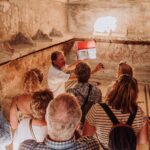
This is a private tour, which means you’re not squeezed into someone else’s group rhythm. Your guide can adjust pace and emphasis based on what your party wants—history depth, daily-life details, or simple sightseeing that stays upbeat.
The guide experience here also stands out in the way people describe it. Lello, for example, is praised for being both incredibly knowledgeable and fun, with the flexibility to handle real-world delays—like a late train—and keep everyone engaged (including kids). Rossana earns similar praise for offering lots of details that you wouldn’t likely pick up on your own.
What I think you should take from that: you’re not just getting facts. You’re getting interpretation. A good guide turns a site into a story you can follow while you’re walking.
What you’ll see at Parco Acheologico di Ercolano
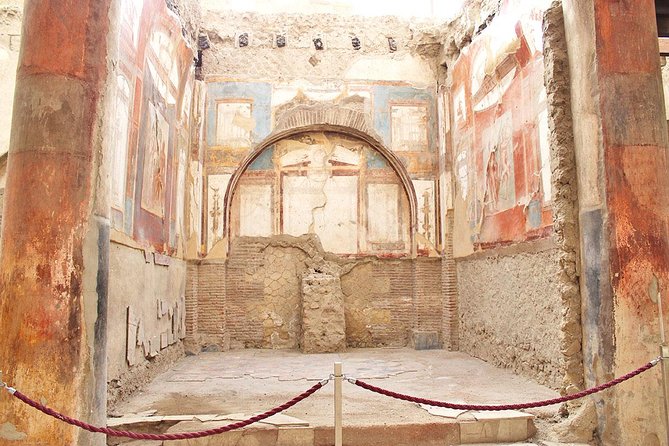
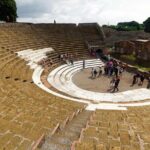
The core of the tour is the Parco Acheologico di Ercolano, where your guide turns the city into something you can picture in motion. You’re guided through the places that help explain daily life in a Roman city—homes, shops, and public spaces.
A few things to watch for as you move through the highlights:
- Roman houses that feel lived-in. The goal isn’t to list rooms. Your guide helps you imagine how people used the space—where activities likely happened, how families might have moved through their day, and what the layout suggests.
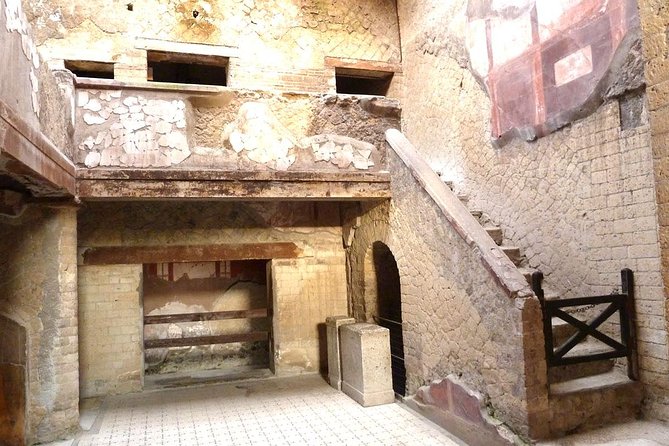
- Shop details that are unusually preserved. You’ll hear about unique elements like original doors and shop furnishings. Those details matter because they let you visualize commerce as it was, not as we reconstruct it from a guess.
- The idea of a city street network. Even in ruin form, the city’s structure helps you understand how people navigated neighborhoods—where you’d walk, where you’d pause, and where the public and private worlds overlap.
Because your time is limited, you’ll get the “best-of” version rather than trying to see everything. That’s a good thing if your brain is easily tired by ruins. It’s also a solid choice if you’re pairing this stop with other plans in the Naples area.
The thermal baths: more than a side attraction
One stop you won’t want to skim is the thermal baths. In a Roman city, baths weren’t just about cleanliness. They were social hubs—places to talk, relax, and exchange news.
Your guide highlights this as a favorite place people in the city would have loved. If you’ve ever wondered why ancient Romans invested so much in public bathing, this helps answer it in a way that feels concrete. You’re not learning about baths from a textbook—you’re seeing the spaces and understanding their function inside the city’s daily rhythm.



Pompeii and the “eruption lesson” in one short window
Even though the focus is Herculaneum, you’ll also get the critical comparison to Pompeii. The eruption story is the backbone here, and the city differences are what make the ruins easier to interpret.
Here’s the takeaway your guide is effectively giving you as you move through the sites:
- Pompeii was covered in a different way, under ash and lapilli.
- Herculaneum was sealed by mud and volcanic debris.
- That sealing is why Herculaneum preserves more “perishable” materials—things tied to everyday life.
The value for you is simple: once you understand how the eruption worked, the ruins stop being random. You start noticing patterns—where a household would have had objects, how a shop might have looked, and why some details survive while others don’t.
There’s also a pacing benefit. Getting the Pompeii context early helps you interpret what you’re seeing at Herculaneum without needing to memorize a lecture. It’s history you can walk along with.
Timing and fitness: making a two-hour tour feel complete
This tour runs about two hours, and it’s designed as a highlights circuit. That means the experience stays focused, but it also means you should manage your expectations.
Here’s how to make it work well:
- If you love close reading of ruins, be ready to pick a few themes. You can’t see everything in two hours, and trying to do so can make you feel behind even when you’re not.
- If your group includes kids, plan to keep snacks and water handy. The pace is flexible, but the site is still an outdoor walk with breaks as needed.
- If anyone in your group has moderate mobility limits, consider the fact that you’ll be walking the archaeological grounds. The tour is described as requiring moderate physical fitness, so wear shoes you trust.
The good news: the private format helps. Your guide can slow down for questions, pause for photos, and adjust attention where your group shows curiosity.
Price and value: what you’re really paying for
At $182.70 per person for a half-day private experience, you’re not paying just for entry. You’re paying for:
- A local guide setup
- A professional art historian guide and professional guidance
- Guaranteed skip-the-line admission
- A private group format
- Admission included for the key stops
For Naples area touring, that bundle is the point. Many “cheap” options fall apart once you add guide fees and admission separately—or they turn into a long day of waiting around. Here, the schedule is tight by design, and the admissions are built in.
So the question becomes: does your group benefit from private guidance? If you want someone to interpret the site while you walk, and you’d rather avoid being stuck waiting with a crowd, the price starts to make sense fast.
Who this tour suits best
This is a strong fit if you:
- Want Herculaneum highlights without losing time to long entrance queues.
- Like the idea of learning daily-life details—homes, shops, and the thermal baths—rather than just big-name sights.
- Are traveling with family members of different ages who need a flexible pace.
- Prefer a private experience where your guide can keep the attention on your group’s interests.
It may be less ideal if you:
- Want an all-day, slow, no-rush excavation-style visit.
- Prefer to explore entirely on your own with no guided interpretation.
- Need hotel pickup as part of your plan. This tour does not include it, and you’ll start near Ercolano Scavi.
Should you book this Herculaneum highlights tour?
I’d book it if your top priority is maximizing understanding in limited time. The skip-the-line advantage is real, and the private format is exactly what makes Herculaneum click—especially with a guide who can connect the eruption story to what you’re seeing right in front of you.
You should also consider booking if you want the “ordinary Roman life” angle: original doors and shop furnishings, houses that make sense once explained, and the thermal baths as a social center—not just another ruin stop.
If you’re the type who wants to wander for hours and decode ruins without help, this might feel short. But if you’d rather leave with a clear mental picture of how this city worked—frozen in time by Vesuvius—this tour does that in a practical, time-smart way.
FAQ
How long is the tour?
The tour is approximately 2 hours.
Where does the tour start and end?
It starts at Ercolano Scavi, 80056 Ercolano, Metropolitan City of Naples, Italy and ends back at the same meeting point.
Is this a private tour?
Yes. It’s a private tour/activity, meaning only your group participates.
What’s included in the price?
The tour includes a local guide and professional art historian guide/professional guide, guaranteed skip-the-line entry, and admission tickets for the stops.
Is hotel pickup and drop-off included?
No. Hotel pickup and drop-off are not included.
Is the tour suitable for children and for walking?
Children must be accompanied by an adult. The tour is described as requiring moderate physical fitness and is near public transportation.
If you tell me your group size and ages, I can suggest whether you’ll get the most from this tight highlights format or if you should consider a slower, longer option instead.