REVIEW · NAPLES
Herculaneum Small Group Tour and Ticket With an Archaeologist
Book on Viator →Operated by Askos Tours · Bookable on Viator
Herculaneum is small enough to feel personal. This 2-hour archaeologist-led walking tour turns the ruins into a street-level story of daily life, and the skip-the-line tickets help you spend your time looking instead of waiting. The main catch is pacing: it’s a brisk walk with lots of standing, so you’ll want to come with comfy shoes.
My favorite part is the small size (up to 20) plus headsets, so you can actually follow the details even when the group stretches out. Guides vary, but people highlight how much context they add on site, from the big design choices to tiny clues left in the buildings. If you’re hoping for lots of sitting breaks, you may find the schedule tight.
In This Review
- Key points that make this tour worth your attention
- Why Herculaneum feels different than Pompeii
- Price and what you actually get for $53.81
- Meeting point and getting there fast: Ticket Office zone in Ercolano
- The 2-hour route through standout houses and bath spaces
- House of the Deer: stags in the peristyle
- La Terrazza di M. Nonio Balbo: benefactor power and an inscription
- College of the Augustales: cult space and civic structure
- Casa del Rilievo di Telefo: a house with a notable relief focus
- Partem Domus lignea (Casa del Tramezzo di Legno): the preserved wooden partition
- House of the Skeleton: a name shaped by a 19th-century discovery
- Central Thermae: men and women baths with separate entrances
- House of the Black Salon: luxury, charred door remnants, and a monumental entry
- Casa Sannitica: Samnite-style layout and Ionic columns
- Casa del Bel Cortile: courtyard design instead of an atrium
- House of the Grand Portal: central area domus with charred wooden evidence
- How the archaeologist guide changes the whole experience
- Pacing, comfort, and rainy-day reality
- Who this tour is best for (and who might want a different plan)
- After the tour: use your ticket time wisely
- Should you book this Herculaneum archaeologist tour?
- FAQ
- How long is the Herculaneum small group tour with an archaeologist?
- What is included in the price?
- Where do I meet the guide?
- How do I get to the meeting point by train or car?
- Is the tour in English?
- Can I cancel for a full refund?
Key points that make this tour worth your attention
- Up to 20 people with headsets so you can hear the guide clearly without crowding in
- Skip-the-line entry keeps your visit moving and reduces time lost in queues
- An archaeologist background adds interpretation you won’t get from self-guided wandering
- A tight highlight route through luxury houses, baths, and daily-life spaces in about 2 hours
- Clear meeting point options near the ticket office with train and car access nearby
- All-weather operation means you can plan around rain without throwing the day off
Why Herculaneum feels different than Pompeii
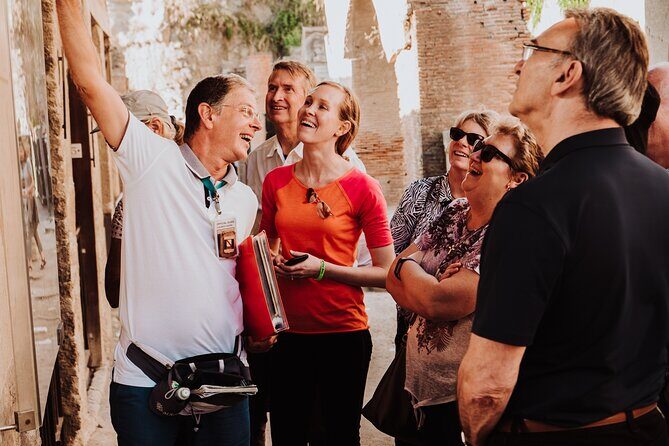
Herculaneum has a way of shrinking the distance between you and Roman life. Instead of seeing major monuments from a distance, you move room to room through houses, courtyards, and bath spaces where you can notice how the layout worked. That is exactly what this tour is built for: a controlled route that keeps you close to the buildings while an archaeologist explains what you’re looking at.
If you’re deciding between Pompeii and Herculaneum, I’d steer you toward this choice when you want more context per square meter. The time is short, but the guide’s job is to connect the dots fast: who paid for what, how spaces were used, and which features were worth preserving and studying.
Other Herculaneum guided tours and tickets we've reviewed at Vesuvius & the Bay of Naples

Price and what you actually get for $53.81
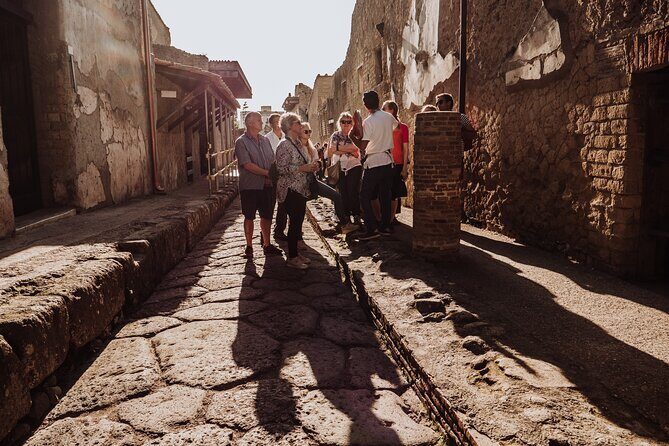
At about $53.81 per person for a ~2-hour small-group tour, the real value is that you get two things bundled together: interpretation plus entry. The ruins entry ticket itself is listed at 16 euros for adults, and there are reduced rates for EU citizens aged 18–25.
So you’re not just paying for a walk. You’re paying for a guided route through major stops, including Herculaneum entry tickets, plus headsets to make the explanations usable on the move. In practice, that turns into less guesswork and fewer missed details—especially in a site where the charm is in what’s small, charred, carved, or restored.
Meeting point and getting there fast: Ticket Office zone in Ercolano
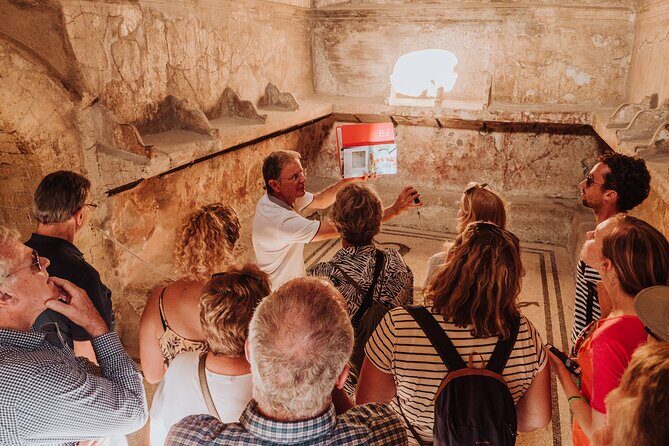
The tour meets at the Ticket Office of the Herculaneum ruins. Your start point is listed near Corso Resina 187, 80056 Ercolano.
Here are your two simplest ways to arrive:
- By car: park close by in via Pignalver (parking is not guarded, and it’s described as near the meeting area).
- By train: take the Circumvesuviana and walk about 10 minutes from Corso Resina 1.
Once the tour begins, it ends inside the Herculaneum ruins, so you can continue exploring afterward without needing to retrace your steps across the whole site.
The 2-hour route through standout houses and bath spaces
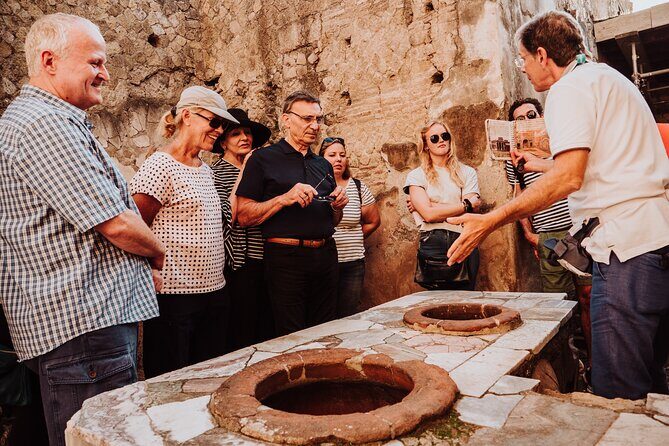
Each stop is about 10 minutes, so this is a highlight circuit rather than a slow museum tour. You’ll cover major houses and public spaces in a set order. Here’s what you’ll see, and why each place matters.
House of the Deer: stags in the peristyle
This house gets its name from marble statues of stags/deer found in the peristyle. Even if you don’t study art history, the point is clear: the owners decorated not just for comfort, but to signal status and taste. This stop is a good warm-up because it trains your eyes to look for symbolic design, not just walls.
Other small group tours we've reviewed at Vesuvius & the Bay of Naples



La Terrazza di M. Nonio Balbo: benefactor power and an inscription
Next comes the La Terrazza di M. Nonio Balbo, tied to M. Nonius Balbus, described as the city’s major benefactor who restored and built public buildings. On his death, he received major honors, with details tied to a long inscription on a funeral altar.
If you like politics and public spending, this is where the tour can feel especially alive. It turns stone into names, roles, and civic identity—plus it gives you a reason to pay attention when inscriptions show up.
College of the Augustales: cult space and civic structure
The College of the Augustales is thought to be connected to a cult tied to Emperor Augustus, and possibly served as the headquarters for the Collegium Augustalium (or even the local curia). Translation: this isn’t only about private homes. It’s about the institutions that organized status, belief, and local influence.
Casa del Rilievo di Telefo: a house with a notable relief focus
The Casa del Rilievo di Telefo is described as possibly belonging to leading benefactors, and it stands out for a relief connection to Telephus. What you get from this stop is an archaeologist’s interpretation of how “art detail” and “house identity” overlap in Roman planning.
Partem Domus lignea (Casa del Tramezzo di Legno): the preserved wooden partition
This is one of the tour’s most distinctive finds: the wooden partition is described as especially important because the elegant wood partition remained. That matters because wood usually doesn’t survive, so when it does, it gives archaeologists real evidence for how rooms separated, how circulation worked, and how domestic life looked before collapse.
House of the Skeleton: a name shaped by a 19th-century discovery
The House of the Skeleton is named after human remains discovered in a second-floor room in 1831. The name can sound dramatic, but the value here is practical: it gives context for where bodies were found and how excavations shaped what we believe about the final moments and building use.
Central Thermae: men and women baths with separate entrances
The Central Thermae were built around the beginning of the 1st century AD. They’re divided into men’s and women’s bathing areas, each with separate entrances—a detail that helps you understand social design, not just architecture.
If you’ve ever wondered whether Roman bathrooms were just “bigger baths,” this stop answers that. It shows how planning reflected expected use and separation in everyday public life.
House of the Black Salon: luxury, charred door remnants, and a monumental entry
The House of the Black Salon is described as one of Herculaneum’s more luxurious mansions, with a monumental entrance that still retains carbonised remains of doorposts and lintel.
This is the kind of stop where a good guide makes the site click. Carbonised wood and preserved traces aren’t only spooky; they’re evidence. They help you imagine how the doorway would have framed visitors and controlled the transition from street to private world.
Casa Sannitica: Samnite-style layout and Ionic columns
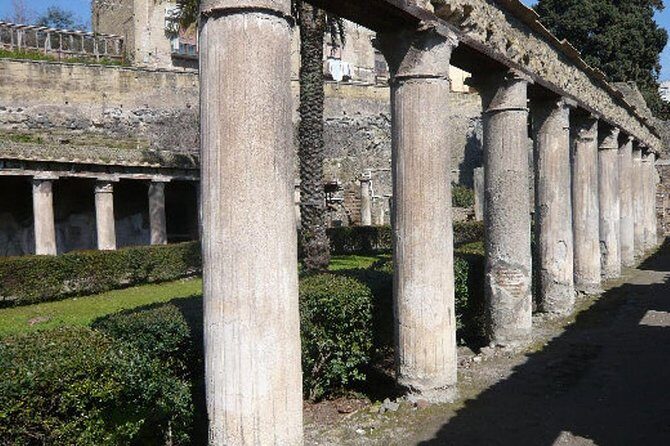
Casa Sannitica is described as typical of the Samnites, with a splendid atrium, a gallery with Ionic columns, and decorated rooms with frescoes. If you like regional identity in Roman life, this is a useful stop because it reminds you that local culture wasn’t erased just because Rome expanded.
Casa del Bel Cortile: courtyard design instead of an atrium
The Casa del Bel Cortile is called one of the most original houses in Herculaneum. It has a courtyard with a stairway and a stone balcony instead of an atrium. That single architectural choice changes how light, movement, and social space would feel inside the house.
It’s also a reminder that Roman homes weren’t all identical boxes. They were tailored.
House of the Grand Portal: central area domus with charred wooden evidence
Finally, the House of the Grand Portal sits in the center of the archaeological area, with various environments and colonnati. You’ll also hear about fresco areas and the charred remains of wooden parts.
This last stop gives you a “wrap-up view” of how many elements existed in one property: decorative surfaces, planned movement, and building materials that now survive in fragments.
How the archaeologist guide changes the whole experience
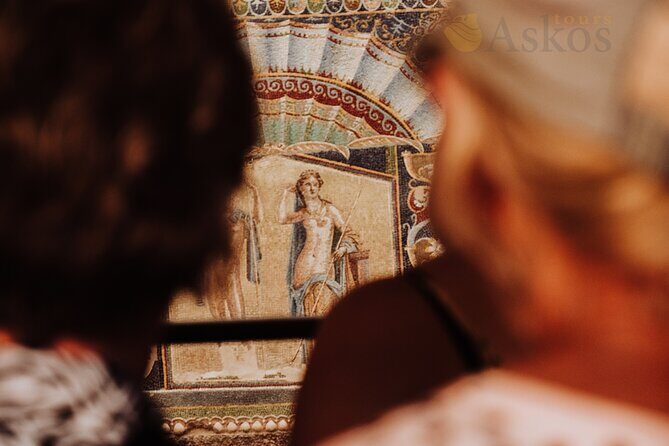
A self-guided walk through ruins can turn into a list of stones. With an archaeologist guide, the goal is different: you learn how buildings worked, who used them, and why certain features were designed the way they were.
In the feedback on this tour, people consistently praise guides for connecting:
- Engineering and design choices (like how bath areas are separated by entrances)
- Culture and status (like how benefactors are honored and how luxury shows up in entrances and layout)
- Small construction clues (like preserved wood partitions)
One guide example shared in the details is Luciano Leone, described as using personal resources and visual reconstructions to show how buildings might have looked around 2,000 years ago. Even if your guide uses a different method, the theme is the same: you’re not just looking at archaeology; you’re learning how to read it.
Pacing, comfort, and rainy-day reality
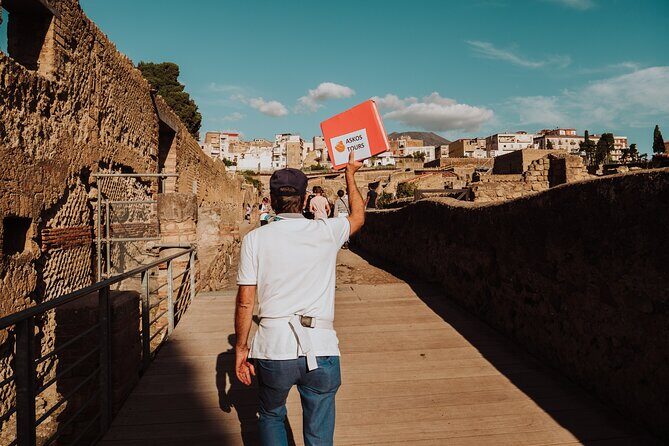
This is a walking tour with time carved into small chunks per stop. The payoff is focus, but the tradeoff is comfort. Expect:
- lots of standing
- some walking
- not much time to sit down and regroup
The good news is that the tour runs in all weather conditions, so you can come even on a rainy day without abandoning the plan. Bring practical rain gear and wear shoes you trust on uneven surfaces.
If you use hearing aids, one guide specifically checked that the sound worked for that need. If you rely on audio support, it’s smart to come prepared and mention your situation to the guide at the start so the headsets can be adjusted.
Who this tour is best for (and who might want a different plan)
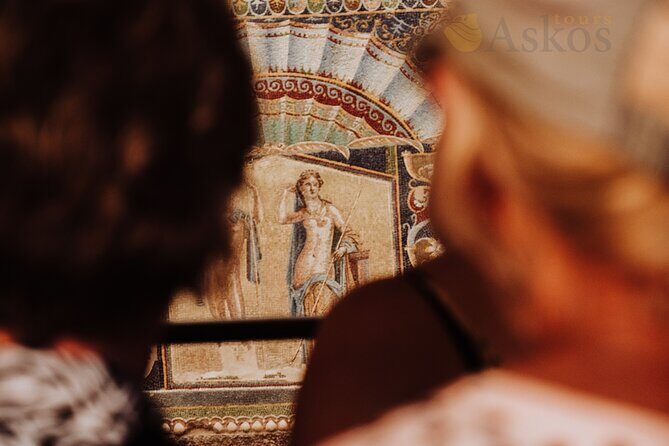
This experience is a strong fit if you:
- want a structured route through Herculaneum’s major features in about 2 hours
- care about how people lived, not just what the buildings are called
- prefer a small group (maximum 20) so you can keep track of the story
It’s also a great choice if you’re skipping other nearby sites and want to make sure you leave with real understanding. Some people explicitly choose Herculaneum instead of Pompeii, and this tour is built for that exact mindset.
If you’re the kind of traveler who needs long pauses, lots of seating, or slow wandering with minimal instruction, you may find this format too tight. In that case, you might enjoy Herculaneum more with a flexible self-guided plan. But if you’re okay with pace, this guide-led route is a fast path to clarity.
After the tour: use your ticket time wisely
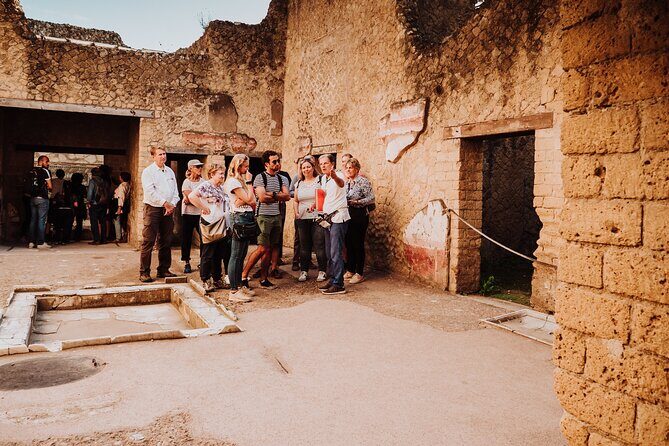
Your package includes entry tickets, so you can plan additional time on your own after the walk. One helpful tip that comes up in the practical discussion of the visit is to spend time in the onsite museum area afterward to see recovered items such as jewelry and furniture pieces.
The tour itself focuses on the ruins. Treat the additional museum time as your chance to zoom out and look at the objects that the guide referenced while you were walking.
Should you book this Herculaneum archaeologist tour?
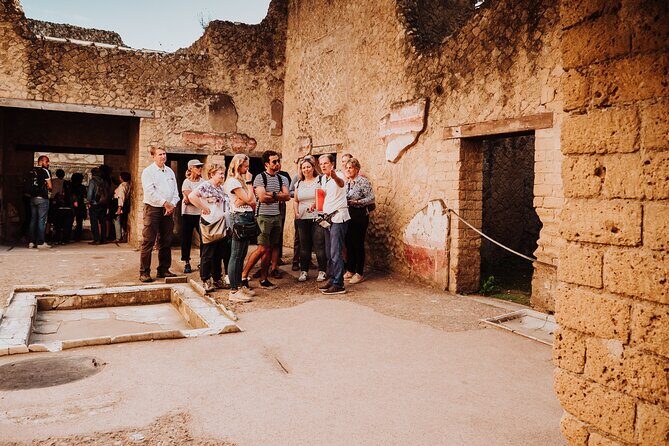
Book it if you want the ruins explained by someone trained in archaeology, and you prefer time-efficient structure over wandering. The skip-the-line entry, headsets, and maximum 20-person group add up to a smoother experience on a site where details matter.
Skip it (or consider a different style of visit) if you’re strongly dependent on frequent seating breaks or you dislike fast pacing. This isn’t a sit-down lecture. It’s a guided walk through carefully chosen highlights.
If you like asking questions, this is also a good bet. The stops are specific enough that you’ll have plenty to point at as the guide moves you from one feature to the next.
FAQ
How long is the Herculaneum small group tour with an archaeologist?
It’s listed as approximately 2 hours.
What is included in the price?
You get guidance from a licensed guide with an archaeological background, Herculaneum entrance tickets, small group size (maximum 20 people), and headsets. Meals and drinks are not included.
Where do I meet the guide?
The meeting place is at the Ticket Office of the Herculaneum ruins. The start point is listed near Corso Resina 187, 80056 Ercolano NA, Italy, and the tour ends inside the ruins.
How do I get to the meeting point by train or car?
By train, you can use the Circumvesuviana station at Corso Resina 1 and walk about 10 minutes. By car, there is not guarded parking close to the meeting area in via Pignalver.
Is the tour in English?
Yes, it is offered in English.
Can I cancel for a full refund?
You can cancel up to 24 hours in advance for a full refund. If you cancel less than 24 hours before the start time, the amount paid is not refunded.