REVIEW · NAPLES
Pompeii and Herculaneum Private Walking Tour with an Archaeologist
Book on Viator →Operated by Askos Tours · Bookable on Viator
Two ruined cities in one smart walk. You’ll pair Herculaneum’s ash-preserved streets with Pompeii’s civic center and homes, guided by an archaeologist who explains what you’re actually looking at. It’s a private 5.5-hour route, built around short stops so you can keep moving without feeling rushed in the wrong way.
I love how the guide turns ruins into daily life. When guides such as Mena, Vincenzo, Ivan, or Sylvia are on the roster, the explanations tend to go beyond dates and names and into how Romans lived, built, decorated, and worshiped. I also like the tight private-group pace: you get time for questions, and that matters when you’re staring at charred doorframes and trying to understand why they survived.
One thing to plan for: tickets and transport aren’t included, and the itinerary includes a train transfer plus lots of walking across both sites. If you want long hangs in just one house or zero schedule pressure, this may feel like you’re sipping from a firehose instead of taking a leisurely stroll.
In This Review
- Key things that make this tour work
- Private archaeologist pacing across two ruined cities
- Getting to Herculaneum: meeting point, train transfer, and quick lunch reality
- Herculaneum stops you’ll actually remember (wood, baths, cult, and mansions)
- House of the Deer
- La Terrazza di M. Nonio Balbo
- College of the Augustales
- Casa del Rilievo di Telefo
- Partem Domus lignea (Casa del Tramezzo di Legno)
- House of the Skeleton
- Central Thermae
- House of the Black Salon
- Casa Sannitica
- Casa del Bel Cortile
- House of the Grand Portal
- Pompeii leg: Porta Marina Superiore, then Forum, baths, houses, and theaters
- Lupanar
- Walk the main street
- Foro de Pompeya (main square)
- Granaries of the Forum
- Basilica
- Stabian Baths (Terme Stabiane)
- House of the Faun
- House of Menander
- Teatro Grande (and Teatro Piccolo)
- Why the archaeologist guide changes everything
- Value and cost: does $597.36 per group make sense?
- What to bring and how to pace yourself for real walking
- Should you book this Pompeii and Herculaneum private archaeologist tour?
- FAQ
- How long is the tour?
- Is this a private tour?
- Are entrance tickets included?
- What are the Herculaneum ticket prices?
- Where do we meet the guide?
- Is transportation between sites included?
- Do we get lunch or food during the tour?
- What should I wear?
- Can I bring a service animal?
- Is cancellation free?
Key things that make this tour work
- Archaeologist-guided pacing across two sites, with stops designed for short, high-impact viewing
- Herculaneum’s detail: you’ll see homes, baths, and even preserved wooden elements like a famous timber partition
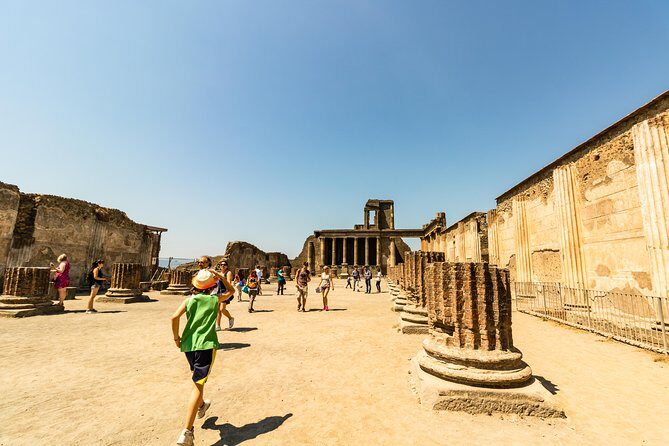
- Pompeii highlights in a logical route from the Lupanar to the Forum area, then baths and theaters
- Private group benefit: you can ask questions and adjust pace without juggling strangers
- Guide name recognition: Mena, Vincenzo, Ivan, Sylvia, and others show up often in the strongest feedback
Private archaeologist pacing across two ruined cities
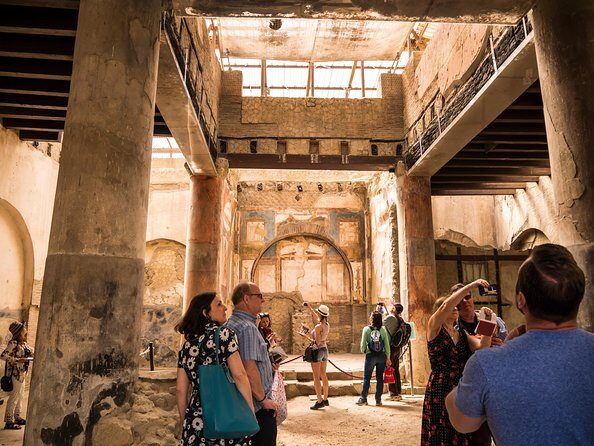
This is priced per private group (up to 15 people), not per person. That’s a big deal here because you’re paying for expertise and on-the-ground guidance more than for “standing in line with a headset.”
The tour runs about 5 hours 30 minutes, so the style is “enough time to see the big things, plus interpret them.” Every stop is short (often around 10–15 minutes), which is perfect if you like learning while you walk instead of spending half the day reading placards. You’ll also get that classic two-city comparison: Herculaneum feels intimate and detailed, while Pompeii reads more like a public stage—squares, theaters, and major buildings.
Because it’s a private tour, it also fits families and mixed ages better than many group tours. Several named guides (like Giancarlo and Raffaele Romano) are associated with the kind of calm patience that works when kids ask the obvious questions adults forget to ask.
Other Herculaneum guided tours and tickets we've reviewed at Vesuvius & the Bay of Naples

Getting to Herculaneum: meeting point, train transfer, and quick lunch reality
You start near Ercolano (Via dei Papiri Ercolanesi). The Herculaneum leg begins at the Herculaneum ruins ticket office, which is your first “anchor” point. The provided guidance gives you two realistic ways to reach it:
- By car, near Via Pignalver, with parking close by (not guarded)
- By train via Corso Resina 1 (the Circumvesuviana station is about a 10-minute walk)
The itinerary then includes a train transfer segment (about a 30-minute train ride plus a short walk), and transportation costs are explicitly not included. Translation: you’ll want to budget for transit and keep your phone charged so you don’t get stuck when local routes get confusing.
Lunch isn’t part of the price, but the schedule includes time for a quick lunch break if you need it. I’d treat that as a “grab-and-go window” rather than a sit-down meal unless your group travels really slow.
Herculaneum stops you’ll actually remember (wood, baths, cult, and mansions)
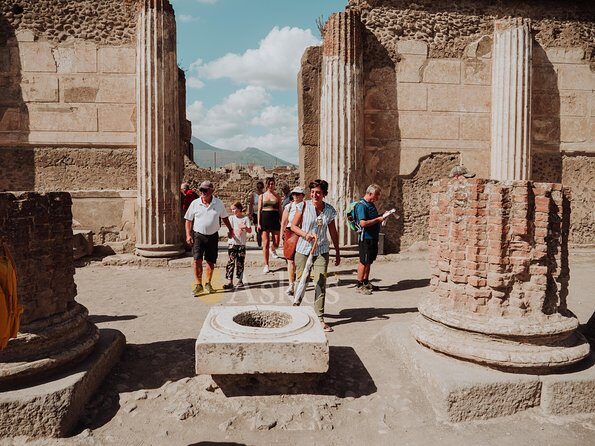
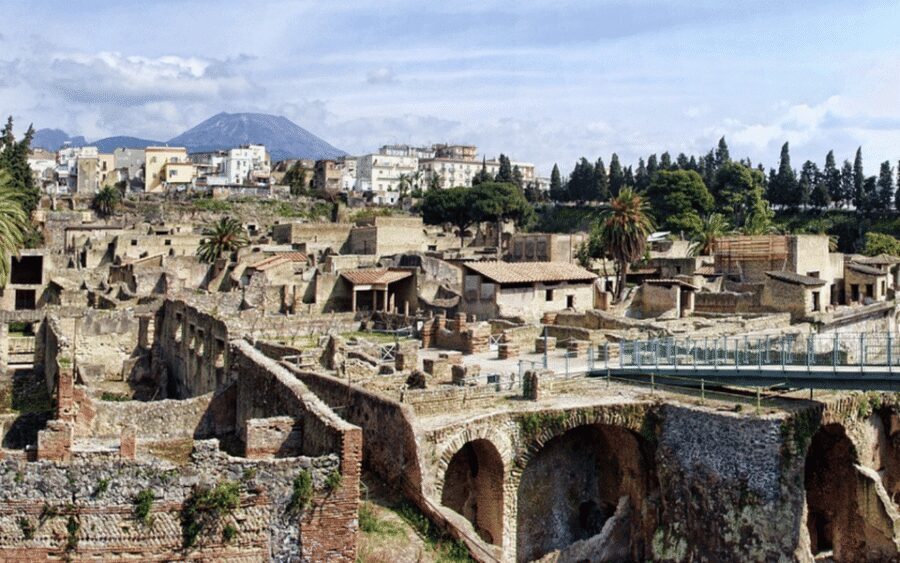
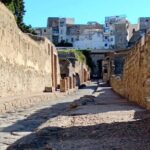
Herculaneum is where this tour earns its keep. The volcanic burial means you can see traces that feel closer to objects than rubble—like carbonized wood and preserved spatial details inside houses.
Here’s the Herculaneum sequence, and what each stop is really teaching you:
House of the Deer
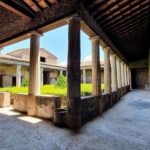
This house gets its name from marble stag/deer statues found in the peristyle. Look for how art and landscaping worked together to signal status. It’s an easy stop to understand because the “deer” name is visual right away.
La Terrazza di M. Nonio Balbo
You’ll focus on the major benefactor, M. Nonius Balbus, and the long inscription tied to his honors. It’s a reminder that Roman cities ran on patrons—people who funded public life and left records of it.
Other private and VIP tours we've reviewed at Vesuvius & the Bay of Naples

College of the Augustales
This building is linked to the cult connected with Emperor Augustus and the Collegium Augustalium. Even if you don’t love religious history, this is useful because it shows that politics, worship, and civic identity weren’t separate boxes.
Casa del Rilievo di Telefo
Named for relief work, this house may connect to leading benefactors (again tied to M. Nonius Balbus). The standout detail here is that it has its own private access to the adjoining Suburban Thermae, which is a neat way to see how elite convenience worked.
Partem Domus lignea (Casa del Tramezzo di Legno)
This stop matters because it features an elegant wooden partition that remained. When you’re staring at ruins, wood often disappears—so this is the kind of rare survival that lets your guide explain materials, construction, and daily movement through a home.
House of the Skeleton
The name comes from human remains discovered in 1831. This is the stop where you’ll feel the weight of what happened. I like how an archaeologist guide can frame it carefully, so it’s not just grim spectacle but a real lesson about the eruption’s impact and what evidence survives.
Central Thermae
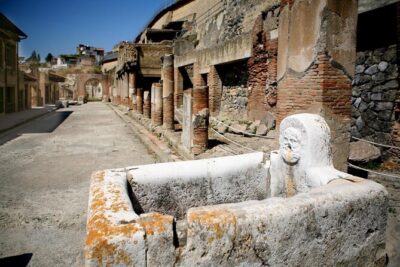
You’ll see thermal baths built around the beginning of the 1st century AD, with separate entrances for men and women. This is practical Roman-life education: bathing wasn’t just hygiene; it was social routine, neighborhood rhythm, and status.
House of the Black Salon
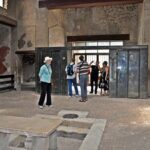
Another “look closer” stop: a luxurious mansion with a monumental entrance that still shows carbonised doorposts and lintel remains. That’s the kind of evidence that turns your imagination into something more grounded.
Casa Sannitica
This house is linked to typical Samnite arrangements, with a splendid atrium and a gallery supported by Ionic columns, plus fresco decoration. Even in a short visit, it helps you see how architecture expressed culture and identity.
Casa del Bel Cortile
Original layout: a courtyard with a stairway and a stone balcony instead of an atrium. If you enjoy how spaces are organized, this stop gives you something concrete to compare with more famous house types.
House of the Grand Portal
Expect multiple environments, colonnati, frescos, and evidence of charred wood. This is a strong wrap-up stop because it pulls together the themes you’ve been seeing: elite space, ornament, and construction materials in a city buried suddenly.
Tip for this whole block: wear shoes that can handle uneven stone and long standing time. The houses are visually rich, but you’ll also be physically moving constantly to keep the route flowing.
Pompeii leg: Porta Marina Superiore, then Forum, baths, houses, and theaters
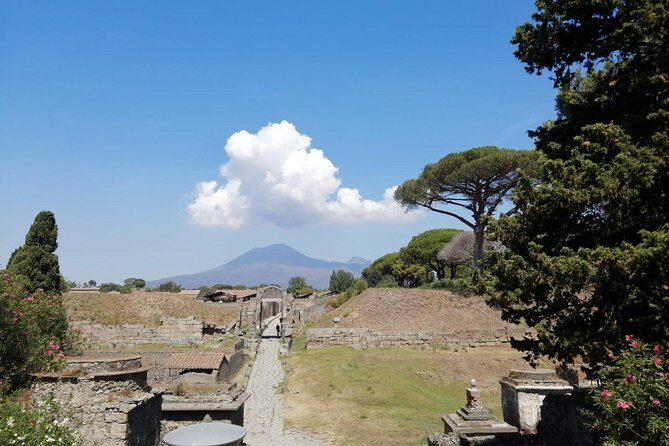
Pompeii starts with a clear meeting instruction: you’ll meet the guide at the main entrance called Porta Marina Superiore, and the guide holds a sign for Askos Tours. That detail matters because Pompeii’s entrances can feel like a maze even when you’re trying to do everything right.
Entry tickets for Pompeii are not included, and the itinerary references Pompei express entry tickets. So yes, you’ll want to have your ticket situation handled before you arrive. This is also where the itinerary becomes more “big city” and less “home museum.”
Lupanar
Pompeii’s most famous brothel is the first named stop. It’s historically important not because you need scandal, but because it shows how commercial and social life were built into the city fabric.
Walk the main street
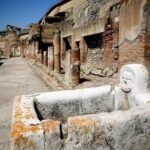
You’ll stroll through Pompeii’s main street as a connecting thread. It helps you reset your bearings and connect the dots between buildings you’d otherwise treat like separate attractions.
Foro de Pompeya (main square)
This is the civic heart—an obvious place, but it hits harder when you’ve just been in homes and baths. A guide can connect the Forum to how people met, traded, and lived their public lives.
Granaries of the Forum
Inside the granary you’ll see marble tables, baths for fountains at house entrances, and casts of victims of the eruption. There’s also mention of casts of a dog and a tree—small details that stick because they’re unexpected.
Basilica
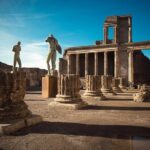
You’ll see the Basilica as an open portico for merchants and other activity. It’s an architectural lesson: Roman commercial life needed sheltered public space.
Stabian Baths (Terme Stabiane)
These occupy a large area and are described as the oldest thermal complex in the city. Baths are one of the best places to understand Roman daily routines because bathing is both public and practical.
House of the Faun
One of the largest and most impressive private residences. This is a good stop for architecture and scale—how wealthy households expressed themselves through size, layout, and decoration.
House of Menander
Often a favorite because it’s described as one of Pompeii’s richest homes, with impressive architecture, decoration, and contents. If you’re already thinking in “rooms as story,” Menander is a strong payoff.
Teatro Grande (and Teatro Piccolo)
You’ll visit the most important theater (Teatro Grande) and take a look at Teatro Piccolo. Even in a brief visit, theaters help you understand how Romans gathered for entertainment and status, not just chores.
Why the archaeologist guide changes everything
A normal self-guided visit is mostly reading and wandering. An archaeologist-led private tour is different because the guide can answer the questions your eyes will naturally raise:
- Why does a house have that feature?
- What do decorations signal about identity?
- How did buildings function as systems (baths, access routes, civic space)?
- What evidence suggests how people lived and what happened in the moment of the eruption?
That’s also where the strongest feedback patterns come from. Named guides such as Mena, Vincenzo, Ivan, Sylvia, Raffaele Romano, Paola, and Giovanni are repeatedly linked with the same winning approach: they make the sites feel readable, and they handle questions patiently. One guide is noted for a PhD background in classical studies, which shows up in the way they connect threads across the region.
Practical way to get the most out of it: go in with a small list of questions. Not 50. Just 2–3, like how baths worked, how elite households used space, or what the wooden remains can tell you. Then listen for the answers tied to what you’re seeing right now.
Also: because each stop is timed, don’t save your best questions for the last 60 seconds. Ask early, while you’re standing at the exact feature your question refers to.
Value and cost: does $597.36 per group make sense?
The sticker price is high at first glance: $597.36 per group (up to 15). But private tours aren’t priced like ticket lines. You’re paying for an archaeologist guide plus a planned route that compresses two major sites into one half-day.
If you fill a group with several people, the effective cost per person drops fast. The bigger point is that your money goes toward interpretation and time-savings: the itinerary is structured so you see key houses and civic buildings without spending the day guessing what matters.
That said, you should budget extra for the items not included:
- Herculaneum entry tickets (listed as 16 euros adult and 2 euros for EU citizens age 18–25)
- Pompeii entry tickets (Pompei express referenced, not included)
- Food and drinks
- Local transport between legs (transportation not included)
My practical take: this is a value purchase if you want guided meaning and you’re visiting both cities in one day. If you’re mainly looking for photos and don’t care about explanations, a cheaper route will likely suit you better.
What to bring and how to pace yourself for real walking
You’re looking at moderate physical fitness requirements. That means:
- Comfortable shoes only (no flip-flops)
- Sunglasses and sunscreen
- Plan for steady walking between stops and across uneven surfaces
Because most stops are short, the tour style is more “move, look, learn, move” than “sit and linger.” If you need breaks, build them into the walking gaps—your guide can handle the rhythm best when you speak up early.
Also, carry water. Food isn’t included, and the schedule includes only a quick lunch break if needed. A small snack in your bag can save your energy when the morning learning sprint turns into an afternoon fatigue slump.
Should you book this Pompeii and Herculaneum private archaeologist tour?
Book it if:
- you want an archaeologist guide to make the sites click fast
- you like short stops with explanations instead of solo wandering
- you’re visiting both Herculaneum and Pompeii in one day and want a smart route
- your group can benefit from private pacing (families often do)
Skip or reconsider if:
- your budget can’t stretch to extra site tickets plus transit plus snacks
- you don’t like long walking days and many short stop-and-go moments
- you’re hoping for a strict promise of skipping queues (no such guarantee is stated here)
If you want one guided half-day where the stones feel like they have voices, this is the kind of tour that earns its price.
FAQ
How long is the tour?
It runs about 5 hours and 30 minutes.
Is this a private tour?
Yes. It’s a private tour, and only your group participates.
Are entrance tickets included?
No. Herculaneum entry tickets are not included, and Pompeii entry tickets (Pompei express) are not included.
What are the Herculaneum ticket prices?
The tour data lists 16 euros for an adult and 2 euros for EU citizens age 18–25.
Where do we meet the guide?
In Herculaneum, you meet at the ticket office of the ruins. In Pompeii, the guide meets you at the main entrance called Porta Marina Superiore, holding a sign for Askos Tours.
Is transportation between sites included?
No. Any transportation to the sites is not included, even though the plan includes a train transfer segment.
Do we get lunch or food during the tour?
No. Food and drinks are not included, though there is time for a quick lunch break if required.
What should I wear?
Wear comfortable shoes and avoid flip-flops. Sunglasses and sunscreen are suggested.
Can I bring a service animal?
Yes, service animals are allowed.
Is cancellation free?
Yes. Free cancellation is available if you cancel up to 24 hours in advance for a full refund.