REVIEW · NAPLES
Day Trip of Pompeii, Herculaneum and Vesuvius from Naples
Book on Viator →Operated by Di Sarno Car Service - Tours & Excursions · Bookable on Viator
One volcano, two ruined cities, and a long day of Roman reality. What I like most is the easy one-day combo from Naples and the live English commentary in the van while you move between sites. The tradeoff: this is not a full guide-led walk through the ruins, so you’ll do most of the exploring on your own time.
You get 2 hours at Herculaneum, 1.5 hours at Vesuvius, and 2 hours at Pompeii—enough to hit major highlights, not enough to see everything. If you want someone to explain every street and building while you’re standing in them, you may need to add a licensed guide at the sites for extra cost.
In This Review
- Key things to know before you go
- What this Naples day trip actually is: transport plus onboard stories
- Herculaneum in 2 hours: why it feels smaller and more intact
- Climbing Vesuvius: Good Giant views and why timing matters
- Pompeii walkthrough: the highlights you can realistically hit fast
- Price and logistics: where the real spending shows up
- The day schedule: how to protect your time and energy
- What kind of guide experience you’ll get (and what you won’t)
- Who this suits best (and who may feel rushed)
- Should you book this Pompeii–Herculaneum–Vesuvius day trip?
- FAQ
- What is included in the tour price?
- Do I need separate tickets for Pompeii and Herculaneum?
- Is there a licensed guide inside Pompeii and Herculaneum?
- How much time do I get at each stop?
- What if weather makes climbing Vesuvius impossible?
- Where is pickup in Naples?
Key things to know before you go
- Driver-led, not site-led: onboard narration, then free time at each archaeological park.
- Two UNESCO sites in one day: Pompeii and Herculaneum are both UNESCO World Heritage areas.
- Vesuvius access is included: entry to Vesuvius National Park is in the tour price.
- Time is the real currency: you move fast because Pompeii is huge.
- Plan for extra tickets: Pompeii and Herculaneum admissions are not included in the base price.
What this Naples day trip actually is: transport plus onboard stories
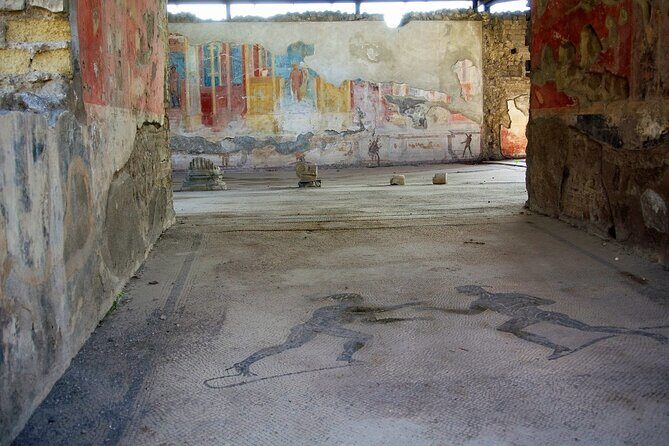
This outing is built around a simple formula: round-trip minibus from Naples, English commentary from your driver/host during the ride, and then you go explore each stop at your own pace. The minibus is air-conditioned, and you’ll have fresh water onboard, which matters on a full-day schedule.
This matters because Pompeii and Herculaneum are not quick “look and leave” sites. Even with your time blocked out, you’ll still be walking, standing in lines, and making choices. The best way to think of it is: you’re buying convenience and context during transit, then you manage the ruins on the ground.
Also note the practical detail: the tour uses a mobile ticket, and Pompeii/Herculaneum entry is handled outside the base price. A couple of hard-earned lessons from past groups point to one key habit: make sure any entry tickets you buy match the names on the group list and the ID you’ll bring.
Other Herculaneum guided tours and tickets we've reviewed at Vesuvius & the Bay of Naples

Herculaneum in 2 hours: why it feels smaller and more intact
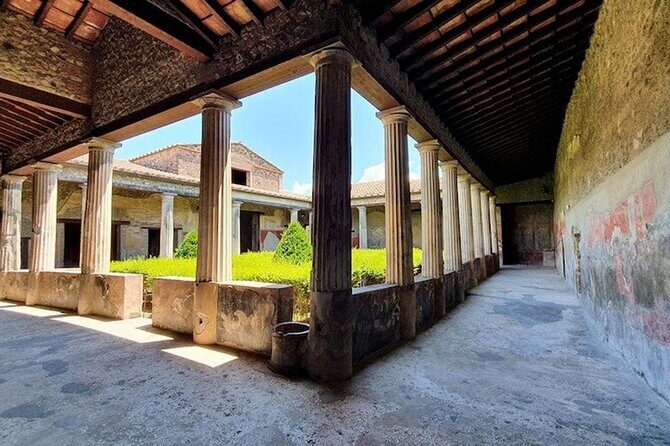
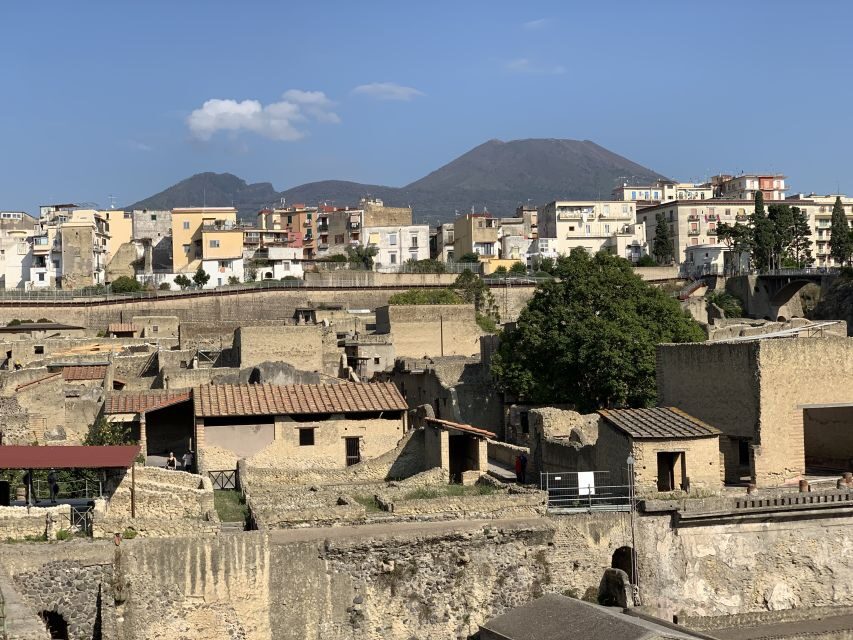
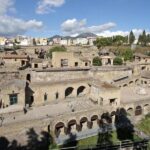
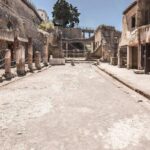
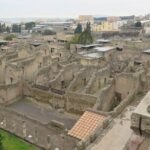
Herculaneum is the “other” volcanic city, and it’s often easier to love because it feels more preserved. It’s smaller than Pompeii, and it was sealed by volcanic material from the 79 AD eruption—so you can see Roman life in a more intact way than you might expect from a ruin.
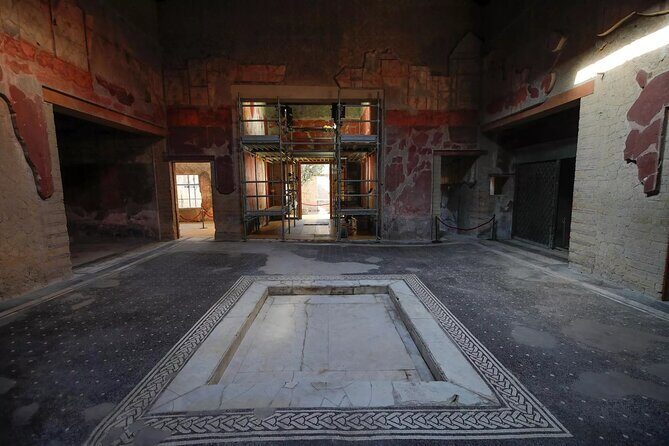
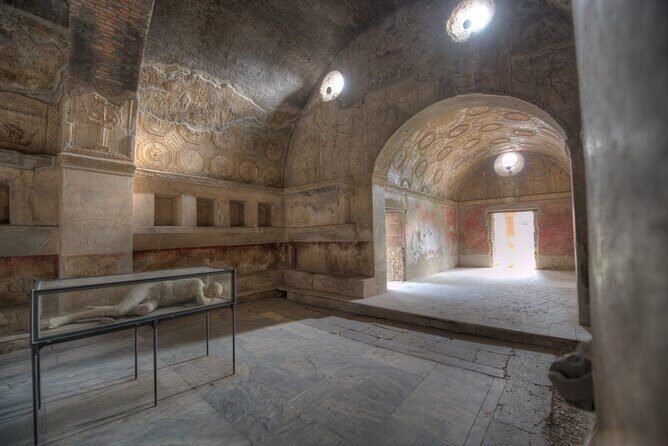
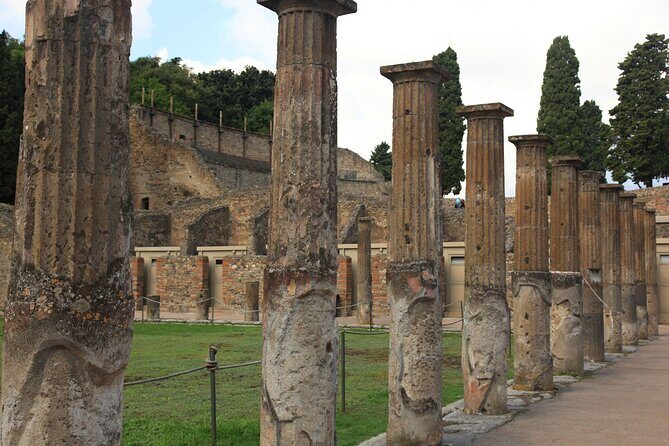
In your time there, you’re set up to focus on highlights and street-level atmosphere. Expect to wander through Roman streets and see major building types, including bath areas and market spaces. The tour’s key named stops include the Villa of the Papyri and the House of the Deer, both the kind of places that make the city feel real instead of abstract.
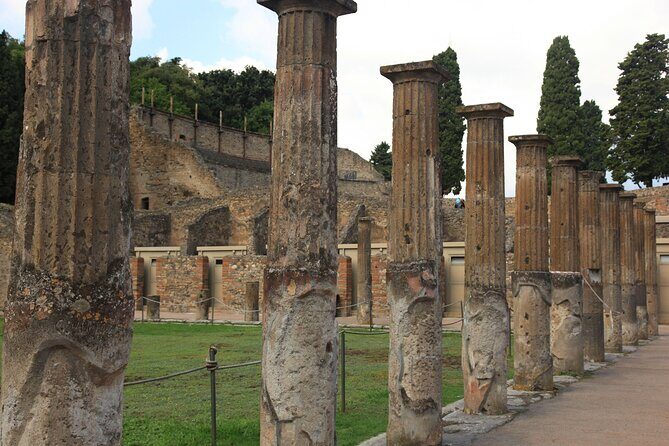
You also get the contrast story: Pompeii suffered differently from Herculaneum. Here, the preservation-by-volcanic-mud effect helps explain why frescoes, mosaics, and decorative details can look startlingly close to their original appearance. That’s a big reason people find Herculaneum emotionally “quieter” than Pompeii—even though it’s just as historically intense.
Two-hour reality check: you’ll be able to see a lot, but you won’t walk every corner. If you’re the type who likes to understand building-by-building purpose, consider adding a licensed guide at the site (available for an extra fee).
Climbing Vesuvius: Good Giant views and why timing matters
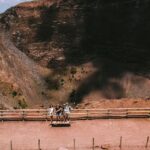
Vesuvius is the active volcano of mainland Europe, and in Naples culture it’s nicknamed the Good Giant—a reminder that people live with it, not just visit it. The tour gives you about 1 hour 30 minutes at Vesuvius National Park, with entry included.
What you should expect is a real hike up a volcanic trail, not a casual stroll. The walking is part of the experience: you’ll pass by volcanic-themed artwork along the way, and at the top you’ll have crater views and wide panoramas over the Bay of Naples, the city, and distant islands.
The practical takeaway: Vesuvius rewards pacing. If you go out fast, you may end up tired for the best part—the viewpoint time near the crater rim. And if the weather turns, don’t be surprised if the climb isn’t possible. Past groups have described situations where wind or fire prevented the hike, and the day pivoted to a different experience like a meal stop elsewhere. You’re dealing with an active volcano, so build flexibility into your expectations.
Pompeii walkthrough: the highlights you can realistically hit fast
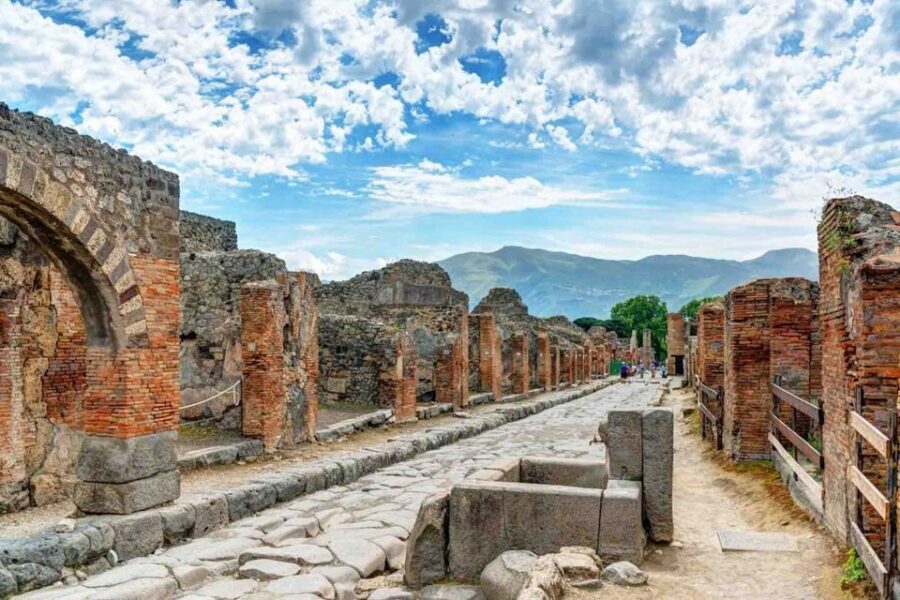
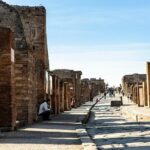
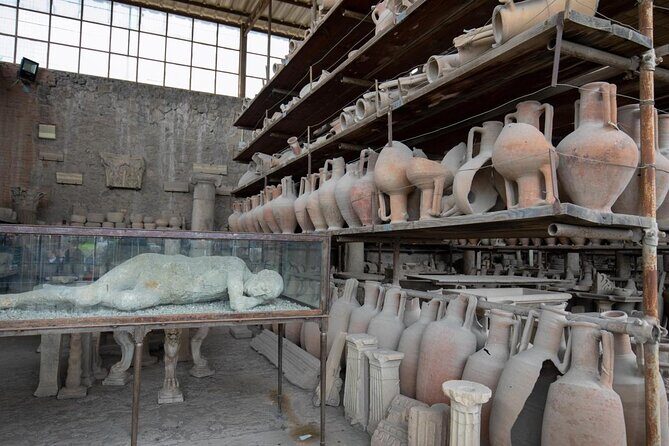
Pompeii is the big name for a reason: it’s the world-famous open-air museum where Roman daily life feels frozen in time. Your 2 hours at Pompeii is enough to capture the “greatest hits,” especially if you have a plan before you enter.
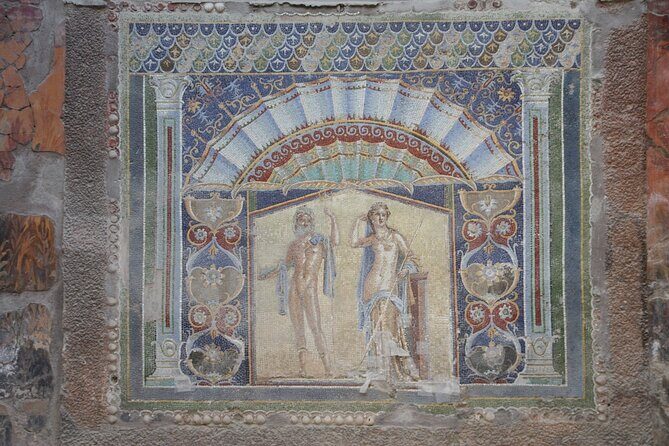
You’ll want to prioritize the anchor sights mentioned in the experience description: the Temple of Apollo, the Casa del Fauno, and the Amphitheater, one of the best-preserved in its class. Pompeii’s power is in the mix—grand public spaces next to domestic details.
Also, don’t rush past the visual arts. The ruins are known for mosaics and frescoes that make whole rooms feel like they’re waiting for someone to walk back in. If you’re walking with photos in mind (and you should), you’ll still need to accept some limits: protective barriers and crowds can slow you down.
A real-world add-on is also built into the day: near the ruins, there’s an opportunity to see modern craftsmanship, including an older coral factory producing items inspired by Greek-Roman designs. If you like tangible souvenirs with a link to local history, it’s worth a quick look—just don’t let it steal too much of your prime ruins time.
Price and logistics: where the real spending shows up
At $145.12 per person, this tour sounds like a deal—until you tally what’s not included. The base price covers transport, Vesuvius entry, onboard live English commentary, and onboard water. But the archaeological sites are extra: Herculaneum is €13.00 per person, and Pompeii is €18.00 per person.
That’s not a problem if you expected it. The issue is when people assume one price covers everything. It doesn’t. And if you add licensed guides at the sites (which is sometimes a good idea for Pompeii), or you spend money on lunch and snacks, the day can climb.
So here’s how I’d judge value: this works best if you strongly want a single-day sweep of all three—and you don’t want to deal with car hire, parking stress, and timing chaos. If you’d rather go slower with a car or train plan you control, this may feel expensive for what is essentially transportation plus van narration.
One more cost note: lunch is not included. Some past days reportedly lacked a dedicated lunch time, which means you may end up eating on the fly using Pompeii time. If you hate that kind of trade, plan snacks in advance or bring a flexible lunch approach.
Other Pompeii, Herculaneum and Vesuvius full combo tours we've reviewed at Vesuvius & the Bay of Naples



The day schedule: how to protect your time and energy
An 8-hour day is generous on paper and tight in real life. The order of stops can adjust based on conditions or group preferences, so don’t lock your mind to one “perfect” sequence. What stays consistent is the time allocation: around 2 hours at each archaeological site and 1.5 hours at Vesuvius.
Use that to plan your personal strategy:
- Arrive mentally ready to walk a lot and move between zones fast.
- Treat Pompeii as a highlight hunt, not a complete museum visit.
- Keep your expectations realistic about what you can understand without an on-site licensed guide.
Timing also affects gates. You’ll likely need to get tickets handled quickly for the sites you enter. If you’re the kind of person who likes everything calm, do your site-ticket prep early rather than right before the day. One common frustration in past groups was ticket-name mismatch at entry—avoid that by checking details carefully before arrival.
Finally, keep weather in mind. Vesuvius requires good weather to climb, and the operator notes weather-based flexibility. If you’re traveling in shoulder season or summer with heavy heat, the water onboard helps, but you’ll still want to pace yourself and plan shade/slow-down points at the ruins.
What kind of guide experience you’ll get (and what you won’t)
This is the part that can make or break expectations. The tour includes live commentary from your English-speaking driver/host on board. That’s real value: you get background during the drive, so the ruins make more sense once you’re standing in them.
But the experience is largely do-it-yourself inside the parks. You won’t have a guide staying with you in Herculaneum or Pompeii explaining every stop. In other words, you control your route once you’re out of the minibus.
If you want more structure, the tour data indicates that a licensed guide can be arranged at additional cost. That’s the best fit if you care about history at a granular level and you don’t want to make sense of everything through reading alone.
One practical suggestion: if your priority is deep interpretation, ask about adding site guidance before you go. If your priority is speed, big sights, and convenience, this format is often a strong match.
Who this suits best (and who may feel rushed)
This day trip is ideal if you:
- Want Naples-based logistics without having to plan transport between three major destinations
- Prefer to explore at your own pace once you arrive
- Like getting context while riding—then choosing what to zoom in on once you’re there
- Have limited time in the region and want the top sights in one go
It may feel less ideal if you:
- Want a full guided walk inside each ruin from start to finish
- Hate buying add-on tickets once you’re already paying for a tour price
- Need a built-in lunch slot with guaranteed timing
- Don’t handle lots of walking well, especially for the Vesuvius climb
Should you book this Pompeii–Herculaneum–Vesuvius day trip?
I’d book it if your goal is a one-day hit list: Vesuvius for the crater views, Herculaneum for the preserved streets and major villas, and Pompeii for the world-famous highlights. The included transport, Vesuvius entry, and onboard narration make it feel smoother than planning everything yourself.
I wouldn’t book it if you specifically want a guided museum-style experience in every park with a guide at your elbow the whole time. In this format, you’ll do most of the learning by your own choices on site. If you’re comfortable with that—and you plan for extra admissions at Pompeii and Herculaneum—it’s a smart way to use limited time in Naples.
FAQ
What is included in the tour price?
The price includes round-trip premium minibus transport, live onboard English commentary, fresh water onboard, and entrance to Vesuvius National Park.
Do I need separate tickets for Pompeii and Herculaneum?
Yes. Entrance tickets for Pompeii and Herculaneum are not included in the base tour price. The stated fees are €18.00 for Pompeii and €13.00 for Herculaneum.
Is there a licensed guide inside Pompeii and Herculaneum?
The experience provides live commentary on board during transport, and site time is mostly self-guided. A licensed guide is available upon request for an additional cost.
How much time do I get at each stop?
The schedule is approximately 2 hours at Herculaneum, 1 hour 30 minutes at Vesuvius, and 2 hours at Pompeii, within an overall day of about 8 hours.
What if weather makes climbing Vesuvius impossible?
This experience requires good weather. If it’s canceled due to poor weather, you’ll be offered a different date or a full refund, and the operator can also adjust the day based on conditions.
Where is pickup in Naples?
Pickup is available at either Stazione Marittima (Cruise Terminal) or the Ramada by Wyndham Naples.