REVIEW · ERCOLANO
Herculaneum Archaeological Park smart Audio Tour
Book on GetYourGuide →Operated by ITGUIDES · Bookable on GetYourGuide
Your smartphone guides you through Roman plaster.
I like how the Itguides audio kicks in right after you purchase, so you can start learning as soon as you’re ready to walk. I also like the GPS geo-localization and on-screen map help, which steer you toward each point of interest in the ruins. The one drawback to plan around: you still need to buy the Herculaneum entrance ticket separately.
This is built for an independent pace, not a tight group schedule. The audio content is organized in sections for bigger areas (like the big domus cluster, including the House of Deers reference you’ll see in the app), so you don’t feel lost while you move around. Just keep in mind that the app’s map clicks can take a moment to get used to, especially if you expect building details to be obvious at a glance.
With a stated 4-hour duration, this feels like a practical way to cover the domus, spa, and gym highlights without paying for a live guide. And at $4.70 per person, the value pitch is hard to ignore, especially since the app notes you can save more than 50% compared with the ticket office audioguide.
In This Review
- Key highlights worth your attention
- Why a self-guided Herculaneum smart audio tour works so well
- Getting your bearings: GPS geo-localization and the in-app map
- The domus, spa, and gym tour logic: what you’ll actually cover
- Domus highlights and the “big” areas
- Spa and gym areas
- Multi-part stops and subentries
- Using the map like a pro: building numbers and blue dots
- The audio itself: informative, sometimes technical, occasionally different voices
- The best move before you walk in
- Timing your 4 hours: a pace that won’t make you rush
- Value: is $4.70 really the better deal?
- Who should book this audio tour, and who might not love it
- Should you book the Herculaneum Archaeological Park smart audio tour?
- FAQ
- Do I need a separate entrance ticket for Herculaneum?
- How long does the audio tour take?
- Can I start the audio right after purchase?
- How does the app help me find the points of interest?
- What languages are available in the audio guide?
- Is the activity wheelchair accessible?
- What if I have trouble using the Itguides app?
- Can I cancel for a refund?
- Is there a way to try before buying?
Key highlights worth your attention
- Start instantly after purchase on your smartphone, with instructions in your voucher
- GPS navigation helps you find each domus and other points of interest
- Complex sites split into sections so you can follow the right stop-by-stop order
- Multi-language audio in Italian, English, French, German, and Spanish
- Support via WhatsApp if the app or links confuse you
- A keep-forever style option, so you can revisit the same audio later
Why a self-guided Herculaneum smart audio tour works so well
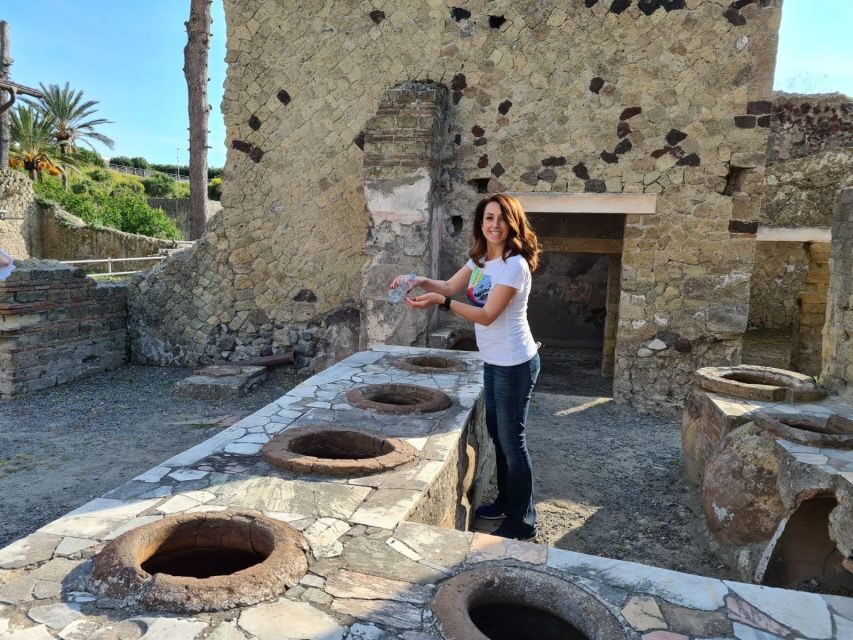
Herculaneum is the kind of place where you want control. You might want 2 minutes to glance at one doorway, or 15 minutes to stare at a domus detail you didn’t expect. This smart audio tour is designed for that freedom. You use your own phone, which is a small comfort: it’s your device, and you’re not relying on shared headsets or a group whispering in your ear.
The app format also matters. The points of interest don’t just dump audio on you. The tour uses maps and geolocation to guide you to what you’re looking at, which reduces the most common problem with DIY ruins visits: wandering without a clue what you’re seeing.
On top of that, the experience is practical. It’s not framed as a marathon. The total suggested time is about 4 hours, which is a sweet spot for covering multiple domus plus the spa and gym areas without feeling like you’re speed-walking for the audio to keep up.
Other Vesuvius skip-the-line tickets and audio guides we've reviewed at Vesuvius & the Bay of Naples



Getting your bearings: GPS geo-localization and the in-app map
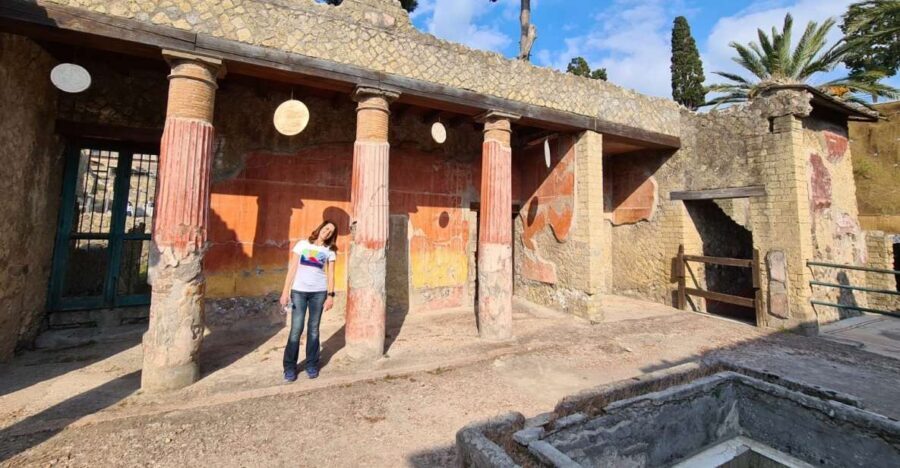
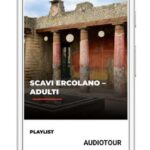
The core “how it works” piece is the app’s GPS geo-localization. After you buy, you can start immediately. The app then helps you reach each point of interest using the map and your phone’s location.
Here’s how that plays out on the ground:
- The “point” you’re listening to is tied to where you are in the park.
- Some areas are more complex, so the tour splits them into sections. That’s a big deal at Herculaneum, where a single “site” can turn into a maze of connected spaces.
- The app is designed to keep you aligned with the stop you’re currently viewing, rather than forcing you to guess which room or wall section matches the narration.
One helpful touch from real usage: the audio flow includes a check mark once you’ve listened to each item. That gives you an easy way to confirm you’re not missing pieces while you’re walking.
If you’re someone who gets annoyed by dead-end signs or vague museum numbering, this setup can feel like a relief. You’re not just reading your way through ruins; you’re following prompts that match your location.
The domus, spa, and gym tour logic: what you’ll actually cover
This is marketed as discovering the most beautiful domus, plus the spa and gym of the ancient city. In practice, you’ll want to think of it less as one long route and more as a set of themed stops you can pace based on interest.
Domus highlights and the “big” areas
Some points of interest are straightforward. Others are larger clusters (like the big domus), and the audio breaks those into parts. That matters because big zones are where DIY tours often fail: you stand in the wrong sub-area and the audio feels disconnected.
One named example you’ll see in the app’s framing is the House of Deers. Even if you don’t know it going in, the key is that the audio helps you track what you’re looking at while you move.
Spa and gym areas
The tour explicitly includes the spa and gym. Even without an official board translating everything for you, the audio segments are built to match the ruins as you encounter them. This is especially useful in places where on-site signage can be limited.
Other Herculaneum guided tours and tickets we've reviewed at Vesuvius & the Bay of Naples





Multi-part stops and subentries
A real-world detail that can affect your experience: some entries have multiple subentries. At first, it can be easy to think a domus stop is only a short intro track, when it’s actually structured into several listening parts. The fix is simple: don’t assume one page equals one full explanation. Let the app guide you through the sections it offers.
Using the map like a pro: building numbers and blue dots
The navigation sounds simple, but the in-app map has a few quirks worth knowing before you start.
One of the biggest practical tips from real use: when you click a point for a building, you may also need to click the blue dots shown beneath the picture to access all the information. Some buildings may not display blue dots, so the behavior can feel inconsistent until you know what to look for.
Another small friction point: the community map (the clickable map layer inside the app) may not always show building numbers immediately before you select an icon. If you’re the kind of person who likes to see numbers first, take a moment early in your visit to learn how the map labels appear once you tap.
And if you prefer a more direct approach, here’s a useful mindset: focus less on forcing the app to match a strict route. Instead, use it as a tool to confirm you’re at the right point, then listen for that point’s content. Even a slightly off-path walk can still work, as long as you keep tapping the map items that match where you are.
The audio itself: informative, sometimes technical, occasionally different voices
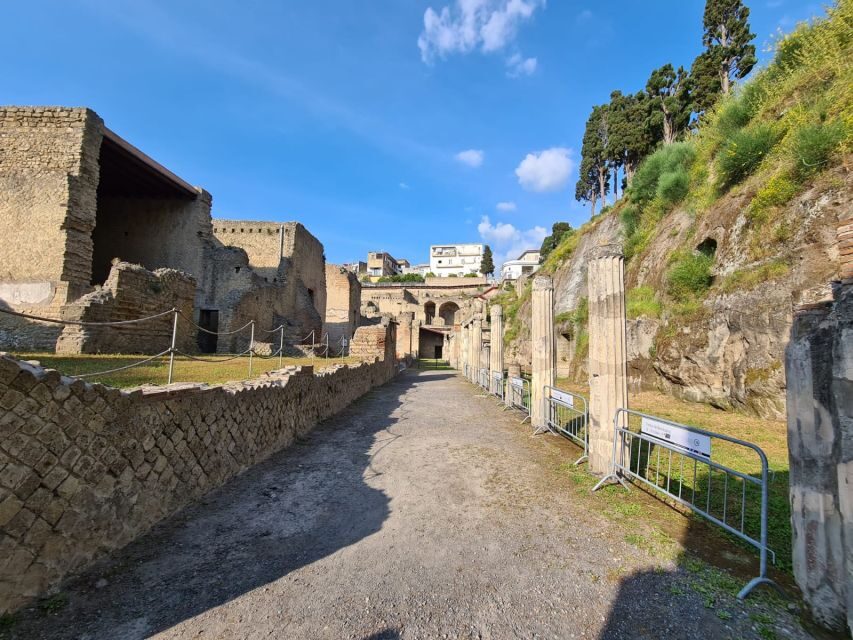
The audio guide is available in multiple languages: Italian, English, French, German, and Spanish. That’s great if you’re traveling with someone who needs another language, or if you’re switching for comfort.
How does it sound in content terms? It’s generally easy to follow, but you should know what kind of writing style to expect. One common feedback: the narration can use technical terms and translation style choices that assume some familiarity with classical archaeology. The good part is that the app still gives you something more than silence and vague sightlines. The caution is that it may not always translate complicated terms into plain, everyday explanations.
There’s also a small listening oddity you might notice: voices can change part way through. That doesn’t usually ruin the experience, but it can be surprising if you’re expecting one consistent narrator voice for the whole tour.
The best move before you walk in
Because the audio is inside the app, plan for download time. The key instructions are:
- download the contents with a good cellular signal or Wi‑Fi
- the product is fully online, so you’ll want connectivity ready
- you can try a free demo before buying, and you should do that if you want to test the app flow first
This is less about being picky and more about reducing stress. When the audio is ready, your visit stays calm.
Timing your 4 hours: a pace that won’t make you rush
The duration listed is 4 hours, and that’s believable if you pace the domus and then give spa/gym stops a real chunk of time. A smart way to plan is to treat the audio segments like checkpoints rather than a strict script.
Here’s a practical approach that fits how the tour is designed:
- Start listening early so you build momentum while the first domus clusters are still fresh.
- Slow down when you enter bigger zones, because those are the areas where the app splits content into sections.
- Use the map and GPS prompts to re-sync if you wander even a little. You’re not failing; you’re just resetting the audio to match what you see.
Because the app includes check marks for completed items, you also avoid the anxiety of wondering whether you skipped something important. If you’re short on time, you can decide to focus on the domus you care about most and move on, instead of trying to finish everything at an unrealistic pace.
Value: is $4.70 really the better deal?

Let’s talk money clearly. The price is $4.70 per person, and the tour claims you can save more than 50% versus the ticket office audioguide.
That price difference matters more than it sounds because you’re not paying for a trained guide. You’re paying for:
- access to the audio content
- the map + GPS navigation layer
- multi-language support
- and the practical convenience of using your own smartphone
So the key question is not, is it cheaper. It’s, does it replace what you’d otherwise pay for. If your priority is to understand what you’re seeing and you’re okay traveling independently, the value looks strong. If you need heavy interpretation at every step, you might find an official guided explanation still more satisfying.
One more value note: the tour highlights that your audio guides will be for your ever use. That’s a nice perk if you want to re-listen later while photos are still fresh and you’re connecting details from the ruins to what you just heard.
Who should book this audio tour, and who might not love it
This works best for you if:
- you like self-guided travel and want to set your own pace
- you’re comfortable using a smartphone for navigation and taps
- you want to cover domus, spa, and gym stops without paying for a live group guide
- you appreciate audio in multiple languages and might share the experience
You might hesitate if:
- you want ultra-simple, no-technical-terms explanations (the narration can be technical at times)
- you rely on very clearly labeled on-screen maps and hate fiddly tapping steps
- you’re expecting one audio stop to equal one neat, single-room explanation (multi-part subentries are part of the design)
And if anything goes sideways, the app provides WhatsApp contact support. That safety net matters when you’re traveling on a tight timeline.
Should you book the Herculaneum Archaeological Park smart audio tour?
If you want a flexible, phone-based way to understand the ruins, I’d book it. The combination of GPS geolocation, segmented audio for larger zones, and low pricing relative to an on-site audioguide makes this a strong value for most independent visitors.
I’d skip it only if you strongly prefer a live, plain-language guide to walk you step-by-step and interpret everything in real time. Otherwise, the app approach is built for exactly the kind of visit where you walk, look, listen, and adjust.
If you do book: download and test the app using the free demo first if you can, then make sure the audio content is ready before you start walking. That one prep step keeps the whole experience smooth.
FAQ
Do I need a separate entrance ticket for Herculaneum?
Yes. This smart audio tour includes the audio guide in the Itguides app, but it does not include the Herculaneum entrance ticket.
How long does the audio tour take?
The duration is listed as 4 hours, so plan on about that amount of time at a comfortable pace.
Can I start the audio right after purchase?
Yes. The guide is available as soon as you purchase, and the app instructions help you start using the audio on your smartphone.
How does the app help me find the points of interest?
It uses your phone’s GPS geo-localization along with maps to guide you to the points of interest in the ruins.
What languages are available in the audio guide?
The audio guide is available in Italian, English, French, German, and Spanish.
Is the activity wheelchair accessible?
Yes, it’s listed as wheelchair accessible.
What if I have trouble using the Itguides app?
The app provides a WhatsApp contact for support if you run into issues with using the Itguides app.
Can I cancel for a refund?
Yes. Free cancellation is listed up to 24 hours in advance for a full refund.
Is there a way to try before buying?
Yes. You can download the app and try a free demo before purchasing.