REVIEW · NAPLES
Herculaneum Private Guided Tour Led by a Local Top-rated Guide – All inclusive
Book on Viator →Operated by Raphael Tours & Events · Bookable on Viator
Herculaneum feels like history in freeze-frame. This private, English-led visit helps you read an ancient city in a way you simply won’t do alone, from the buried streets to the preserved villas. It’s one of those stops where details matter—because Herculaneum didn’t just survive; it was captured by the AD 79 eruption.
I love how private means you get real attention, not a rushed pass through the ruins. I also like that you’re guided by locals with art-history know-how, including moments where guides point out specific visual symbols you’d miss on your own, like angel motifs in the decor. That extra “look closer” attention is a big reason this tour earns its top rating.
The main drawback is the price: at $207.11 per person, it’s a splurge compared with public tours. If you’re traveling solo with no one to share costs, you may want to compare it against a less expensive group option.
In This Review
- Key things that make this tour worth it
- Why Herculaneum hits different than Pompeii
- Meeting at Ercolano Scavi and getting inside fast
- Ancient streets first: amphitheater, Decumanus, and Palestra
- Thermal Baths, Forum, and Basilica: the Roman routine in context
- Villas and mosaics: House of Neptune and Amphitrite
- Why the guides make the difference (and not just the ruins)
- Price and value: when $207.11 per person makes sense
- Who this private Herculaneum tour fits best
- Should you book this Herculaneum Private Guided Tour?
- FAQ
- Where is the meeting point for this tour?
- What time does the tour run, and how long is it?
- Is this tour private?
- Does the tour include admission, and can I skip the lines?
- What do I need to bring or be prepared for?
- Can I cancel for a full refund?
Key things that make this tour worth it
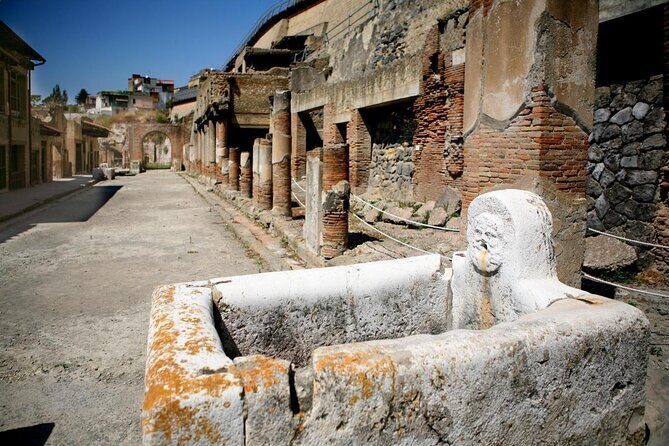
- Skip-the-line entry into the Parco Acheologico di Ercolano so you don’t waste your time queuing.
- Two-hour to 2.5-hour flow that covers the big must-sees without dragging.
- Specialist-style guidance, since the tour includes a professional art historian guide on top of your local guide.
- “See the city, not just ruins” stops, from forum and basilica areas to the thermal baths and villas.
- Guides who can explain the odd details, including iconography that isn’t obvious at first glance.
- Private means questions fit your pace, and you can ask follow-ups as you walk.
Why Herculaneum hits different than Pompeii
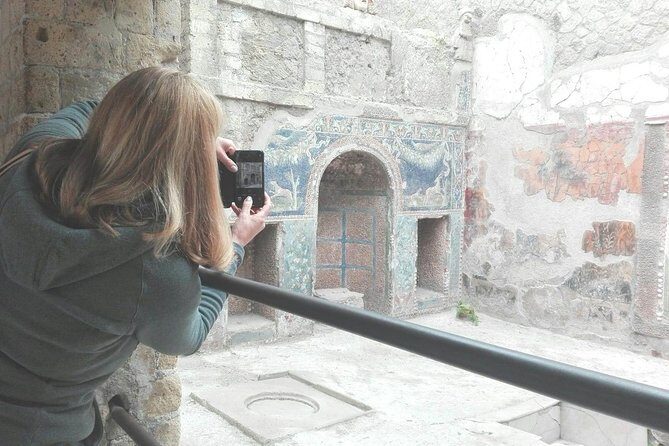
If you’ve done Pompeii, you might expect more of the same. Herculaneum changes the picture fast. The big story is the AD 79 eruption from nearby Mt Vesuvius, when the city was buried and preserved in a way that lets you visualize everyday life with unusual clarity.
Here’s the practical advantage: you don’t just look at stone walls. You’ll be shown how spaces worked—public areas like the forum and basilica, and personal spaces inside elite homes with floors and wall decorations preserved in ways that are hard to grasp without context.
Also, Herculaneum’s timeline stretches earlier than many people expect. The site includes layers that go back as early as the 7th century BC, so your guide can connect what you’re seeing to the city’s longer development, not just the eruption.
Other Herculaneum guided tours and tickets we've reviewed at Vesuvius & the Bay of Naples

Meeting at Ercolano Scavi and getting inside fast
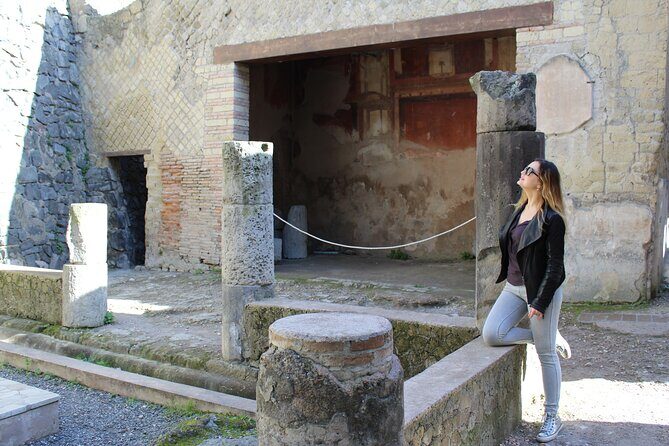
This tour starts at Parco Acheologico di Ercolano (Ercolano Scavi), ending back at the same meeting point. You’ll make your own way there and meet your guide in time for either the 8:30am or 12:30pm departure (based on the option you choose).
The biggest value-add is the guaranteed skip-the-long-lines approach with included admission. That matters because archaeological sites can be slow at entry, and your tour clock is limited. If you want to spend your time actually walking the streets and viewing interiors, you want to start without delay.
You also get a mobile ticket, so plan on having your phone handy. And yes, this is a real walking tour: the guidance is designed for a moderate fitness level, and you’ll want comfortable shoes. It’s not a sit-and-stare museum visit.
A final practical note: you’ll need a current valid passport on the day of travel. It’s the kind of requirement that’s easy to forget until check-in time.
Ancient streets first: amphitheater, Decumanus, and Palestra
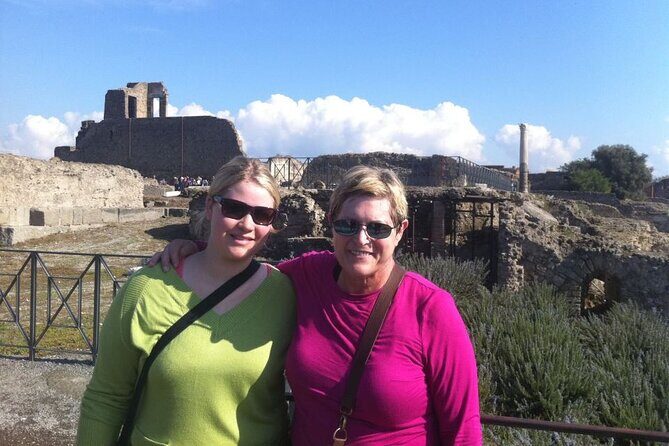
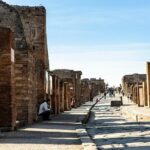
Once you’re through the entrance, the tour follows a logical route through the city’s core. You’ll start orienting yourself on the grid of ancient streets—especially the Decumanus, the main east-west thoroughfare—so the site stops feeling like random blocks of stone.
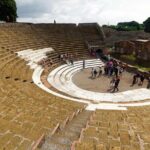
From there, your guide leads you to key public structures, including the amphitheater and the Palestra. These aren’t just “look, columns” stops. When your guide explains how they worked, you can picture what people did there: performances and crowds in the amphitheater, and athletic or training routines in the palestra area.
Two things to watch for as you walk:
- How the layout connects. Guides often help you understand which zones were social hubs versus everyday living areas.
- How preservation changes your imagination. When buildings and features are still recognizable, you can actually map daily life in your head instead of guessing.
Even if you’ve read about Roman life before, this part of the tour makes the city feel navigable. Without that direction, it’s easy to get lost in “pretty ruins” mode.
Thermal Baths, Forum, and Basilica: the Roman routine in context
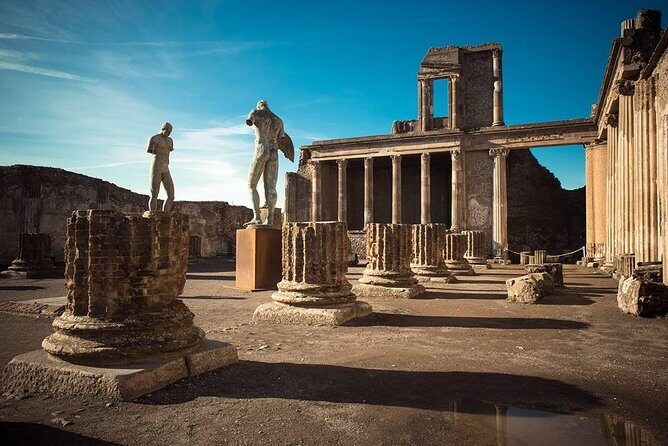
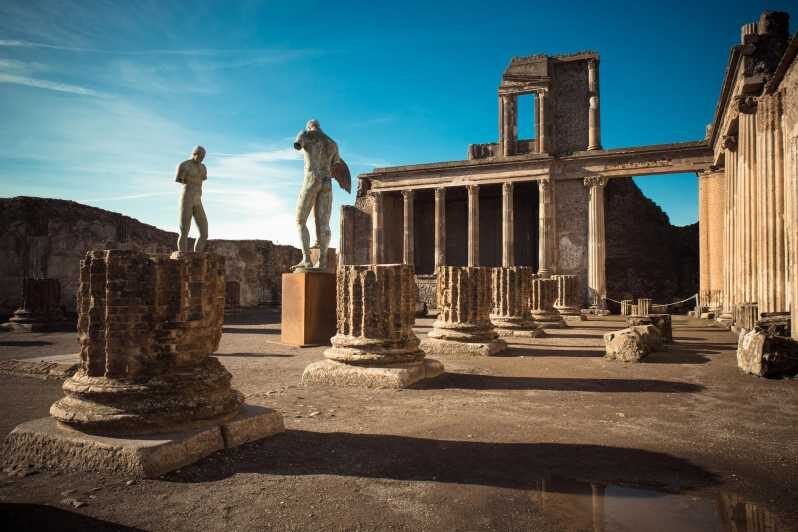
Next comes the civic and social heart. You’ll see the Forum, plus the Basilica, and you’ll also peek into the thermal baths area.
This is where a guided explanation pays off most. The ruins are impressive on their own, but the real learning happens when your guide connects function to layout: where people gathered, how the day moved from public space to leisure, and how buildings supported social behavior.
The thermal baths are especially interesting because they turn abstract “Romans had baths” into something concrete—plumbing spaces, room groupings, and the idea of bathing as part of a larger lifestyle. Your guide also helps you interpret the site in terms of use: what the area likely felt like when it was active.
As you’re walking, you’ll also hear stories that bring the place to life. In particular, some guides (including those with archaeology experience on site) can explain details you’d never know to ask about, and they often slow down at the right moments so the explanations land.
If you’re the type who likes to understand why something was built a certain way, this segment is a highlight.
Villas and mosaics: House of Neptune and Amphitrite
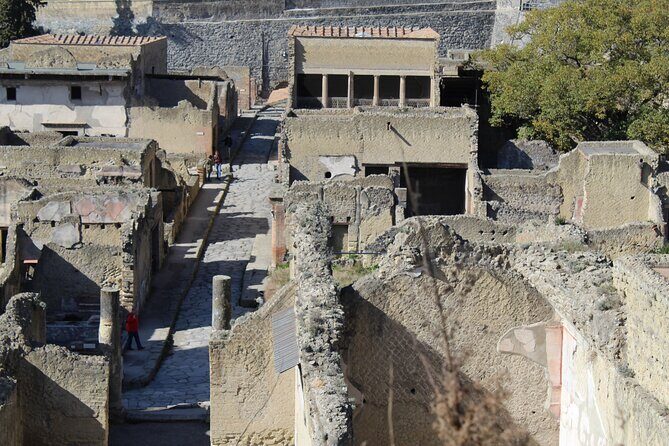
Then the tour shifts into the spaces people lived in—the places where art and identity showed up in the details. You’ll spend time in the grand seafront villa area and explore houses such as:
- House of Neptune and Amphitrite
- House of the Deer
- House of the Mosaic Atrium
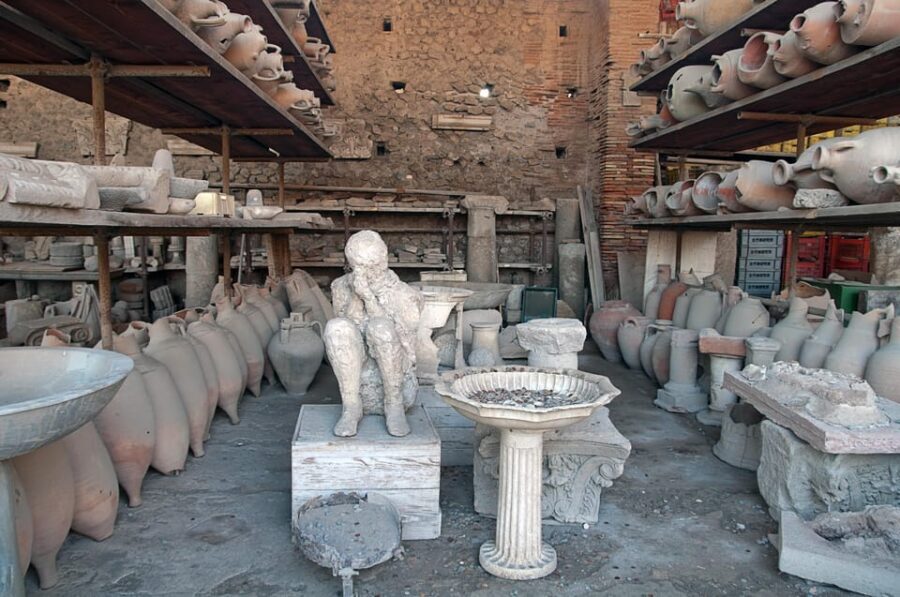
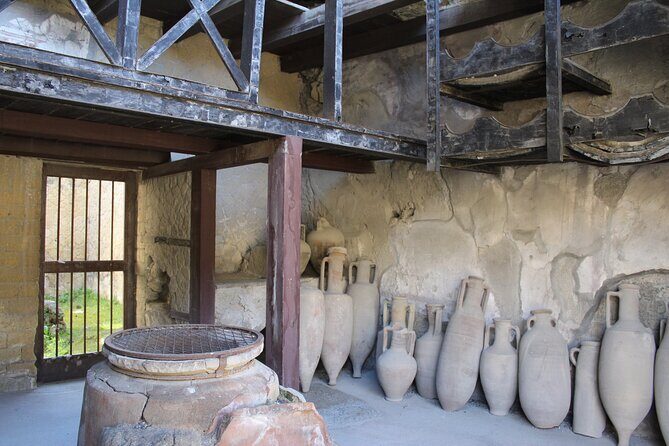
This is where Herculaneum’s preservation becomes the main character. You’ll admire colorful mosaics and the kind of preservation that can include carbonized items—objects that survived the eruption in a way that’s startling, because it helps you visualize what was in the rooms rather than just what the walls looked like.
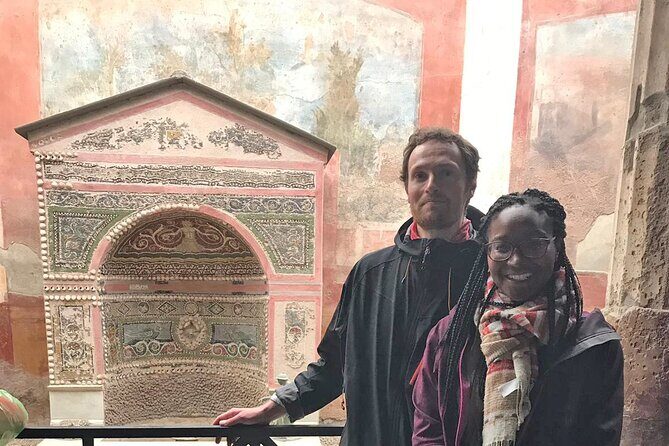
For the House of Neptune and Amphitrite, look for how the decoration works as a statement. A mosaic isn’t only decoration; it’s a message about wealth, taste, and connection to cultural themes. With a guide, you can connect iconography to the scene you’re standing in, not just admire it as color on stone.
And the House of the Mosaic Atrium is a strong stop for anyone who likes composition and design. You’ll see how patterns guide your eye across floors and openings, and you’ll get help interpreting what you’re looking at.
One small caution: this part can feel visually intense—mosaics everywhere, details to process. If you get overwhelmed at museums, pace yourself. Your guide can usually adjust their speed to your group’s energy, and private tours make that easier than group mass rotations.
Other private and VIP tours we've reviewed at Vesuvius & the Bay of Naples

Why the guides make the difference (and not just the ruins)
A common theme in this kind of site is that the person holding the narrative matters as much as the stones. Here, you’re not only working with a local guide—you’re also supported by professional art-historian style guidance, which helps with symbolism, decorative choices, and the meaning behind what you see.
In practice, that shows up as attention to the small stuff. One guide experience highlighted the way angel symbols can appear in decor, and how a good guide points those out in context. That’s exactly what you want: not more facts, but better facts tied to visible details.
Another standout detail from past guide performance: some guides are actual archaeologists who have worked on site. Even if your guide isn’t an archaeologist, the level of interpretation tends to be high—so you don’t leave thinking, That was cool, but I don’t know what I actually saw.
Ask yourself what you want from Herculaneum:
- If you want story + clarity, a guide-driven private tour is a strong match.
- If you want only “see the top spots,” you might not need this level of interpretation.
In my view, the difference comes down to comprehension. The site is complex. With an expert-led approach, you walk out understanding the city’s rhythms and the meaning behind what’s preserved.
Price and value: when $207.11 per person makes sense
At $207.11 per person for about 2 to 2.5 hours, this isn’t a budget outing. The value question isn’t only cost—it’s what you get for that cost.
Here’s what you’re paying for, in real terms:
- A private group experience (just your group), which usually means less waiting and better pacing.
- Guaranteed skip-the-line entry, so you protect your limited tour time.
- Multiple layers of expertise, including a local guide and professional art historian guidance.
- Admission ticket included, which removes one common add-on expense.
If you’re traveling as a family of four, the private setting can actually compare favorably in experience quality. You also get room to ask questions—useful if you have teens, classics students, or anyone who likes to understand details rather than just photograph.
If you’re solo, the price can feel steep. Still, if you care a lot about interpretation and want to avoid being rushed, it may still be worth it. My practical advice: make a short list of what you want to see—forum, basilica, thermal baths, and the mosaic villas—and ask yourself if you’d be satisfied doing those stops without a guide explaining what you’re looking at.
Who this private Herculaneum tour fits best
This tour is a great match if:
- You enjoy Roman ruins with context (not just visuals).
- You want to see mosaics and understand what they mean in the rooms and houses.
- You value personal attention, and you want questions answered as you walk.
- You’re visiting from Naples and want an organized, time-efficient way to handle a major UNESCO site.
It may be less ideal if:
- You’re extremely price-sensitive and want the lowest cost option.
- You hate walking and prefer a mostly seated experience.
- You already know Herculaneum deeply and plan to spend extra time on your own.
Also, it’s explicitly a moderate physical walk. Bring shoes that handle uneven ground, and plan on staying engaged—this is best enjoyed when you’re ready to look closely.
Should you book this Herculaneum Private Guided Tour?
If your goal is a guided “read” of Herculaneum—streets, public buildings, and decorated homes—this is a solid booking. The skip-the-line entry and the private pace protect your time, and the added art-historian framing helps you understand the visuals instead of just collecting photos.
I’d book it if you’ll appreciate details like mosaics, iconography, and how Roman spaces worked. I’d think twice if you’re only chasing the headline ruins and you’re comfortable wandering without expert interpretation.
FAQ
Where is the meeting point for this tour?
You meet at Ercolano Scavi (80056 Ercolano, Metropolitan City of Naples, Italy). The tour ends back at the same meeting point.
What time does the tour run, and how long is it?
The tour is about 2 hours (approximately) and is offered with morning or afternoon departures. Meeting is for an 8:30am or 12:30pm start time depending on the option you choose.
Is this tour private?
Yes. It’s a private tour/activity, and only your group participates.
Does the tour include admission, and can I skip the lines?
Admission is included, and you’re guaranteed skip-the-line entry to head inside the archaeological site.
What do I need to bring or be prepared for?
Wear comfortable shoes and have your current valid passport with you on the day of travel. You’re also asked to specify your mobile number with country code for emergency contact.
Can I cancel for a full refund?
Yes. Free cancellation is available if you cancel up to 24 hours in advance for a full refund.