REVIEW · NAPLES
From Naples: 2-Hour Herculaneum Kid-Friendly Tour
Book on GetYourGuide →Operated by Askos Tours · Bookable on GetYourGuide
Herculaneum feels close enough to touch. This 2-hour, kids-customized walk turns a huge archaeological site into a kid-size story you can actually follow, with tablets, reconstructions, and multimedia to keep the energy up. What I really liked: the guide’s kid-first explanations that make Roman life feel understandable, and the way you can step into multiple well-preserved spaces so kids aren’t just looking from the outside.
My other favorite part is the route itself: you get a real mix of streets, homes, public spaces, and even the beach area tied to the eruption. The main thing to consider is that it is a walking tour through the ruins, so you’ll want to bring shoes your kids can handle and be ready for some time on foot.
In This Review
- Key highlights I’d plan around
- Entering Herculaneum the kid-friendly way
- Meeting at Via dei Papiri Ercolanesi and getting oriented
- The 2-hour route: what you’ll see and why it works
- Northern Cardo: the street kids can actually follow
- Houses that tell stories: Skeletons, Neptune, and the Black Saloon
- House of the Skeleton
- House of Neptune and Amphitrite
- House of the Black Saloon
- Baths, food, and everyday routines
- Temple of Augustali and the forum: public life in miniature
- Temple of the Augustales
- The forum
- More homes on the route: Bel Cortile, Samnite House, and partitions
- Ending with the Marina gate terrace and the eruption beach
- Skipping lines and included admission: the value math
- Who this tour is best for (and who should reconsider)
- Should you book the 2-hour Herculaneum Kid-Friendly Tour?
- FAQ
- How long is the Herculaneum kid-friendly tour?
- Where do we meet and where does the tour end?
- Is transportation included?
- What is included in the price?
- What areas will we visit during the walk?
- Is the tour wheelchair accessible?
Key highlights I’d plan around
- Kid-first guiding that keeps attention on what kids can see and do, not just facts
- Tablets plus reconstructions that help you picture life in Roman Herculaneum
- A house-to-house route where kids can enter multiple homes and see different rooms
- Familiar categories for young minds: food spots, baths, temples, streets, and everyday commerce
- A “why it mattered” ending at the Marina gate terrace and the eruption victim area by the beach
Entering Herculaneum the kid-friendly way
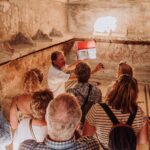
Herculaneum is one of those places where adults usually say wow fast, then get stuck explaining details for too long. This tour is built to avoid that trap. You’re not doing a slow, lecture-style museum experience. You’re moving through the ruins with a guide who focuses on kids’ questions and attention spans, using tools like tablets and reconstructions to make the site readable.
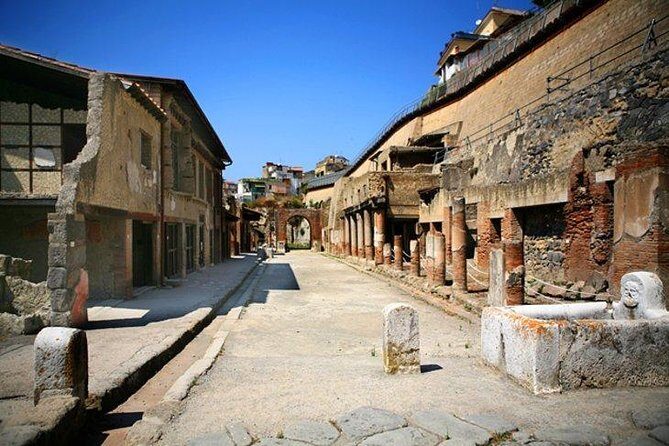
That matters because Herculaneum is unusually “intact” for an ancient city that was buried and then uncovered. You can stand in the kind of spaces that were once everyday. A kid can point at a wall, a doorway, or a floor detail and feel like the story is right there, not floating in a textbook.
And yes, it’s still archaeology. You’ll see real remnants: street segments, rooms, entrances, and architectural features. The difference is that the guide translates what you’re seeing into something kids can grasp in real time.
Other Herculaneum guided tours and tickets we've reviewed at Vesuvius & the Bay of Naples

Meeting at Via dei Papiri Ercolanesi and getting oriented
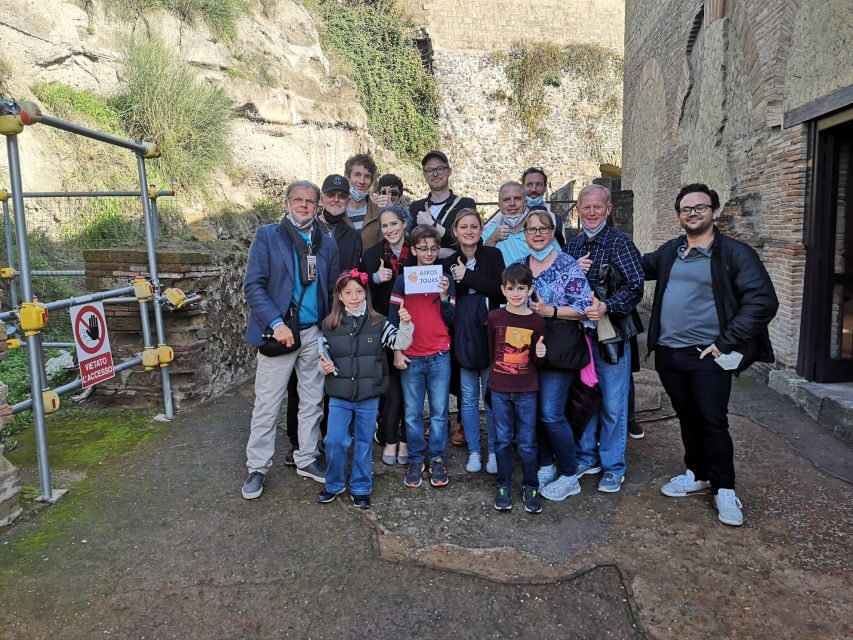
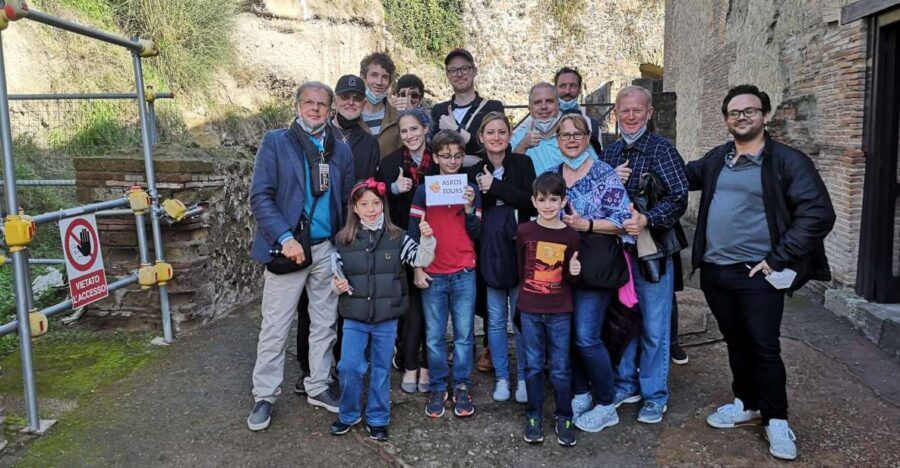
You meet at the ticket office area at the Herculaneum ruins, at Via dei Papiri Ercolanesi, 21, where the guide holds a sign with your name. That small detail helps a lot when you’re traveling with children because you’re not wandering, guessing, or getting separated.
From there, you start walking immediately. The tour is private, and it stays to a tight 2-hour window. That short duration is a hidden advantage with kids: you can cover meaningful ground without turning the day into a long slog.
This is also a good format if your family wants to see Herculaneum but doesn’t want to over-plan. No transportation is included, so you’ll be responsible for getting to the meeting point. Once you’re there, the tour flow is straightforward: start at the ruins, walk the route, and finish back at the same meeting location.
The 2-hour route: what you’ll see and why it works
This tour is designed like a guided storyline. You pass through the city by following key areas that shaped everyday life in Roman times. For kids, the “why” behind each stop is often the real hook—food is food, baths are baths, a forum is where people gather, and houses have rooms with clues about daily routines.
You’ll move through a sequence of spaces, and you’ll get a few moments in each one to look, listen, and connect the dots using the guide’s kid-focused approach.
A key thing I appreciated is how the stops are varied. You’re not stuck in one house for the whole time, and you’re not only walking through corridors of stone. The mix helps kids stay engaged because the scene changes often.
Northern Cardo: the street kids can actually follow
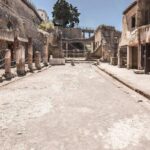
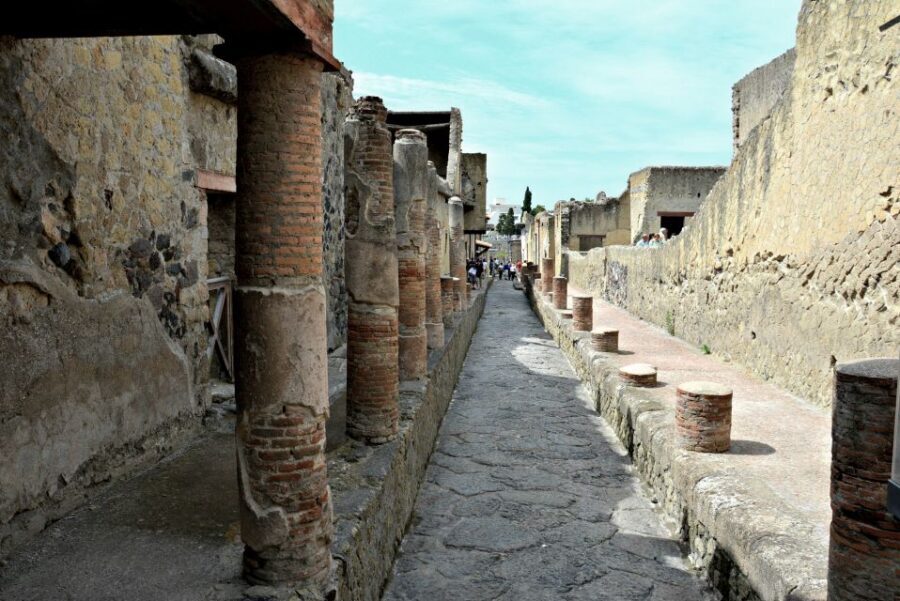
One of the first big ideas you’ll track is the Northern Cardo, the north-south road spine of the city. A street sounds boring until you realize it’s a way to give kids a sense of direction. Once you have the main road in your head, the rest of Herculaneum feels less like random ruins and more like a place with a layout.
This stop also helps you teach a simple concept: an ancient city wasn’t just buildings. It was movement—people walking to food, to baths, to public spaces, and back home again.
If your kids like to look for patterns, this road orientation is a smart way to keep them feeling like they’re in the know instead of just walking.
Houses that tell stories: Skeletons, Neptune, and the Black Saloon
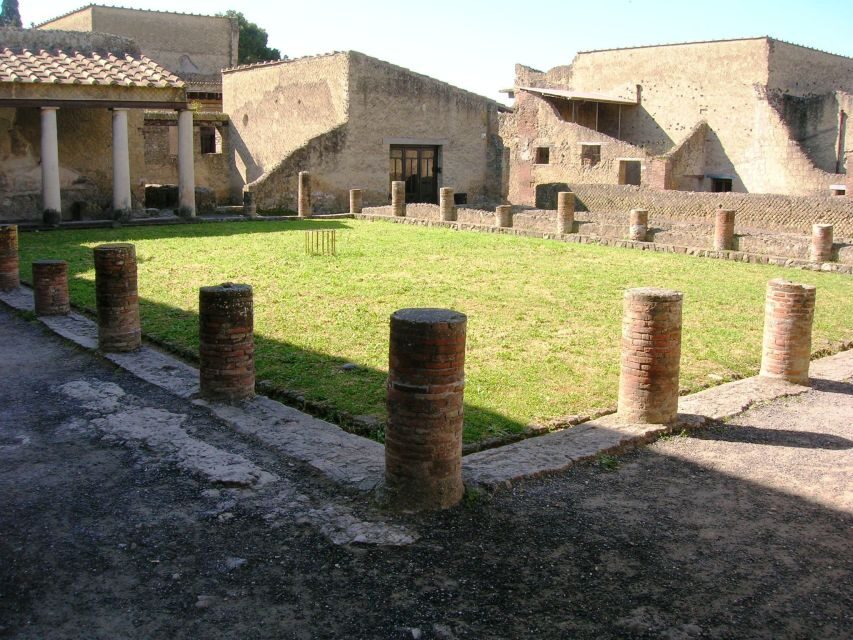
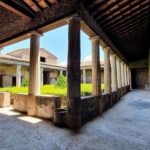
If you’re bringing kids, houses are usually the star of the show. This tour leans into that. You’ll enter multiple homes and key spaces, and the guide’s job is to connect what you’re seeing to what it would have meant to live there.
Other tours departing from Naples we've reviewed at Vesuvius & the Bay of Naples
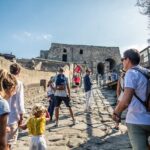
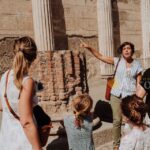

House of the Skeleton
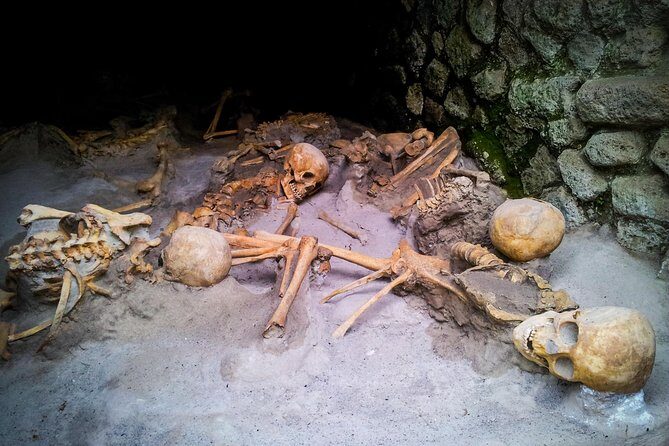
The House of the Skeletons is one of the emotional and memorable stops. It’s also a place where a kid may ask the big question right away. The guide’s job is to handle that with sensitivity while still keeping the focus on the reality of the site and how people died during the eruption.
Practical tip: expect that this stop can feel intense for some families. If your child gets anxious easily around human remains, you may want to mentally prepare for a short, serious moment and then plan to move on quickly afterward.
House of Neptune and Amphitrite
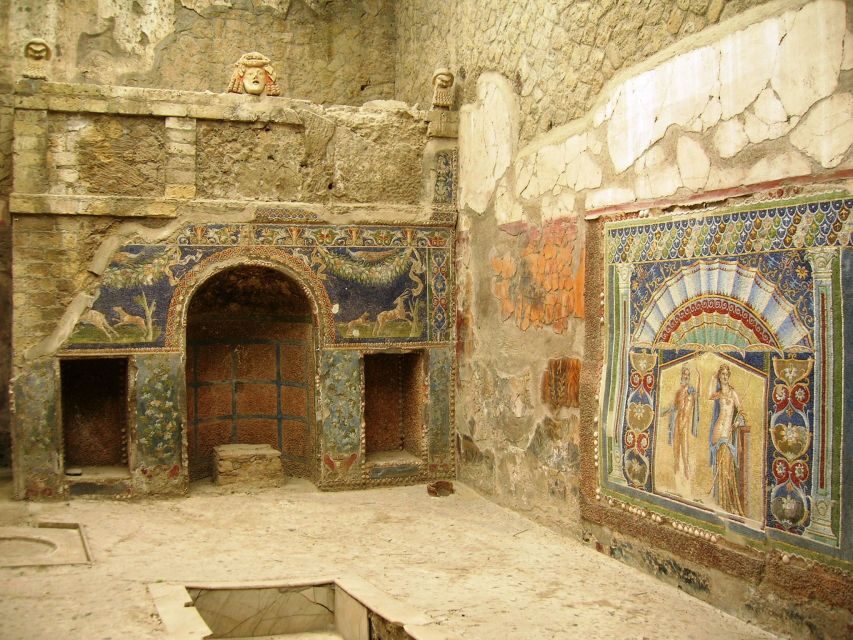
Next, you’ll see the Casa di Nettuno ed Anfitrite, a house connected to Roman decorative themes. For kids, this kind of stop is often a break from the heavier content. It gives them something to notice beyond survival—artful choices, household spaces, and the idea that people lived with style, not just survival.
House of the Black Saloon
Then there’s the Casa del Salone Nero. A dramatic name like that prompts questions, and the guide can turn those questions into learning: what a reception area might have meant, why certain rooms matter in the layout, and how daily life wasn’t only practical. It had social rhythms, too.
Overall, these house visits are a big reason this tour feels kid-friendly instead of overwhelming. Kids aren’t stuck in one long “look at ruins” phase.
Baths, food, and everyday routines
Roman life becomes real when you cover the basics: where people ate, where they bathed, and where they gathered.
You’ll pass the thermopolium, a type of restaurant or food counter. For kids, this is a simple and familiar concept: a place to grab food on the go. Even if they don’t connect the ancient details right away, the idea of a quick meal spot is easy to grasp.
You’ll also see the men’s thermal bath. Baths can be a great “body comfort” topic for kids because it’s not abstract. It’s an everyday routine: wash, relax, talk, move on. It helps them map Roman habits onto something recognizable.
The guide’s tablets and reconstructions help here. Without that kind of visual support, some bath and food-counter details can be harder to picture. With it, kids can connect fragments to the larger function of the spaces.
Temple of Augustali and the forum: public life in miniature
Herculaneum isn’t only private homes. It also had public identity. The tour includes the Sacellum of the Augustales and the forum, so kids get a sense of how community spaces worked.
Temple of the Augustales
The Temple of Augustali (Sacellum of the Augustales) introduces the idea that there were religious or civic groups with their own space. For kids, religion works better when it’s explained as part of daily community life rather than as a distant concept. The guide can frame what the space likely looked like in use and why it mattered to the people inside it.
The forum
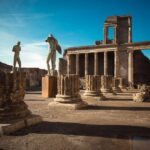
Then you’ll reach the forum, the main gathering square. This is where kids tend to understand the city as a social place. People met, events happened, and the city had a heartbeat beyond the streets and homes.
If your child loves “where would people go” questions, the forum is your answer zone.
More homes on the route: Bel Cortile, Samnite House, and partitions
This is a tour that keeps the “house variety” coming, and that’s a smart strategy for kids who lose patience with repetition.
Along the way you may visit:
- House of Bel Cortile
- Samnite House
- House of the Wooden Partition
- House of the Bucks
- Plus the bakery and gym
I like that you get functional stops mixed in with home visits. The bakery is one of those places kids can picture quickly: food production and daily supply. The gym adds motion and routine, like a Roman version of daily exercise and social time.
The House of the Wooden Partition is the kind of detail that feels almost puzzle-like. Kids often enjoy noticing differences between spaces, and a partition detail becomes a clue: how the room might have been used, and how privacy or function might have been organized.
Ending with the Marina gate terrace and the eruption beach
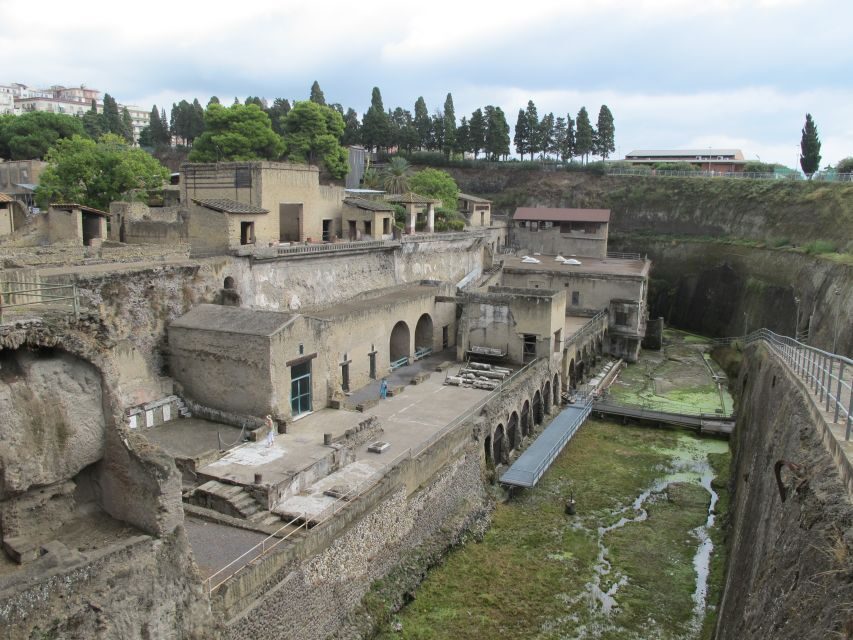
The final segment is where the tour becomes unforgettable. You’ll head toward the Marina gate terrace of Marcus Nonius Balbus, and then reach the beach area where hundreds of skeletons of the victims of the eruption were discovered.
This ending works for two reasons. First, it gives the city a human scale. You’re not only seeing architecture; you’re seeing the consequence of a catastrophe. Second, the emotional weight is balanced by a guided approach that helps kids keep moving through the site rather than freezing on one spot.
Still, keep expectations realistic. Some kids will find this part scary or sad, even with a guide handling the tone. If you know your child gets upset with heavy topics, plan for a short decompression afterward (water, snack, a quiet moment before you leave the ruins).
Skipping lines and included admission: the value math
At $206.75 per person, this isn’t a budget add-on. So I look hard at what’s included.
Here’s the clear value case:
- A local certified guide specialized in tours with children
- Herculaneum admission fee included (16 euros each)
- A private group
- English and Italian guiding
- Tools to aid understanding, including tablets and reconstructions
- A walking tour focused on key highlights, not a random shuffle
What’s not included: transportation and meals. You also spend your time on foot, which means this tour is best when you’re already in the right area and ready to walk.
In practice, families often justify the price because you’re buying two things at once: the access (admission is part of it) and the kid-focused teaching style. If you’ve ever tried to do Herculaneum without a guide with your children, you know how easily it turns into “walk and hope they don’t get bored.” This tour is built to prevent that.
Who this tour is best for (and who should reconsider)
This tour fits best if:
- Your kids are curious and you want a guided, interactive style with tablet and media support
- You want a targeted 2-hour visit instead of spending half a day wandering
- You’d like a private format so your guide can adjust to your kids’ pacing and questions
It may not be the best fit if:
- Your family prefers long, slow sightseeing where you can stop and roam independently for extended periods
- Your kids struggle with walking ruins for a couple of hours
- You’re traveling with someone who needs very specific mobility accommodations, since the tour info contains a wheelchair accessibility note and also says it’s not suitable for wheelchair users. I’d treat that as a signal to contact the operator before booking so you’re not surprised on arrival.
Should you book the 2-hour Herculaneum Kid-Friendly Tour?
I’d book it if you want Herculaneum to feel like a story your kids can follow. The biggest selling point isn’t just seeing famous spots. It’s the way the guide shapes the route for children—mixing streets, houses, baths, public life, and an eruption-linked ending, then using tablets and reconstructions to make the past readable.
If your kids get bored quickly in museums or you know your family needs structure to enjoy ruins, this tour is a smart use of time. It’s also a good choice when you want a highlight-rich visit that still feels manageable.
If your family would rather do everything at your own pace, or if you’re avoiding emotionally heavy content, you may want to consider a different approach to Herculaneum. But for most families with children, this is the kind of tour that turns a challenging site into a kid-friendly adventure.
FAQ
How long is the Herculaneum kid-friendly tour?
The tour lasts 2 hours.
Where do we meet and where does the tour end?
Meet the guide at the ticket office of the Herculaneum ruins at Via dei Papiri Ercolanesi, 21. The tour ends back at the same meeting point.
Is transportation included?
No. This is a walking tour and no transportation is included.
What is included in the price?
A local certified guide specialized in tours with children and the Herculaneum admission fee (16 euros each). Skip-the-ticket-line is also included.
What areas will we visit during the walk?
You’ll cover major parts of Herculaneum, including the Northern Cardo, multiple houses (like the House of the Skeletons, Casa di Nettuno ed Anfitrite, and Casa del Salone Nero), the thermopolium, men’s thermal bath, the Temple of Augustali and forum, plus stops like the bakery and gym. The tour also reaches the Marina gate terrace of Marcus Nonius Balbus and the beach where victims were discovered.
Is the tour wheelchair accessible?
The information includes both a wheelchair accessibility note and a note that it is not suitable for wheelchair users. To avoid surprises, check directly with the provider (Askos Tours) before booking.