REVIEW · NAPLES
3-Days Audio Guide for Pompeii, Herculaneum, Vesuvius and Naples
Book on Viator →Operated by ITGUIDES app per smartphone · Bookable on Viator
Naples feels calmer when the guide is in your pocket. This 3-day ITGUIDES audio set covers Naples, Pompeii, Herculaneum, and Vesuvius, so you can move at your pace instead of fighting tour groups. I especially like that it includes a big Sansevero Chapel (Veiled Christ) section, plus it’s designed to work offline after you download the content.
Another thing I like: the content is produced and supervised by Rosella Gallo, a professor of Art History at the Academy of Fine Arts in Rome. It’s also set up with a map of points of interest and notes that help you navigate when GPS can get shaky inside archaeological areas. One consideration: admission tickets are not included for most stops, so you’ll still want to plan entry tickets separately where required.
In This Review
- Key highlights you’ll care about
- Your phone as the guide: how this 3-day audio plan works
- Day 1 in Naples: Chiesa del Gesu Nuovo and the baroque-to-art-history mood
- Sansevero Chapel (Veiled Christ) timing: getting more from 20 minutes
- Santa Chiara cloister: a 1-hour pause that makes the day feel worth it
- Pompeii Archaeological Park: 2 hours that fit real-world crowds
- Herculaneum (Ercolano) for 2 hours: daily life, not just famous ruins
- Vesuvius National Park: 90 minutes for the famous view of the Gulf of Naples
- Value check: why $11.45 can be a smart budget move
- Practical tips so the audio guide actually feels easy
- Should you book this Pompeii, Herculaneum, Vesuvius audio package?
- FAQ
- How much does the 3-day audio guide cost?
- Where does the experience start?
- How long is the experience?
- Is the audio guide available offline?
- Do I need tickets for each stop?
- What stops are included in Naples?
- What stops are included outside Naples?
- Are GPS directions reliable in archaeological areas?
- Is this a private activity?
- What is the cancellation policy?
Key highlights you’ll care about

- Offline audio after downloading to your smartphone, so you’re not stuck with bad signal
- Sansevero Chapel focus including the Veiled Christ, where many generic guides go light
- Simple, clear narration that helps you go through big sites without being in a group
- GPS warning for ruins plus a reminder to use the maps you receive at ticket counters
- Real value: priced at $11.45 and designed to save versus buying at the ticket office
Your phone as the guide: how this 3-day audio plan works
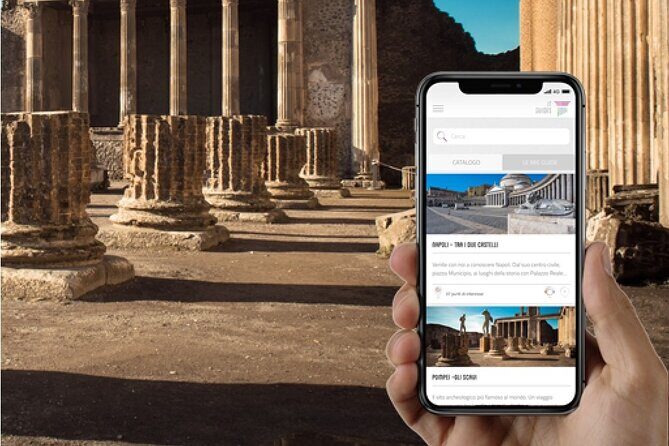
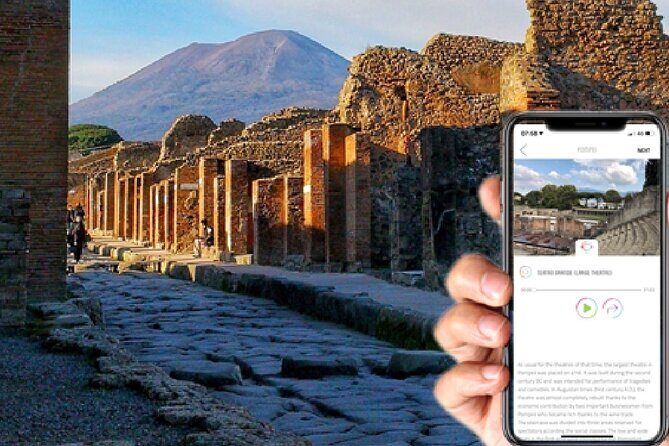
This is a mobile-ticket experience built for independent sightseeing. You don’t have to join a paced walking tour. Instead, you follow the route by listening to audio tied to the specific stops across three days. That matters in Naples, where crowds can move in bursts and lines can grow fast. With audio, you can slow down for a few minutes when something catches your eye, then speed up when you want to keep momentum.
The audio guide is meant to be a balance of history and curiosity, not a lecture you half-forget while walking. It also comes with multimedia content, which is a nice touch when you’re staring at ruins and trying to “see” how spaces used to work. You’ll use the smartphone for everything, and the best part is that the content can also be used offline. That’s a lifesaver at Pompeii and Herculaneum, where service can be spotty.
One practical note: the guide includes a map with points of interest. The instructions also warn that in archaeological sites, phone GPS may not be accurate, so you shouldn’t treat it like a GPS taxi. Use the maps you get at the ticket office too—this is exactly the kind of small step that prevents wasted time.
It’s listed as a private activity for your group, and you’ll start and end back at the meeting point: Piazza Monteoliveto, 1, 80134 Napoli. The operating window shown is 10:00 AM–5:00 PM, Monday through Sunday for the listed date range, which helps you plan visits without scrambling around odd hours.
Other Vesuvius skip-the-line tickets and audio guides we've reviewed at Vesuvius & the Bay of Naples

Day 1 in Naples: Chiesa del Gesu Nuovo and the baroque-to-art-history mood
Day 1 is Naples in full contrast mode: church facades, art, cloisters, and classic “start early and wander” energy. The first stop is Chiesa del Gesu Nuovo, described as the most famous Baroque church in Naples, with a 15-minute slot. Admission for this one is included. That’s handy because it gives you one “easy win” on day one—you can focus on the audio experience without immediately worrying about separate entry.
From there you move to Complesso Monumentale Sant’ Anna Dei Lombardi (20 minutes). This spot is framed as a Renaissance jewel in the heart of Naples. Admission is not included, so treat it as a listen-and-see stop that still needs your ticket plans handled separately.
Then the route brings you to Museo Cappella Sansevero for 20 minutes. This is the big draw because the Naples audio guide includes a large section dedicated to the Veiled Christ (Cristo Velato). Even if you’ve seen photos before, the real value of audio here is pacing: you can take your time looking at what’s in front of you, then let the narration explain why it’s famous.
Why that order works: the day builds from Baroque (high drama) into Renaissance (precision and refinement) and then into an 18th-century art landmark (where technical skill becomes a story). It’s a smooth mental ramp, and it keeps you from feeling like you’re bouncing between unrelated sights.
Sansevero Chapel (Veiled Christ) timing: getting more from 20 minutes
Twenty minutes sounds short until you remember this is audio-led pacing. The goal isn’t to “study” every detail. It’s to help you look better—so the sculptures and artwork make more sense while you’re standing there.
This is also where I think the offline advantage really pays off. If you’re relying on signal while inside a museum-like environment, things can get frustrating fast. With offline support, you can focus on the space instead of troubleshooting your phone.
Also, the content being supervised by Rosella Gallo adds confidence. When you’re dealing with landmark art, you want narration that’s careful and structured. The reviews you’ll see for this guide lean hard on clarity and usefulness in Pompeii. That same approach tends to matter in Sansevero too—because without a guide, it’s easy to admire a sculpture and miss the why.
One more practical tip: if you’re planning to buy tickets for multiple sites on day one, try to do that earlier rather than later. Not because you’ll need to sprint—just because Naples can stack up small delays. With audio, the experience stays enjoyable even if you’re a bit flexible, but it’s nicer when everything is already lined up.
Santa Chiara cloister: a 1-hour pause that makes the day feel worth it
Stop 4 on day 1 is the Complesso Monumentale di Santa Chiara with an estimated 1 hour and admission not included. The description calls it the most beautiful cloister in the world. That claim may be dramatic, but cloisters in this part of Europe often reward slow walking and quiet looking. One hour gives you breathing room to move at a comfortable speed and not feel rushed by the next stop.
The value of using audio in a cloister is simple: it turns a pretty space into a place you can understand. You can listen, then look, then listen again. That loop is what makes a short visit feel substantial. You’ll also appreciate audio here if you like architecture or religious art but don’t want to take notes or read big panels.
Since admission isn’t included, you’ll want to handle your ticket planning beforehand. If you’re trying to keep your budget tight, remember that the package is priced low, but not every stop’s entry is covered. In other words, the savings come from buying the audio package, not from walking into every site for free.
If day one starts to feel like too much indoor time, you can still manage it. Audio lets you shorten listening and focus on the parts that grab you most. That’s the benefit of self-paced guiding.
Pompeii Archaeological Park: 2 hours that fit real-world crowds
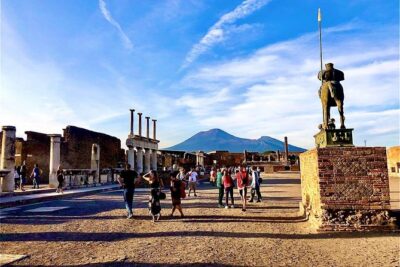
Day 2 is Pompeii Archaeological Park for about 2 hours. Admission isn’t included. Pompeii is the big name you came for, and it’s also the place where a “generic” guide can fail you. With audio, you can avoid the classic problem of being pushed along by a group that wants to hit everything. Instead, you can spend your 2 hours on what you actually want to see and still get context.
What I like about this audio approach at Pompeii is how it’s built for understanding without hand-holding. The narration is designed to explain things simply and clearly, so you don’t need to be in a tour bus to feel oriented. That matters because Pompeii is huge, and without a mental map, you can end up wandering while thinking you’re missing the point.
There’s also an emphasis on making navigation workable. The guide includes points of interest, but it warns that GPS may not be precise in archaeological zones. Translation: you should combine the audio prompts with the maps you get at the ticket office. This combination keeps your route logical instead of turning into a “where am I now?” game.
Two-hour pacing is also realistic. You could spend an entire day here, but most people don’t want to burn out. A focused 2-hour audio visit gives you a strong “first read” on the city while leaving you energy to enjoy the rest of your trip.
If you’re visiting with a phone battery that’s already stressed, this is the time to be careful. Download offline before you enter, and keep your brightness sensible. Audio is simple tech, but it still needs juice.
Other Herculaneum guided tours and tickets we've reviewed at Vesuvius & the Bay of Naples


Herculaneum (Ercolano) for 2 hours: daily life, not just famous ruins
Day 3 starts with Parco Acheologico di Ercolano for about 2 hours. Admission isn’t included. Herculaneum is the quieter counterpoint to Pompeii, and the guide frames it as giving you a complete view of what life was like in a 2000-year-old Roman city. That’s a helpful promise because it signals what to listen for: how people lived, not only what collapsed.
Audio helps here because daily-life explanations are often missed when you’re distracted by scale. Even if you know Pompeii’s reputation, Herculaneum can surprise you in how it feels—smaller, more intimate, and often easier to take in without feeling overwhelmed.
The same practical GPS reminder applies. You’ll get more from the site if you treat the audio map as guidance, not as a perfect locator. Use your ticket-office maps as backup and let the narration point you to meaningful features. That’s the difference between “walking through ruins” and “building a picture of the place.”
At two hours, you can cover a thoughtful chunk without feeling like you have to see everything. And because this is self-led, you can linger when something catches your attention, then move on when you want to save energy for Vesuvius.
Vesuvius National Park: 90 minutes for the famous view of the Gulf of Naples
The second part of day 3 is Vesuvius National Park with about 1 hour 30 minutes. Admission isn’t included. The description calls it one of the most famous and evocative volcanoes, with a breathtaking view of the Gulf of Naples. That’s exactly the kind of place where audio can add something even when the scenery is already doing the heavy lifting.
You’ll use the narration to make the volcano more than a backdrop. Even without getting lost in technical details, a good audio track can explain why the views and volcanic setting are so significant. It also helps you pace yourself for the climb and viewpoints. Audio doesn’t slow you down or speed you up—it just gives your eyes something to connect to while you’re taking in the panorama.
One practical thought: because it’s a climb-and-stand environment, you’ll want to keep your listening time flexible. If you’re tired, you don’t have to listen straight through. If the wind or temperature is intense, you can pause and just enjoy the view.
And again, offline matters. On volcanic slopes, signal can be unpredictable. Offline keeps the experience steady so you’re not stuck with silent time when you still want guidance.
Value check: why $11.45 can be a smart budget move
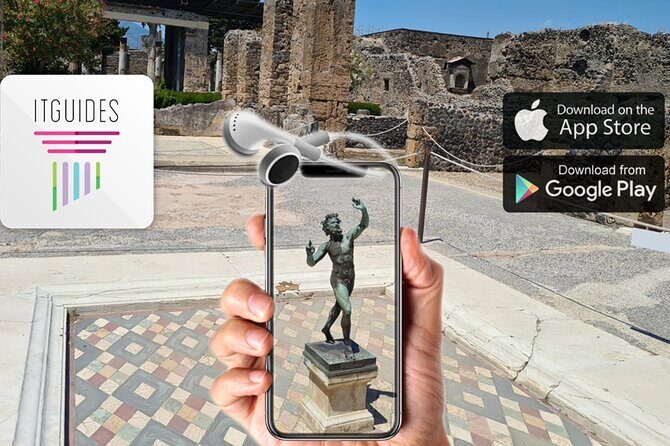
Let’s talk money. The price is listed at $11.45 per person for the 3-day package, and the setup is meant to save you about 50% compared to audio guides sold at the ticket office. Reviews also point out a real-world pattern: audio guides sold on-site can cost around 8–10 euros each. If you’re planning to do Naples plus both Pompeii and Herculaneum (and then Vesuvius), buying separate audio guides individually can quietly add up.
This is where value comes from: you’re not paying for a single stop. You’re paying for one audio system that follows you through multiple major areas. That’s the difference between “cheap audio” and “cheap access to guidance everywhere you go.”
I also like that the guide is designed for independent use: you’re not paying for a staff member to follow you around. Instead, you get a consistent explanation style across sites. The same reviews that praise Pompeii also highlight practical features like a simple, intuitive app and a pleasant voice. If you’ve ever tried to use a messy audio app in crowds, you’ll understand how much that matters.
One more value point: offline capability and a map of points of interest reduce wasted time. Time is the hidden cost of travel. When audio helps you find your way quickly and understand what you’re seeing, that’s where the bargain turns into a real win.
Practical tips so the audio guide actually feels easy
A self-paced audio plan only works if you set yourself up for success. Here’s how I’d make it click quickly:
- Download offline content before your first stop. Don’t wait until you’re already inside a crowded place.
- Bring a charged phone and a simple audio setup (headphones you already know work). Audio lives and dies by battery.
- Use the points-of-interest map as a guide, not a dictator. In ruins, GPS may not be accurate—use the maps provided at ticket offices too.
- Plan your ticket reality early. Admission is included only for Chiesa del Gesu Nuovo; the other stops list admission as not included.
- Keep your listening flexible. For big sites like Pompeii and Herculaneum, it’s fine to take shorter listening “chunks” instead of staying locked in nonstop.
- Respect daylight and opening hours. With the activity window shown as 10:00 AM–5:00 PM, try not to treat it like an all-day ghost app.
If you like choosing your own pace and you’re okay doing a bit of self-navigation, this experience fits that style perfectly.
Should you book this Pompeii, Herculaneum, Vesuvius audio package?
Book it if you want a low-cost way to cover four top Naples-area sights without being pinned to a tour schedule. It’s a strong choice for budget-minded travelers, couples, and anyone who prefers freedom over a group pace. The biggest selling points are the offline-ready audio, the clear explanations, and the fact that the audio plan is built to help you handle large sites like Pompeii without getting overwhelmed.
Skip it (or at least double-check your plan) if you’re the type who really wants an in-person guide explaining everything step-by-step. Also, factor in that admission isn’t included for most stops, so you’ll still need to manage entry tickets yourself.
If you’re trying to get maximum guidance per dollar while keeping control of your time, this audio package is exactly the kind of smart travel tool that makes an intense region feel manageable.
FAQ
How much does the 3-day audio guide cost?
It’s priced at $11.45 per person.
Where does the experience start?
The meeting point is Piazza Monteoliveto, 1, 80134 Napoli NA, Italy.
How long is the experience?
The duration is about 3 days.
Is the audio guide available offline?
Yes. You can download the contents to your smartphone and use it offline.
Do I need tickets for each stop?
Admission is included for Chiesa del Gesu Nuovo. Admission is not included for the other listed stops.
What stops are included in Naples?
The day 1 stops are Chiesa del Gesu Nuovo, Complesso Monumentale Sant’ Anna Dei Lombardi, Museo Cappella Sansevero, and Complesso Monumentale di Santa Chiara.
What stops are included outside Naples?
Day 2 includes Pompeii Archaeological Park. Day 3 includes Parco Acheologico di Ercolano and Vesuvius National Park.
Are GPS directions reliable in archaeological areas?
The information notes that phone GPS may not be accurate in archaeological sites. You should also use the maps provided at the ticket office.
Is this a private activity?
Yes. It’s listed as a private tour/activity, so only your group will participate.
What is the cancellation policy?
You can cancel for a full refund up to 24 hours before the experience’s start time. Free cancellation applies, and cancellations are based on the local time of the experience.