REVIEW · NAPLES
Naples: Herculaneum Entry Ticket with Digital Audio Tour
Book on Viator →Operated by Vox City International Ltd · Bookable on Viator
Herculaneum feels like time froze. With fast-track entry and a digital audio guide, you can walk Roman streets at your own pace and hear guided-style stories in multiple languages. I especially like how well Herculaneum’s preservation lets you picture everyday life, and I like the convenience of having a route you can follow without joining a group. One thing to consider: the audio app and GPS can be hit-or-miss, and some stops may feel limited compared with what the ruins offer.
You’ll spend about two hours wandering the Archaeological Park of Ercolano with a map built into the experience. The park is laid out so you’re not staring at a fence wondering what you’re looking at—you’re meant to move from villa to street to market-like areas, with audio stopping you at key points. If you want constant, spot-on navigation, you may find you need extra help from the park’s signage or your own notes.
In This Review
- Key highlights to know before you go
- Arriving at Herculaneum: Corso Resina logistics that matter
- Walking the ruins with a digital audio map
- Why Herculaneum feels more intimate than Pompeii
- Parco Acheologico di Ercolano: what you’ll actually see
- The digital audio guide: what works and what to watch for
- Price and value: is $29.04 worth it?
- Who should book this Herculaneum entry ticket?
- Should you book it for your Naples trip?
- FAQ
- What’s included with the Herculaneum entry ticket?
- Do I need to bring my own headphones?
- Do I need a mobile device to use the audio guide?
- Where do I redeem the e-ticket?
- How far in advance should I download the audio guide?
- What are the opening hours?
- Is there a cancellation window?
Key highlights to know before you go
- Fast-track entry saves time at the gate when you’re arriving in peak visiting hours
- Multilingual audio is provided in English, French, Italian, and Spanish
- Self-paced route gives you control over how long you linger in quieter corners
- GPS and marker syncing may be imperfect, so bring patience and a charged phone
- Higher preservation than Pompeii makes Herculaneum feel more intimate and more readable
- Download via QR code before arrival helps you start smoothly
Arriving at Herculaneum: Corso Resina logistics that matter

This ticket is built around getting you into the Archaeological Park of Herculaneum at Corso Resina, 187 (Ercolano NA). The redemption point is the park itself, so you don’t have to hunt for a separate pickup office. That matters in Naples area traffic, where “close by” can still mean “slow.”
You’ll get an e-ticket, and it’s designed to reach you twice: it becomes available to download within 24 hours before your date, and it’s also delivered via WhatsApp from Vox City. When you arrive, you go straight to entry and show the ticket on your mobile device. Staff check tickets by scanning what’s on your screen.
Two timing details are worth planning around. First, last entry is 90 minutes before closing. Second, the park hours change by season:
- From 03/16/2025 to 10/14/2025, it’s 8:30 AM–7:30 PM daily
- From 10/15/2025 to 03/15/2026, it’s 8:30 AM–5:00 PM daily
Also note: it’s listed as near public transportation, which is a real help if you’re doing this as part of a Naples day.
Practical tip: scan the QR code to download the audio guide prior to arrival. Doing that at home (or at least before you reach the entry line) reduces stress once you’re standing there ready to go in.
Other Vesuvius skip-the-line tickets and audio guides we've reviewed at Vesuvius & the Bay of Naples



Walking the ruins with a digital audio map
This experience is centered on a self-guided route inside Parco Acheologico di Ercolano. The audio is digital, and you’re meant to use a digital map so you can move between key areas without guessing.
In theory, it works like this: you download the audio guide, follow the map, and the app brings you stories as you reach different locations—Roman roads with stone slabs, the layouts around villas, and more. It’s the kind of setup that’s ideal for travelers who like to go at a human pace: stop when something catches your eye, skip what doesn’t, and take photos without negotiating with a group.
In practice, the app experience can be uneven. I’d plan for two possible frustrations. The first is GPS accuracy, which can make the app feel unsure about where you are. The second is syncing, where the audio stops don’t always seem to line up perfectly with the markers you’re standing near. If you run into that, don’t panic—just use what’s visible around you and keep your phone handy for quick re-checks.
Because the audio guide depends on your device, you’ll want to bring basics that aren’t included. The ticket does include multilingual commentary, but it does not include a mobile device or headset. Bring your own phone and headphones/earbuds, and keep your battery topped up.
Why Herculaneum feels more intimate than Pompeii

Herculaneum is often described as the calmer sibling of Pompeii, and that’s not just marketing. The big reason is preservation. The eruption buried the town under volcanic ash in 79 AD, and a lot of material survived in a way that makes the ruins easier to read. You get a more direct sense of how people lived.
You’ll also notice something else: Herculaneum has more parts yet to be excavated. That changes the feel. Instead of feeling like every corner has been turned into a photo stop, you may experience more “incomplete” or “archaeology in progress” energy. For me, that’s part of the appeal—it feels closer to the real process of discovery rather than a fully staged museum floor.
The overview also points to preservation of objects you wouldn’t expect to survive: doors, papyrus, and even food. That’s a mind-shift. You’re not only looking at stone walls; you’re reminded that organic and fragile things existed—then got frozen in time under ash.
And compared with Pompeii, the site offers a more intimate glimpse into Roman life thanks to higher preservation and a stronger display of wealth in places like villas. If you’re the type of traveler who likes “this is what their daily world looked like,” Herculaneum’s layout supports that.
Parco Acheologico di Ercolano: what you’ll actually see
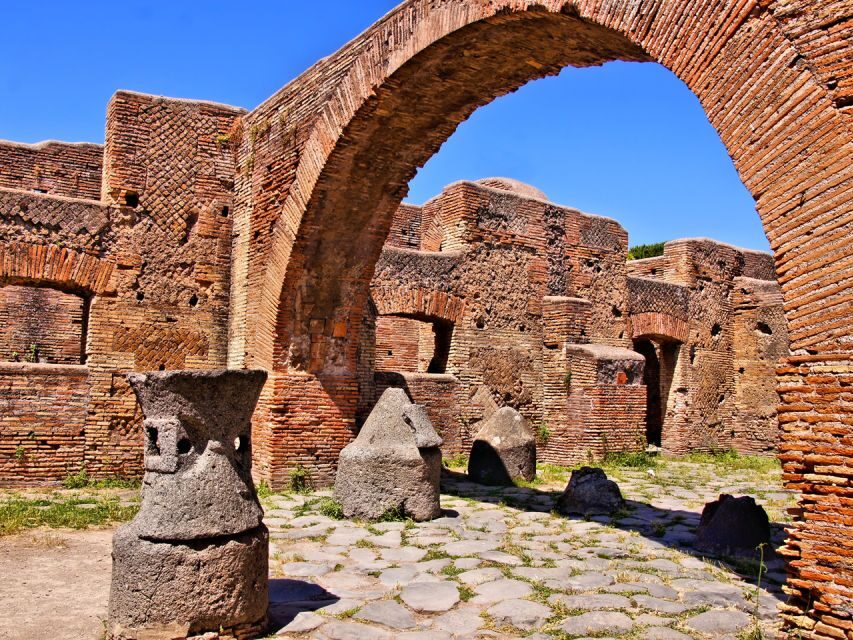
Your visit is centered on one main place: the Archaeological Park itself. The ruins don’t show up as one big single monument. You’ll instead move through a series of zones that help you piece together the city.
Here are the themes you can expect as you wander, and why they matter:
Roman streets laid out in stone
As you walk, you’ll follow ancient roads lined with stone slabs. That detail sounds small, but it’s crucial. It turns the visit from “I saw ruins” into “I walked the city’s movement.” Your brain starts mapping where people would have traveled on foot, where turning corners would have happened, and how space was used.
Opulent villas and wealth
You’ll come across villas and areas that help show how wealth was displayed. The ticket description highlights opulent villas, and that’s where Herculaneum can feel striking: you’re not only seeing basic structures; you’re seeing spaces that suggest status and comfort.
Historic markets and everyday life
You’ll also encounter market-like areas. This is where the site becomes more than scenery. Markets suggest work, trade, and daily routines—so your visit shifts from “grand houses” to “how people actually got through their days.”
Preserved traces that make the past feel close
The experience leans hard on preservation under ash. That’s why the park works for people who usually find “ruins” too vague. When objects and impressions survive, you can connect with the human scale—what they might have used, written on, or carried.
Time-wise, the experience is listed at about two hours. In reality, your pace will vary based on what you stop for. I’d think of two hours as “comfortable with breaks,” not “racing.” If you move quickly and only hit the major audio stops, you might finish sooner, but the point is to slow down enough to let the city make sense.
The digital audio guide: what works and what to watch for
The audio guide is multilingual and includes English, French, Italian, and Spanish. You download it using the QR code before you arrive, and then you listen as you move through the park.
Here’s the honest balance. The audio concept is great: stories timed to your walking pace can turn ruins into a guided experience without forcing you into a group schedule. And when the stops line up, it’s a really efficient way to learn.
But there are real concerns to plan around. Some people found the audio coverage limited and felt they needed to look up extra details elsewhere to fully understand certain houses or areas. Others reported the app struggled with GPS tracking and that stops weren’t always synced with the actual Herculaneum markers. There’s also a complaint that it could be hard to match your exact location to what the audio expects.
So how do you make it work for you?
- Start by downloading the audio guide before you arrive, not while you’re already standing at the entry scramble.
- Keep your expectations flexible. If GPS acts up, treat the audio as a set of helpful stories rather than a perfectly timed choreography.
- If you really care about deep context for every building, consider pairing your visit with additional reading on your phone (or saving a few questions for later). The ruins are dense; even a strong app can’t cover everything without gaps.
If you’re the type who wants a guide to answer questions in real time, remember: this ticket does not include a guided tour. You’re in charge of the learning rhythm.
Other Herculaneum guided tours and tickets we've reviewed at Vesuvius & the Bay of Naples






Price and value: is $29.04 worth it?
At $29.04 per person, you’re paying for three main things: entry, a digital audio guide, and the convenience of self-navigation with the map. For many visitors, that’s solid value because it bundles two hard parts—admission and interpretation—into one ticket.
Where the value can swing is the audio performance. If the audio app behaves well on your device and your GPS cooperates, you get a guided-feeling visit without extra cost for an official guide. If your phone struggles with location or the stops don’t match what you see, the experience can feel like it’s missing pieces.
So I’d judge the price based on your style:
- If you like independent travel and you’ll happily use the app as a companion, the cost can feel fair.
- If you need highly precise navigation and full coverage, you may find this price only pays off when the tech cooperates.
Also, note the site is popular enough that it’s commonly booked ahead (on average, about 32 days in advance). Booking early often helps you get the day/time you want—especially in a region where day plans change fast.
Who should book this Herculaneum entry ticket?
I’d point you toward this ticket if you match the vibe: you want a Roman city experience without a rigid group schedule. The self-paced format is a good fit for couples, solo travelers, and families who can manage short stretches of walking and want to choose their own pace.
You’ll likely enjoy it most if:
- You like walking and reading spaces as you move through them
- You enjoy multilingual audio rather than needing a live guide
- You want a structured visit but still want control over stop length
I’d think twice if:
- You expect the audio to work like GPS perfection and cue you flawlessly every time
- You’re hoping for deep, building-by-building explanation with no gaps
- You dislike apps that can be touchy with location services
Because the ticket doesn’t include a guided tour, anyone who wants on-the-spot interpretation may feel like they’re missing a layer of context.
Should you book it for your Naples trip?
If your main goal is to see Herculaneum without paying for a guided tour, this ticket can be a good move. The site itself is the star, and Herculaneum’s stronger preservation gives you a more intimate view of Roman life than you’ll get from many other ruins. The included multilingual audio is also a real plus.
My call: book it if you’re flexible about the app and you’re happy to use the park’s physical cues when GPS gets weird. Skip or reconsider if you know you depend on precise audio-marker syncing to learn, or if you want nonstop expert narration.
If you do book, prep smart: download the audio via QR code ahead of time, bring headphones, and keep your phone charged. Then treat the audio as a guide you steer, not a train schedule you must follow.
FAQ
What’s included with the Herculaneum entry ticket?
You get Herculaneum entry plus a digital audio guide with multilingual commentary in English, French, Italian, and Spanish.
Do I need to bring my own headphones?
Yes. The ticket includes audio commentary, but headsets are not included, so you’ll need your own.
Do I need a mobile device to use the audio guide?
Yes. A mobile device is not included, and you’ll use your phone to access the e-ticket and the digital audio.
Where do I redeem the e-ticket?
Redeem at the Archaeological Park of Herculaneum, Corso Resina, 187, 80056 Ercolano NA, Italy.
How far in advance should I download the audio guide?
You should scan the QR code to download the audio guide prior to arrival. E-tickets are available within 24 hours before your travel date.
What are the opening hours?
From 03/16/2025 to 10/14/2025: 8:30 AM–7:30 PM daily.
From 10/15/2025 to 03/15/2026: 8:30 AM–5:00 PM daily.
Is there a cancellation window?
Yes. You can cancel for a full refund up to 24 hours before the experience start time. Within 24 hours, the amount paid is not refunded.