REVIEW · NAPLES
From Naples: Day Trip to Herculaneum with skip the line
Book on GetYourGuide →Operated by Napoli Official Tour · Bookable on GetYourGuide
Herculaneum is the rare ruin you can enjoy at walking speed. I like the skip-the-line entry because it protects your limited time, and I also like the free self-guided pace once you’re inside. The biggest drawback to keep in mind is that this is very dependent on smooth meeting-point logistics and clear pickup details, and that can be where things get messy.
You’ll ride a shuttle bus from central Naples, then spend a focused 4 hours exploring Roman streets buried under mud and lava from Mount Vesuvius. I especially love how much of daily life feels close—houses, preserved wood, and the layout of the town—without being rushed by a group schedule. If you’re hoping for lots of commentary, note that there’s no guide or audio guide included.
Still, for the right traveler, this setup is a smart value: you get the transport help and the entry shortcut, then you choose what to linger on. My advice: bring extra patience for the bus handoff, and double-check where you’re supposed to be before you head out.
In This Review
- Key points before you go
- Why Herculaneum is worth your time (and why 4 hours feels right)
- Shuttle bus logistics from Naples: the part you should plan like a pro
- Skip-the-line entry: the real time-saver (and its limits)
- The self-guided Herculaneum experience: what you’ll actually see
- Beyond villas: public buildings and thermal baths for a fuller picture
- A simple 4-hour game plan that keeps you from rushing
- Price and value: is $71 worth it for Herculaneum?
- Who this shuttle-and-self-guided trip suits best
- When you might prefer a different kind of tour
- Should you book this skip-the-line shuttle to Herculaneum?
- FAQ
- How long is the Herculaneum trip from Naples?
- Does this ticket include skip-the-line entry?
- Is there a guide included?
- Where do I get picked up in Naples?
- What do I need to bring for children?
- What is the cancellation policy?
Key points before you go
- Skip-the-line access: enter the site without delay and start walking right away.
- Self-guided exploration: see what interests you most without staying glued to a group.
- Shuttle from central Naples: round-trip bus transport with a designated pickup stop.
- Better-preserved details: intact wooden structures in homes and a town layout that feels vivid.
- Thermal baths and public buildings: not just villas—there are communal spaces too.
- Logistics matter: meeting points and signage can be the weak link on busy days.
Why Herculaneum is worth your time (and why 4 hours feels right)

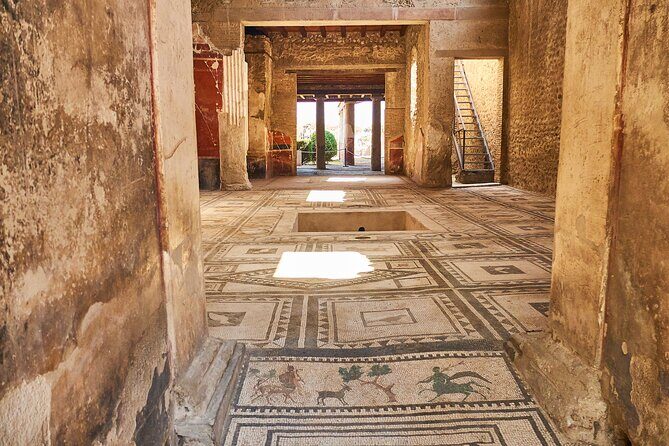
Herculaneum was frozen in time during the Mount Vesuvius eruption in 79 A.D., when the town was buried under volcanic material. That’s the whole magic of the place: you’re not just looking at stone walls. You’re walking through the framework of daily life—streets, houses, and spaces that show how people lived right before the disaster.
The big reason I think Herculaneum works so well as a short day trip is preservation. Wooden structures survive in some areas, and the overall feel can come across as more “complete” than other famous sites. Even if you don’t go deep into Roman history, you’ll still understand what you’re seeing because the town layout is legible as you walk.
And because this experience is self-guided, you get to spend your time where your curiosity lands. Some people will focus on homes and household details; others will want the public buildings and thermal baths. Either way, the ruins reward a slower pace than you might expect from a 4-hour window.
Other Herculaneum guided tours and tickets we've reviewed at Vesuvius & the Bay of Naples


Shuttle bus logistics from Naples: the part you should plan like a pro
You’ll be picked up at a designated bus stop in central Naples, then taken to the entrance area of Herculaneum. The departure time is approximate, and the exact time is confirmed the day before by the local operator. That’s helpful, but it also means you shouldn’t treat the first email or message as gospel.
Here’s the practical reality: the tour is only as smooth as the pickup handoff. Several experiences have turned frustrating when the bus arrives late, or when the stop isn’t clearly marked, or when English announcements aren’t made clearly on the return trip. If you’re the kind of traveler who hates standing around with your luggage, plan for extra buffer time.
My strong tip: take a screenshot of your meeting instructions and any map you’re given. Also, arrive early enough to re-check your exact stop location once you’re there. Naples is a city of tight corners and confusing signage, so having a visual reminder can save you real time.
Once you’re at the ruins, your life gets easier. The shuttle part is straightforward—get you there and bring you back. After that, you’re free to wander.
Skip-the-line entry: the real time-saver (and its limits)

The highlight here is skip-the-line entrance, meaning you avoid time-wasting queues when you arrive. On a tight schedule, that shortcut matters. It’s the difference between “I barely got in” and “I actually got to see the parts that interest me.”
But skip-the-line doesn’t turn this into a guided tour. No guide is included, and you’ll likely want your own method for learning as you go. One traveler noted they enjoyed an audioguide app that helped them explore in their own order. Another experienced a surprise cost when they felt they needed to buy an audio tour on top of what they already paid.
So think of it like this: you’re paying for transport + entry efficiency. If you want a human to explain what you’re looking at, you’ll need to either bring your own research, use an app you provide yourself, or choose a different kind of tour.
If you’re content to “read” the ruins with your eyes, you’ll probably be happy. Just make sure you’re not expecting a teacher in the seat next to you.
The self-guided Herculaneum experience: what you’ll actually see
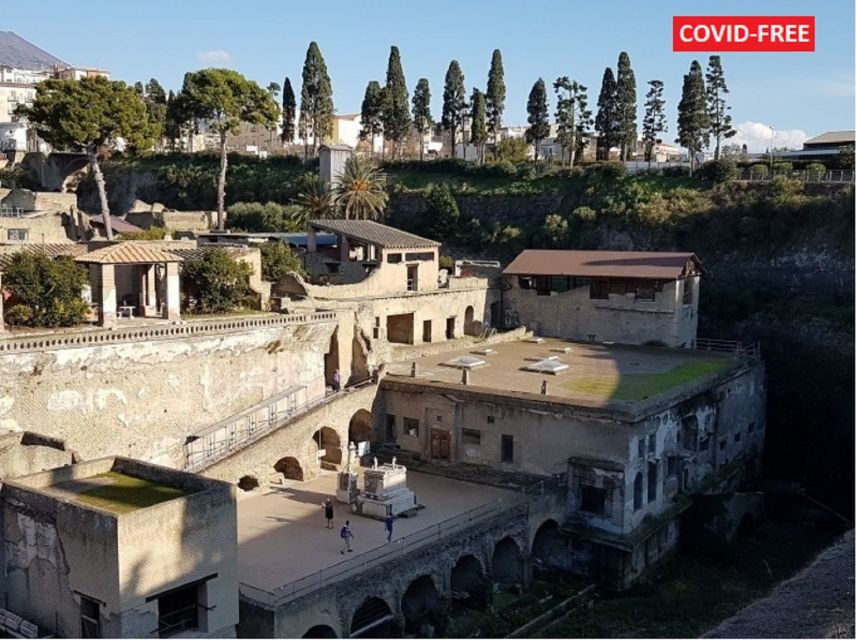
After you enter, you’re in the ancient town—destroyed and preserved by the Vesuvius eruption. The tour time gives you room to walk past buildings of the Roman settlement that was covered by mud and lava. This isn’t a quick stop with a photo line. It’s a site where movement matters.
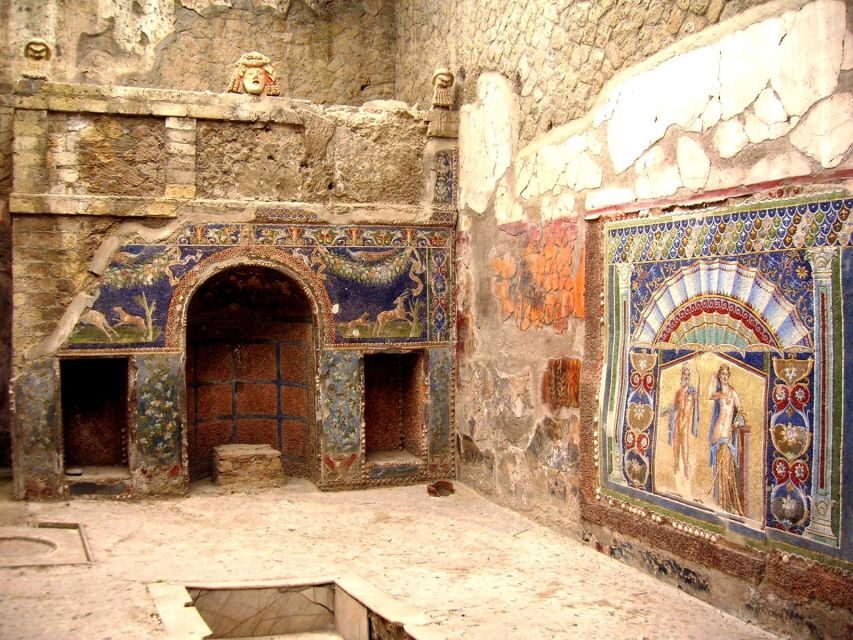
One of the most striking elements is the survival of intact wooden structures. That sounds like a small detail until you stand near it and realize you’re looking at parts of buildings that once held expensive furnishings and ornamentation. It adds a different emotional weight compared to ruins that are mostly stone.
As you explore, you’ll also get a sense of how rich the villas were. Herculaneum is known for its preserved household spaces, not just public structures. Even if you’re not reading every inscription, you’ll notice how the town layout and building types connect to daily routines—where people lived, where they met, and how different spaces worked together.
And because you’re on your own schedule, you can slow down at the scenes that feel meaningful to you. If you love architecture, you’ll probably spend longer on houses and construction details. If you’re more into “how people lived,” you’ll likely spend time looking at rooms, access points, and what’s left of decor.
Beyond villas: public buildings and thermal baths for a fuller picture
This isn’t only about wealthy residences. You’ll also have time for important public buildings and the thermal baths. That matters because it shifts the story from private life to community life.
Roman thermal baths weren’t just about washing. They were social hubs—places to talk, relax, and spend time. Standing in (or near) the spaces that once served that purpose gives you a more complete view of what the town functioned like before the eruption.
If you’re deciding where to spend your energy, here’s a helpful approach: don’t try to see everything equally. Pick a “house focus” and a “public life focus.” That way, you leave with a theme, not a blur.
Also, remember it’s a ruin site. Some parts may feel darker, uneven, or a bit exposed depending on the layout. Wear shoes that handle uneven ground and stay alert when you’re looking up or down.
Other tours departing from Naples we've reviewed at Vesuvius & the Bay of Naples






A simple 4-hour game plan that keeps you from rushing
This experience is designed around a 4-hour duration, including your shuttle time and your free period inside the archaeological site. Since the exploration is self-guided, you should use time intentionally.
Here’s a straightforward rhythm I’d use if I were planning it:
- Start with one “main loop” you can revisit.
- Spend your first hour on the parts that look most intact to you—often the houses and wooden details.
- Then shift to public buildings and the thermal baths for contrast.
- Leave the last chunk of time for whatever you didn’t get to the first pass.
That last rule is underrated. Ruins can surprise you. You might find yourself lingering somewhere you expected to only glance at, especially if preservation catches your eye.
Also, keep an eye on your return time. The shuttle brings you back, so you don’t want to be caught reading every label while the pickup clock is ticking.
Price and value: is $71 worth it for Herculaneum?
At $71 per person for a 4-hour experience, you’re paying for two things: round-trip shuttle transport from central Naples and skip-the-line entry. You’re not paying for interpretation from a guide, and you may still want to add an audio solution of your own.
For many people, that’s enough to justify the cost. If you hate planning, the shuttle does the hard part for you. If you’re traveling in a small window of time, skip-the-line entry protects your schedule.
But you should also know the DIY reality. One traveler pointed out that round-trip transport and site tickets can be cheaper if you plan it yourself. If you’re budget-focused and comfortable navigating Naples using public transport and your own route planning, you may decide that a DIY day trip is a better deal.
So the value question comes down to your personality:
- If you value simplicity and fewer moving parts, this price can feel fair.
- If you’re comfortable doing public transport and don’t mind waiting, you might prefer saving money.
My balanced take: pay for the convenience if you’re short on time or if logistics stress you out. Otherwise, go DIY and put that saved money into a longer day or a nicer dinner.
Who this shuttle-and-self-guided trip suits best

This experience fits travelers who want freedom inside the ruins rather than a fixed tour script. If you like to walk, pause, and follow your own interests, you’ll probably enjoy Herculaneum more here than on a rigid guided schedule.
It can also work well for families, because children policy is straightforward: children up to 3 years old are free, and there’s a reduced price for ages 4 to 17. Just remember you should bring a passport or ID card for children.
If you’re traveling solo or with friends who don’t all want the same pacing, self-guided time can be a plus. You’re together for the shuttle, then you’re free to explore your own way inside.
When you might prefer a different kind of tour
If you’re expecting a lot of explanation, this format may feel thin. The absence of a guide means you’ll rely on your own learning tools. Some people are totally fine with that. Others will feel like they need more context to connect what they see.
The other “tour type mismatch” happens when meeting points feel unclear. If you’re arriving late, if you’re not confident about finding your bus stop, or if you’re traveling without a reliable phone connection, this kind of logistics-heavy handoff can become stressful.
In those cases, a fully guided option can reduce the risk. You trade flexibility for smoother interpretation and fewer navigation headaches.
Should you book this skip-the-line shuttle to Herculaneum?
Book it if you want a time-saver in the entrance line and you’re happy to explore on your own. It’s a solid way to reach a famous site without turning your day into a puzzle. Bring your own plan for learning—an app or a bit of prior reading—and you’ll get a better experience with the same entry shortcut.
Skip it if meeting points are your weak spot, or if you know you want an expert explanation throughout. If you’re comfortable using public transport and buying tickets on your own, you might enjoy better value and more control.
My final advice is simple: treat the pickup details as the main task of the day. Once you’re inside, Herculaneum does the rest.
FAQ
How long is the Herculaneum trip from Naples?
The activity is listed as 4 hours total, including the shuttle transportation and free time to visit the archaeological site.
Does this ticket include skip-the-line entry?
Yes. The experience includes skip-the-line entrance to the Herculaneum ruins so you can enter without delay.
Is there a guide included?
No. A guide or audio guide is not included, so you’ll be self-guided once you arrive.
Where do I get picked up in Naples?
Pickup is included, and the driver will pick you up at the designated city bus stop you select as your meeting point.
What do I need to bring for children?
You should bring a passport or ID card for children.
What is the cancellation policy?
Free cancellation is available up to 24 hours in advance for a full refund.