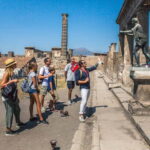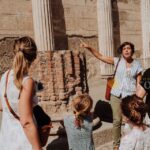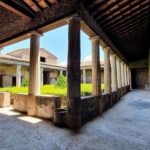
Roman streets, frozen in time. This Herculaneum tour takes you through one of the best-preserved ancient cities from the 79 AD Vesuvius eruption, with rooms, frescoed walls, and everyday objects still readable.
I love two things about the experience. First, it’s a small group (max 10), so the walk feels human instead of rushed. Second, you get a certified guide supported by an archaeologist, which helps turn what you see—like the mosaic in Casa di Nettuno e Anfitrite or the House of the Wooden Partition—into clear, believable daily life.
One heads-up: some guides may speak a bit softly, so don’t linger too far back if you want to catch every detail.
In This Review
- Key highlights you’ll care about
- Herculaneum in two hours: why it feels different from Pompeii
- Price and tickets: what you’re really paying for
- Meeting point and timing at the Herculaneum Ticket Office
- Stop-by-stop: houses, seaside views, and the boat pavilion
- Stop 1: Parco Acheologico di Ercolano and the feeling of real rooms
- Stop 2: the ancient beach, Herculaneum’s waterfront
- Stop 3: La Terrazza di M. Nonio Balbo
- Stop 4: Casa dei Cervi (House of Deer)
- Stop 5: Partem Domus lignea – Casa del Tramezzo di Legno
- Stop 6: Casa di Nettuno e Anfitrite and the Neptune mosaic
- Stop 7: Casa Sannitica (Samnite House)
- The decumanus maximus: the main street you can picture
- Stop 8: College of the Augustales
- Stop 9: Casa d’Argo and the missing fresco you still learn from
- Stop 10: Salone della Barca di Ercolano and the boat pavilion
- Stop 11: back at the park and tour wrap-up
- What the guide style changes (and why the archaeologist matters)
- Comfort tips: shoes, steps, and a quick map before you start
- Who this tour fits best
- Should you book this Secret Herculaneum tour?
- FAQ
- What does the tour price include?
- How much is the entrance fee for Herculaneum?
- How long is the visit?
- Is the tour offered in English, and do I get a mobile ticket?
- Where do I meet the guide?
- Is it a lot of walking or steps?
- Can I cancel, and what if the weather is bad?
Key highlights you’ll care about
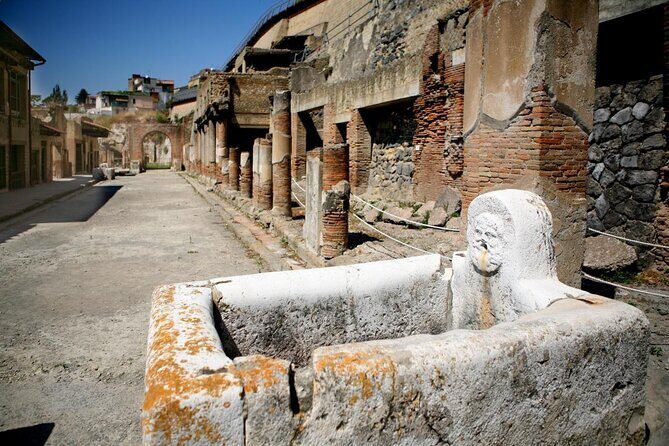
- Herculaneum is shockingly intact: houses, doorways, fresco colors, and street layouts are easy to recognize.
- The seaside isn’t an afterthought: you’ll reach the ancient beach, the waterfront of an almost fully preserved Roman city.
- You’ll hit standout houses: Deer fresco sculpture, a folding-wood partition idea, and a Neptune mosaic.
- A charred boat is part of the route at the Salone della Barca di Ercolano.
- Small group, big explanation value: with a max of 10 and English guidance.
- Plan for the park entrance fee: the tour price doesn’t include the Archaeological Park admission.
Herculaneum in two hours: why it feels different from Pompeii
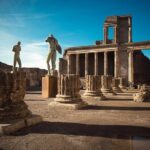
If you’ve only heard Pompeii as the star of Roman disaster tourism, Herculaneum is the curveball you’ll be glad you took. The city is smaller, so you can actually make sense of the layout. More importantly, it preserves a lot of what you’d normally miss when ruins are just stone shells.
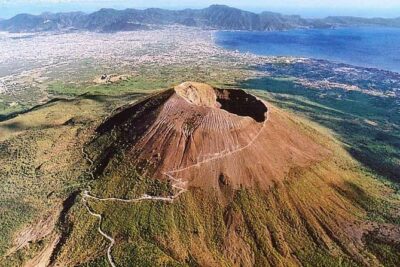
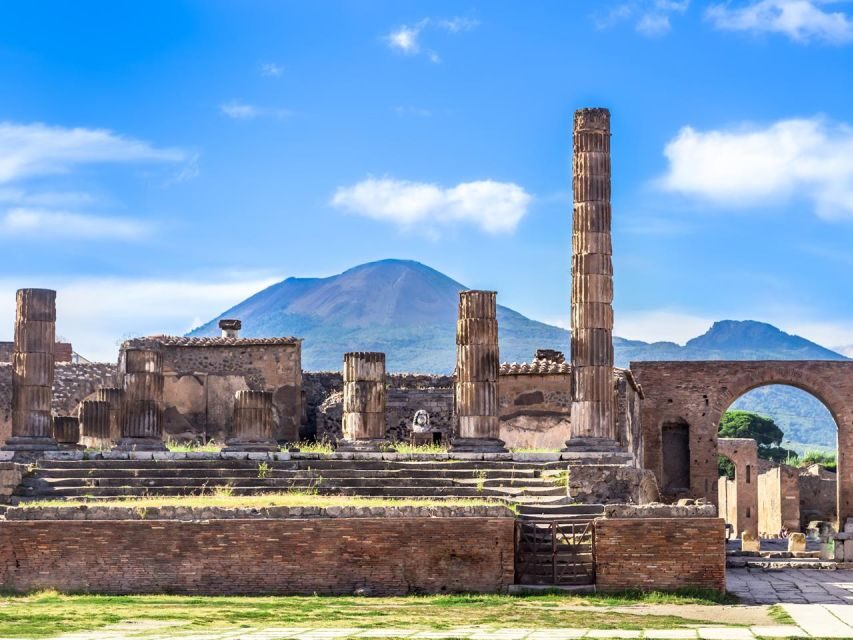
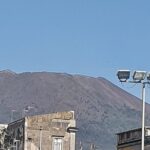
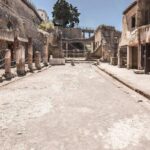
Herculaneum was buried during the Mount Vesuvius eruption in 79 AD. What’s special here is how much of the urban and civic structure you can still read: paved streets, room layouts, and house features are visible enough to connect buildings to real routines. You’ll walk the kind of main streets Romans used, and you’ll also step into houses where the wall decoration still looks like it belongs to a lived-in home.
The tour is built around that feeling of clarity. You’re not spending hours getting lost in a big site. Instead, you’re shown a chain of key places—houses, public spaces, and the waterfront—so you leave with a map in your head, not just photos on your phone.
Other Herculaneum guided tours and tickets we've reviewed at Vesuvius & the Bay of Naples

Price and tickets: what you’re really paying for
The tour itself costs $34.84 per person and runs for about 2 hours. That price covers the certified guide and the archaeologist support included with the experience.
You do need to budget for the Archaeological Park of Herculaneum entrance fee: €16.00 per person. It’s not included in the tour price, so if you add it up you’re making one clear combined decision: guided interpretation (what things mean) plus site admission (what you can physically enter and see).
Is it good value? For most people, yes—because you’re paying for two hours of guided explanation inside a place where details matter. Standing alone at a preserved doorway or a floor mosaic is interesting. Understanding what that house layout meant for daily life is usually the difference between a quick look and a memorable visit.
Meeting point and timing at the Herculaneum Ticket Office
You’ll meet at the Herculaneum Ticket Office (80056 Ercolano), and the tour ends back at the same spot. It’s also described as being near public transportation, which helps if you’re day-tripping from Naples or connecting onward.
Arrive with a little buffer. In this type of timed small-group walk, check-in timing matters. One practical lesson from real visits: if a few people don’t check in properly, it can create a short wait before you start. If you want things to go smoothly, I’d show up about 15 minutes early so your group can get moving on time.
The tour moves at a steady pace, with multiple stops. Many of the highlight segments are brief, so your best strategy is simple: listen closely at each stop, then ask questions once you’re there. This format works well if you like seeing several big sights in one sitting without turning the day into a full-day slog.
Stop-by-stop: houses, seaside views, and the boat pavilion
Think of the route as three themes: home life, street life, and the shock of the eruption reaching the sea.
Stop 1: Parco Acheologico di Ercolano and the feeling of real rooms
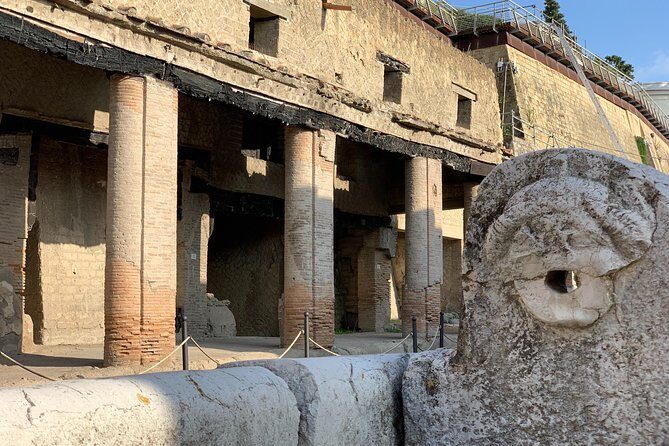
You begin at the Parco Acheologico di Ercolano, a UNESCO archaeological site. This is where you get the core “wow” factor: Herculaneum preserves houses and street structure in a way that makes the town feel legible.
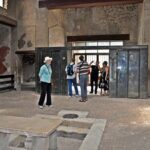
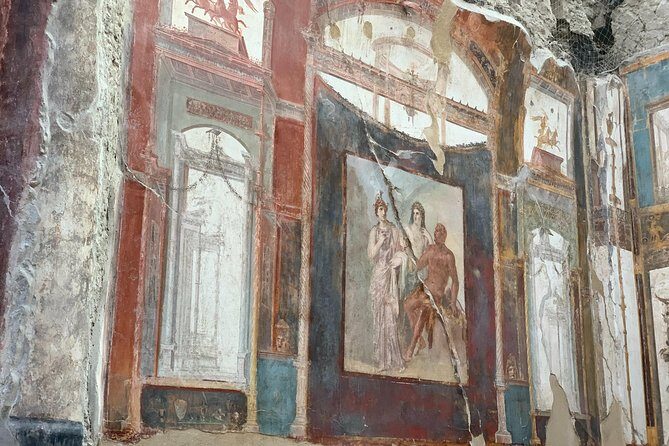
The guide-led walk is built around street-level pacing—along paved streets you can see how people moved through neighborhoods. You’ll also enter house spaces where wall colors from frescoes remain visible. Doors, bedrooms, workshops, and objects are still there enough to help you imagine the space rather than just observe stones.
Two spots tend to anchor the Roman-life feeling. First is the gymnasium, a social space. Second is the baths—places people went to talk about politics and business. When the guide connects those details to what you’re seeing, it turns “ruins” into a daily schedule.
Practical note: some parts involve steps and uneven surfaces. If you’re prone to foot fatigue, sturdy shoes matter.


Stop 2: the ancient beach, Herculaneum’s waterfront
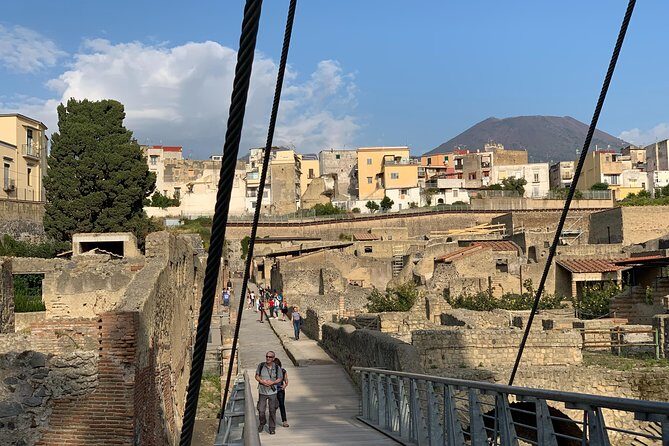
Next comes something people often skip when they think of volcano ruins: the ancient beach. Herculaneum’s beachfront is described as the only waterfront of an almost entirely preserved Roman city. That’s a big deal, because it helps you picture what ordinary life looked like near the sea—before the eruption changed everything.
This stop is short, but it gives context. Seeing the preserved shoreline area changes how you understand the later museum-like boat pavilion.
Stop 3: La Terrazza di M. Nonio Balbo
You’ll reach La Terrazza di M. Nonio Balbo, a terrace built to honor Marcus Nonius Balbo, described as Herculaneum’s most prestigious citizen and patron. The viewpoint is tied to the sea—this isn’t just architecture for architecture’s sake.
Even if you don’t care about Roman elite politics, this stop helps you understand class and status in a very physical way. You’re looking at how a wealthy person’s house and terrace connected to the waterfront.
Stop 4: Casa dei Cervi (House of Deer)
Then comes one of the standout residences: Casa dei Cervi, or House of Deer. The name comes from two marble groups showing deer being attacked by dogs.
This is a strong stop for people who like visual storytelling. It’s not a random decoration. In a preserved house, a dramatic sculptural theme tells you the household had taste, money, and opinions about what art should communicate.
Stop 5: Partem Domus lignea – Casa del Tramezzo di Legno
Next is Partem Domus lignea, also known as Casa del Tramezzo di Legno—the House of the Wooden Partition.
The focus here is practical domestic space: a folding wooden structure discovered in the layout, designed to separate the splendid atrium from the tablinum (the homeowner’s study). This is the kind of detail that feels small until you see it explained. Once you do, it becomes obvious how Roman homes could shift function depending on who was visiting and what kind of day it was.
If you love how daily life worked behind the scenes, this is one of the most satisfying stops on the route.
Stop 6: Casa di Nettuno e Anfitrite and the Neptune mosaic
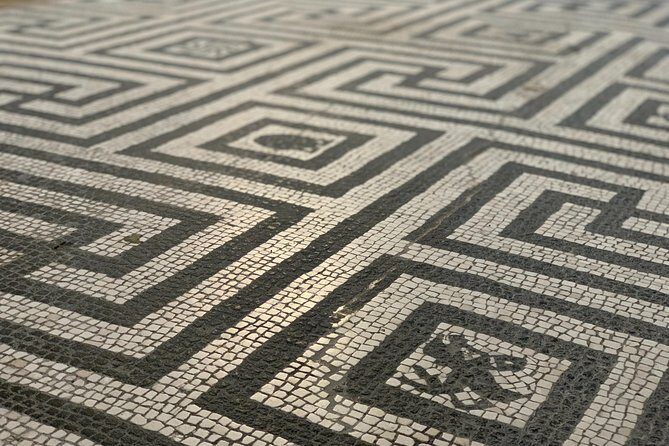
At Casa di Nettuno e Anfitrite, you’ll see a famous mosaic featuring Neptune and his companion. This house is described as belonging to a wealthy merchant, and the mosaic is the visual anchor of the stop.
Mosaics can look like decoration until you learn what they’re doing in the space. With a guided approach, you’ll get the point: this is Roman household identity, displayed in a way visitors would see and remember.
Stop 7: Casa Sannitica (Samnite House)
You’ll also visit Casa Sannitica, called the Samnite House. It’s described as one of the most popular remains at Herculaneum because it’s considered among the oldest dwellings on the site.
This stop is useful for grounding the timeline. It reminds you that you’re not just seeing one frozen moment—you’re seeing layers of settlement and how the city developed.
The decumanus maximus: the main street you can picture
At some point, you’ll get the street-level context of the decumanus maximus, described as the main street of Roman cities and the key thoroughfare in Herculaneum. The idea is that the most prestigious houses lined this kind of street.
If you’ve ever struggled to understand what you’re looking at in a ruin, this is how to solve it. Once you can place houses along the main axis, the city becomes clearer fast.
Stop 8: College of the Augustales
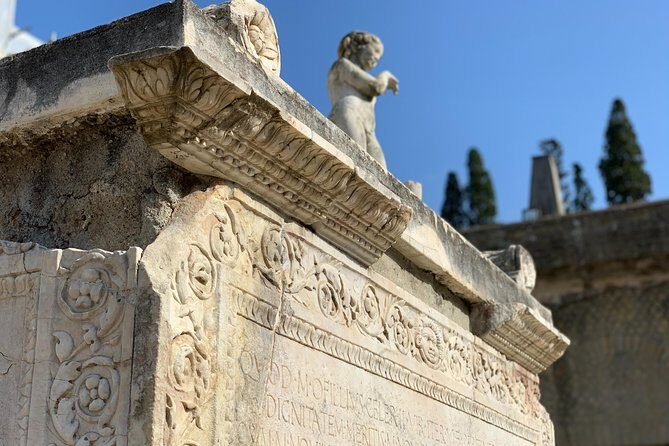
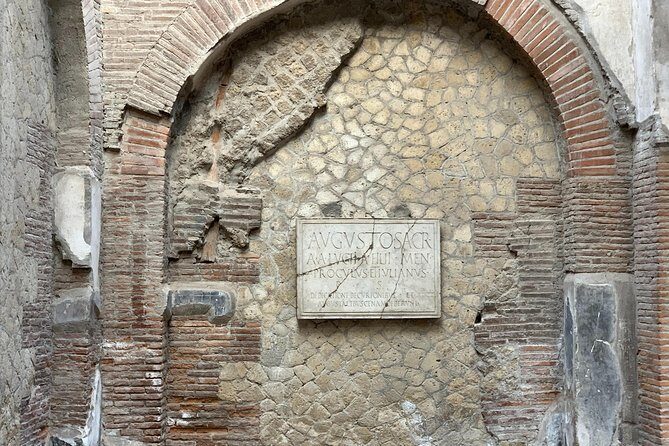
Next is the College of the Augustales (specifically the Sacellum of the Augustals). It’s described as a Roman-times building tied to worship rites of emperors, tended by Augustal priests.
This is your shift from home life to public ritual space. It helps you see that Romans were building identity and authority into both domestic and civic buildings.
Stop 9: Casa d’Argo and the missing fresco you still learn from
You’ll visit Casa d’Argo, named after a fresco that decorated the peristyle. The fresco is now disappeared, but it’s described as depicting Argo Panoptes, the giant with a hundred eyes.
Even without the original painting intact, the story matters. The guide uses the house layout and the recovered context to explain what was once there—so you still get meaning, not just absence.
Stop 10: Salone della Barca di Ercolano and the boat pavilion
Finally, you reach the Salone della Barca di Ercolano, the boat pavilion. Here, a charred boat found along the beach during excavations in 1981 is preserved.
This is the emotional punctuation mark for the whole tour. You began with preserved buildings and everyday rooms; you end with a material object that screams disaster and gives you a physical link between eruption, sea, and the speed of change.
If you’re into the “how do we know” side of archaeology, this stop is for you. It turns the story into evidence you can point to.
Stop 11: back at the park and tour wrap-up
After the boat pavilion, the tour ends back at the park area, returning you to the meeting point location.
What the guide style changes (and why the archaeologist matters)
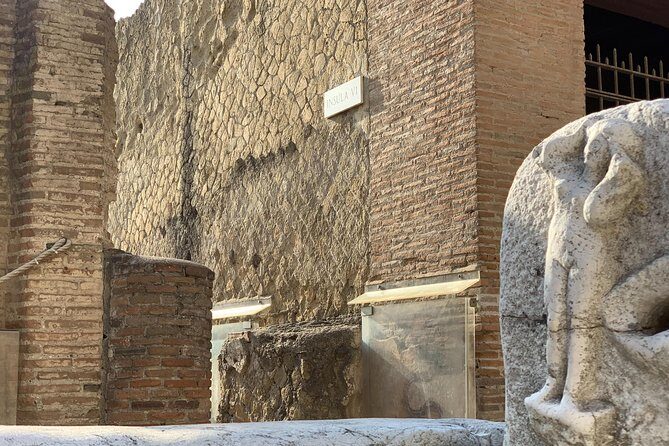
The standout pattern in real tours of this site is how well the guide connects tiny details to big ideas. I’ve seen this work best when the guide is an archaeologist or has deep excavation experience, because it changes how confidently they explain what you’re looking at.
In this tour format, you may have different guides. Names that show up in actual experiences include Luigi, Ornella, Riccardo, Arcangelo, Raffaele, and Corrado. Across those accounts, a consistent theme appears: people enjoy the explanations plus the humor. That mix matters because ruins can feel dry if the guide only lists facts.
The archaeologist angle also helps you understand the difference between places on the site. One key example from real guidance: learning how Herculaneum compares to Pompeii. Both come from the same eruption history, but they preserve different things, and that changes what you should pay attention to.
Small group tours also mean there’s time for questions. If something catches your eye—like the purpose of a room split or the meaning behind a mosaic—this is when you ask.
One practical caution, though: if a guide speaks softly, you’ll want to stay where you can hear clearly. That’s not a “site problem,” it’s a group-spacing issue. Move a little forward, and you’ll get more out of every stop.
Comfort tips: shoes, steps, and a quick map before you start
Wear sturdy walking shoes. Herculaneum is compact, but the ground can involve steps and stairs, and the route is designed to keep moving.
A small but useful tip: at the park entry, you can pick up a free map at the kiosk. Even if you plan to follow the guide closely, having the map helps you connect names to location fast once you’re in the ruins.
Food timing is also easy to plan around this tour. There’s a small restaurant across the road from the park entrance that a visitor recommended for meatballs, and it’s the kind of place you can use as a simple pre- or post-tour stop if your schedule allows.
Who this tour fits best
This experience is built for people who want a high-impact visit without the marathon feel of huge sites.
You’ll likely enjoy it if:
- you like Roman daily life details (houses, baths, streets, domestic decoration)
- you prefer a manageable walking loop
- you want someone to translate what you’re seeing into context
- you’re visiting in a limited time window and want the key highlights in about 2 hours
It may be less ideal if:
- you need long, slow exploration time at one location
- you’re uncomfortable with stairs and uneven ruin surfaces
Accessibility note: if you use a wheelchair, you must report it 24 hours before the visit.
Should you book this Secret Herculaneum tour?
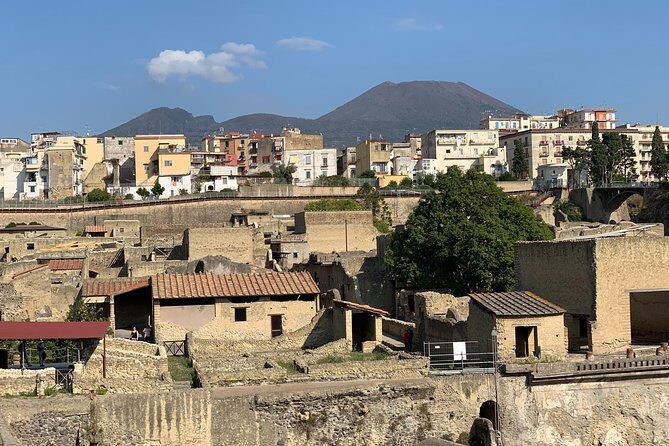
I think this is a strong booking when you want more than photos. The site is preserved enough that, with the right guide, you can actually understand what these spaces were for—home by home, street by street, and finally with the boat pavilion that ties the eruption to the coastline.
Book it if you:
- want a small-group experience (max 10) with room for questions
- care about Roman routines, not just monumental statues
- like expert context from a certified guide and archaeologist
Skip it (or consider changing your plan) if you want a self-paced wander with lots of extra time at fewer points, because the route is designed to cover a chain of highlights in a short window.
If you’re choosing between options, I’d pick the guided version here. Herculaneum rewards attention, and this format helps you give it—without turning your day into an endurance test.
FAQ
What does the tour price include?
The tour price includes a certified guide and an archaeologist. The Archaeological Park entrance fee is not included.
How much is the entrance fee for Herculaneum?
The Archaeological Park of Herculaneum entrance fee is €16.00 per person.
How long is the visit?
The duration is about 2 hours.
Is the tour offered in English, and do I get a mobile ticket?
Yes. It’s offered in English, and you receive a mobile ticket.
Where do I meet the guide?
You start at the Herculaneum Ticket Office in Ercolano, and the tour ends back at the same meeting point.
Is it a lot of walking or steps?
There is walking on the site, and some stops can involve steps/stairs. Wear sturdy shoes.
Can I cancel, and what if the weather is bad?
You can cancel for a full refund up to 24 hours in advance. If the experience is canceled due to poor weather, you’ll be offered a different date or a full refund.