REVIEW · NAPLES
Pompeii and Herculaneum day trip
Book on Viator →Operated by A DRIVE INTO THE BLUE · Bookable on Viator
Two ruins, one smooth day. What makes this trip special is the private driver setup that keeps you from wasting time on shuttles, plus the rare chance to compare Pompeii and Herculaneum back-to-back. I love that you can follow the route at your own pace during the stops, and still have structure so you don’t wander in circles.
I also like the way the day is built around a licensed guide starting right at Porta Marina, so you’re not just looking at stone slabs—you’re learning what each area meant. The one real drawback to budget for: site entry is not fully included. You’ll pay extra for Porta Marina and other Pompeii/Herculaneum access fees on top of the $429.69 tour price.
In This Review
- Key highlights worth your attention
- Price and logistics: what you’re really paying for
- The day starts in Naples: pickup that saves your brain
- Pompeii timeline: how the route stays focused
- Porta Marina: your best chance to get oriented
- Foro di Pompei (Forum): the core of daily life
- Via dell’Abbondanza: the prosperous street
- Teatro Grande: entertainment and meeting points
- Casa del Menandro: what wealth looked like
- Stabian Baths: daily rituals in Roman bathing culture
- Lupanar: the brothel with infamous wall paintings
- Antiquarium of Pompeii: objects and casts that make it real
- Herculaneum: smaller site, better-preserved feel
- House of the Hotel: a wealthy residence in ruins form
- House of the Wooden Sacellum: the charred partition detail
- Decumano Massimo and the street grid idea
- College of the Augustales: civic religion meets power
- Suburban Baths: another public life anchor
- Antiquarium di Ercolano: the objects beside skeletons
- What a good guide (like Antonino) changes on day one
- Timing, crowds, and how you can avoid the worst of Pompeii
- Who this tour is best for (and who should consider another plan)
- Handy practical tips before you go
- Should you book this Pompeii and Herculaneum day trip?
- FAQ
- Is pickup from Naples hotels and ports included?
- How long is the Pompeii and Herculaneum day trip?
- Are admission tickets included in the tour price?
- Is the tour private?
- Are the guides available in English?
- Do I need to wear a mask on the private vehicle?
Key highlights worth your attention
- Private, door-to-door Naples pickup (hotel, port, or station) so you start stress-free
- Pompeii + Herculaneum same day, which is the fastest way to see both eruptions in context
- English-speaking professionals, with a licensed guide at the ruins when you choose the guided option
- A flexible route: you can enjoy ruins on your own or lean on guidance for interpretation
- Time-efficient stops that cover the major public and residential areas without dragging all day
Price and logistics: what you’re really paying for
At $429.69 per person for a 6–7 hour day, this isn’t a budget outing. The value comes from the part most people end up paying for anyway: transportation and time. You get air-conditioned comfort, bottled water, and pickup and drop-off tied to where you actually are in Naples (hotels, ports, train stations, or the airport area).
The other thing you’re paying for is control. With a private driver, you’re not stuck behind slow groups or rerouted by the logistics of larger bus tours. That matters in Pompeii, where walking routes, crowd flow, and timing can make or break your experience.
Now, the financial reality check: entry fees are mostly extra. Access to the ruins and monuments is listed as about €34 per booking, and Porta Marina is €18 per person. Some Herculaneum areas and Pompeii highlights are marked as included, but other specific components are not. If you hate surprise charges, price it out before you commit. You’ll likely end up paying tour cost plus roughly the additional ticket amounts above.
Other Herculaneum guided tours and tickets we've reviewed at Vesuvius & the Bay of Naples

The day starts in Naples: pickup that saves your brain
This is built for real-world travel days. You’re picked up from your accommodation if streets allow; otherwise you’ll meet at the closest spot your car can reach. If you’re on a cruise, you’re also covered with a Naples-area docking pickup option.
Two small details make this smoother than most DIY plans:
- Mobile ticketing means you’re not scrambling for paper.
- Bottled water and an air-conditioned vehicle help on the hotter, louder parts of the day.
One practical note: the schedule is daily, and the tour is designed as a private group experience (only your party rides together). If you’re traveling as a family, or you want a calmer pace, this private format is often the difference between enjoying Pompeii and feeling like you’re constantly “catching up.”
Pompeii timeline: how the route stays focused
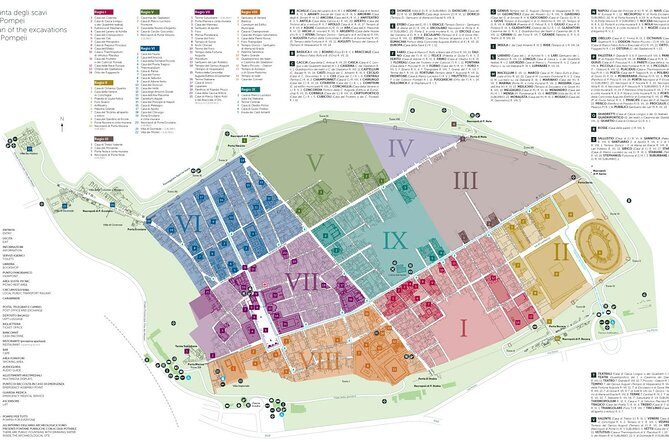
Pompeii is huge. Even when you’re excited, it’s easy to lose your place and miss the meaning of what you’re seeing. This itinerary keeps things readable by grouping stops into major themes: city life (forums and streets), entertainment (theater), daily rituals (baths), and elite households.
The day begins at Porta Marina, which is treated as the start-point. That matters because a guided start can help you understand where you are before you fan out into individual sights. You get about two hours at the ruins start area, and if you chose the option that includes the professional ruin guide, you’ll be led by them after your ticket purchase.
Porta Marina: your best chance to get oriented
Porta Marina is a strong opening because it sets context. Think of it as where you begin translating the ruins from “cool rocks” into a living city. Expect entry and orientation time, then movement into the town.
If you’re going self-guided, you might still enjoy the basics, but a guide here can help you notice details quickly, like how street layout and building fronts reveal where movement and commerce mattered. If you choose the guided option, this is the moment that usually gives you the most payoff per minute.
Foro di Pompei (Forum): the core of daily life
The Foro di Pompei is short on the clock (around 10 minutes), but it’s central in meaning. This is where public administration, justice, business, markets, and worship intersected.
In practice, don’t rush past it like it’s just a big open area. Even in limited time, you can do two things that pay off:
- Look for the idea of a civic “center” rather than only individual structures.
- Use your guide (if included) to connect the forum to how people moved for business and ceremony.
Other full-day tours we've reviewed at Vesuvius & the Bay of Naples


Via dell’Abbondanza: the prosperous street
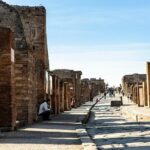
The Via dell’Abbondanza is labeled as the most prosperous street. You get about 20 minutes, which is good because it’s enough time to actually register how streets functioned like commercial corridors.
This is one of those stops where you can either zone out, or you can do a quick mental exercise: imagine daily errands, shop activity, and foot traffic along the same axis. If you’re with kids, this is also a place where the contrast between today’s street energy and ancient city life can land fast.
Teatro Grande: entertainment and meeting points
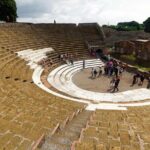
The Theatre area is about 10 minutes. It includes the Large Theatre, the Odeon (small theatre), and the Quadriporticum. In other words, it’s not just a stage—it’s a social hub.
If you like architecture, this is worth treating as more than a photo stop. The key value is understanding why entertainment buildings in Pompeii also worked as places to gather, see, and be seen.
Casa del Menandro: what wealth looked like
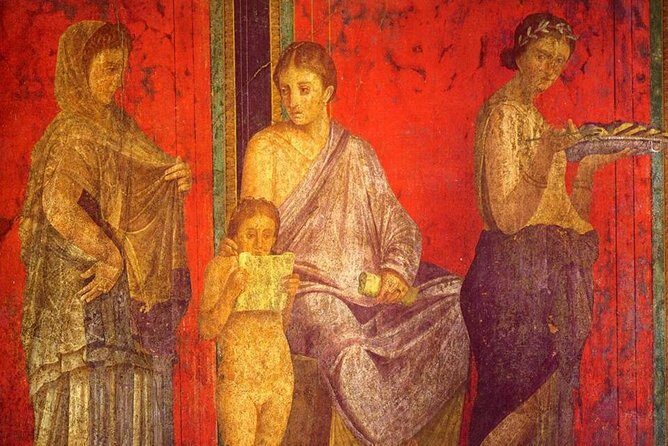
The Casa del Menandro gets about 10 minutes. This is one of the richer houses, and that shows in how the space is described: architecture, decoration, and contents.
A quick but useful way to enjoy this without feeling rushed:
- Compare it to the public spaces you just saw (forum and street).
- Notice how the household layout reflects status and daily routine.
If you’re hoping for a slow, deep interior walkthrough, keep expectations realistic. This tour format is compact by design.
Stabian Baths: daily rituals in Roman bathing culture
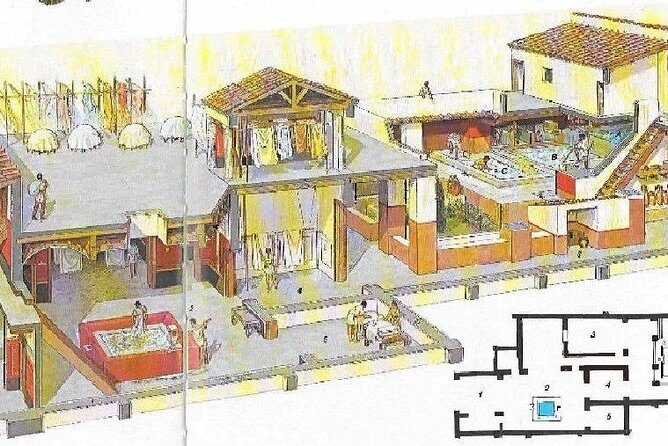
The Stabian Baths are about 10 minutes and represent one of Pompeii’s key public bath complexes. Roman bathing wasn’t just hygiene—it was a social activity with its own rhythm.
Even in a short visit, you can make the stop count by thinking about flow: where people would enter, how they’d move through different areas, and how it fits the city’s public life.
Lupanar: the brothel with infamous wall paintings
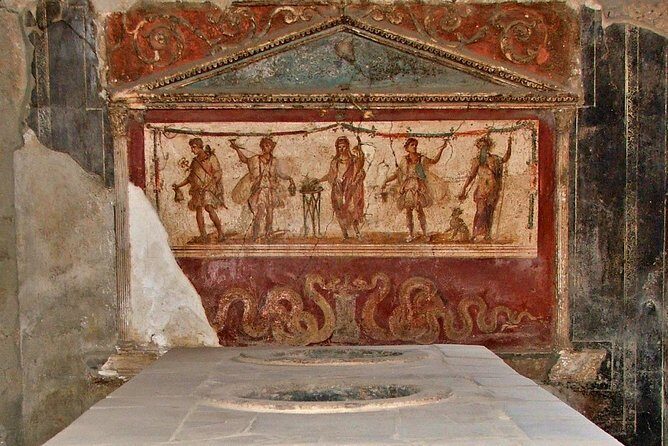
The Lupanar is about 10 minutes. You’ll hear its purpose in plain language, and it’s especially known for erotic wall paintings.
This stop may not be for everyone, but it’s important for understanding daily life in a way that’s not all “temples and fancy houses.” The realistic consideration: if you’re easily uncomfortable with sexual imagery, plan how you’ll handle this part of the day. You don’t have to stare; you can keep moving and focus on the broader context.
Antiquarium of Pompeii: objects and casts that make it real
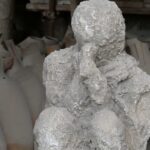
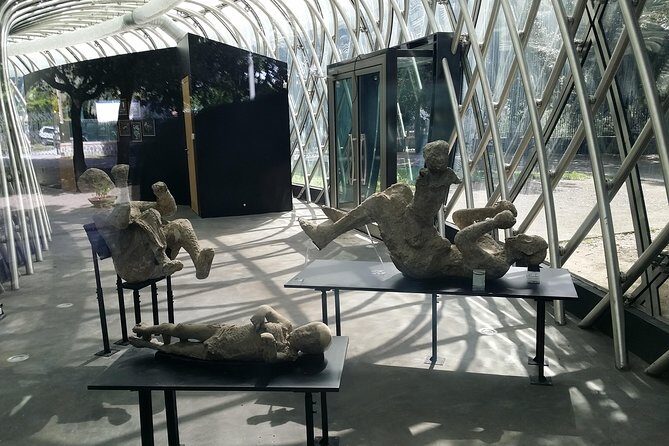
The Antiquarium gets about 10 minutes. This is where the trip becomes less abstract. You can see archaeological finds tied to everyday life, plus casts of victims from the Mount Vesuvius eruption and displays about Pompeii’s settlement history.
If you have limited time, this museum stop is smart because it gives meaning to what you see outdoors. Outdoors you get the city layout; indoors you get the “what happened and who these people were” layer.
Herculaneum: smaller site, better-preserved feel
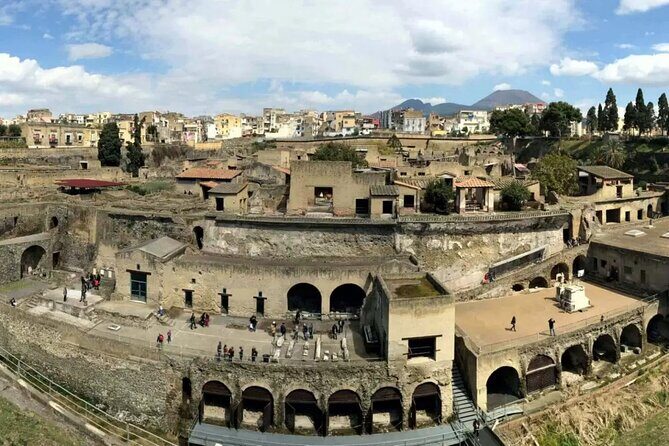
After Pompeii, you head to Parco Acheologico di Ercolano (Herculaneum). Expect about 5 minutes at the main archaeological park entrance area, with site admission not included.
Here’s the big reason Herculaneum is often called a highlight: it’s smaller and generally better preserved, because of the particular volcanic materials that buried it. That difference changes what you notice. Rather than only reading spaces as outlines, you may feel like the buildings are more intact, which makes daily life easier to picture.
House of the Hotel: a wealthy residence in ruins form
The House of the Hotel stop is short (about 5 minutes) but focused. It’s described as a big wealthy house. In practical terms, this is a “compare and contrast” moment: rich private space in a town that’s smaller and better preserved than Pompeii.
House of the Wooden Sacellum: the charred partition detail
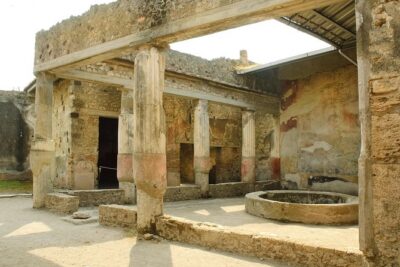
The House of the Wooden Sacellum gets about 10 minutes, and the description includes pre-Roman origins and a famous detail: a wooden partition door that was charred by the eruption, with bronze rings used for lamps.
This stop is one of the more memorable ones because it’s specific. When ruins include identifiable features like the partition and lamp rings, you don’t have to guess how things worked. You can understand it quickly.
Decumano Massimo and the street grid idea
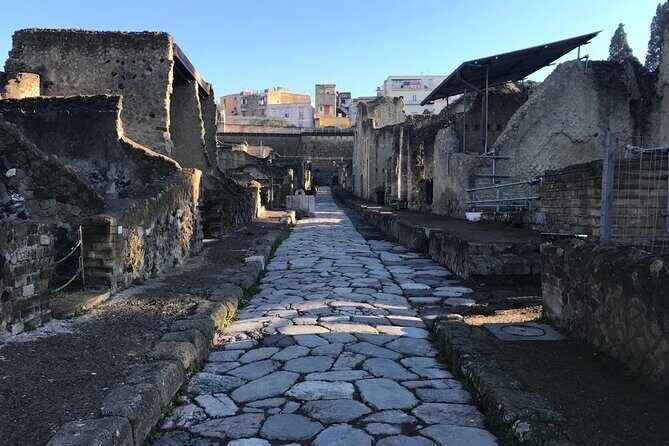
Decumano Massimo is the main street, about 5 minutes. This is a useful connector stop. It helps you see how the town’s layout functioned as a stage for movement and commerce.
Even if you have only a moment, orient yourself like this: the street is the skeleton; the houses are the organs.
College of the Augustales: civic religion meets power
The College of the Augustales is about 5 minutes and is linked to the Augustan period. The building was financed by two brothers, and the site description points to an epigraph found in 1960 placed on a wall today.
This is a quick stop, but it’s the kind that adds meaning if your guide is talking. You’re not just seeing stones; you’re seeing evidence of how people organized public religion and status.
Suburban Baths: another public life anchor
The Suburban Baths are about 5 minutes. You’ve already seen Stabian Baths in Pompeii, so this acts like a second data point: Roman bathing culture shows up in different forms across both towns.
If you’re paying attention, you can use this stop to spot similarities and differences without turning it into an architecture lecture.
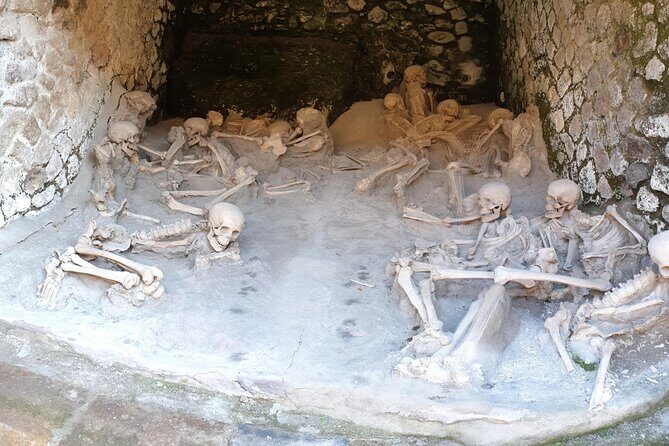
Antiquarium di Ercolano: the objects beside skeletons
The Antiquarium di Ercolano is about 10 minutes. It’s described as holding an amazing collection of objects found next to the skeletons.
This museum stop is the emotional counterweight to the outdoor walking. It’s where the town becomes personal, fast. If you prefer lighter viewing, you might want to give yourself a minute to step back afterward—but it’s still one of the parts that makes the day stick.
What a good guide (like Antonino) changes on day one
The tour can work without a guide, but the difference is usually how fast you understand what you’re looking at.
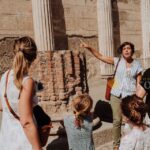
In the feedback you’ll likely see names like Antonino and examples like Anna, plus the point that some guides actively help you notice small things that you can later recognize on your own. That’s a big deal in Pompeii, where the sheer amount of detail can overwhelm you.
A couple of practical guide strengths that matter:
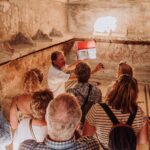
- Crowd navigation: one guide was credited with navigating Pompeii crowds and helping people avoid the worst congestion as much as possible.
- Customization: at least one instance includes a tour being tailored for a party member with sensory needs (visual and hearing impairment), plus another example of a second tour being customized for an adult daughter.
- Kid-friendly pacing: there’s a clear theme of children being entertained and informed through anecdotes rather than just facts.
If you have special needs, or you want a slower, more teachable pace, you should plan to ask ahead for route and pacing adjustments when the guided option is available.
Timing, crowds, and how you can avoid the worst of Pompeii
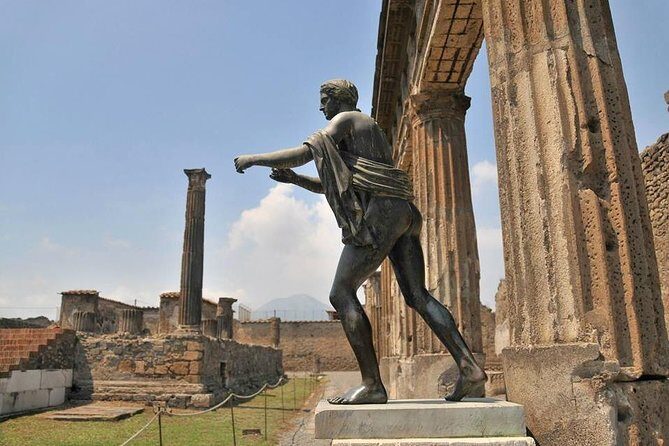
Pompeii’s crowd reality is simple: it’s popular. The best strategy is to be ready to start early, and to let your guide steer you through the flow.
One tip tied to this kind of schedule is to aim to get in when it opens, because you’ll usually find it easier to move and see things before the crush builds. If your pickup and entry timing can support an early start, it’s worth it.
Also, this itinerary’s stop times are short at many sites. That isn’t a problem if you approach each stop with a target:
- One thing to look for.
- One thing you want to understand.
- One photo only if it helps your memory later.
If you try to “finish” everything visually, you’ll feel rushed. If you pick targets, you’ll feel satisfied.
Who this tour is best for (and who should consider another plan)
This day trip is especially good for:
- People who want to see Pompeii and Herculaneum in one day without planning transit
- Families who need a guide to keep kids interested and moving
- Travelers who prefer a private driver so the day can flex to your pace
- Anyone who wants an English-speaking explanation rather than just reading signage
You might want a different format if:
- You’re hoping for long, slow stays inside a few major buildings only
- You dislike the idea of paying additional entry fees on top of the tour price
- You want a deeply guided, fully immersive experience for hours at each single site (this itinerary spreads time across many highlights)
Handy practical tips before you go
Bring the basics, because the day is active:
- Comfortable walking shoes (Pompeii and Herculaneum are made for walking, not standing still)
- A hat or sunscreen if the weather is hot
- A small bag you can keep close in crowded areas
For the “make it yours” factor:
- If you’re traveling with kids, agree on a simple plan for each stop: one picture, one question, then move on.
- If you’re a history person, ask your guide to point out the specific layout logic (street vs house vs public buildings) so the city makes sense quickly.
- If you’re sensitive to discomfort, decide ahead of time how you’ll handle the Lupanar stop.
Should you book this Pompeii and Herculaneum day trip?
Book it if you want maximum value from a limited Naples stay and you’re tired of logistics. The private pickup and transport, combined with major Pompeii and Herculaneum highlights in one day, is a strong way to get orientation fast and avoid transit headaches.
Skip or compare if you can spend multiple days on the ruins and you want longer stays inside a handful of buildings. Also, budget for entrance fees on top of the tour price so you don’t get surprised.
FAQ
Is pickup from Naples hotels and ports included?
Yes. Pickup and drop-off are provided for Naples hotels, ports, the train station, and even airport pickup and drop-off in the Naples area.
How long is the Pompeii and Herculaneum day trip?
Plan on about 6 to 7 hours, with the exact flow depending on timing at each site.
Are admission tickets included in the tour price?
Not fully. Access fees to Ruins and Monuments and the Porta Marina entrance are listed as not included. Some individual areas are marked included, but you should expect additional ticket costs.
Is the tour private?
Yes. It is a private tour/activity, so only your group participates.
Are the guides available in English?
Yes. The tour is offered in English, and a professional guide at the ruins is available if you choose the option that includes the guide.
Do I need to wear a mask on the private vehicle?
The information provided notes that, according to current Italian laws at the time of the listing, passengers must wear a mouth mask when traveling on a private vehicle.