REVIEW · NAPLES
From Naples: Archeological day to Pompeii and Herculaneum
Book on GetYourGuide →Operated by Around Vesuvio · Bookable on GetYourGuide
A day trip like this turns one famous eruption into two real places you can walk. You’ll spend your time on Pompeii and Herculaneum ruins that were frozen by Vesuvius’s ash, with stress-free coach transport from Naples to keep the day moving. The biggest watch-out: this format leans on self-guided audio, and a few details of the audio-map system may frustrate you if you prefer a live guide.
You’re also getting the kind of time split that makes sense. You’ll have about 2.5 hours in Herculaneum and 4 hours in Pompeii, so you can actually see the highlights without the “10 minutes and next bus” feeling.
And yes, Pompeii can feel like a lot. If you like clear signage and an easy-to-follow route, you’ll want to plan how you’ll navigate so you don’t wander in circles.
In This Review
- Key things that make this trip worth your attention
- A day trip that turns Vesuvius into something you can walk through
- From Naples by coach: the practical side that actually matters
- Herculaneum (Ercolano): 2.5 hours where ash preserved everyday life
- Pompeii: 4 hours to see more than just the postcard highlights
- Audio guide reality check: how to get the most from a self-guided day
- Skip-the-line tickets: where time actually gets saved
- Price and value: is $123.48 a good deal?
- Practical tips so your day stays fun (not exhausting)
- Should you book this Pompeii and Herculaneum day trip?
- FAQ
- How long is the day trip from Naples?
- What stops are included on the itinerary?
- How much time do you get at each archaeological site?
- What’s included in the ticket price?
- Do you need food included?
- Is an audio guide included for both sites?
- What documents do I need for the Pompeii audio guide?
- Is there free cancellation?
Key things that make this trip worth your attention
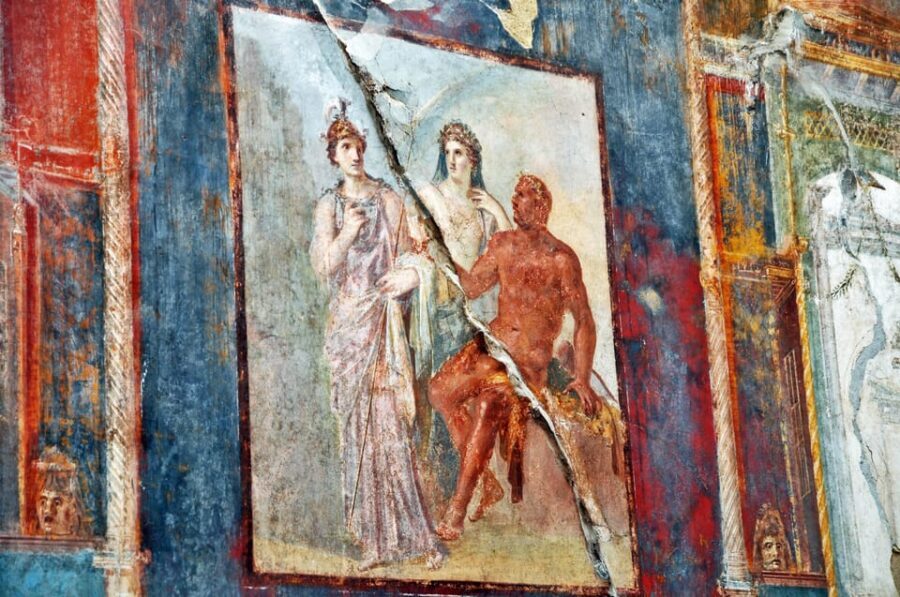
- Two sites in one day: Herculaneum first, then Pompeii, both tied directly to Vesuvius’s 79 AD eruption.
- Skip-the-line tickets: less waiting at the entrances, more minutes inside the ruins.
- Audio guide + maps: an easy way to understand what you’re seeing as you walk at your own pace.
- Ash-preserved details: you’ll focus on how the eruption protected homes, décor, and even food.
- Comfortable roundtrip transport: coach pickup and drop-off from Naples keeps the logistics simple.
A day trip that turns Vesuvius into something you can walk through
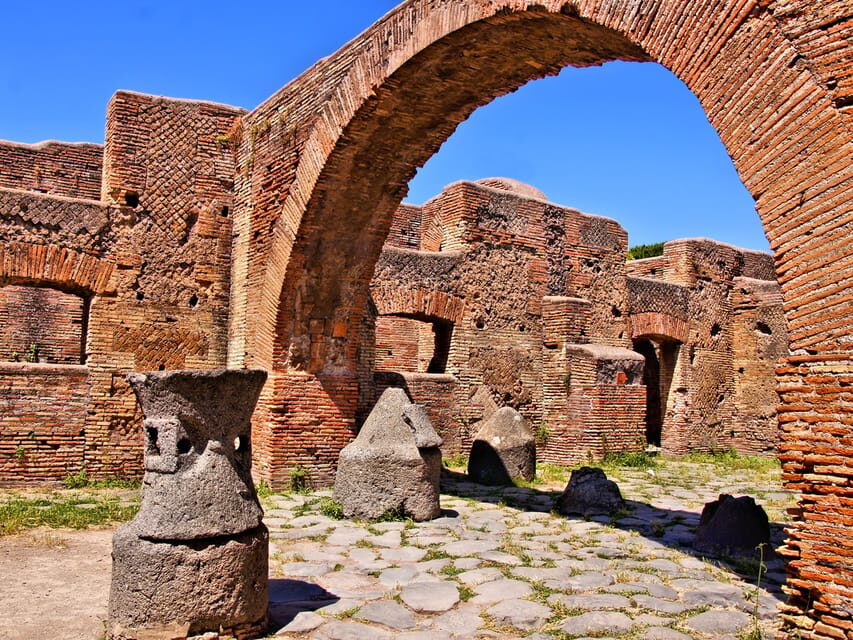
Vesuvius is famous for a reason, but it’s one thing to read about it and another to stand in streets that stopped mid-life. This trip is built around that shift: you go from Naples to the archaeological remains of two Roman towns, Pompeii and Herculaneum, both destroyed in the eruption of 79 AD.
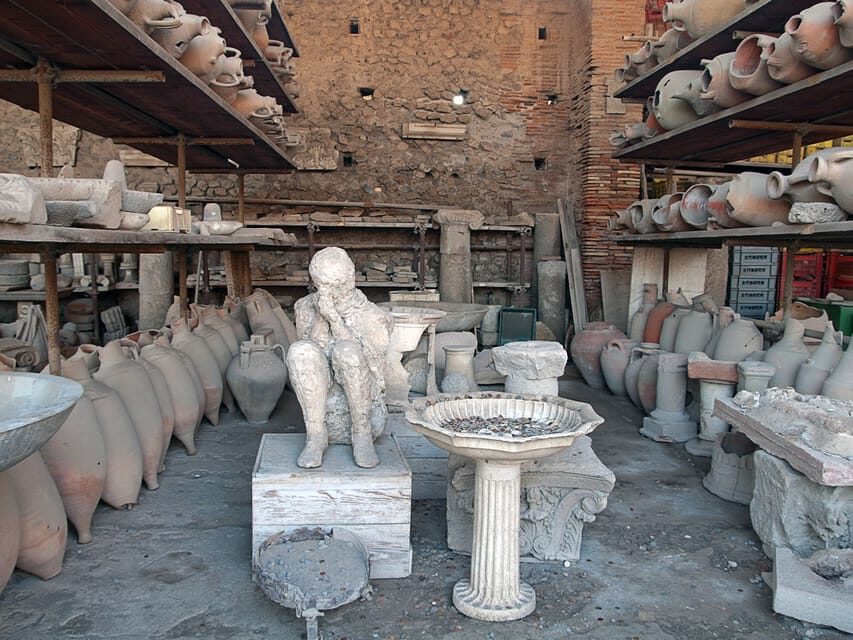
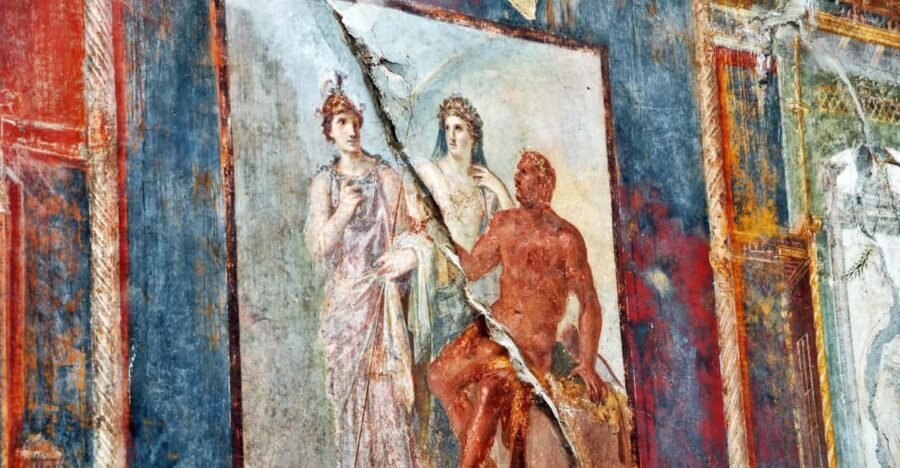
I like that it’s not just sightseeing. It’s structured time in the places where you can see the aftermath up close—frescoes, sculptures, houses, and the famous casts and skeletons that show the scale of the disaster.
The other thing I appreciate is pace. You get a real chunk of time in each site instead of a frantic hop-and-run.
Other Herculaneum guided tours and tickets we've reviewed at Vesuvius & the Bay of Naples



From Naples by coach: the practical side that actually matters
Transportation sounds boring until you’ve spent your day fighting trains, transfers, or parking. Here, you get roundtrip coach transport from Naples with pickup and drop-off at Via Galileo Ferraris, 40 (the bus logo is Around Vesuvio, and the meeting coordinates are 40.8505189, 14.2747942).
The schedule is straightforward: you ride to Ercolano (Herculaneum) and then transfer to Pompeii. In total you’re on the tour for about 8.5 hours, with travel time broken into short segments between stops.
One consideration: the pickup area may not look like a postcard neighborhood at first glance. If you’re meeting at the exact address, come a few minutes early, keep your belongings secure, and head directly to the bus rather than lingering with your map out.
Herculaneum (Ercolano): 2.5 hours where ash preserved everyday life

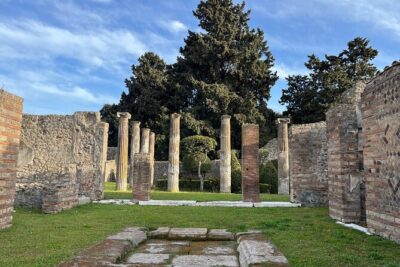
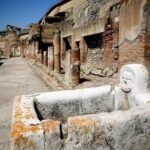
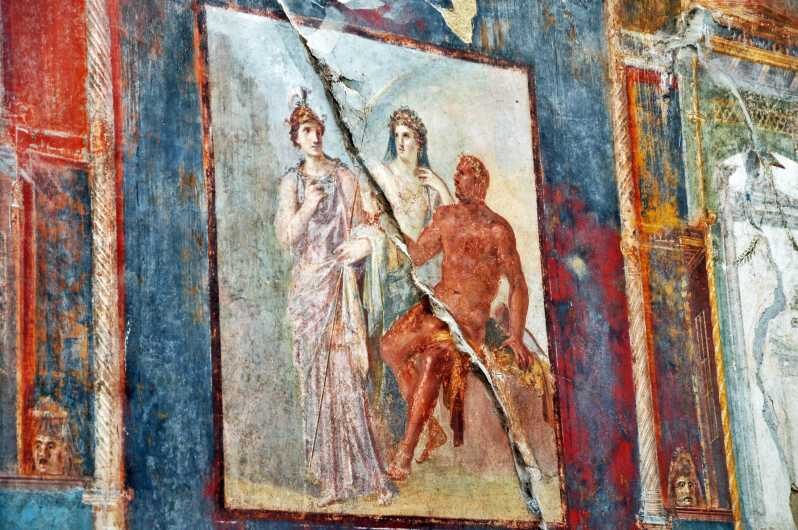
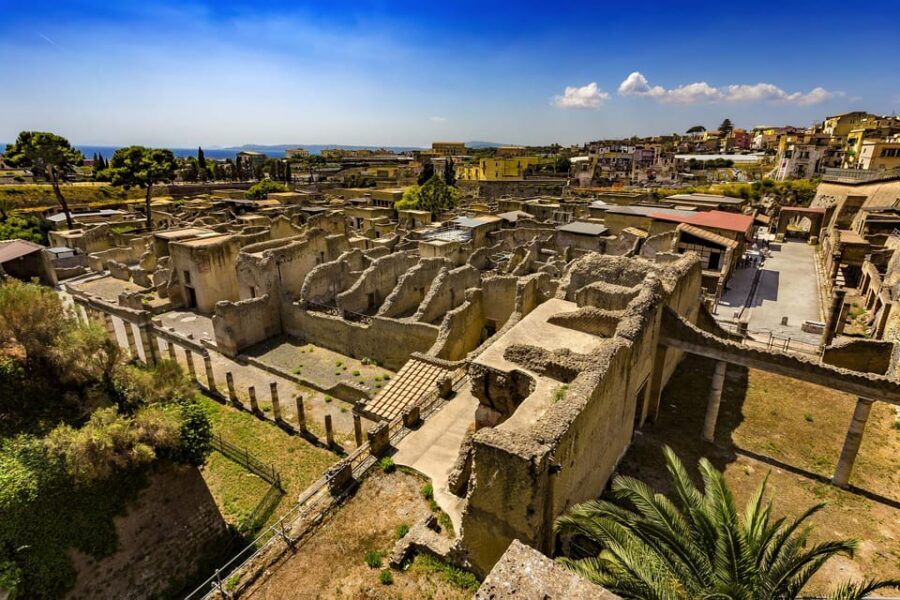
Herculaneum feels different from Pompeii. The ruins here often read like a town you might have stepped through the next day. You’ll have about 2.5 hours to explore Ercolano with a skip-the-line ticket and a digital audioguide designed to walk you through what you’re seeing.
This is the stop where the story of ash preservation really lands. You’ll notice how the eruption’s material protected homes, décor, and even evidence related to what people ate. That’s the kind of detail that turns archaeology from abstract into human.
What to do with your time:
- Use the audioguide early, so you understand what buildings and objects are meant to represent before you start drifting.
- Expect to slow down for the “small” scenes. Herculaneum often rewards careful looking more than sprinting to a top-ten list.
Possible drawback: if you rely on audio prompts that use button selections, you might find it annoying if the interface is hard to follow. The good news is that you’ll still be able to wander the site and make sense of things visually, especially if you stop and re-check where you are on the audioguide sequence.
Pompeii: 4 hours to see more than just the postcard highlights

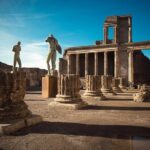
Pompeii gives you the bigger footprint and the bigger urge to roam. You’ll get about 4 hours inside the archaeological site after the transfer from Herculaneum.
This is where you can lose track of time and space fast. Pompeii is large, and even with an included guide and map, the street layout can feel confusing if you’re expecting easy-to-follow modern wayfinding. One theme you’ll want to plan for: the provided map helps, but signs and street patterns may look different from what you’re used to, so you’ll benefit from choosing a few must-sees and using the map to connect the dots.
What’s included to make Pompeii easier:
- Skip-the-line entry
- Audio guide plus a detailed map of Pompeii
- Time to explore freely, instead of being locked into a rigid walking route
And what you should pay attention to:
- Frescoes and sculptures: look for decorative “layers,” not just the big set pieces.
- Houses and temples: even if you don’t know the function of every room, the overall layout tells you how people moved through daily life.
- The casts and skeletons: they’re not just dramatic. They help you understand what the eruption did in real, physical terms.
One important heads-up: you must have a valid ID document to rent the Pompeii audio guide. If you forget it, you can lose access to the tool that helps the ruins click into place.
Audio guide reality check: how to get the most from a self-guided day
Audio guides can be brilliant—or a pain—depending on how the experience matches your style. This one is built around digital audioguides and an audio option that’s available in many languages (including English, Italian, French, German, Spanish, Portuguese, Russian, Hebrew, and Chinese). The driver is listed as English/Italian.
Here’s how to make audio guides work better:
- Start listening right after you enter each site, not after you’ve already walked around. Early context helps you recognize what you’re looking at later.
- If the system uses numbered selections, go slow the first time you switch tracks. Don’t assume you’ll remember how it works once you’re deep in the ruins.
- When something grabs you visually, pause and re-sync with the nearest audio segment instead of trying to power through.
The downside from a couple of practical experiences: some people had trouble figuring out which number to press, and the explanations can feel short if you’re expecting a more story-driven narration from a person. If you prefer a live guide who can answer questions on the spot, you may feel that you’re doing some of the interpretive work yourself.
Still, if you like exploring at your own pace, the audio format is a real plus. You can stop when you want and move on when you’re ready, without waiting for group cohesion.
Other tours departing from Naples we've reviewed at Vesuvius & the Bay of Naples





Skip-the-line tickets: where time actually gets saved

Skip-the-line is one of those features that sounds minor until you’re standing at a busy entrance. Here, you get skip-the-line tickets for both Herculaneum and Pompeii, which matters because the ruins draw big crowds.
That time saving becomes part of the overall value of the day. You’re paying for the convenience of less waiting and more time walking the streets and seeing the preserved details that make this trip so special.
If you’re the type who hates queues, this is one of the strongest reasons to choose a packaged day trip rather than trying to DIY everything with separate tickets and timing.
Price and value: is $123.48 a good deal?

At $123.48 per person, the cost isn’t the cheapest way to see Pompeii and Herculaneum. But it covers several pieces that add up fast if you plan on your own: roundtrip transportation, skip-the-line tickets, and audio guide tools (including a digital audioguide for Herculaneum and audio + map support for Pompeii).
So the question becomes: are you paying for comfort and time, or are you paying for content?
I think this trip makes the most sense if you want:
- A smooth day with minimal logistics stress
- Entry without waiting in long lines
- A guided explanation layer through audio and maps
If you’re a hardcore “I only want the best possible interpretation” traveler, you might regret not having a live guide. But if you’re happy to read the site with help from audio and you’re good at choosing what you want to see, the value lands better.
Also, remember you’re spending a limited window in each place. This is not a “weekend at the ruins.” It’s a focused day, which is perfect for first-time visits.
Practical tips so your day stays fun (not exhausting)
A good day trip depends on small decisions you make before you’re deep in crowds.
Here are the practical moves that help most:
- Bring a valid ID document so the Pompeii audio guide doesn’t turn into a problem. If you’re using a passport, keep it handy.
- Wear shoes you can walk in for hours. Pompeii especially involves lots of uneven ground and long stretches.
- Use the map and audio together. A map helps you find where you are; audio helps you understand why that spot matters.
- Pick your pace. You’ll have free time in both places, so if you like photos, plan shorter listening segments and longer viewing breaks.
For the pickup area, show up ready. If the meeting point area looks a little rough, don’t panic. Just be direct, be quick, and get on the bus.
Finally, don’t underestimate how much there is in Pompeii. Even with 4 hours, you’ll wish you had one more. The goal isn’t to see everything. The goal is to see enough of the right things so the eruption story feels real.
Should you book this Pompeii and Herculaneum day trip?
Book it if you want a comfortable, organized way to see two major sites in one day, with skip-the-line entry and built-in audio support so you’re not wandering totally blind.
Skip it (or consider a different format) if you know you struggle with self-guided audio or you strongly prefer a live guide who can explain and adapt as you go. In particular, the Pompeii audio guide setup can be a dealbreaker if you don’t have ID or if audio controls feel confusing.
For most first-time visitors from Naples, I think it’s a smart choice. You’re spending your limited time in the right places, and you’re getting the key benefit of this eruption story: ash-preserved details that turn history into something you can stand beside.
FAQ
How long is the day trip from Naples?
The total duration is about 8.5 hours.
What stops are included on the itinerary?
You visit Herculaneum (Ercolano) and Pompeii, with coach travel between the two.
How much time do you get at each archaeological site?
You’ll have about 2.5 hours at Herculaneum and 4 hours at Pompeii.
What’s included in the ticket price?
Included roundtrip transportation from Naples, skip-the-line tickets for both Herculaneum and Pompeii, and audio guide support (digital audioguide for Herculaneum, and audio guide plus a detailed map for Pompeii).
Do you need food included?
Food and drinks are not included.
Is an audio guide included for both sites?
Yes. The tour includes a digital audioguide for Herculaneum, and an audio guide (with a detailed map) for Pompeii.
What documents do I need for the Pompeii audio guide?
You must have a valid ID document to rent the Pompeii audio guide.
Is there free cancellation?
Yes, you can cancel up to 24 hours in advance for a full refund.
If you want, tell me your travel month and your preferred pace (fast photo stops vs slower reading time), and I’ll suggest a simple plan for what to prioritize inside each site during the hours you have.