REVIEW · POMPEII
The Ultimate Ruins of Pompeii and Herculaneum Private Day Trip
Book on Viator →Operated by Withlocals · Bookable on Viator
Two cities hit fast, with real order. That’s the appeal of this private Pompeii and Herculaneum day trip: you get guided time in both ruins without turning it into a logistical scavenger hunt. I like how the tour is built around keeping you moving, especially at Pompeii, where crowds can steal your day.
Two things I really like: first, the fast ticket line approach with a licensed guide, so you don’t spend your morning baking while waiting. Second, the day’s structure actually creates contrast. Pompeii gives you the big public sights and the street-level drama, then the short train ride resets you for Herculaneum’s calmer, more intimate streets and homes.
One drawback to factor in: no hotel pickup or drop-off is included. If your lodging is far from the meeting point, you’ll want to plan that commute (or budget for a taxi/ride) so the day stays smooth.
In This Review
- Key Things to Know Before You Go
- Skip the Lines at Pompeii’s Main Gate
- Pompeii in Two Hours: Theatre, Baths, Brothel, Forum
- Train to Herculaneum: A More Personal Kind of Ruins
- Licensed Guides Who Turn Stones into People
- Price Check: Is $461.98 Per Person Good Value?
- Practicalities: Meeting Point, Timing, and Getting Back
- Who This Private Tour Fits Best
- Should You Book This Pompeii and Herculaneum Private Day Trip?
- FAQ
- How long is the Pompeii and Herculaneum private day trip?
- Does the tour include admission tickets?
- Is the tour private, or will I be mixed with other groups?
- Do I get hotel pickup or drop-off?
- How do you get from Pompeii to Herculaneum?
- Where does the tour start and end?
- What language is the guide?
- Can I choose a start time?
- Is this tour refundable?
- Is the tour suitable for most travelers?
Key Things to Know Before You Go
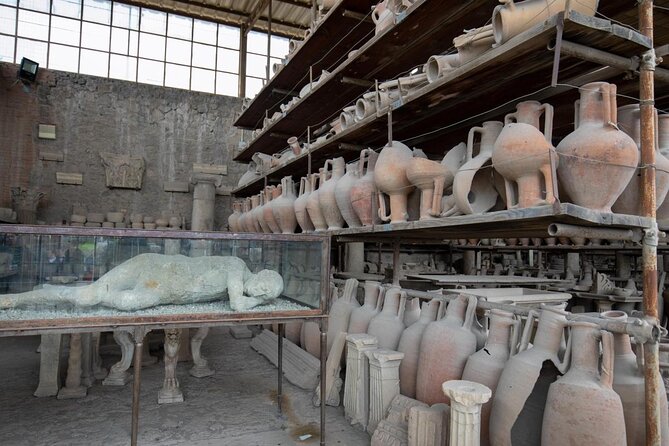
- Fast ticket line at Pompeii with a licensed guide, helping you start seeing sights sooner
- Two hours in Pompeii, two in Herculaneum so the towns feel distinct instead of rushed blur
- Train transfer between sites (about 30 minutes), which cuts down on the hassle of cross-town travel
- A private group setup where you can ask questions and set a pace that fits your interests
- Licensed local guides with story-first explanations, including Roman life and the eruption context
- Weather and tight scheduling can matter, since your guide may be working within set time blocks
Skip the Lines at Pompeii’s Main Gate
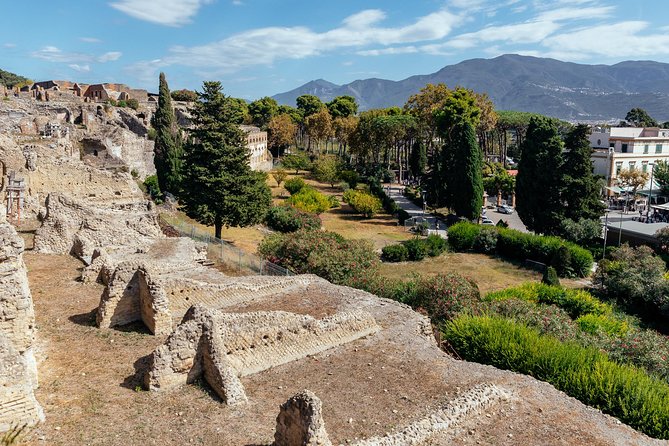
Pompeii is one of those places where timing equals enjoyment. If you arrive and get stuck at the wrong line, you lose the best part: prime morning light and momentum. This tour is designed to prevent that early-day pain by using a guided entry with preferential access. The guide handles the key parts of getting you into Pompeii, using the included tickets and getting you onto the faster path rather than the long queue.
Another small but useful detail: you’re given a mobile ticket, which usually makes day-of logistics easier (no hunting for printed paper). And you get an official, English-language guide, which matters at Pompeii because the site is huge and easy to misunderstand if you’re reading captions without context.
Practical note: the meeting point is Via Villa dei Misteri, 80045 Pompei NA, Italy, and the tour ends back there. It’s near public transportation, which is helpful if you’re not staying within walking distance.
If you're still narrowing it down, here are other tours in Pompeii we've reviewed.


Pompeii in Two Hours: Theatre, Baths, Brothel, Forum
Your Pompeii time is about two hours, guided. That’s a smart length for Pompeii on a first visit. The city is enormous, and trying to see everything on your own often turns into the same problem: you either sprint and miss meaning, or you wander and end up back where you started.
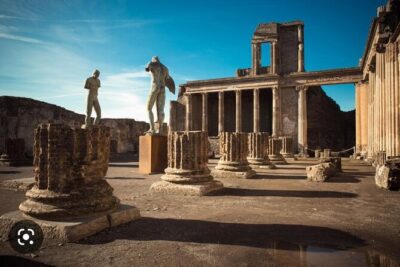
In this tour, you’re taken through a curated sweep of Pompeii’s standout areas. Expect stops that can include the ancient theatre, baths, a brothel, and the forum. These aren’t random picks. They map the rhythm of daily Roman life:
- The theatre shows public culture and how people gathered.
- The baths explain hygiene, social habits, and the way spaces were used.
- The forum gives you the political and civic backbone of the city.
- The brothel area helps you understand the darker, more human side of everyday life—how normal people lived, spent, and worked.
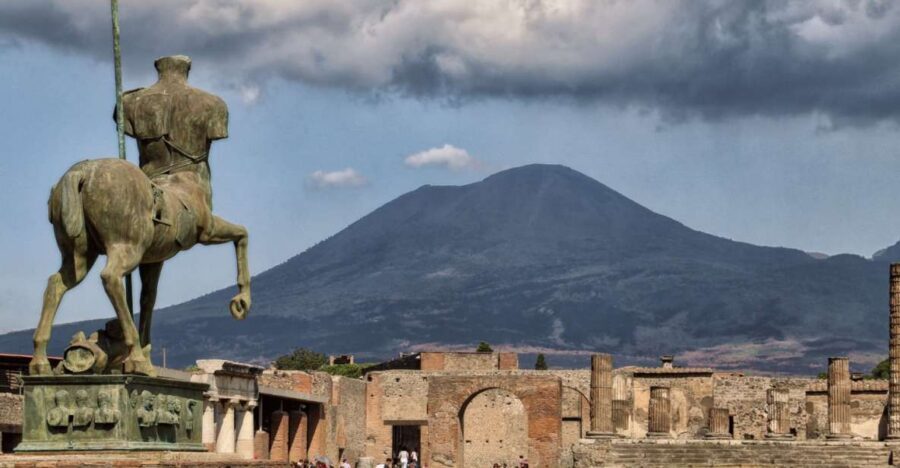
What makes guided time here worth it is the “how did people live” framing. Guides on this route typically connect ruins to real Roman routines, then tie it to the broader story of Vesuvius and what happened to the city. You don’t just look at stones; you see the stage set for daily life.
One more thing: you get to move as a group, which is underrated. At Pompeii, it’s easy to lose your bearings. Having someone lead you through the most memorable sections means you’re not fighting the site map on top of everything else.
Train to Herculaneum: A More Personal Kind of Ruins
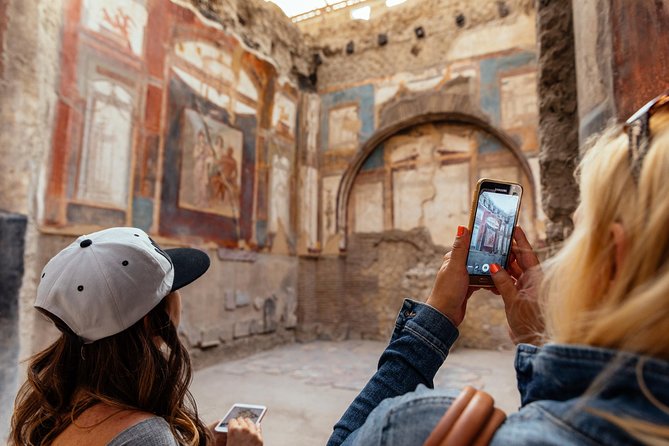
After Pompeii, you shift gears with a 30-minute train ride to Herculaneum. That transfer is a big part of why this plan works. You don’t have to guess transit times, book separate legs, or sit through confusing station changes. Instead, the schedule keeps the day coherent.
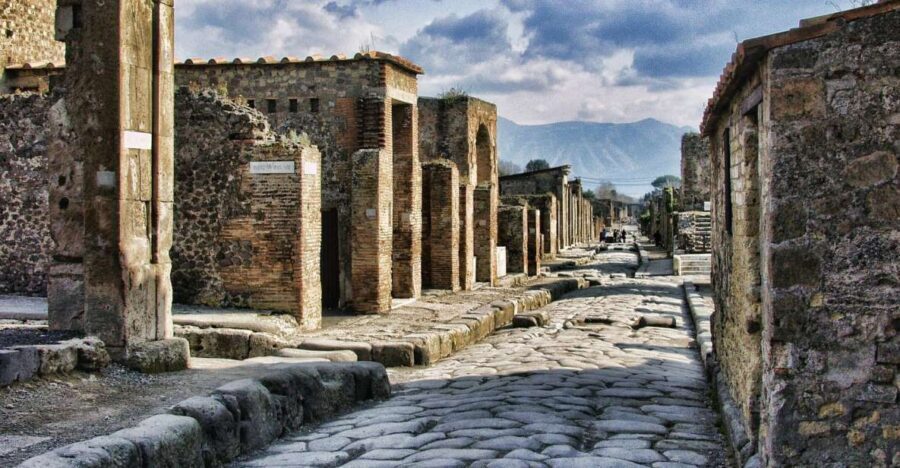
Herculaneum is different from Pompeii in feel. Pompeii’s ruins can feel wide-open and dramatic. Herculaneum often feels more “in your face” because structures and layouts sit closer together. The guided visit here also tends to focus on practical everyday elements: ancient stores, private houses, and sacred sights.
You’ll also spend about two hours in Herculaneum, with time for a panoramic view of the historic remains. That viewpoint helps you understand why this town feels like it’s preserved in layers rather than scattered across a broad plain.
If you want variety in one day, this pairing is a good match. Pompeii explains public life and civic spaces. Herculaneum shows domestic life and the texture of neighborhoods. Together, they make the eruption story feel less like a single tragedy on a timeline and more like a real snapshot of two communities.
Licensed Guides Who Turn Stones into People
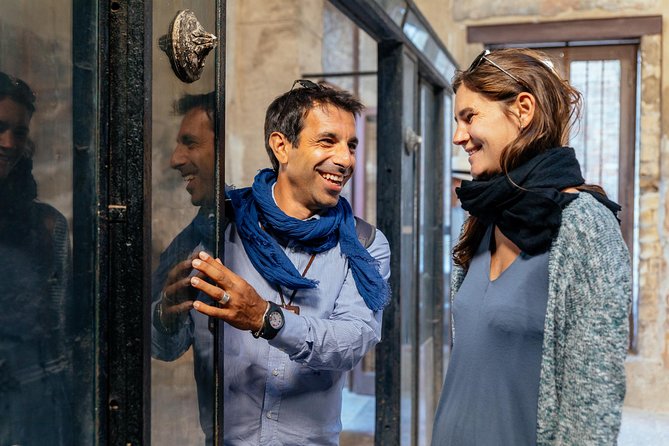
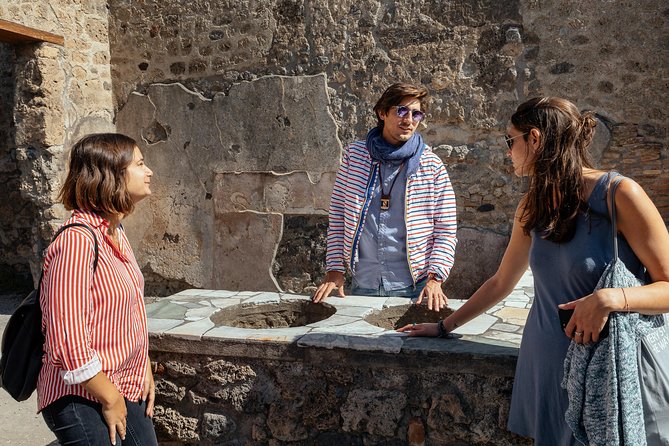
The biggest strength of this experience is the human one: your guide. This is a private tour, so you’re not stuck listening to the same route speech while trying to see around other groups.
In the names you’ll hear associated with this tour, you’ll find guides like Dario, Barbara, Raffaele, and Roberto. Each has a reputation for story-driven explanations. Some guides connect technical questions—archaeology methods, geology, and local flora—to what you’re seeing right in front of you. That’s not common on casual tours. It’s especially helpful if you’re the type who wants “why is this here?” and “what does this detail mean?” answered clearly.
You’ll also notice that strong guides adjust. One example from the tour experiences you might expect: a guide will often ask what you’re most interested in at Pompeii and build the route around it. Another common feature is ongoing day-of communication, including WhatsApp-style coordination to reduce the chances of missing the right train or meeting point on the way back.
That said, “private” doesn’t mean “everything can be improvised.” You still have fixed time blocks for each site. So if you have deep questions, don’t be shy, but also understand you’re touring within a set window.
Price Check: Is $461.98 Per Person Good Value?

Let’s talk money directly. At $461.98 per person, this isn’t a budget excursion. The question isn’t whether the price is high. It’s whether it saves you enough time, confusion, and stress to justify it.
Here’s what you’re paying for, based on what’s included:
- Private tour (only your group)
- Local licensed guide
- Tickets for Pompeii and Herculaneum included
- Preferential access at Pompeii to use a faster ticket route
- Train transfer between Pompeii and Herculaneum (about 30 minutes)
So the value math looks like this: if you want a tight, guided route that reduces queue time and makes Pompeii make sense, you’re buying focus. If you’re traveling as a group and split the cost, private starts to feel less painful.
When it may not feel like value:
- If your main goal is just wandering and taking photos, you could get similar access with a less expensive option.
- If you need hotel pickup/drop-off, remember it’s not included here. You’ll handle that part yourself, which can add cost depending on where you’re staying.
A useful timing tip: this kind of popular day trip can book up. It’s commonly reserved around 49 days in advance on average. If you have firm travel dates, don’t wait until the last minute.



Practicalities: Meeting Point, Timing, and Getting Back
You can choose a morning or afternoon start time, which is helpful because Pompeii crowds and weather change throughout the day. For many first-timers, a morning start usually wins for energy and light. But an afternoon start can work if it fits your train plans or you want to avoid the most intense morning rush.
Your tour starts at Via Villa dei Misteri and returns there at the end. Because hotel pickup and drop-off aren’t included, you should plan your own way to that meeting spot and your way back. If you’re staying in the area, this is easier. If you’re coming from far out, you might want to arrange transport in advance.
One more thing to keep in mind: the day runs on time blocks. If rain hits hard, you may still keep moving within the schedule. Pompeii and Herculaneum won’t wait for clear skies, and the guide may have another tour after yours. Bring a compact umbrella or rain layer so you’re not miserable while still trying to enjoy the sites.
Who This Private Tour Fits Best
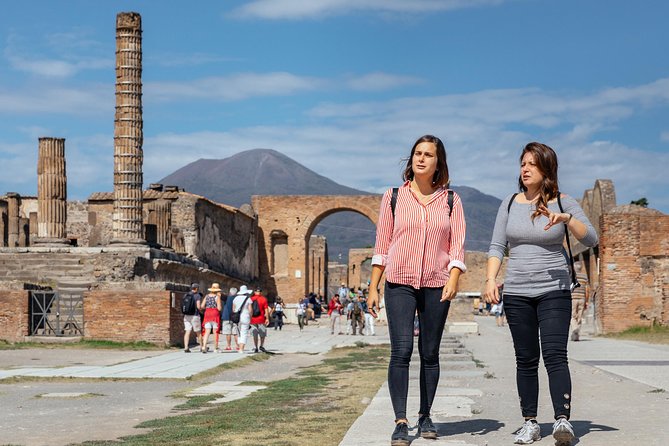
This is a great match if you want:
- A guided walkthrough that connects ruins to real Roman daily life
- A day plan that doesn’t require you to solve transit on the fly
- Time in Pompeii and Herculaneum without spending most of the day commuting
It’s also a good choice for travelers who don’t want to gamble with self-guided wandering. Pompeii’s scale can be intimidating. This route keeps you inside a “greatest hits” track while still giving you enough context to feel like you understood what you saw.
If you’re on a strict budget, you may prefer a group tour option. But if you’re the type who hates waiting in lines and wants your questions answered without feeling rushed, the private format can be worth it.
Should You Book This Pompeii and Herculaneum Private Day Trip?
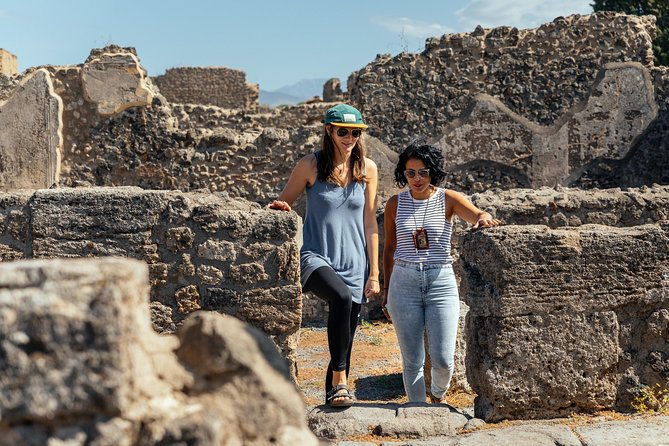
I’d book it if your priorities look like this: save time at Pompeii, get expert explanations, and see two different kinds of preserved Roman life in one day. The combination of fast entry, included tickets, and the short train ride makes the plan feel built for first-timers who want real results without getting lost.
I’d think twice if your biggest constraint is cost, or if you’re expecting your guide to solve your entire transport puzzle. Since hotel pickup/drop-off is not included, your “real” cost is whatever you’ll add to get to Via Villa dei Misteri and back comfortably.
If you can handle the meeting point logistics and you care about guided interpretation, this tour is the kind of day trip you’ll remember. Not just because the ruins are famous, but because someone helps you see what those places were for.
FAQ
How long is the Pompeii and Herculaneum private day trip?
It’s about 5 hours total.
Does the tour include admission tickets?
Yes. Tickets for Pompeii and Herculaneum are included.
Is the tour private, or will I be mixed with other groups?
This is a private tour/activity. Only your group participates.
Do I get hotel pickup or drop-off?
No. Hotel pickup and drop-off are not included.
How do you get from Pompeii to Herculaneum?
You take a train, about 30 minutes long.
Where does the tour start and end?
It starts at Via Villa dei Misteri, 80045 Pompei NA, Italy, and ends back at the meeting point.
What language is the guide?
The tour is offered in English.
Can I choose a start time?
Yes. You can choose from convenient morning or afternoon start times.
Is this tour refundable?
No. It’s non-refundable and cannot be changed for any reason.
Is the tour suitable for most travelers?
Most travelers can participate.