REVIEW · POMPEII
Private Pompeii and Vesuvius with Wine Tasting and Full Tickets
Book on Viator →Operated by Leisure Italy · Bookable on Viator
Pompeii and Vesuvius in one private day. This tour strings together a private Pompeii walk, a climb up to Vesuvius’ crater, and then a wine-and-lunch pause at Cantina del Vesuvio on the mountain’s slopes. I like that the visit is guided and focused, so you get more understanding per minute than you would drifting around. The one real catch: it’s a long day with real walking and sun exposure on a gravel-and-ash trail.
What I love most is the hands-on guidance. In Pompeii, a guide can point out details you’d miss on your own—like why Porta Marina mattered for arrivals by sea, or how the Forum ties together religion, politics, and markets in one square. I also like the food-and-wine stop because it’s not a quick sip-and-run; you sit down for a set meal paired with multiple wines at the Cantina del Vesuvio (Russo family since 1930).
One consideration: you’ll be moving from site to site. The Pompeii portion includes many short stops, so if you want lots of free time to linger alone in just one ruin, you may find the pace a bit tight. That said, it’s a smart trade-off if you want the big, meaningful highlights in a single day.
In This Review
- Quick reasons this day works
- Pompeii Highlights With a Real Private Guide (and Optional Kids Mode)
- The Pompeii Stops That Explain Everyday Roman Life
- Wine Tasting and Lunch at Cantina del Vesuvio: Where the Day Slows Down
- The Vesuvius Climb: Gravel Steps, Wind, and a Short Volcanologist Talk
- Price and Logistics: Is $701.99 Per Person Good Value?
- Who This Tour Fits Best (and Who Should Rethink It)
- Should You Book This Private Pompeii and Vesuvius Day?
- FAQ
- How long is the Pompeii and Vesuvius private tour?
- Is pickup included?
- Are tickets included for Pompeii and Vesuvius?
- Is this tour private or shared with strangers?
- Is the Pompeii portion kid-friendly?
- How hard is the walk on Mount Vesuvius?
- Is there a guide at Vesuvius?
- What’s included at the winery?
- What should I bring for the day?
- Can I get a full refund if I cancel?
Quick reasons this day works
- Private transport + guided Pompeii flow: you’re not stuck in giant-group choreography.
- Full tickets included: you’re covered for the Pompeii admissions and the Vesuvius park entrance experience.
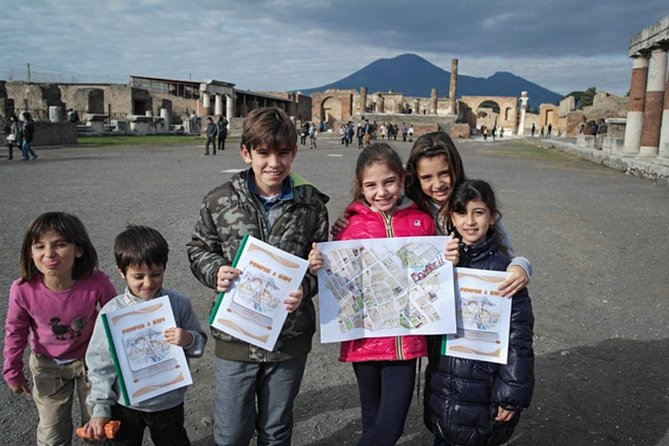
- Kid-friendly Pompeii option: Pompeii for Kids activities with an interactive tour book is recommended for ages 6–11.
- Real Vesuvius effort, handled smartly: the driver takes you close to the trail start, then you walk up on gravel and ash.
- Wine tasting paired with lunch: a set menu and a spread of local wines at Cantina del Vesuvio.
- Varied Pompeii stops: from gates and temples to baths, elite houses, markets, and the theater.
Pompeii Highlights With a Real Private Guide (and Optional Kids Mode)
This is the kind of Pompeii tour that makes sense if you want to see a lot without feeling lost. The day starts with pickup in Naples, Sorrento, Pompeii, and even points like train stations, airports, or cruise terminals/ports. Once you’re on board, you’re in a private van with just your group, not mixing into a crowd that all wants the same photo angle at the same time.
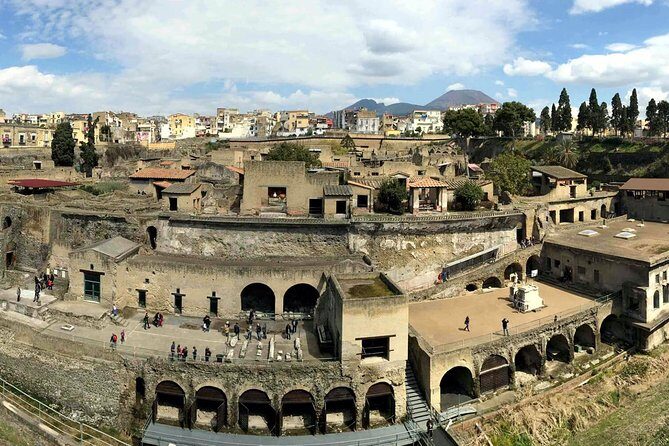
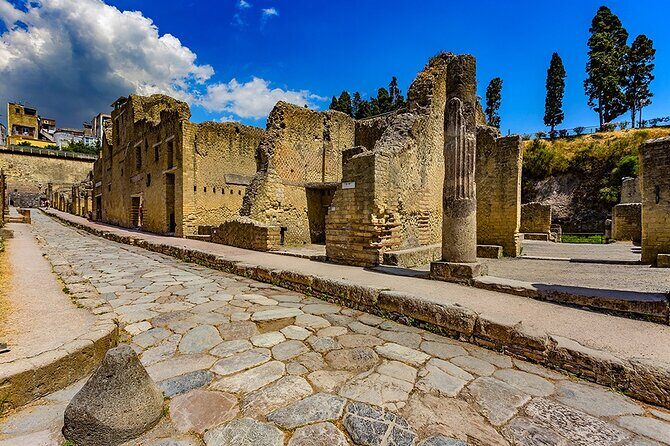
In Pompeii, your guide chooses the highlights for the Archaeological Park route. You’ll get a mix of big-name monuments and the “why this mattered” context. That’s the difference between seeing ruins and understanding a Roman city that froze mid-routine in AD 79.
If you’re traveling with kids, this is where the tour earns its reputation. The Pompeii for Kids activities are designed for ages 6 to 11, and the interactive tour book keeps the younger crowd engaged while you adults still get real historical value. I like that it’s not just a kid badge—it’s built into how the Pompeii visit is shaped.
Practical tip: Pompeii is spread out, and even short transitions add up. Bring your patience, and keep expectations clear: this is a guided “greatest hits” day, not a slow museum marathon.
If you're still narrowing it down, here are other tours in Pompeii we've reviewed.

The Pompeii Stops That Explain Everyday Roman Life
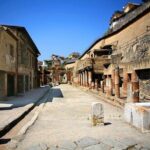
Pompeii works best when you connect places: how people entered the city, where they prayed, how they spent money, where they washed, what the wealthy decorated their homes with, and where entertainment happened. This tour does that with a sequence of stops you can mentally link.
Porta Marina e cinta muraria (harbor gate and walls)
This gate was one of the main entrances, near the port area. It’s also a quick way to visualize logistics—merchants, sailors, and visitors arriving into a controlled city. You can walk along the original stone ramp and see the fortifications that once guarded access. Even as a short stop, it helps you picture Pompeii as a functioning city, not a theme park of ruins.
Temple of Apollo (religion in the open courtyard)
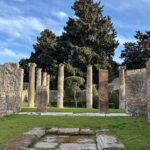
Apollo’s temple sits near the Forum and represents Pompeii’s older and central religious life. The layout matters here: offerings happened in a large open courtyard, and the temple was tied to the sun, music, and prophecy. There was also a famous bronze of Apollo that aimed his bow. This stop is brief, but it gives you a feeling for how public life and worship overlapped.
Forum of Pompeii (politics, commerce, and ceremonies)
From elevated perspectives around the main square, you can grasp how civic space worked in Roman times. The Forum isn’t one building—it’s a whole system of temples and administrative spaces framing daily announcements, deals, and festivals. The Capitolium, Basilica, and Macellum are visible within this area, so you start “seeing the city map” in your head.
Macellum (the food market complex)
The Macellum was Pompeii’s covered food market—fish, meat, fruit, and imported goods. What I like here is that the organization of the market still reads in the layout: stalls, storerooms, and a central shrine. It’s easy to imagine the bustle when you’re standing in a space designed for transactions and supplies.
Terme del Foro (Forum Baths and daily social life)
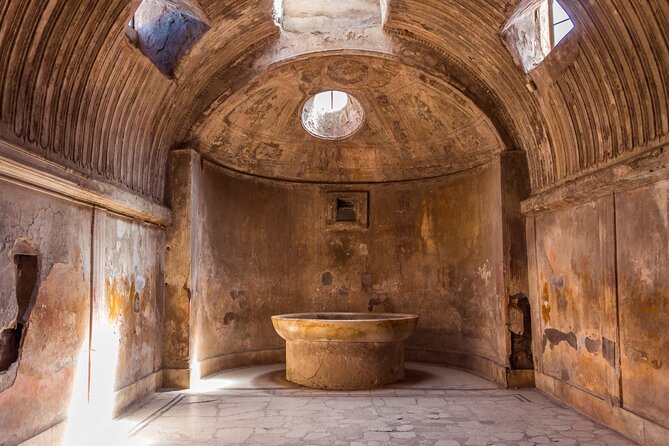
These baths were among the most elegant public complexes in Pompeii. You’ll get a sense of the routine: changing rooms, warm and hot bathing areas, and a cold plunge. The hypocaust heating system is the standout engineering detail—Roman comfort built on underground airflow. Even in ruins, it feels like a social space where people caught up and relaxed, not just washed and went.
Casa dei Vettii (an elite merchant home with art)
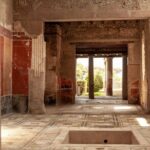
This is your shift from public city spaces to private luxury. The House of the Vettii is known for frescoes and a polished layout organized around atria and peristyle gardens. It’s a reminder that Pompeii wasn’t only about wealthy Romans—merchant owners could display status and taste through art and architecture.
Insula dei Casti Amanti (how workers and neighbors lived)
This block is named for a lovers’ fresco, and the route is designed to protect fragile surfaces. You access the site via elevated ramps that let you look down into workshops, storerooms, and domestic rooms without trampling what’s preserved. I like that this is one of the few ways you can picture daily life in a neighborhood caught mid-moment at eruption time.
Teatro Grande (Roman drama and crowds)
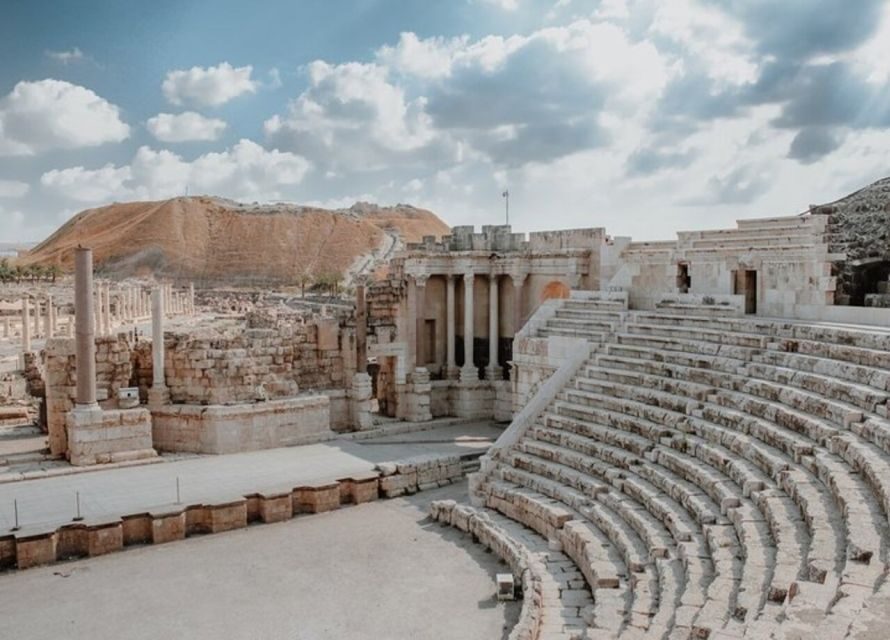
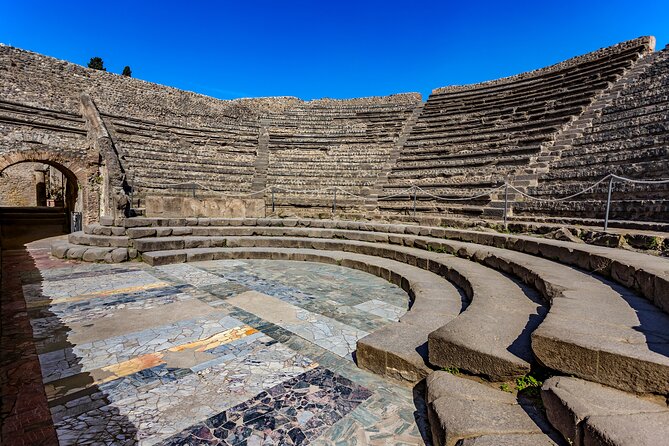
If you want the emotional highlight of the Pompeii circuit, this is a strong candidate. From the upper terraces, you look down at the semicircular seating, the stage building, and the orchestra area. Pompeii theater wasn’t background entertainment—it was major community culture with impressive acoustics and big views (including Mount Vesuvius in the distance on the right day). Standing where performances once happened helps you understand why crowds showed up.
Antiquarium di Pompei (the emotional “set-up” before walking streets)
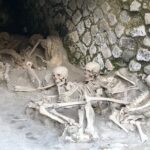
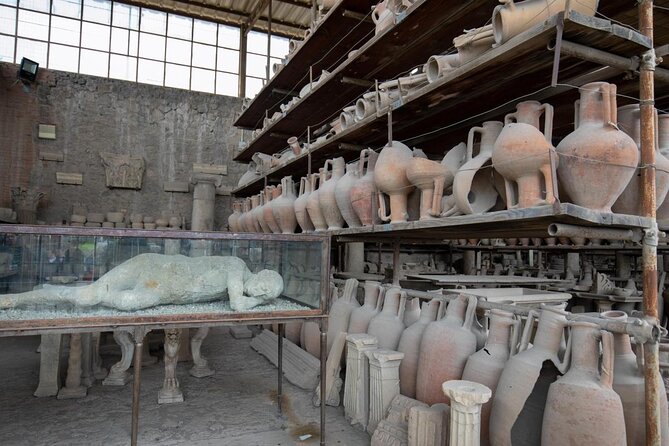
Before you wander the ruins, this museum gives context: artifacts recovered during excavations, household objects, statues, jewelry, inscriptions, and well-organized galleries. The emotional punch comes later in the final rooms, where plaster casts of victims and eruption material frame what you’ll see outside. If you’re the kind of person who likes meaning behind the stone, this stop is worth your time.
Wine Tasting and Lunch at Cantina del Vesuvio: Where the Day Slows Down
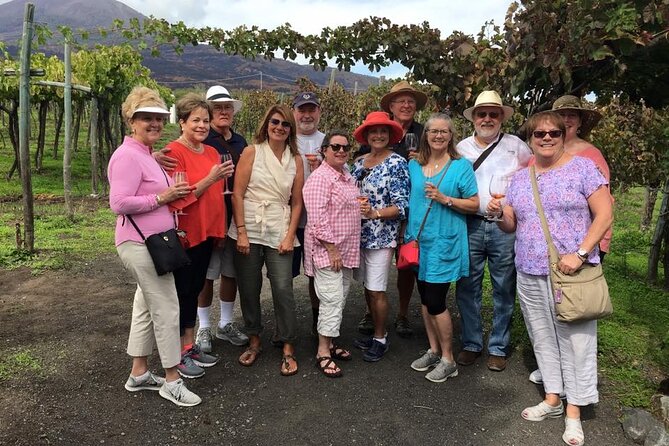
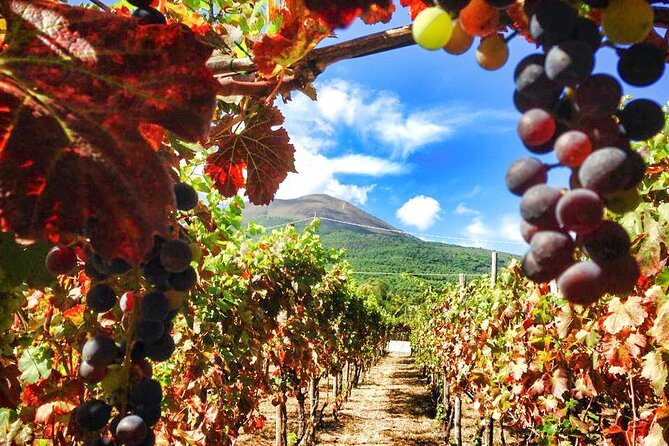
After Pompeii, the tour heads to Mount Vesuvius’ National Park region for the vineyard experience at Cantina del Vesuvio – Famiglia Russo (family-run since 1930). This is the part I’d look forward to even if you’re not a heavy wine person, because the setting makes the taste more memorable. You’re on volcanic slopes, so you’re literally drinking from Campania’s dramatic geography.
At the winery, you can explore the vineyards and then taste signature reds and whites. The lunch is a set menu, not a choose-your-own-adventure. The starter includes bruschetta plus provolone cheese and cured meats (salame and capocollo). The main is spaghetti with the cherry tomatoes “del Piennolo” from Mount Vesuvius. Dessert is Pastiera, the wheat-and-ricotta Neapolitan cake.
You’ll also be served a range of wines, including sparkling rosé, white, rosé, red, red reserva, and a sweet dessert wine (served alongside the meal). I like that this isn’t the typical “one sip and done” stop. You eat, you taste, and you leave with a clearer sense of what Campania does with volcanic terroir.
Diet notes: the tour info only specifies this menu set-up, so if you have allergies or dietary restrictions, you’ll want to check in advance rather than assume flexibility.
The Vesuvius Climb: Gravel Steps, Wind, and a Short Volcanologist Talk
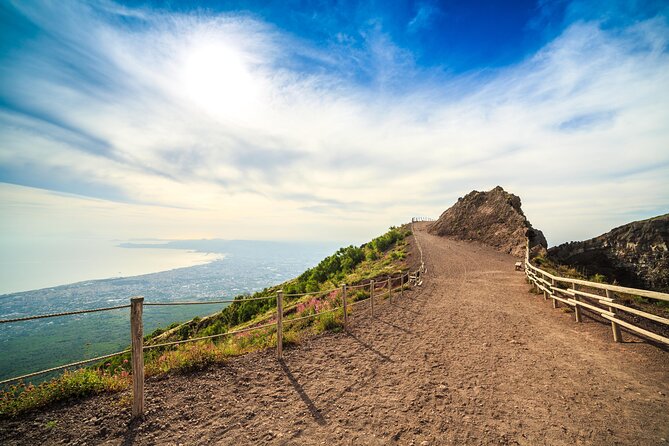
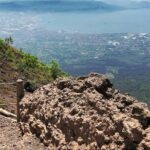
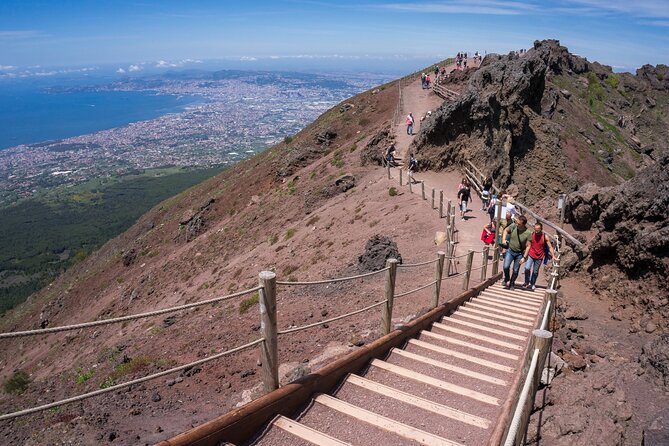
Vesuvius is where the day turns from ruins into something physical and real. The driver takes care of the Vesuvius tickets and brings you close to the beginning of the trail. Then it’s a walk up for about 30 minutes on a path made of gravel and ash.
You’ll be in the sun and exposed to wind. That matters. If you go in expecting a casual stroll, you might feel it more than you planned. Good shoes are not optional here—grit plus slope equals tired feet fast.
On top, there’s a live introduction from a volcanologist in English, timed like a shared talk (about 10 minutes, starting every few minutes). After that, you can walk halfway around the crater on your own for about 30 minutes. This is the window for photos on clear days—when you can see wide views and feel how close you are to the volcanic “engine” behind everything you saw in Pompeii.
If someone in your group doesn’t want to climb all the way, there’s a café by the parking lot. That’s a helpful pressure release if you’re traveling with mixed-energy adults or kids.
One more thing I appreciate: the experience is set up to work even with weather shifts. There’s an example in the tour history of Vesuvius being handled during snowy conditions in April, which is a reminder that the mountain can change fast and the team still keeps the plan moving.
Price and Logistics: Is $701.99 Per Person Good Value?
Let’s talk money plainly. At $701.99 per person, this is not a budget excursion. The value comes from the fact that you’re paying for a tight set of inclusions that usually cost extra when you mix vendors yourself.
Here’s what’s built in based on the tour info:
- Private transport with pickup offered from many places (Naples, Sorrento, Pompeii, train stations, airport, cruise terminal/port)
- A private guide for the Pompeii portion, designed around highlights
- Full tickets included for the Pompeii stops listed and for Vesuvius National Park
- A wine-tasting and lunch experience at Cantina del Vesuvio
- A Vesuvius climb with the driver taking you close to the start and handling tickets
If you were to book Pompeii admission, a guided tour, Vesuvius tickets, transport, and then a winery lunch separately, the costs often add up quickly. You also get the biggest hidden value: less stress. Instead of coordinating trains, timed entries, and separate guides, you roll through the day with someone else managing the moving parts.
When it might not be the best fit: if you’re traveling solo with a small budget, you might prefer a cheaper group tour or a self-guided Pompeii day plus separate Vesuvius transport. But if you care about comfort, timing, and having someone handle the day’s rhythm, this price starts to look more like a “pay for convenience” fee than a pure premium.



Who This Tour Fits Best (and Who Should Rethink It)
This tour is a strong match for:
- Families with kids age 6–11, since Pompeii for Kids is specifically recommended for that range and the interactive approach keeps them engaged.
- Couples who want a private guide and a more personal pace than a large coach tour.
- Wine + food lovers who want a sit-down vineyard meal paired with multiple wines, not just a tasting flight.
- Anyone who wants the Pompeii experience tied to meaning: gates, markets, baths, elite homes, entertainment, and an emotional museum frame.
It might not be ideal if:
- You dislike walking in sun. The Vesuvius trail is gravel and ash, and you’ll be exposed to wind.
- You need lots of free time at each ruin. This day is structured with multiple short stops, so there’s less room for lingering.
- You’re going to struggle with moderate fitness demands. The tour is marked for travelers with moderate physical fitness level.
Good to know: service animals are allowed, and the tour operates as a private group only your party participates in. Also, the experience is offered in English.
Should You Book This Private Pompeii and Vesuvius Day?
If your ideal day is Pompeii with context, a real climb to Vesuvius’ crater, and then a wine-and-lunch payoff with local Campanian food, I’d say yes—book it. The strongest reasons are the mix of private guidance, full tickets, and a winery meal that’s more than a quick stop.
My final checklist before you decide:
- You’re comfortable with a long day and walking on uneven ground.
- You like guided structure rather than wandering.
- You’ll value the winery lunch and tasting at Cantina del Vesuvio.
- You either want Pompeii’s big highlights or you have kids who will benefit from Pompeii for Kids.
If those boxes match your style, this is the kind of one-day plan that can genuinely anchor your trip to Naples and the Bay of Naples coast.
FAQ
How long is the Pompeii and Vesuvius private tour?
It runs about 8 to 9 hours.
Is pickup included?
Pickup is offered, and you can be collected from hotels, vacation rentals, train stations, airports, and cruise terminals/ports. You’ll need to specify your pickup place when booking.
Are tickets included for Pompeii and Vesuvius?
Yes. Admission tickets are included for the Pompeii stops listed, and the Vesuvius National Park visit includes tickets handled for you.
Is this tour private or shared with strangers?
This is a private tour/activity. Only your group participates.
Is the Pompeii portion kid-friendly?
There is an option for a Pompeii for Kids experience recommended for kids ages 6 to 11, with an interactive tour book and activities.
How hard is the walk on Mount Vesuvius?
You’ll walk up about 30 minutes on a gravel and ash trail, and you’ll be exposed to sun and wind. The overall day calls for a moderate physical fitness level.
Is there a guide at Vesuvius?
You’ll have a short live English introduction from a volcanologist at the top (about 10 minutes, with talks starting every few minutes).
What’s included at the winery?
A visit to Cantina del Vesuvio (Russo family since 1930) with wine tasting, plus a set lunch menu and wine service. The info lists appetizers, a main pasta with vesuvian cherry tomatoes, dessert (Pastiera), and multiple wines including a sweet dessert wine.
What should I bring for the day?
Wear comfortable walking shoes and bring sun gear. The Vesuvius area is exposed, and the trail is not paved.
Can I get a full refund if I cancel?
Yes, free cancellation is available. You can cancel up to 24 hours in advance for a full refund. Cancellation changes within 24 hours of the start time are not refundable.