REVIEW · ERCOLANO
Herculaneum: Private Walking Tour with Archeologist Guide
Book on GetYourGuide →Operated by Askos Tours · Bookable on GetYourGuide
Volcanic ash still tells stories here. This private, archaeologist-led tour is a tight, high-impact way to understand Herculaneum’s 79 A.D. fate and how it stayed remarkably preserved. I love that you get the big picture of the Vesuvius eruption and then jump straight into rooms and details that show daily Roman life.
Two things I really like: first, the guide’s human-scale explanations of the disaster, from what buried the town to what that means for what you see today. Second, you’ll spend your two hours on major stops tied to famous features like the House of the Black Saloon, mosaics and wall art, and even the area connected to the victims found near the beach.
One possible drawback: it’s not cheap for what’s essentially a 2-hour walk, and the tour price doesn’t include transportation. If you’re sensitive to walking time or travel coordination, plan your day carefully—and note that guides can vary (people have mentioned Antonio and Luciano by name), so you’ll want to match your interests with the right language and pacing.
In This Review
- Key things to know before you go
- Why Herculaneum Hits Different Than Pompeii
- A Private 2-Hour Walk That Actually Moves
- Starting at Parco Archeologico di Ercolano: Get Oriented Fast
- The Eruption Story: What “Preserved by Ash and Mud” Means
- The Forum and the Town Highlights: Roman Life at Street Level
- House of the Black Saloon: See Art and Style Up Close
- Herculaneum Thermopolium: A Window Into Food and Fast Stops
- The Domestic Homes: Albergo, Neptune and Amphitrite, and the Stags
- House of Skeletons and the Augustales Shrine: The Hard Part, Done Right
- Price and Value: What You’re Really Paying For
- Practical Tips That Make This Tour Easier
- Who This Tour Suits Best
- Should You Book This Private Herculaneum Tour?
- FAQ
- How long is the Herculaneum private walking tour?
- Is the tour private, and who guides it?
- What’s included in the price?
- Where do we meet and where does the tour end?
- What languages are available for the live guide?
- What should I bring, and is there anything I can’t bring?
Key things to know before you go
- A licensed archaeologist guide explains the eruption and what preservation means in real terms
- Better preservation than Pompeii thanks to ash vs. mud depth differences
- Two hours of major site stops without the scramble of a larger group
- Family-friendly in tone when you want it to be (many guides aim to keep it relatable)
- Skip-the-ticket-line entry helps you use daylight on the ruins, not queues
- Comfortable shoes matter because you’ll be walking a good chunk of the site
Why Herculaneum Hits Different Than Pompeii
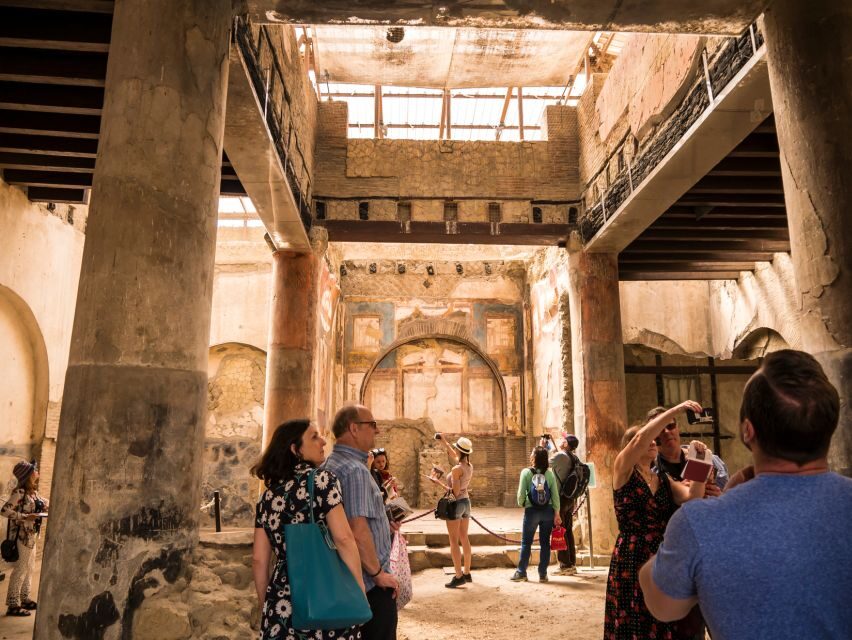
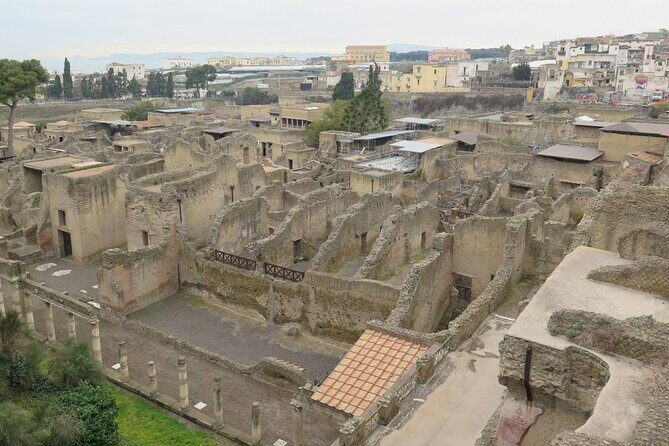
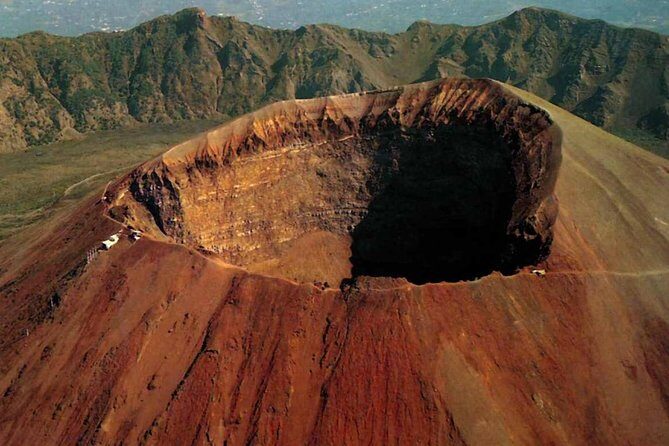
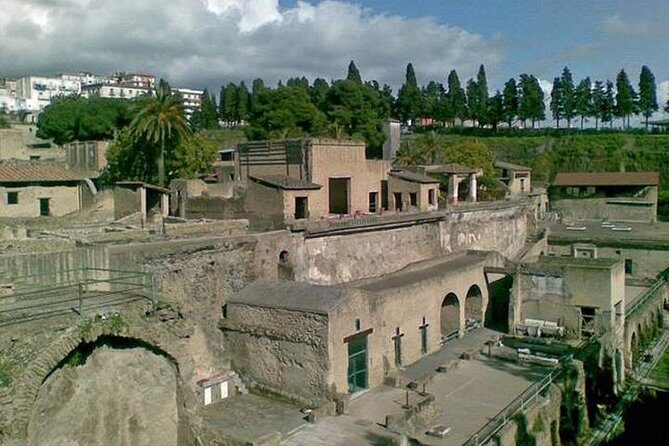
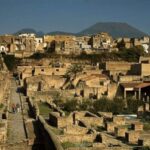
Herculaneum and Pompeii share a title page: Vesuvius and 79 A.D. But the details are where Herculaneum grabs you. Pompeii was buried under roughly 4–5 meters of ash. Herculaneum, though, was smothered by a massive mud avalanche—around 20 meters deep. That combination is why so many objects, surfaces, and room features survived in ways that feel almost unfair.
On this tour, you’ll hear the eruption story in plain language, then you’ll walk through the consequences. You’re not just looking at rocks and walls. You’re seeing why Roman interiors—like painted surfaces, mosaics, and even well-preserved wooden items—can still feel close to how they looked in everyday use.
Other Herculaneum guided tours and tickets we've reviewed at Vesuvius & the Bay of Naples


A Private 2-Hour Walk That Actually Moves
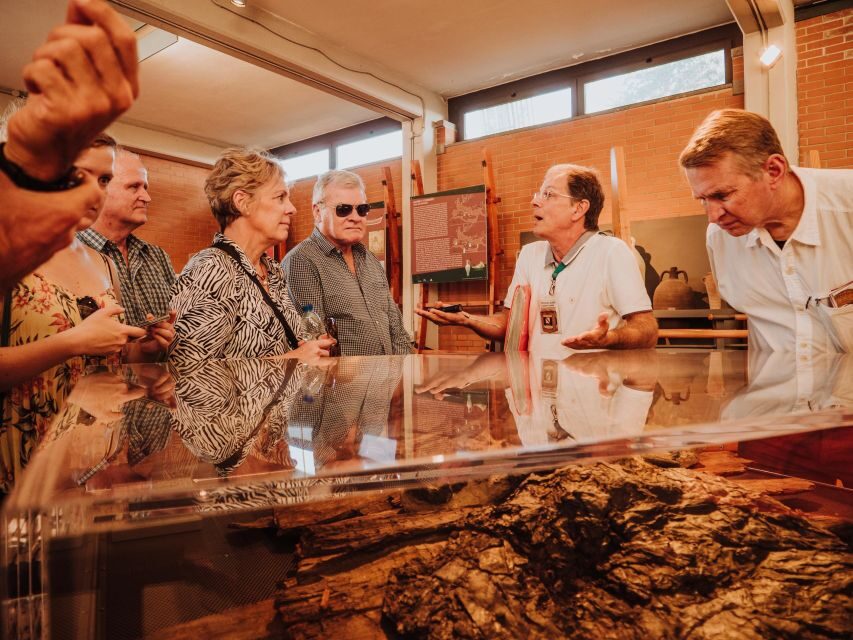
This is designed as a focused private experience. You get a 2-hour guided route through the most meaningful highlights, and you’re not pushed around by a big crowd schedule. The guide is a licensed archaeologist, so you’re less likely to get vague storytelling and more likely to get context you can use while you’re standing in the space.
You can also pick your language from a long list (Italian, Spanish, English, Japanese, Russian, French, Portuguese, Chinese, German). That matters more than it sounds. When you understand the explanation clearly, you notice more in the ruins—like what to look for in a room layout or why a preserved fragment is important.
Two practical notes: you’ll want comfortable shoes (seriously), and oversize luggage isn’t allowed. If you’re trying to travel light, this will make your life easier at the entrance.
Starting at Parco Archeologico di Ercolano: Get Oriented Fast
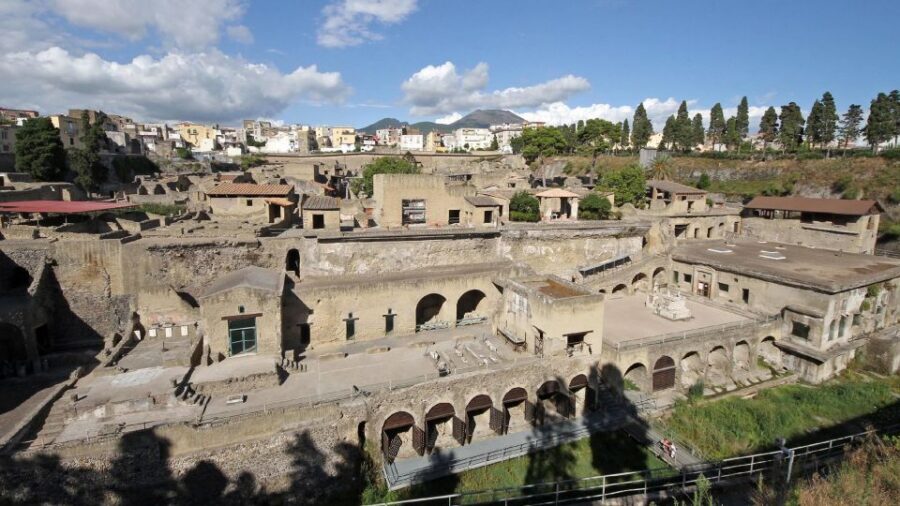
Most tours begin at the Parco Archeologico di Ercolano area, with a commonly listed meeting point at Via dei Papiri Ercolanesi, 21. The end is back at the starting area.
The first few minutes are all about orientation. You’ll be placed in the site rhythm—what comes next, what matters most, and how the town’s spaces connect. That’s key because Herculaneum can feel like many small moments in a single walk unless someone helps you keep the map in your head.
Also, the site timing affects comfort. You’re outside, and shade isn’t guaranteed everywhere. A good guide will pace stops so you can see what’s important without frying. (People have specifically praised guides for working to keep things shaded when possible.)
The Eruption Story: What “Preserved by Ash and Mud” Means
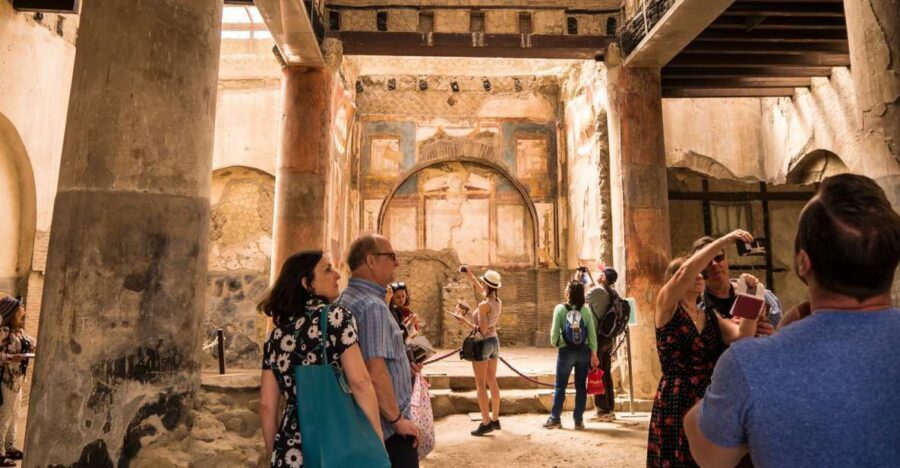
This is not a lecture-only tour. The eruption explanation is tied to what you can see right there. You’ll hear what happened when Vesuvius erupted and how the town was buried. Then you’ll connect that to the preservation effect.
That mud depth difference is the big takeaway to keep in mind while you walk:
- More ash and less intense mud coverage can change what survives.
- Herculaneum’s mud burial helped preserve materials and surfaces in a way that makes rooms feel unusually intact.
So when you see wooden objects, paintings, or mosaics, don’t treat them as random “wow” items. Ask yourself: how did the burial method protect them? That’s the kind of question an archaeologist guide can answer as you go.
The Forum and the Town Highlights: Roman Life at Street Level
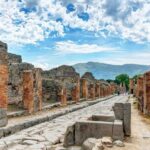
After orientation, you’ll move through the town spaces that show how Herculaneum functioned day-to-day. A forum-area stop gives you the sense of public life—where people would gather, talk, trade, and move through key civic spaces.
Then you’ll shift from public to private. This is where Herculaneum feels personal. The tour is built around interiors and specific houses, not just generic ruins. You’ll see highlights that make the place feel lived in, from social rooms to the quieter spaces of domestic life.
Two standout themes you’ll keep encountering:
- How a Roman home was organized for daily routines.
- How “small” artifacts—like painted details or preserved wood—translate into a story about the people inside.
Other private and VIP tours we've reviewed at Vesuvius & the Bay of Naples
House of the Black Saloon: See Art and Style Up Close
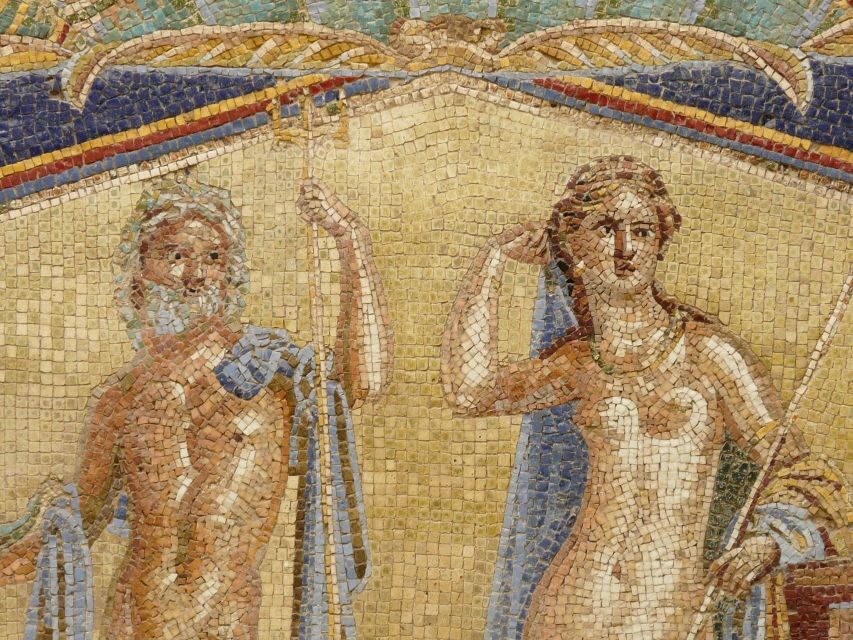
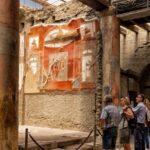
One of the anchor stops is the Casa del Salone Nero (House of the Black Saloon). This is the kind of location where the guide’s interpretation really matters. A name like Black Saloon doesn’t tell you much until you’re standing where the room layout and decoration make sense.
Expect to focus on what the preserved elements suggest about taste, status, and everyday use. Herculaneum’s preservation can make decorative choices feel immediate, not abstract. You’ll also get a sense of how these grand rooms fit into the larger house.
A tip for your eyes: don’t race. In a place like this, you’ll understand more if you pause for a moment and let the guide point out what to notice—then you look again. It’s a faster way to learn than trying to read every carved detail yourself.
Herculaneum Thermopolium: A Window Into Food and Fast Stops
Next comes Herculaneum Thermopolium, a stop that shifts you from homes to everyday consumption. A thermopolium is essentially a kind of Roman snack-and-drink counter space—think of it as a food stop embedded into the urban fabric.
Why this matters: when you visit only big houses, Roman life can feel like it belonged to one class. The thermopolium helps balance the picture. It brings you back to routine—people buying food, moving through streets, and using communal spaces.
During this portion, you’ll likely spend time on how the preserved setup indicates function. This is one of those “you get it because you can see it” moments, where the guide connects the architecture to the action you imagine happening there.
The Domestic Homes: Albergo, Neptune and Amphitrite, and the Stags
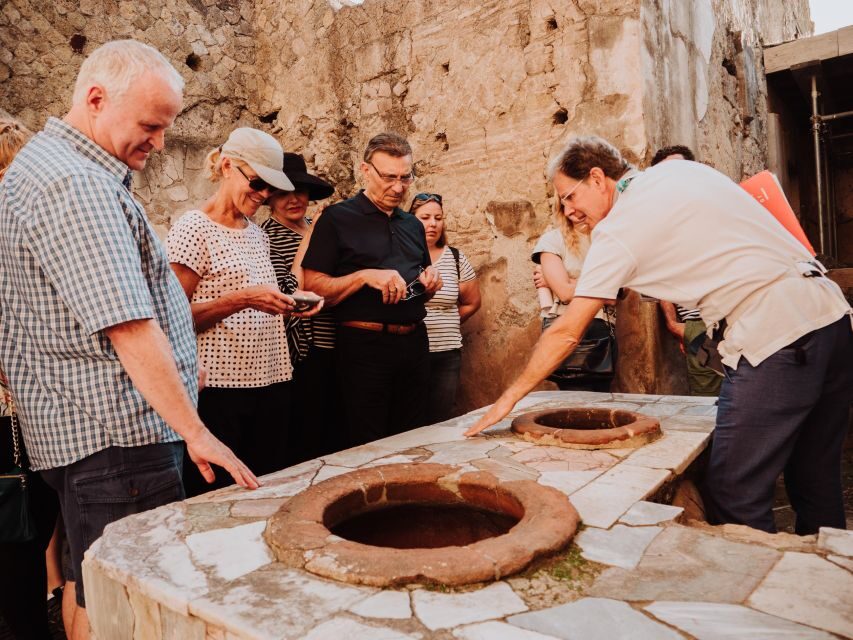
The tour then leans harder into private life with several houses, each with its own personality.
You’ll visit:
- Casa dell’Albergo (Herculaneum Albergo house)
- Casa di Nettuno ed Anfitrite
- Casa dei Cervi
Even if you don’t remember every Roman name afterward, you’ll remember the feeling: these are homes with distinct themes and different kinds of preserved detail. The guide’s job is to help you read those differences without getting lost.
Here’s what to focus on as you move between houses:
- How room purposes seem to change from house to house.
- How art and decorative choices reflect lifestyle.
- How the preserved elements create a stronger connection than you’d get from rubble alone.
If you’re traveling with teens, this is usually where the tour can become more relatable—many guides keep the conversation anchored in daily life rather than letting it float into pure antiquarian facts.
House of Skeletons and the Augustales Shrine: The Hard Part, Done Right
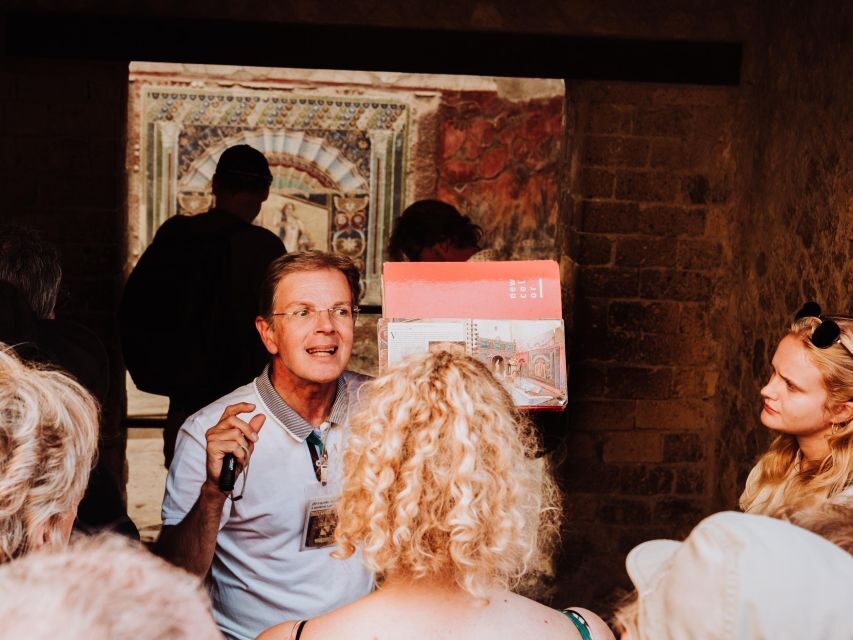
You’ll eventually reach two of the most emotionally heavy stops.
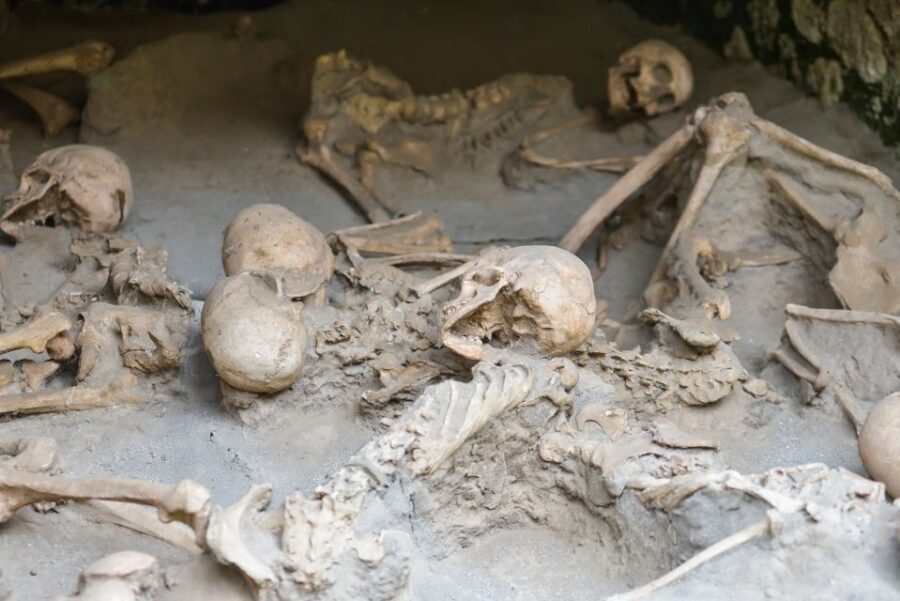
First is the House of Skeletons, where remains of victims were discovered. This stop can be intense, so pace yourself. You’re not just scanning the “big moment.” Let the guide explain what you’re seeing and how it fits into the broader eruption timeline.
Then you’ll visit the Sacellum of The Augustales. This is the kind of stop that restores balance after the gravity of the skeleton discovery. A shrine space gives you a clearer view of civic-religious culture and how belief systems shaped community life.
And yes, the tour also includes time tied to the beach discovery—where hundreds of skeletons were found. That’s a detail that adds urgency to the eruption story. When the guide connects those discoveries back to the burial process, the history stops being distant.
Price and Value: What You’re Really Paying For
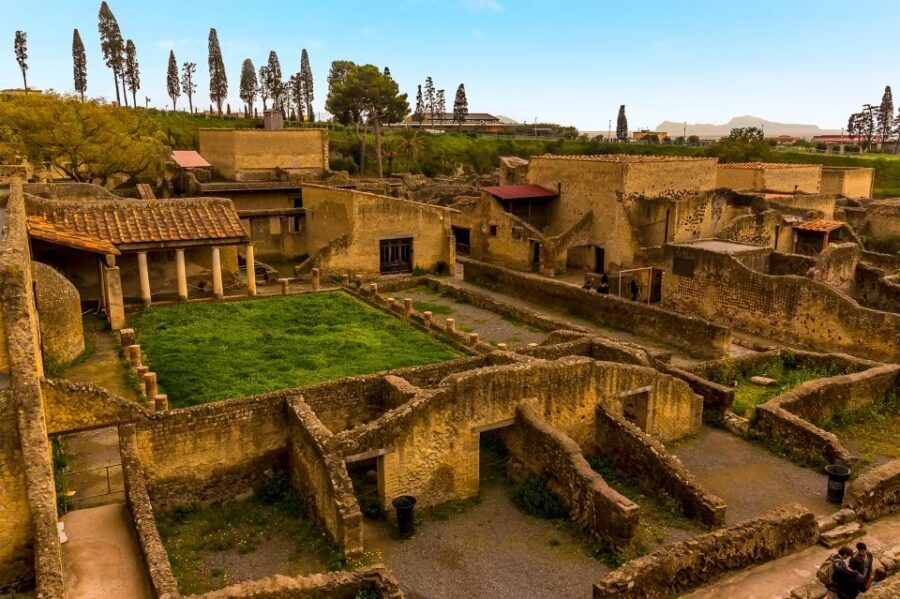
At $317.76 per group (up to 1), this is a true private experience price. If you’re used to group tours, it will feel steep at first glance. But here’s where the value math gets more interesting.
You’re paying for:
- A private guide who is also an archaeologist (not just a general storyteller).
- Admission fees to Herculaneum included (listed as 16.00 euros each).
- A 2-hour route that hits multiple major highlights instead of wandering.
You’re also getting practical time value. Skip-the-ticket-line helps you stay on schedule. And because the pace is private, you can ask questions and focus on what you actually care about—preservation, daily life, the eruption story, or the specific houses.
What you don’t get: transportation. If you’re coming from Naples or nearby, you’ll need to handle getting to the site yourself. So your total trip cost depends on your starting point.
Practical Tips That Make This Tour Easier
Bring comfortable shoes. Even a short tour can mean lots of uneven ground and slow movement. Also plan for sun. One thing guides try to manage is keeping you in shade when possible, but you should still show up prepared with sunscreen, a hat, and water.
Also note a couple of site-specific realities:
- On the first Sunday of each month, entrance is free, but tickets can’t be reserved ahead of time and entry isn’t guaranteed. If you’re traveling on that date, your plan should include flexibility.
- The info says wheelchair accessible, but it also notes it’s not suitable for wheelchair users. That contradiction is worth taking seriously. If mobility is a concern, contact the provider before booking and ask what “accessible” means in practice for this exact route.
Finally, keep luggage simple. Oversize luggage isn’t allowed.
Who This Tour Suits Best
This private format is best for:
- You want a guided, high-signal visit without the crowd shuffle.
- You care about how and why Herculaneum stayed preserved—especially wooden objects, paintings, and mosaics.
- You’re traveling with older kids or teens who can handle history when it’s explained in a fun, human way.
- You prefer asking questions as you walk rather than just taking photos.
If you’re someone who loves the quiet “wander and read signs” style, you might prefer a self-guided visit. But if you want the eruption story explained and then anchored to specific rooms, this tour does that work for you.
Should You Book This Private Herculaneum Tour?
Book it if you want the fast path to the most meaningful parts of Herculaneum with an archaeologist guide who can connect the Vesuvius story to what you’re seeing. The price is high, but you’re buying focus, expertise, and time saved with skip-the-ticket-line entry.
Skip it (or rethink) if transportation cost and logistics will be a headache for your day, or if you’re only looking for a casual stroll through ruins. Two hours goes quickly, and this experience is built around guided stops, not leisurely wandering.
If you do book, choose your language carefully and wear shoes you trust. Then let the guide point, explain, and pace. That’s the secret sauce for getting real meaning out of Herculaneum’s surviving rooms.
FAQ
How long is the Herculaneum private walking tour?
It runs for 2 hours.
Is the tour private, and who guides it?
Yes, it’s a private group tour led by a licensed archaeologist guide.
What’s included in the price?
The tour includes the licensed archeologist guide and admission fees to Herculaneum (16.00 euros each). Skip-the-ticket-line entry is also included.
Where do we meet and where does the tour end?
Meeting points can vary depending on the option booked. One listed start point is Via dei Papiri Ercolanesi, 21, at Parco Archeologico di Ercolano. The tour ends back at the meeting point.
What languages are available for the live guide?
The tour offers live guides in Italian, Spanish, English, Japanese, Russian, French, Portuguese, Chinese, and German.
What should I bring, and is there anything I can’t bring?
Wear comfortable shoes. Oversize luggage isn’t allowed.