REVIEW · ARCHAEOLOGICAL SITE OF HERCULANEUM
Herculaneum 2-Hour Private Guided Tour
Book on GetYourGuide →Operated by Tempio Travel Pompei Tickets · Bookable on GetYourGuide
Ash and lava still tell stories. Herculaneum is one of the quieter, more startling ways to experience Vesuvius—because the city sits closer to the volcano and was buried in a way that kept buildings in unusually good condition. I loved seeing the colorful murals and household art that survived under volcanic material, and I also loved how a private guide turns the ruins into a real sense of daily Roman life. One thing to consider: two hours moves fast, and you may wish you had extra time to slow down and absorb everything.
This tour is built for flexibility. You meet your guide at Herculaneum and follow a focused route for about two hours, with room to ask questions. It’s also a good pick if you’re traveling with kids, since the format is private and your guide can spend time explaining instead of rushing a crowd.
The main trade-off is simple: private time costs more, and a two-hour window means you won’t get to wander endlessly on your own. If you’re the type who reads every sign slowly and wants to linger by each wall painting, you might end up thinking, OK, now I want a longer version.
In This Review
- Key things that make this tour worth it
- Why Herculaneum feels different from Pompeii
- The meeting point and how entry works without drama
- Your 2-hour route: what you’ll actually do
- The eruption story: not scary, just clear
- Why the private guide makes the biggest difference
- Murals and artwork: what to look for during your stops
- Comfort notes: shoes, bags, and the reality of heat
- Price and value: what $283.21 buys you
- Who should book this Herculaneum private tour
- Should you book the Herculaneum 2-Hour Private Guided Tour?
- FAQ
- How long is the Herculaneum private guided tour?
- How many people is the private group for?
- Where do we meet, and where does the tour end?
- Is transportation included to Herculaneum?
- Are entrance tickets included?
- What languages are available for the live guide?
- Can we skip the ticket line?
- What should I bring?
- Are there restrictions on luggage or bags?
- What happens if we visit on the first Sunday of the month?
Key things that make this tour worth it
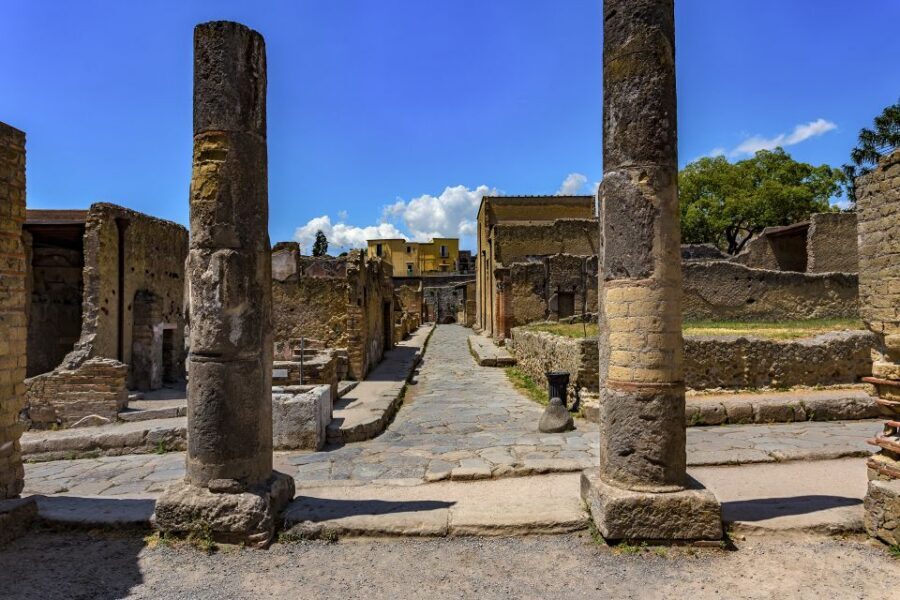
- Murals you can actually see clearly: you get time to focus on wall paintings and preserved artwork
- Better preservation than Pompeii: Herculaneum’s closer position to Vesuvius and deeper burial by lava helps keep architecture intact
- Guides who answer questions well: guides like Daniela, Teresa, and Anna are praised for patience and clarity
- Smart visuals for Roman-era context: some guides use an iPad to show what buildings may have looked like in the 1st century AD
- Private pacing for families: parents appreciate how the tour stays engaging for children
- Fast entry support: a skip-the-ticket-line approach reduces waiting
Why Herculaneum feels different from Pompeii
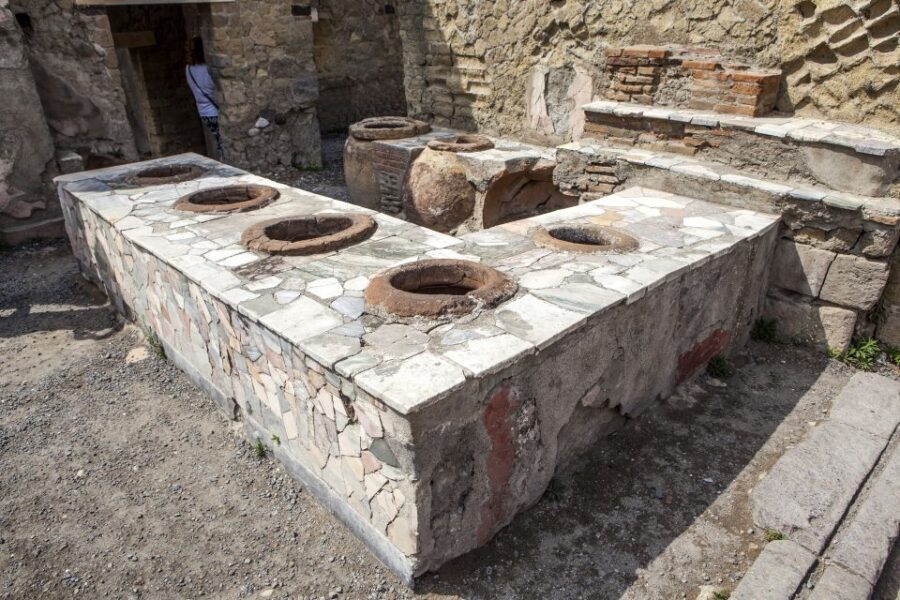
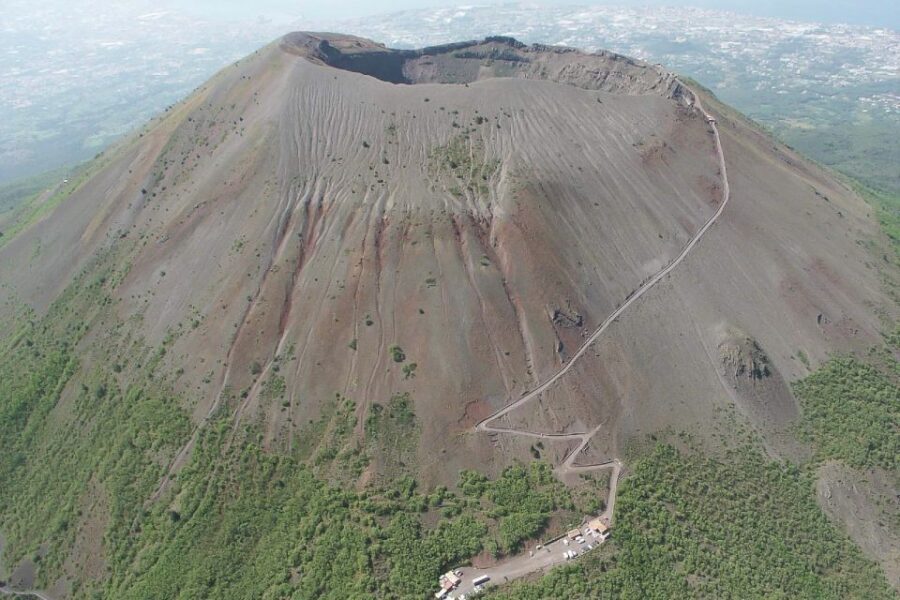
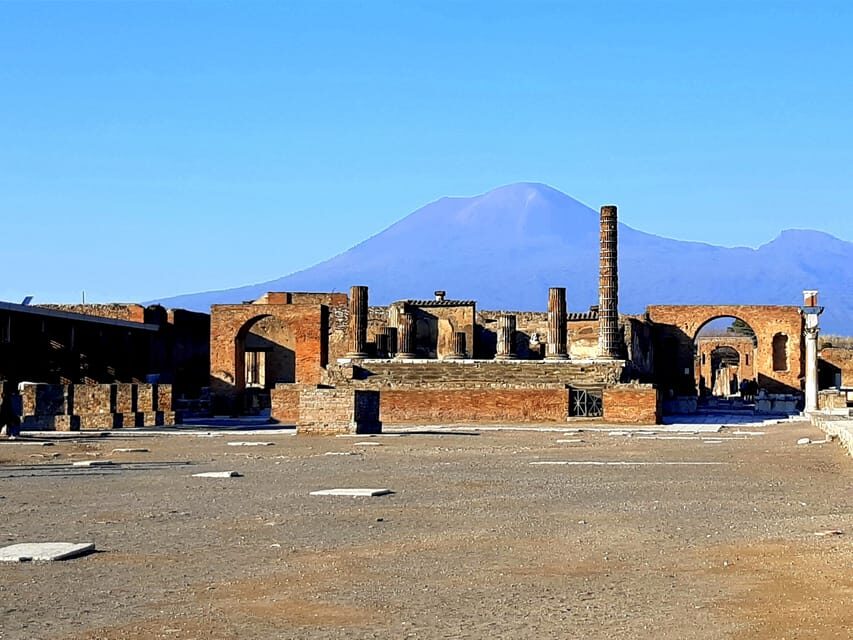
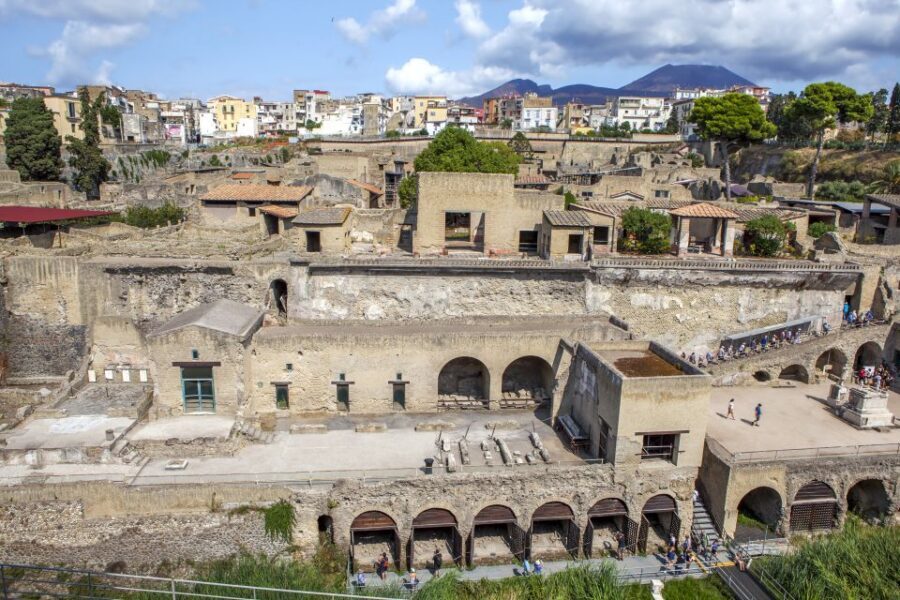
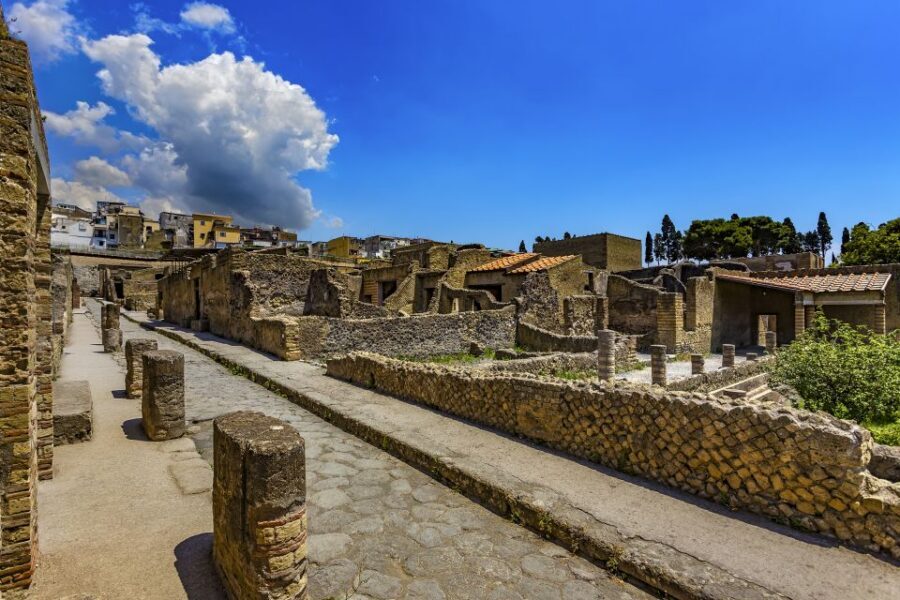
If Pompeii is the headline, Herculaneum is the detail. Both cities were hit in the same eruption of Mount Vesuvius, but the way the city was buried matters. Herculaneum sat closer to the volcano, and it was buried deeper by lava. That extra “packaging” helped preserve architecture more effectively than at Pompeii, so you’re not just looking at foundations—you’re seeing clearer hints of how rooms, walls, and everyday spaces worked.
I like how Herculaneum doesn’t feel like a museum that’s frozen in time. It feels like a neighborhood that stopped suddenly, leaving behind the physical “messengers” of Roman life: household surfaces, wall paintings, and built spaces. On a private tour, that difference becomes easier to grasp because your guide can connect what you see with what it meant.
The biggest payoff is the art. The colorful murals and other artwork from homes of wealthy nobles hit harder in person. You realize that this wasn’t just a city of ruins. It was also a place where people decorated rooms, displayed taste, and lived with social status.
Other Herculaneum guided tours and tickets we've reviewed at Vesuvius & the Bay of Naples
The meeting point and how entry works without drama
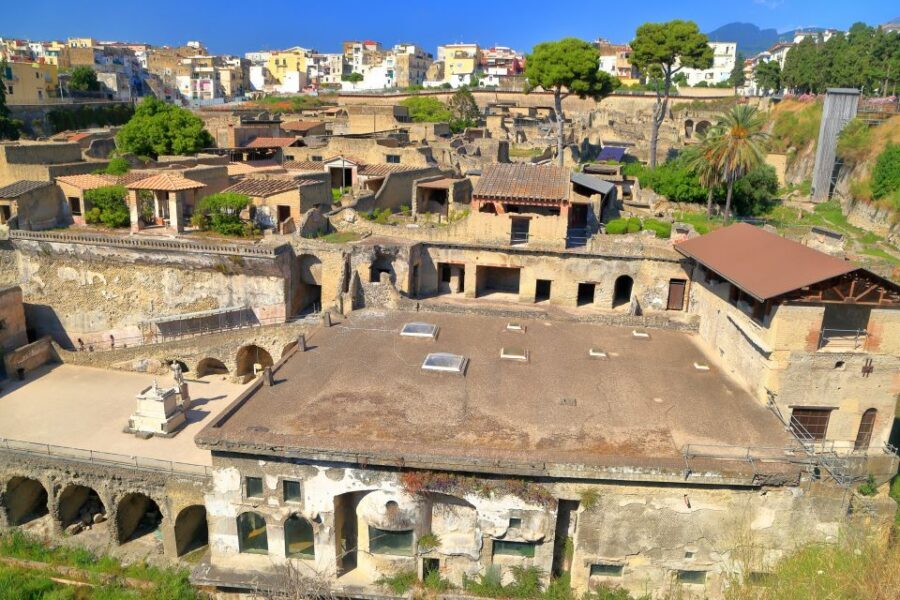
Plan to meet your guide at the Herculaneum entrance area, though the exact meeting point can vary depending on the option booked. That flexibility is normal for private tours. What’s consistent is the goal: reduce hassle when you arrive.
One practical win: you typically get help with entry, including a skip-the-ticket-line approach. In real life, that means less time standing and more time walking. Some guides meet you right at the ticket booth area with tickets in hand, so you can move through the bottleneck instead of joining the slow queue.
If you’re going on the first Sunday of the month, there’s an added wrinkle. Entrance is free that day, but tickets can’t be reserved ahead of time, so entry isn’t guaranteed. If that’s your target date, go in with a Plan B mindset for timing.
Your 2-hour route: what you’ll actually do
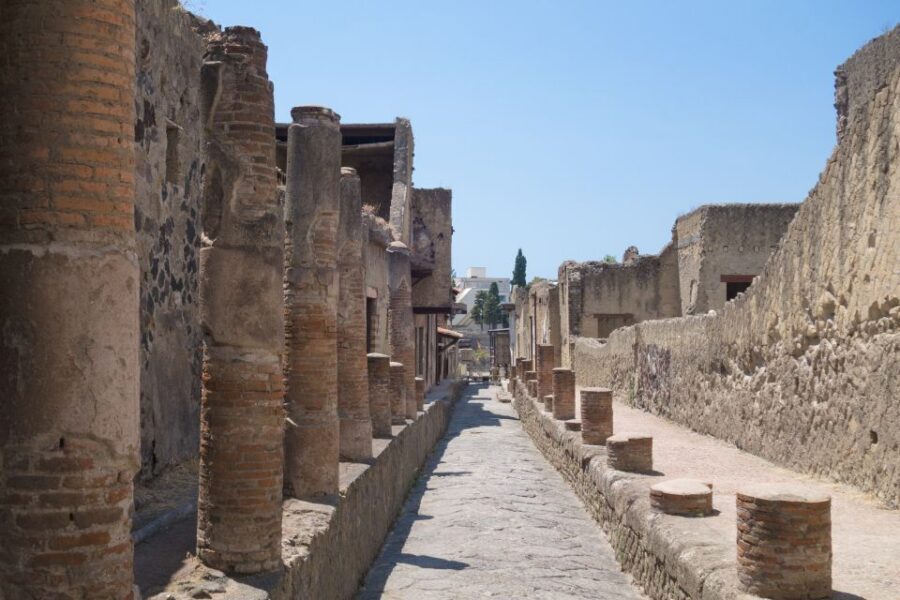
This tour is designed as a tight, guided circuit. You start at the site and spend about two hours walking the ruins with explanations that focus on meaning, not just dates.
Here’s the rhythm you can expect:
- You’ll begin with orientation—how the eruption impacted the city and why Herculaneum’s burial story differs.
- Then you’ll move through parts of the archaeological site that highlight the residential side of Roman life, especially homes of wealthier families.
- Throughout, your guide connects physical features to everyday habits: rooms and circulation, the visual style of interiors, and what it implies about lifestyle.
The best part is that you’re not left alone with “read the sign and figure it out” homework. Your guide uses what’s still standing to build a mental image of how the city looked and functioned. Some guides even bring an iPad with helpful visualizations, showing how buildings might have appeared back in the 1st century AD. That kind of prompt can make the ruins snap into focus quickly—especially if you’ve never studied Roman architecture before.
A note on pacing: because the tour is only two hours, you’ll cover meaningful ground but you won’t have unlimited time in each spot. A few people have said the tour felt too short for fully absorbing everything. That’s not a problem with the guide—it’s just math. Herculaneum is detailed, and attention takes time.
The eruption story: not scary, just clear
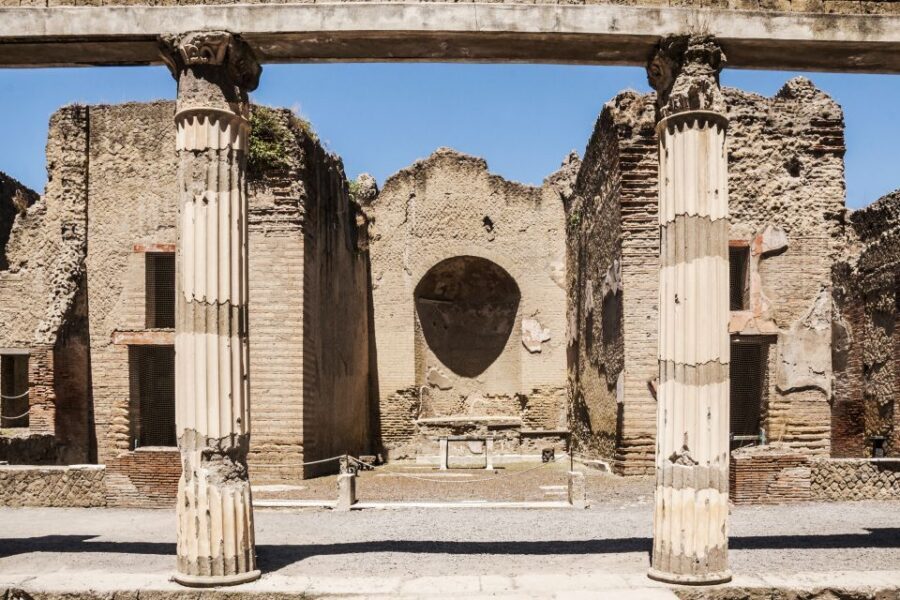
You’ll hear the story of the eruption and its impact from your private guide. The key is that your guide explains why the same disaster produced different preservation results at Herculaneum versus Pompeii.
The essential idea you’ll leave with:
- Herculaneum was closer to Vesuvius.
- It was buried deeper by lava.
- That deeper burial helped keep architecture in better condition.
That explanation matters because it changes how you interpret the ruins. When you understand the “why,” you stop treating the site like random leftovers. You start seeing it as a physical record. It’s easier to notice what’s preserved, what’s fragmentary, and what must have been protected by the burial conditions.
It also makes the murals feel less like decoration and more like evidence. When the artwork survives, it tells you something about what happened and how the city was sealed.
Why the private guide makes the biggest difference
Private tours sound like a luxury add-on. In this case, they’re also a shortcut to understanding.
With a private guide, you can ask questions as they come up. Guides are praised for being patient with kids and for answering follow-ups instead of pushing onward. You’ll also get explanations pitched to your group, not a one-size-fits-all script.
I’m especially drawn to the variety of guides mentioned by name. Daniela is repeatedly singled out for knowledge and for taking time with children, including using visual tools like an iPad. Alessia is also praised for being charming and professional, with a strong command of the site. Anna is noted for being extremely knowledgeable and helpful when coordinating across multiple activities. And Teresa is highlighted for taking two hours to share a lot of information and for keeping interest even on a hot day.
Even one smaller note from a lower rating points in the same direction: a good guide adds real value. If you’re the type who likes your questions answered instead of ignored, the private format helps you get that.
Language options are another practical plus. Guides can work in Spanish, English, French, Italian, or German. That matters for nuance, especially when you’re learning how preservation, architecture, and Roman daily life connect.
Other private and VIP tours we've reviewed at Vesuvius & the Bay of Naples
Murals and artwork: what to look for during your stops
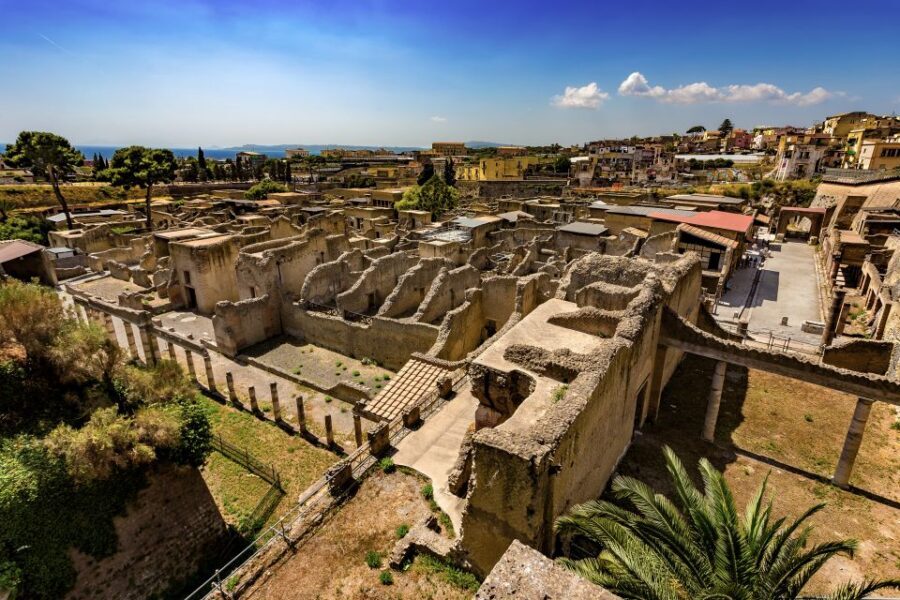
The ruins of Herculaneum are often described through what’s missing. But the standout feature here is what remains—especially inside or near residential areas where wall art can still be striking.
As you walk, here’s how I’d focus your eyes:
- Look for color and layout in murals. Even if a piece is incomplete, the composition usually tells you what the room was trying to communicate.
- Notice where artwork sits relative to the built space. Murals weren’t random wallpaper; they reinforced style and status.
- Pay attention to the “wealth factor.” The tour highlights that Herculaneum had affluent homes and wealthy nobles, and the surviving artwork helps prove it.
Because the guide is on hand, you don’t have to guess what you’re seeing. You can ask what a specific image or decorative approach likely signaled.
Comfort notes: shoes, bags, and the reality of heat
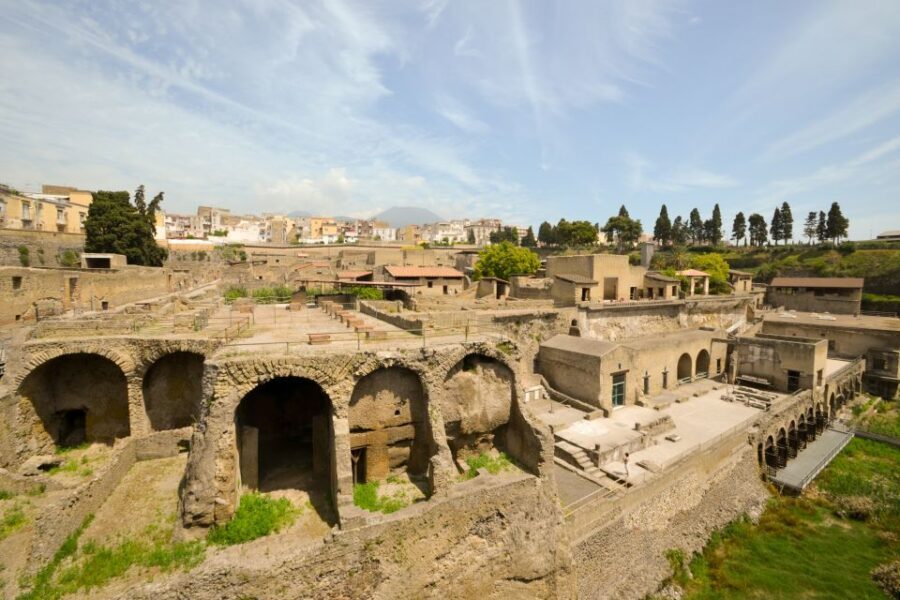
Bring comfortable shoes. This is a walking tour on archaeological ground, and you’ll want footing that’s reliable.
Also keep bags small. Luggage or large bags are not allowed. That’s the kind of rule that can ruin a day if you ignore it, so pack light and plan to carry only what you need for a couple of hours.
Heat can be a factor too. One guide was praised for keeping a group engaged during a super hot day. Still, I’d treat sunny afternoons like they’re serious. Bring water if allowed where you’re comfortable, wear sun protection, and don’t try to speed through everything.
Price and value: what $283.21 buys you
The cost is listed as $283.21 per group, up to 8 people, for a 2-hour private guided tour. Private tours often feel expensive until you translate what you’re actually buying: time with an expert, a tailored pace, and reduced waiting.
Here’s how to think about value:
- If you’re traveling as a small group, splitting the total among up to eight people can make it feel more reasonable than it first appears.
- If you care about understanding what you’re seeing (instead of just taking photos), the guide’s storytelling can turn a short stop into a much more satisfying experience.
- If your group includes kids, private pacing is often worth it. A guide who can answer questions and keep them engaged can save you from constant “are we done yet?” moments.
The main value risk is the flip side of the short duration. If you want a slower, deeper exploration, two hours can feel like a sprint. In that case, you’re paying for focus, not for endless wandering.
Who should book this Herculaneum private tour
This one fits well when:
- You want a strong explanation while you walk the ruins.
- You care about preservation and why Herculaneum looks the way it does.
- You’re traveling with children and want a flexible, question-friendly format.
- You’d rather pay for a guide than spend your time piecing together meaning from signs.
It may feel less ideal if:
- You plan to show up purely for independent wandering and photos.
- You’re aiming for a long, unhurried visit. Two hours can satisfy many people, but some need more time to take it all in.
Should you book the Herculaneum 2-Hour Private Guided Tour?
I’d book it if you want your time to count. Herculaneum rewards attention, and a private guide helps you see the site as a living record of Roman interiors, social status, and the eruption’s impact. The combination of preserved murals, a clear eruption narrative, and patient guiding—especially with kids—is the strongest reason to choose this format.
I wouldn’t book it as-is if you know you’ll want hours of self-guided strolling. In that case, consider whether you’re comfortable with a 2-hour sprint or if you’d rather look for a longer guided option.
If you’re visiting once and you want the biggest understanding per minute, this tour is an efficient, high-impact way to experience Herculaneum.
FAQ
How long is the Herculaneum private guided tour?
The tour is listed as 2 hours.
How many people is the private group for?
The price is per group up to 8 people.
Where do we meet, and where does the tour end?
You meet your private guide at a meeting point that may vary depending on the option booked. The tour ends back at the meeting point.
Is transportation included to Herculaneum?
No. Transportation to Herculaneum is not included.
Are entrance tickets included?
Entrance ticket to the Herculaneum archaeological site is included only if you select it as an extra.
What languages are available for the live guide?
The live tour guide is available in Spanish, English, French, Italian, and German.
Can we skip the ticket line?
Yes, the tour offers a skip-the-ticket-line approach.
What should I bring?
Bring your passport or ID card and wear comfortable shoes.
Are there restrictions on luggage or bags?
Yes. Luggage or large bags are not allowed.
What happens if we visit on the first Sunday of the month?
Entrance is free on the first Sunday of each month, but tickets can’t be reserved ahead of time, so entry is not guaranteed.