REVIEW · ARCHAEOLOGICAL SITE OF HERCULANEUM
Herculaneum: Half-Day Guided Trip from Naples
Book on GetYourGuide →Operated by BLU WELCOME TRAVEL · Bookable on GetYourGuide
Volcano-ruins in just a few hours. This half-day trip to Herculaneum from Naples gives you skip-the-line entry and a guided walk through a Roman town frozen by Vesuvius in 79 AD. I really like the way the tour packages the essentials—ruins time, explanation, and transit—so you spend less time guessing and more time looking.
I also like the round-trip transfer from a set Naples meeting point, which cuts down on stress if you’re not renting a car. The main thing to watch is that the guide format depends on group size, so smaller groups may get an audio guide instead of a live one.
In This Review
- Key Highlights You’ll Feel Immediately
- Why Herculaneum Hits Harder Than You’d Expect (Even in 3 Hours)
- Price and What That $96.29 Gets You in Real Terms
- Getting There From Naples: The Set Meeting Point Advantage
- Skip-the-Line Entry at Herculaneum: How It Helps Your Half-Day
- How the Tour Works: Live Guide Minimums vs Audio Guide Reality
- The Walking Route: What You’ll See and Why Each Stop Matters
- House of the Mosaic Atrium: Start With the Domestic Details
- House of the Deer: A Roman Home With Personality
- Thermal Spas of the Forum: Where Routine Happened
- House of the Mosaic of Neptune and Amphitrite: Myth Meets Daily Life
- The Vesuvius Story You’ll Hear Along the Way
- Languages and Guide Style: English and Italian
- What to Pack for Ruins That Don’t Care About Your Schedule
- Who This Tour Fits Best (and Who Should Rethink It)
- Price vs Alternatives: When This Half-Day Makes Sense
- Should You Book This Herculaneum Half-Day Guided Trip?
- FAQ
- How long is the Herculaneum half-day trip?
- Does this tour include skip-the-line entry?
- Is there a live guide for everyone?
- What’s included in the price?
- What do I need to bring?
- Is this tour suitable for wheelchair users?
Key Highlights You’ll Feel Immediately
- Skip-the-line entry saves you time before you start walking the site
- Round-trip transfer from Naples keeps this a clean half-day plan
- Live guide or audio guide based on group size (check how you’ll be assigned)
- Roman life stops like the House of the Mosaic Atrium, the House of the Deer, and more
- Forum thermal spas offer a strong sense of daily routine in the ancient town
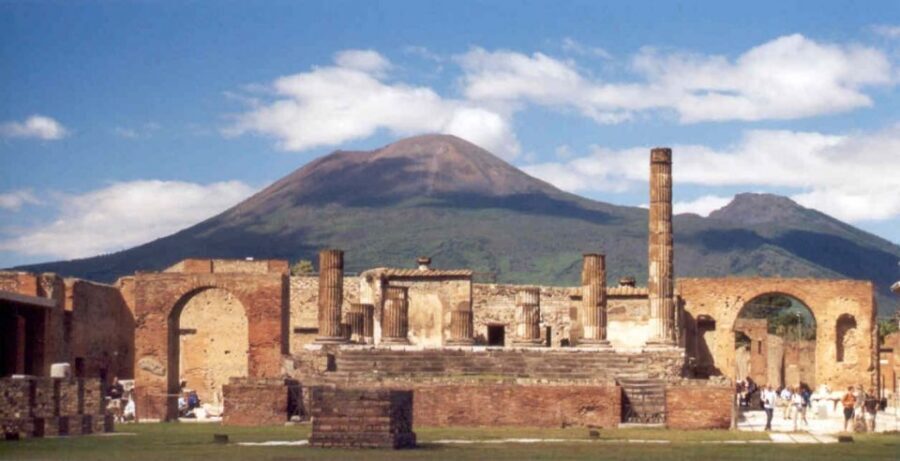
- Vesuvius eruption context ties the streets and landmarks to what happened in 79 AD
Why Herculaneum Hits Harder Than You’d Expect (Even in 3 Hours)
Herculaneum is the kind of site that rewards slow attention, but you only have a half-day. The smart part of this tour is that it compresses a lot of meaning into a short walk, without turning it into a race. You get a guided explanation of what happened when Mount Vesuvius woke on October 24, 79 AD—an eruption that destroyed Pompeii and Herculaneum—and you see how that disaster shaped what survived.
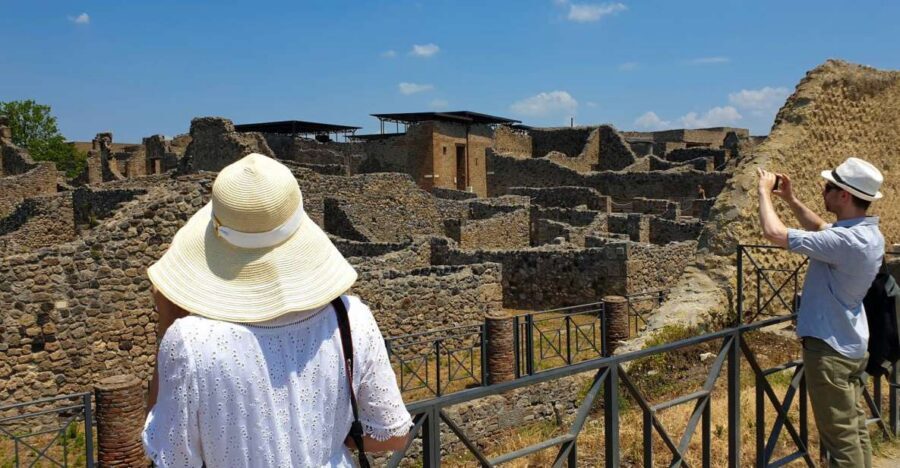
What makes Herculaneum feel different from other Roman ruins is the lived-in layout and the way the streets and buildings help you imagine everyday routines. The tour language (and the way it’s presented) pushes you to look at the private lives of Romans, then connect that to the panic and shock the eruption brought. That storyline matters because otherwise you can end up with a list of buildings and no emotional thread.
Other Herculaneum guided tours and tickets we've reviewed at Vesuvius & the Bay of Naples

Price and What That $96.29 Gets You in Real Terms
At $96.29 per person for about 3 hours (starting times vary), the headline value is simple: you’re paying for entrance access plus a structured experience that runs on a tight schedule. It’s not just “someone drops you off.” The package includes round-trip transportation from Naples (from a meeting point), onboard commentary, and skip-the-line entrance.
For many people, the biggest cost driver at major sites is wasted time. Here, skip-the-line entry helps you start sooner, which is a big deal when your total time on site is limited. You also get either a live guide or an audio guide, depending on how full the group is—so you’ll still have interpretation, not just silent wandering.
One note: lunch isn’t included. That’s fine—3 hours is usually enough time to do the main highlights without needing a long meal break, but it does mean you should plan your day around this stop.
Getting There From Naples: The Set Meeting Point Advantage
This is a round-trip transfer format with pick-up and drop-off from a set meeting point in Naples. That’s one of the tour’s best practical features. When tours don’t include hotel pickup/drop-off, you avoid the chaotic “where are you?” game that can eat half your morning.
Still, this is where you should be a bit cautious. Pickup errors happen sometimes when meeting points are close but not exact. You’ll want to double-check your meeting instructions before you head out, and build in a little buffer so you’re not relying on last-second phone calls.
Also, the schedule can shift due to traffic or road closures. That’s not unique to this trip, but it matters on a short timeline. If you’re trying to squeeze in other activities that same day, keep some flexibility.
Skip-the-Line Entry at Herculaneum: How It Helps Your Half-Day
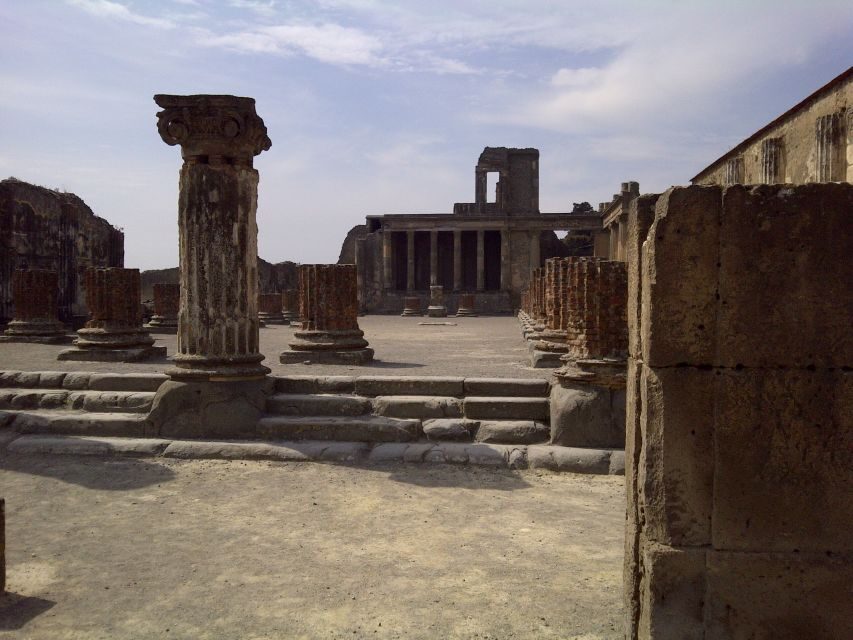
Skip-the-line entry is more than a time-saver—it changes how you experience a site. When you walk in without waiting in a queue, you avoid that awkward “stand around and get tired” phase. You stay fresh for the first part of the walk, when the layout is easiest to understand and your guide’s story gives you a useful mental map.
Once inside, you’ll follow your guide (or listen via audio when applicable). The interpretation is timed to what you’re seeing, so each major landmark connects back to the eruption and the way the town’s destruction preserved it.
How the Tour Works: Live Guide Minimums vs Audio Guide Reality
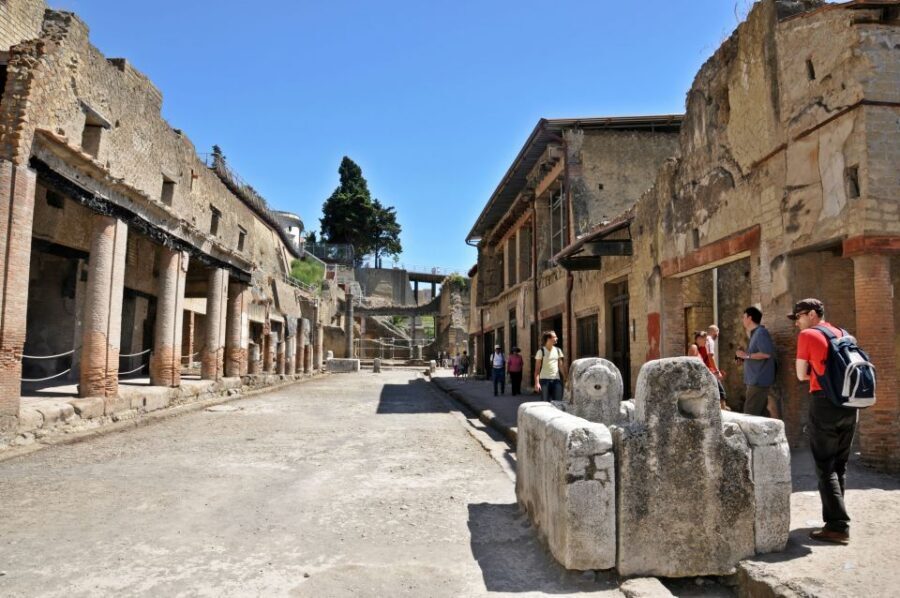
Here’s the operational detail that can shape your whole experience: a live guide is provided with a minimum of 6 participants. If your group is up to 5 participants, you’ll get an audio guide instead.
Live guides tend to help most when a site is dense and you want to ask small questions like Why is this room shaped this way? or What should I notice first? Audio guides are still useful, but they’re less interactive and can feel a bit like walking with a podcast while everyone else hears the same track.
If you care a lot about having a person explain details and steer your attention, you’ll likely prefer departures likely to hit that minimum group size. If you’re flexible and happy to follow a curated route by listening, the audio setup can still get you most of the value—especially because the tour also includes onboard commentary during transport.
The Walking Route: What You’ll See and Why Each Stop Matters
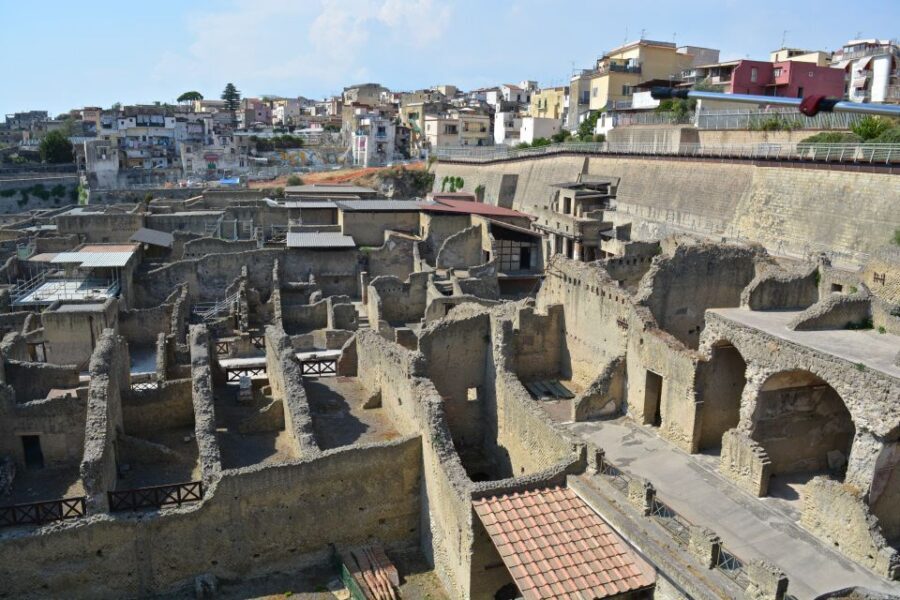
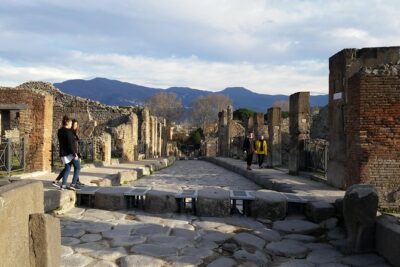
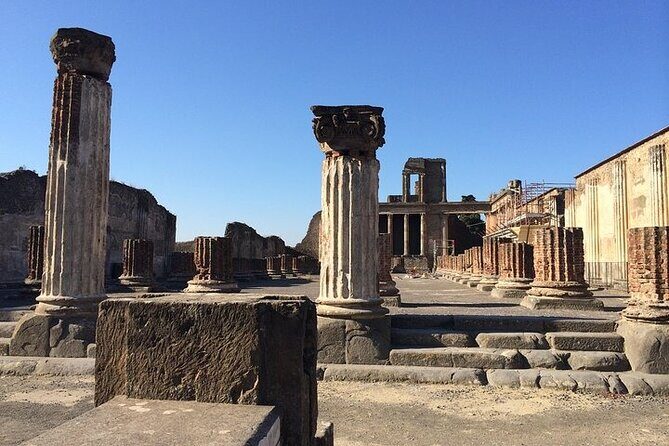
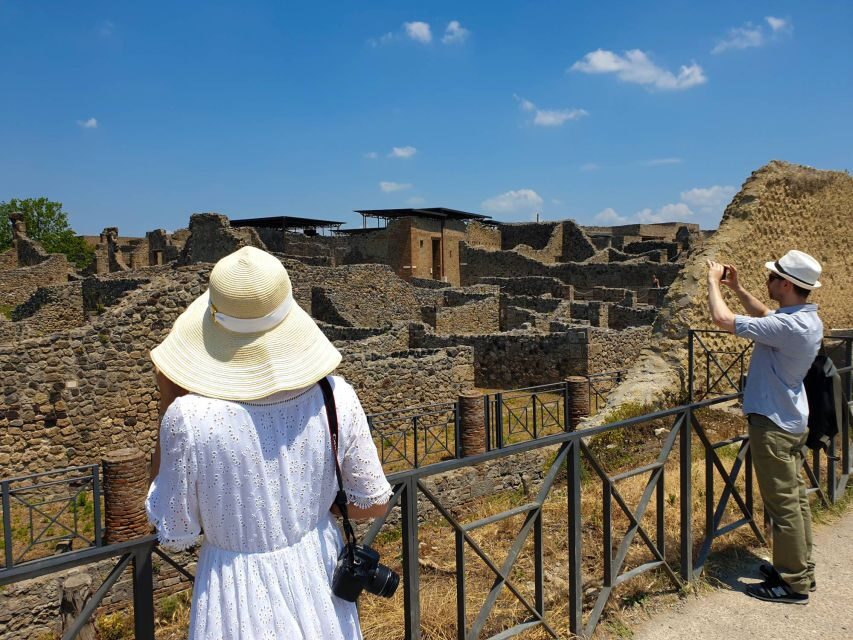
The tour focuses on a walk through Herculaneum’s most recognizable areas, with explanations built around Roman daily life and the 79 AD eruption.
House of the Mosaic Atrium: Start With the Domestic Details
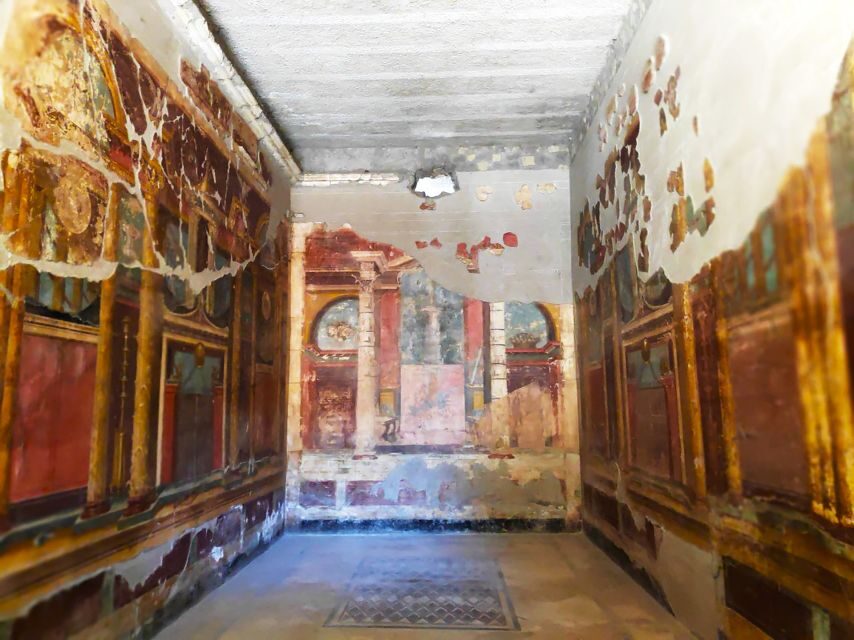
You’ll spend time around the House of the Mosaic Atrium, which is exactly the kind of stop that makes ancient ruins feel human. Mosaic floors weren’t just decoration—they were statements of wealth and taste. Seeing a home like this helps you understand the social world behind the stone.
A guided approach matters here: without context, mosaics can look like “pretty floors” and that’s it. With guidance, you start noticing how layout and features suggest how people moved, gathered, and spent time.
House of the Deer: A Roman Home With Personality
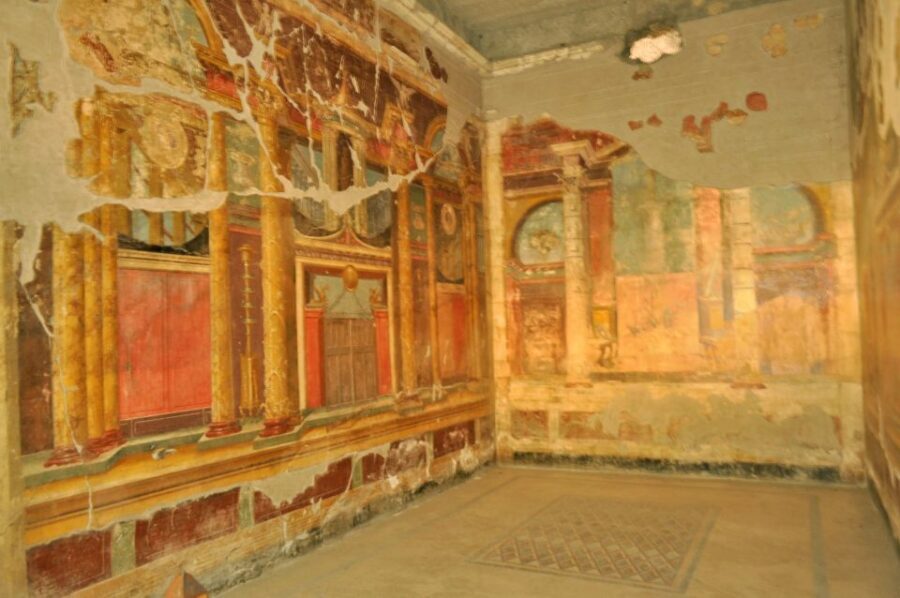
Next is the House of the Deer. This is another domestic landmark, and it’s a good reminder that Herculaneum wasn’t only public monuments. It was also private spaces where people lived, hosted, and decorated.
If you like art and design, this stop gives you something to look at beyond walls. You’ll get a better sense of how residents used imagery and pattern to shape the feel of their home.
Thermal Spas of the Forum: Where Routine Happened
The tour also includes the thermal spas of the Forum. Roman baths weren’t just about cleaning. They were social spaces. You can picture conversations, meetings, and the slow rhythm of daily life.
This is one of the stops where guidance helps most with interpretation. You’ll likely come away thinking about what “going to the baths” meant in a town’s schedule—especially when you contrast it with the chaos implied by the eruption story.
House of the Mosaic of Neptune and Amphitrite: Myth Meets Daily Life
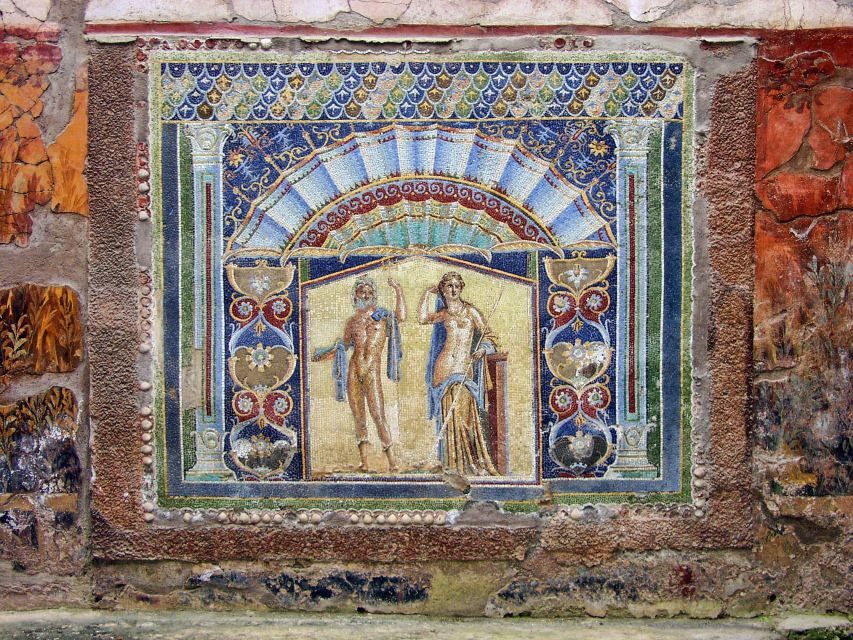
Another standout named in the tour description is the House of the Mosaic of Neptune and Amphitrite. Mythological imagery like Neptune and Amphitrite connects your eyes to Roman religion and storytelling, but it also belongs to a home, not a temple. That mix is part of why Herculaneum feels so intimate.
It’s also a great place to slow down. In a short tour, you don’t always get long pauses—so when your guide brings attention here, you’ll want to take a few seconds to study the mosaic and the setting around it.
The Vesuvius Story You’ll Hear Along the Way
The eruption context is not treated like a history lecture. It’s used as a lens for what you’re seeing. You’ll hear about Vesuvius waking on October 24, 79 AD and the destruction of both Pompeii and Herculaneum.
You’re also shown how Herculaneum was discovered in the 18th century, which helps explain why the site became so famous and why it’s still a major archaeological draw. The effect of hearing the story while walking the town is that the ruins stop feeling abstract. You start to sense the panic and the disruption the eruption caused.
And yes, it’s emotional. But it’s also practical to understand. It’s why your attention shifts from shapes and surfaces to what those spaces may have been like in ordinary life.
Languages and Guide Style: English and Italian
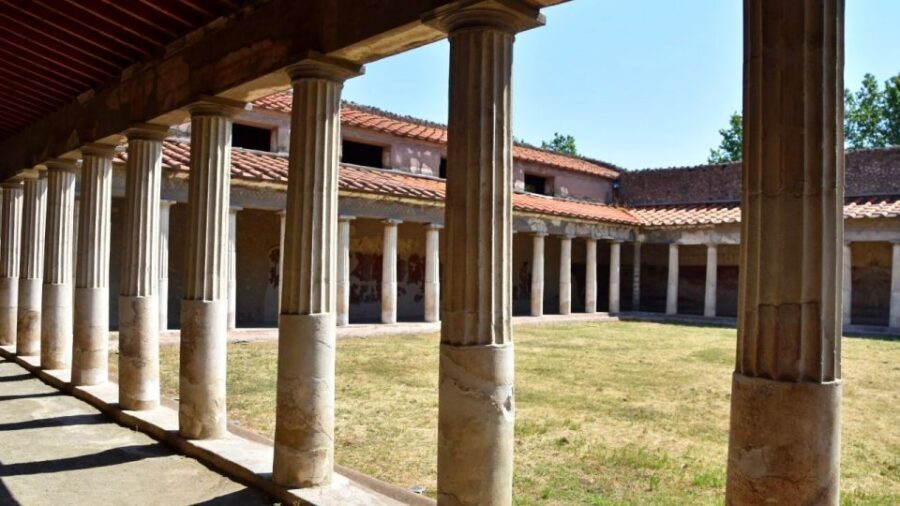
The tour runs in English and Italian. Live guiding is available in both languages depending on the group. Audio guidance is also provided for smaller groups.
In practice, this matters for comprehension. If English is your comfort language, you’ll be able to follow the narrative without the mental effort of translating. That’s especially helpful at Herculaneum, where the site can look like a maze if you don’t know what you’re aiming at.
What to Pack for Ruins That Don’t Care About Your Schedule
You’ll want comfortable shoes first. The tour is a walking experience inside an archaeological site, and there’s no indication of special transport once you’re there.
Also bring:
- a hat and sunscreen (sun exposure is common in open-air sites)
- your camera
- your passport or ID card
The tour operates in all weather conditions, so dress for the conditions you’ll actually face. A light rain layer can be the difference between enjoying the walk and feeling miserable through it.
Who This Tour Fits Best (and Who Should Rethink It)
This trip is best for people who want a short, structured introduction to Herculaneum without the stress of planning transport and timing on their own. If you like guided interpretation and you’re comfortable walking at a steady pace, you’ll likely enjoy it.
It’s not suitable for people with mobility impairments or wheelchair users. If accessibility is a concern, you’ll want to look for an alternative that matches your needs.
If you’re the type who wants lots of time to wander slowly and linger in one room, you might find 3 hours a bit tight. But if you want the core landmarks plus story context, this is an efficient way to do it.
Price vs Alternatives: When This Half-Day Makes Sense
Herculaneum is popular, and entrance logistics matter. When you factor skip-the-line access and round-trip transfer into the price, you’re not only paying for entry—you’re paying for reduced friction.
This tour makes the most sense if:
- you want Herculaneum done in half a day
- you’re staying in Naples and don’t want to manage transport yourself
- you like a guided route that connects landmarks to what happened in 79 AD
- you prefer the comfort of being handled by a provider, including onboard commentary
It may not be the best choice if:
- you’re traveling with a very small group and strongly want a live guide
- you need longer than 3 hours at the site to feel satisfied
- you’re planning a packed itinerary where even a little traffic shift could cause problems
Should You Book This Herculaneum Half-Day Guided Trip?
Yes, if you want an efficient, story-driven walk with skip-the-line entry and round-trip Naples transport. I’d book it if your priority is seeing the marquee Herculaneum landmarks—like the Mosaic houses and the Forum thermal spas—while also understanding the eruption narrative instead of just taking photos.
I’d pause before booking if you know you’re picky about live guiding, since group size determines whether you get a live guide or audio. Also, double-check your meeting instructions carefully so you’re not stuck dealing with last-minute pickup confusion.
FAQ
How long is the Herculaneum half-day trip?
It lasts about 3 hours. Starting times vary, so you’ll want to check available time slots.
Does this tour include skip-the-line entry?
Yes. The entrance fee includes skip-the-line privileges at the Archaeological Site of Herculaneum.
Is there a live guide for everyone?
A live guide is provided when there are at least 6 participants. For groups of up to 5 people, you get an audio guide instead.
What’s included in the price?
Round-trip transfer from a set meeting point in Naples, onboard commentary, a live guide or audio guide depending on group size, and skip-the-line entrance fee are included.
What do I need to bring?
Bring a passport or ID card, comfortable shoes, a hat, sunscreen, and a camera if you’d like photos.
Is this tour suitable for wheelchair users?
No. It’s not suitable for wheelchair users or people with mobility impairments.