REVIEW · ARCHAEOLOGICAL SITE OF HERCULANEUM
2-Hour Private Tour of the Ruins of Herculaneum
Book on GetYourGuide →Operated by Leisure Italy · Bookable on GetYourGuide
Herculaneum is Pompeii with the lights off. This private, 2-hour walk lets you see a Roman town frozen by the 79 AD eruption and brought to life again by a personal guide. The one possible drawback: at this price point, two hours can feel short.
I love how the time is spent on what matters. If you do Pompeii first, Herculaneum becomes a powerful contrast, and the site’s compact layout helps you cover the big moments without rushing. You’ll also appreciate that this is a private tour, so your guide can adjust pacing to what you want to look at longer.
You’ll meet the guide at the only ticket office in Herculaneum Archaeological Park, who holds a sign with your name. The tour is designed as a focused circuit, with a live guide available in Spanish, English, French, and Italian.
In This Review
- Key highlights I’d plan around
- Why Herculaneum feels different from Pompeii
- The two-hour route: what you’ll actually cover
- Marina level: evidence of the sudden disaster
- House of the Albergo gardens and the return of quince apple trees
- Council Hall of the Augustali: frescoes with Hercules
- House of Neptune and Amphitrite: mosaics plus a living-room feel
- Grande Palestra (Big Gym) and the spa complex
- Villa dei Cervi: where luxury shows up in mosaics, frescoes, and statues
- Price and value: is $167.66 per person worth it?
- Should you book this Herculaneum private tour?
- FAQ
- How long is the private tour?
- Where do I meet the guide?
- Is admission included in the price?
- What languages are available?
- Do I skip the ticket line?
- What should I bring, and what can’t I bring?
- Is the tour wheelchair accessible?
- Is there anything special about the first Sunday of the month?
- Can I pay later and cancel if needed?
Key highlights I’d plan around
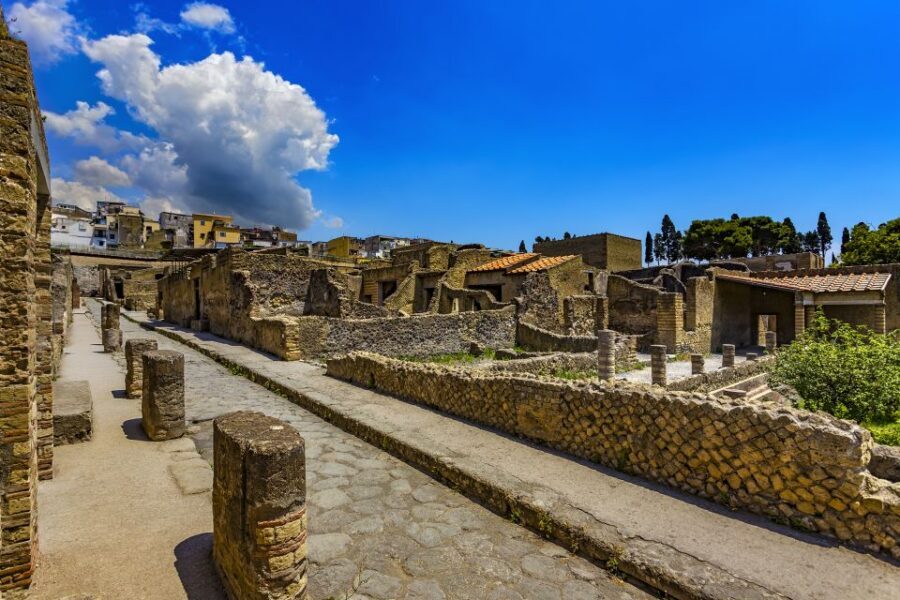
- Buried city depth and preservation: the whole archaeological site sits about 75 feet down.
- Marina evidence of sudden tragedy: area where about 300 skeletons were found, plus a boat displayed on weekends.
- House of the Albergo garden story: quince apple trees replanted using evidence from ancient carbonized roots.
- Art plus daily life: mosaics and frescoes, plus carbonized food and wine containers still hanging in a store.
- Roman gym and spa scale: the Grande Palestra (Big Gym) and a spa complex with mosaics from different rooms.
- Big finale villa: Villa dei Cervi for luxury mosaics, frescoes, and statues.
Why Herculaneum feels different from Pompeii
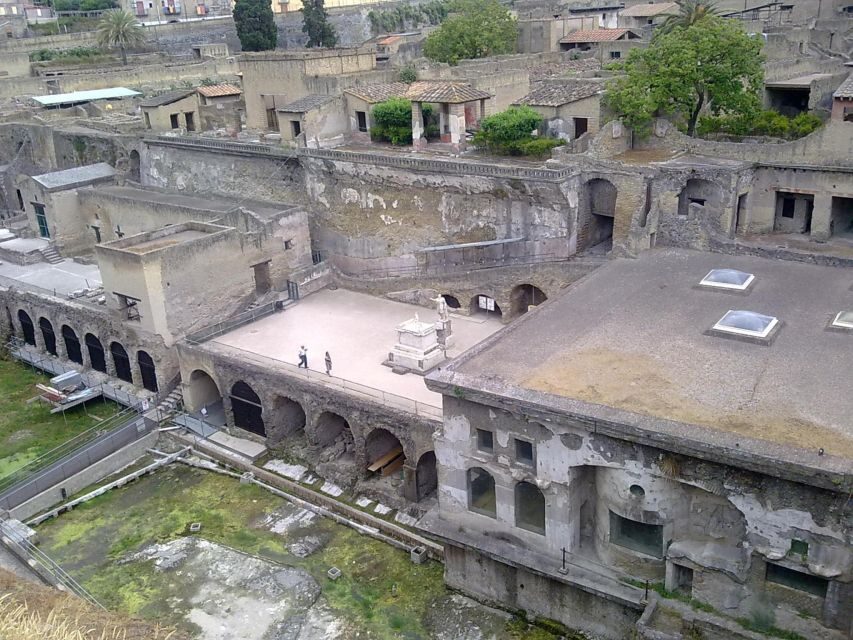
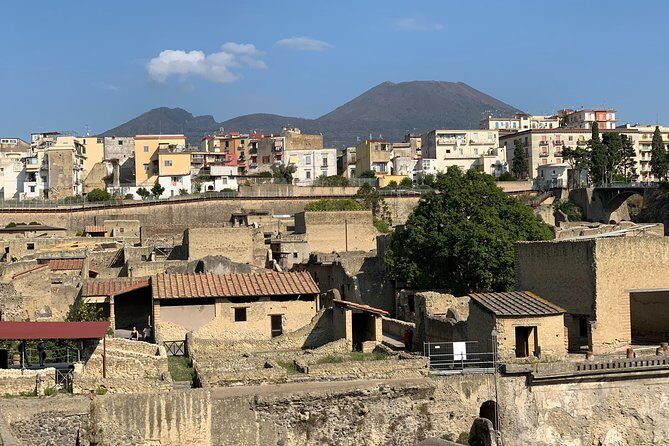
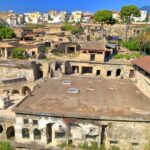
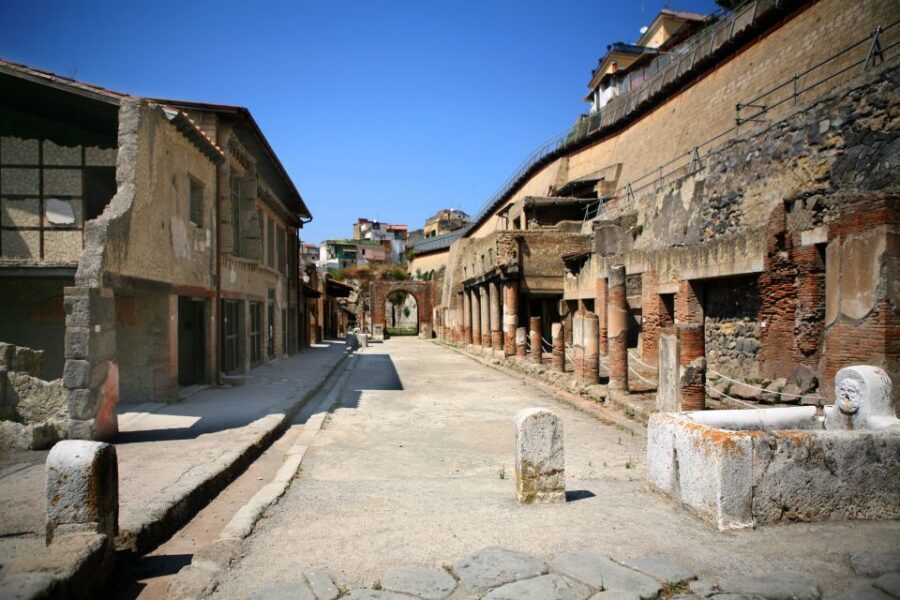
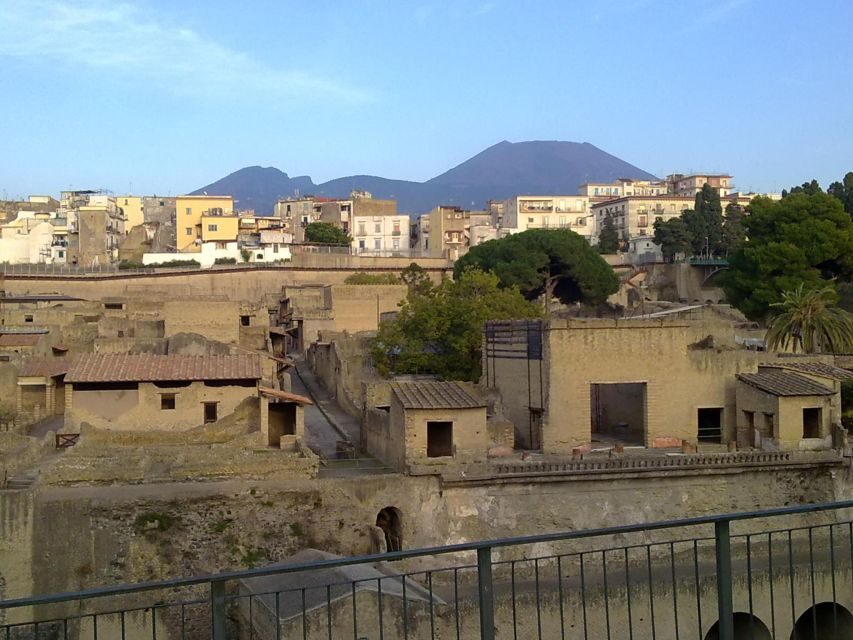
Herculaneum is often called Pompeii’s smaller sister, but it doesn’t feel small once you’re there. The big difference is the kind of preservation you get. Volcanic material buried Herculaneum under ash and rubble, and the result is a town that feels shockingly intact—houses, floors, walls, and details that would have been lost above ground.
The eruption happened on August 24, 79 AD. What you see today is a Roman city literally staged underground, with the main site laid out in an archaeological “hole” around 75 feet deep. That vertical distance matters. When you stand inside those spaces, you can understand why Herculaneum became such a discovery story when it was uncovered starting in the 1700s.
For me, the value of a private tour here is coherence. You don’t just get random highlights. Your guide connects art, architecture, daily routines, and the eruption evidence into one clear picture. With only two hours on the clock, that context helps you actually remember what you saw.
Other Herculaneum guided tours and tickets we've reviewed at Vesuvius & the Bay of Naples
The two-hour route: what you’ll actually cover
This tour is built as a tight circuit. You’ll start at the only ticket office in Herculaneum Archaeological Park, meet your guide with your name sign, and then head into the ruins as a private group.
In that roughly 2-hour window, you’ll hit the major clusters that make Herculaneum special: the marina area and its human remains, the House of the Albergo garden and its replanted trees, the Council Hall of the Augustali with myth-based frescoes, major mosaic houses, the Grande Palestra (Big Gym), and the spa area. The tour ends back at the meeting point.
Because it’s a private tour and the site is compact, you won’t waste time bouncing with a crowd. Still, it’s worth being honest: if you’re the type who could happily read every wall inscription and photograph every corner for an hour, this tour might feel like a “best-of” pass rather than a slow, total immersion.
Marina level: evidence of the sudden disaster
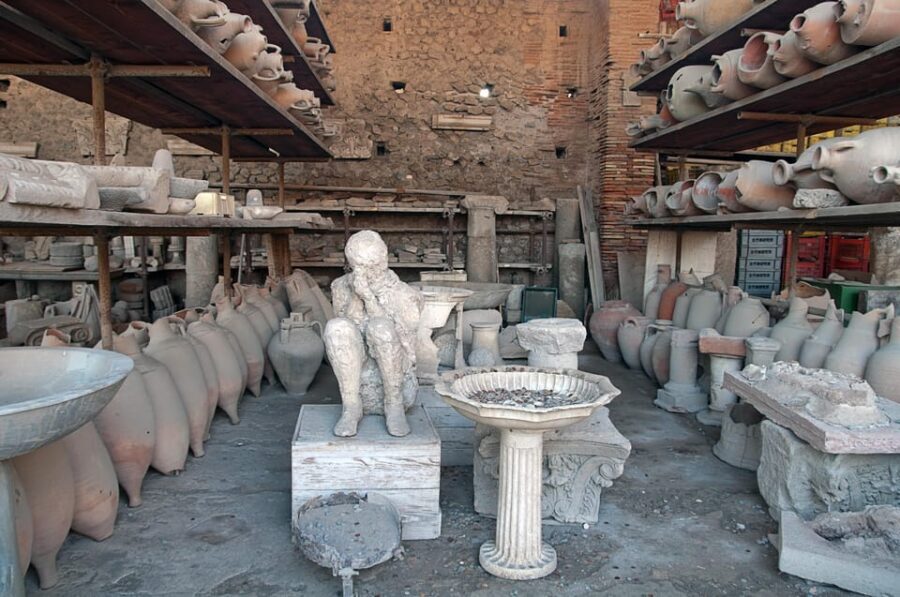
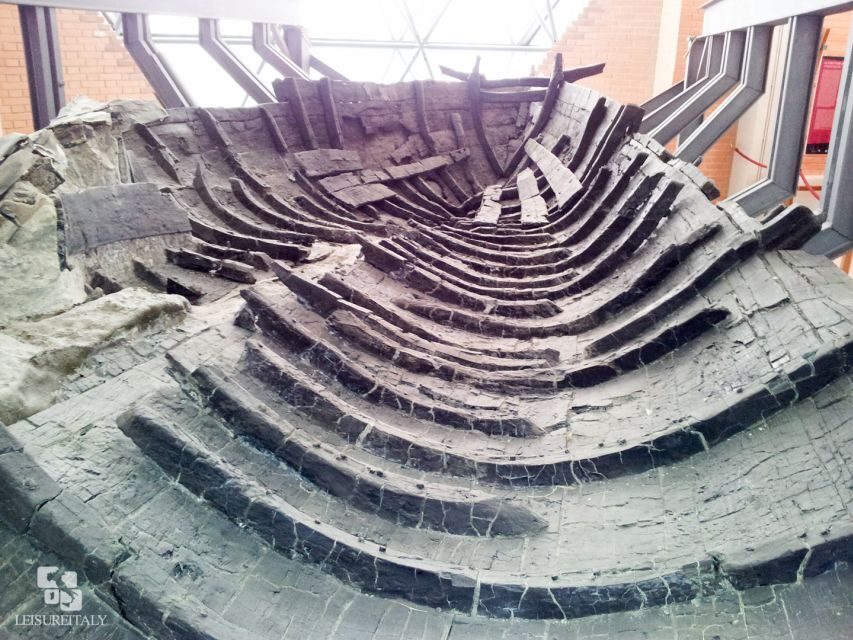
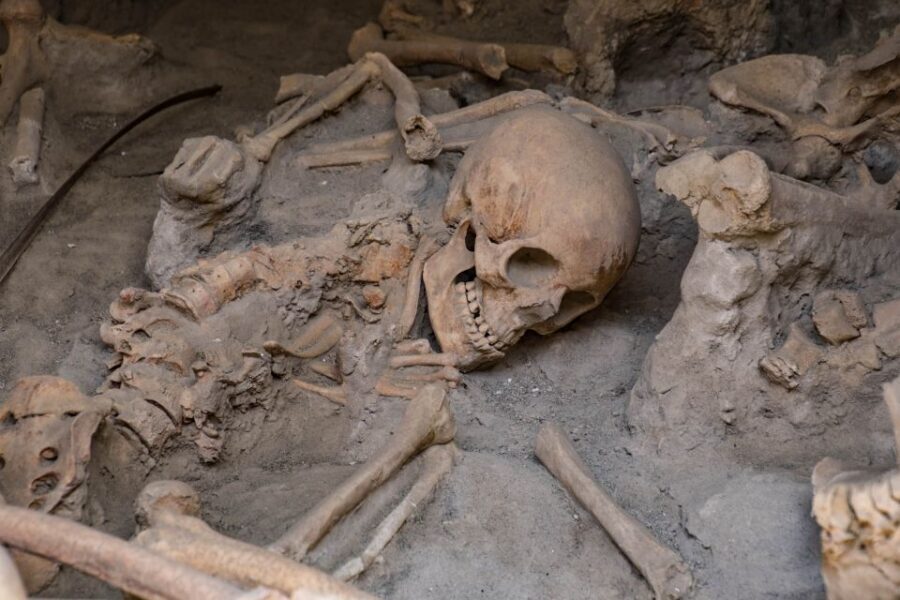
One of the most striking parts of the site is the marina area. This is where around 300 human skeletons were found, along with a boat. The boat is on display on weekends, so if your schedule matches, it adds another layer—because you’re not only seeing bodies or architecture, you’re seeing the objects tied to daily movement on the water.
Seeing the marina evidence early in the tour also sets the emotional tone. You’re reminded that this wasn’t a gradual collapse. The eruption of 79 AD was fast and catastrophic for many people. Then, as you move into homes, gyms, and public spaces, you get a sharper sense of what was lost—and what survived.
Practical note: the site is mostly made for walking, and you’ll likely be moving between areas that are visually connected but not identical in layout. Comfortable shoes are a must.
House of the Albergo gardens and the return of quince apple trees
After the marina, the tour takes you to the garden of the House of the Albergo. This is one of those moments where the ruins feel science-adjacent, not just decorative.
Quince apple trees have been reintroduced to the garden. The reason is fascinating: evidence from carbonized roots of the ancient fruit tree helped guide the replanted version. It’s a small detail, but it’s exactly the kind that makes Herculaneum feel different from a typical museum. You’re watching a modern restoration that’s grounded in what survived the eruption.
If you like nature-history connections or you’re the kind of person who remembers stories better than dates, this stop is for you. It also gives your eyes a break from mosaics and frescoes, since gardens add light and open spacing (even when everything is still underground).
Council Hall of the Augustali: frescoes with Hercules
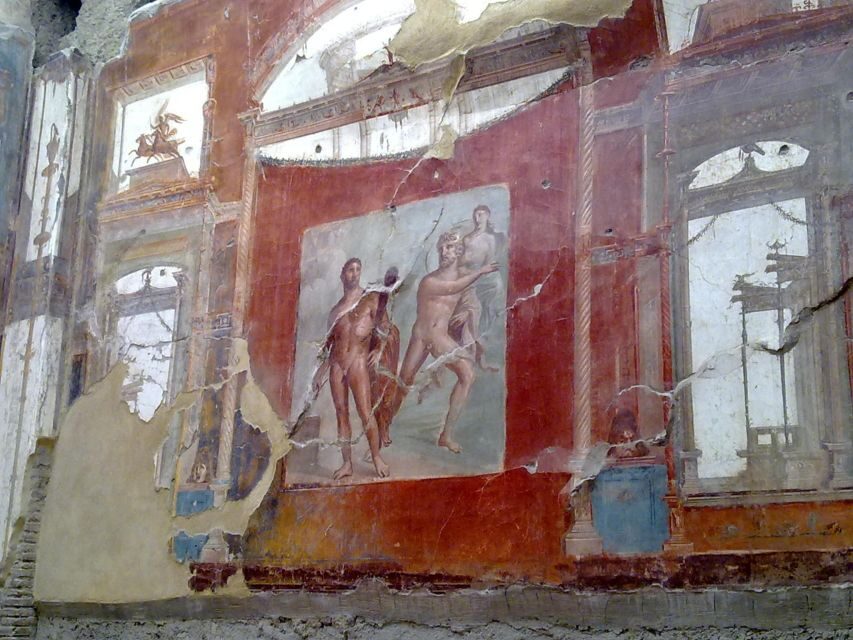
Next comes a more formal space: the Council Hall of the Augustali. This is where you’ll see beautiful frescoes, including images of Hercules.
This stop matters because it shifts you from everyday life into public identity. In Roman cities, myth and power weren’t separate topics. Art helped define who belonged, what mattered, and how the community thought about strength and protection. When you see these frescoes in context, they stop being just “pretty wall paintings” and start working like part of the city’s language.
The benefit of a private guide here is pacing. You can spend a minute scanning the frescoes, then have the explanation connect the imagery to the room’s role.
Other private and VIP tours we've reviewed at Vesuvius & the Bay of Naples
House of Neptune and Amphitrite: mosaics plus a living-room feel
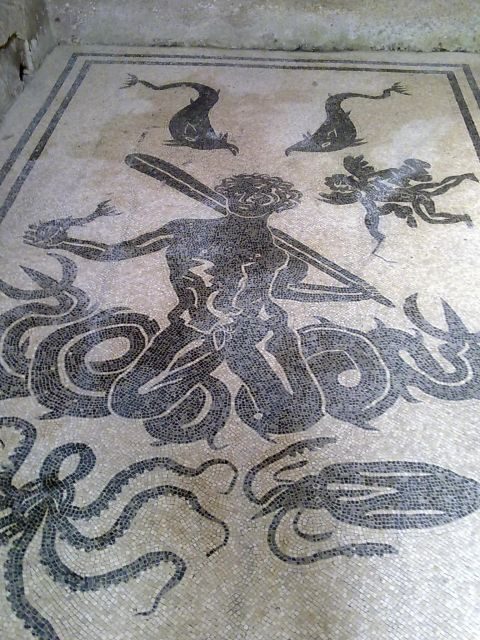
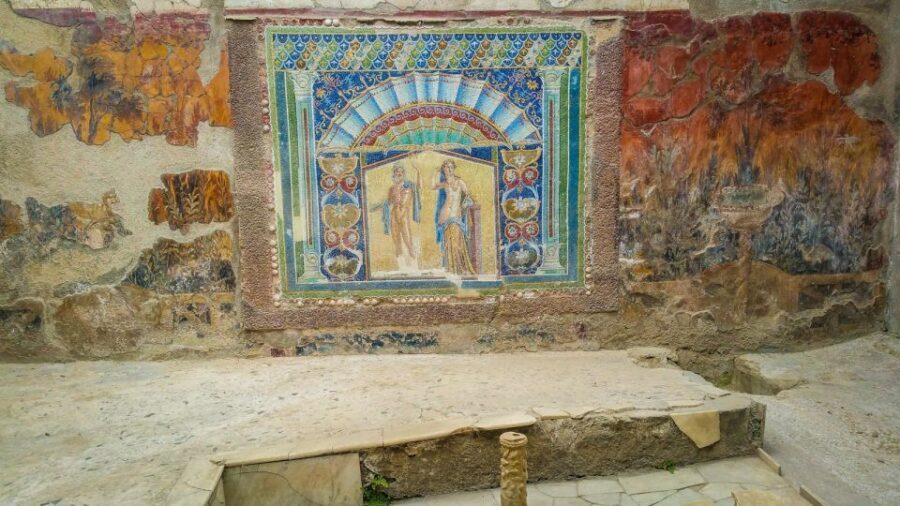
Herculaneum is famous for art on floors and walls, but the best part is how close it is to you. The House of Neptune and Amphitrite is a major mosaic stop, and it highlights the way wealth showed up in ordinary spaces like eating and gathering.
The mosaics here aren’t just decoration. They’re floor-level storytelling. While you look, try to notice what the room is shaped for: movement, conversation, and daily routine. A guide helps you see how the layout supports the function.
Nearby, you’ll also see a store area where food and wine containers were carbonized by the volcano and remain visible hanging on walls. This is one of the most valuable stops for making the site feel real. You’re not only looking at art. You’re looking at evidence of daily consumption—stopped mid-life by disaster.
Grande Palestra (Big Gym) and the spa complex
If you want “archaeologist mode,” this is where you’ll feel it.
The tour includes the Grande Palestra, often called the Big Gym. You can walk through a space that gives you a sense of Roman exercise and training culture. It’s also tied to the volcanic evidence theme, because your guide can point out how the setting preserves the physical scale of these areas.
After that, you’ll move into the spa complex, still covered with mosaics from Roman routines: gyms, hot rooms, saunas, and cold tubs. This is a big theme stop. The spa wasn’t just for hygiene. It was social time, body-care time, and status time. When you see the variety of rooms, you start to understand how structured Roman leisure was.
For most people, these two stops are the memory anchors. You’ll remember how the spaces felt, not just what they looked like.
Villa dei Cervi: where luxury shows up in mosaics, frescoes, and statues
The tour’s finale is the most spectacular villa at Villa dei Cervi. This is the place for maximum visual impact: luxurious mosaics, frescoes, and statues.
This part matters because it rounds out what you’ve seen earlier. Earlier stops showed neighborhoods, daily life, and public identity. Villa dei Cervi shifts the focus to status and private display. You get to see how wealth turned into art, and how that art was meant to impress within a carefully designed home.
There’s also a practical reason to care. If you’re only going to spend two hours on Herculaneum, ending here helps your brain make a clean storyline: community life, then daily routines and public spaces, then the high-end finish.
Price and value: is $167.66 per person worth it?
At $167.66 per person for about 2 hours, you’re paying for convenience and for a guide who can steer you through a dense site. Admission is included, and the tour skips the ticket line, which saves time you can’t really get back once you’re on-site.
So when does it feel like good value?
- When you want context fast. Herculaneum can be overwhelming if you’re just sightseeing. The guide helps you connect floors, rooms, and eruption evidence into a story.
- When you’re traveling as a small group and prefer a private pace over crowd timing.
- When you’ve already seen other major sites and you want a focused, high-impact second stop near Naples.
When might it feel pricey?
- If you’re slow-paced and would rather linger for longer than the schedule allows.
- If you’re mostly after photos and don’t care much about interpretation.
One more honest note: I’d plan to go in with the mindset that this is a “best-of guided circuit.” The site is compact, but it’s not tiny. If you try to stretch it emotionally, two hours might feel tight.
Should you book this Herculaneum private tour?
I’d book it if you want the easiest way to get the most meaning out of Herculaneum in a short visit. A private guide is especially valuable here because the site’s power comes from the details—mosaics, fresco subjects, garden restoration evidence, and even carbonized everyday storage.
I’d think twice if you’re wheelchair-bound or have mobility impairments, since it’s not suitable for wheelchair users. Also, if you know you want long, unhurried time in the ruins, this may feel like a quick pass rather than a slow stroll.
If your goal is a smart, high-impact route through major sites like the Grande Palestra, the Roman spa rooms, and Villa dei Cervi, this tour is a strong fit.
FAQ
How long is the private tour?
The tour lasts 2 hours. It’s scheduled with different starting times depending on availability.
Where do I meet the guide?
Meet at the only ticket office in Herculaneum Archaeological Park. Your guide will hold a sign with your name.
Is admission included in the price?
Yes. Admission fee and a private guide are included.
What languages are available?
The live guide is available in Spanish, English, French, and Italian.
Do I skip the ticket line?
Yes. This experience skips the ticket line.
What should I bring, and what can’t I bring?
Bring comfortable shoes. You can’t bring luggage or large bags.
Is the tour wheelchair accessible?
No. It’s not suitable for wheelchair users and not suitable for people with mobility impairments.
Is there anything special about the first Sunday of the month?
Yes. On the first Sunday of each month, entrance is free, but tickets can’t be reserved ahead of time, so entry is not guaranteed.
Can I pay later and cancel if needed?
You can reserve now & pay later. The experience also offers free cancellation up to 24 hours in advance for a full refund.