REVIEW · MOUNT VESUVIUS
From Rome: Pompeii and Vesuvius Crater Experience with lunch
Book on GetYourGuide →Operated by VEDITALIA · Bookable on GetYourGuide
One long day, two ancient worlds. This trip ties together a guided Pompeii walk and a Vesuvius crater hike with Bay of Naples views, and it keeps you moving with unlimited free Wi‑Fi on the bus. I especially like how the Pompeii guide helps you understand what you’re seeing, and I like that Vesuvius isn’t just a viewpoint stop—it’s a real crater visit. The main catch is the day runs long and the crater hike takes solid shoes and fitness.
You start early from Piazza del Popolo with VEDITALIA, grab headsets for clearer commentary in the ruins, and then it’s rain or shine. If Vesuvius is exceptionally closed, the plan shifts to the town of Sorrento, so you still get a full Campania day instead of a rewrite.
In This Review
- Key things that make this day trip work
- Rome to Campania: how the day starts (and why timing matters)
- Pompeii ruins with a guide: what you’ll actually get out of it
- Lunch in the Pompeii area: staying on track without eating like a tourist
- Mount Vesuvius: the crater hike and the Bay of Naples views
- If Vesuvius can’t be visited: Sorrento as the backup plan
- Price and value: what you’re really paying for
- Who this day trip is best for (and who should skip it)
- Practical tips to make the most of 12 hours
- Should you book this Pompeii and Vesuvius day trip?
- FAQ
- FAQ
- How long is the Pompeii and Vesuvius experience from Rome?
- Where do I meet the tour in Rome?
- Is transportation included?
- Is Wi-Fi included?
- What language will the guide speak?
- Is lunch included?
- Will I have the chance to hike to the crater?
- What if Mount Vesuvius is closed?
- Does the tour run in bad weather?
Key things that make this day trip work
- Two expert-led stops: Pompeii ruins with a guide, plus Vesuvius explanations from your leader
- Big Pompeii highlights: Forum areas, Thermal Baths, Greek Theatre, and Lupanare, along with other key ruins
- Crater access with a hike option: you can walk up toward the crater if conditions allow
- Lunch is included in the Pompeii area: helps you keep the schedule without stress
- Unlimited high-speed Wi‑Fi on the coach for the Rome-to-Campania ride
- Headsets included: easier listening when the group is spread out in busy ruins
Rome to Campania: how the day starts (and why timing matters)
This is a classic early-start Rome day trip. You meet at Piazza del Popolo, by the entrance of the Leonardo da Vinci Museum next to the church of Santa Maria del Popolo. Your guide is there holding a VEDITALIA sign with Pompeii and Vesuvius, which is a nice small detail because it reduces the usual first-day confusion.
From there, you ride south on an air-conditioned bus. The route isn’t rushed: there’s a break stop at Cassino (with a short rest break) before you continue on to Pompeii. For a day this packed—Pompeii ruins plus a crater hike—those breaks are not wasted time. They’re what make the later climbing feel doable rather than miserable.
Also, you get unlimited free Wi‑Fi on the bus. It won’t replace the scenery, but it helps if you want to check maps, read about what you’ll see next, or just kill time without draining your phone battery.
If you're still narrowing it down, here are other tours in Mount Vesuvius we've reviewed.



Pompeii ruins with a guide: what you’ll actually get out of it
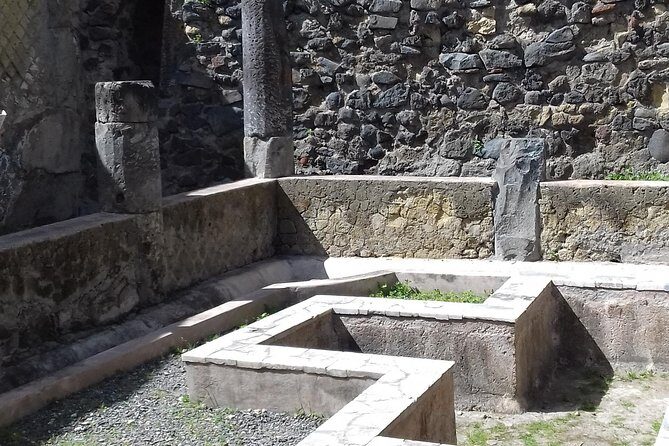
Pompeii is one of those places where going solo can mean wandering first, understanding later. This tour is built to fix that. You get a guided Pompeii tour that lasts about two hours, paced for seeing the major highlights without turning into a sprint.
The city you see is UNESCO World Heritage and one of the best-preserved Roman archaeological sites in the world. Pompeii was buried by volcanic ash and pumice after the AD 79 eruption of Mount Vesuvius. That backstory matters, because your guide’s job is to translate the ruins into something human: daily routines, public spaces, and how people lived before the eruption erased the streets.
Here’s what makes this Pompeii portion especially strong:
- Key public areas like the Forum zone, where you can grasp how civic life worked
- The Thermal Baths, which help you connect Roman architecture to everyday health and leisure
- Greek Theatre, a reminder that Pompeii wasn’t isolated—it absorbed cultural influences
- Lupanare, often mentioned because it’s a standout example of a specific type of space from the period
You also get the kind of guidance that points out what’s still well-preserved—details like frescoes and villa elements tend to make more sense when someone explains what you’re looking at instead of you guessing.
Practical tip: bring water and wear comfortable shoes. Pompeii involves walking on uneven ground, and you’ll want your legs to still be fresh for the rest of the day.
Lunch in the Pompeii area: staying on track without eating like a tourist
After Pompeii, you get lunch in the Pompeii area, with about one hour on the schedule. The tour is clear that lunch is included, and it’s framed as traditional Italian food using local ingredients.
That one-hour block is a key part of the value here. You’re not left figuring out where the group should eat, or what’s convenient after a long ruin walk. It keeps you from losing time when you’d rather spend it on Vesuvius.
What to expect from the meal itself: the exact menu isn’t specified, so think of it as a regional lunch stop that keeps things simple and filling. If you have dietary needs, you’ll want to check directly with the operator in advance, since the details of the restaurant are not listed here.
Mount Vesuvius: the crater hike and the Bay of Naples views
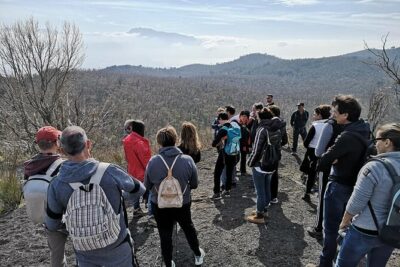
Then comes the highlight for many people: Mount Vesuvius. Your tour reaches the volcano by bus, with a photo stop and then time to visit and sightsee.
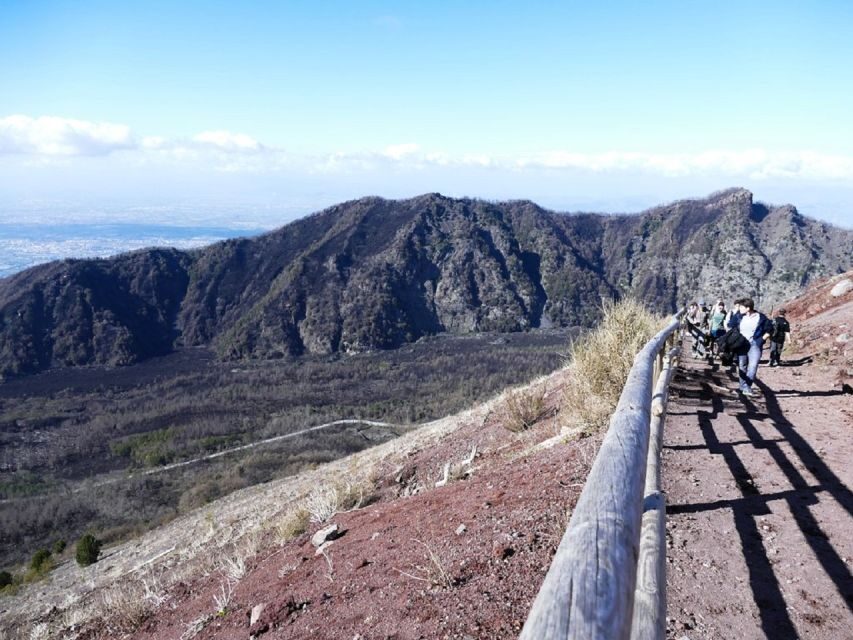
Vesuvius is still active and rises about 1,281 meters. The guide connects the geography to what happened nearly 2,000 years ago, including the eruption’s impact on the town below. Even if you know the basic story, hearing it in the place where it happened changes the whole feel of Pompeii.
There are two layers to this part of the day:
- Views first: you look out over the Bay of Naples area
- Crater access second: you have the opportunity to hike up toward the crater
The crater hike is described as challenging but rewarding. That’s honest, and it’s why this tour isn’t a good match if you’re not comfortable with steady walking and steep or uneven terrain.
If you go for the hike, wear layers. Conditions on the mountain can feel different than in the city, and you’ll be glad you can adjust.
If Vesuvius can’t be visited: Sorrento as the backup plan
Sometimes logistics change because Vesuvius may be exceptionally closed. If that happens, the tour swaps in Sorrento instead.
Sorrento is a charming coastal town known for its views and for the vibe of the coast—plus things like lemon groves and local culture. It’s not the same as standing at a volcanic crater, but it does keep your day intact and gives you another memorable Campania stop rather than an empty schedule.
If your dream is crater hiking specifically, you’ll want to be ready for weather and operational changes. Still, the backup plan is a smart inclusion because it protects your time.
Other Pompeii and Vesuvius combo tours we've reviewed at Vesuvius & the Bay of Naples
Price and value: what you’re really paying for
At $168.23 per person, this is not a cheap add-on to your Rome stay. But you’re also not just paying for entry tickets.
Here’s what’s included based on the tour details:
- Round-trip transportation by air-conditioned bus
- Unlimited free high-speed Wi‑Fi during the ride
- A licensed tour leader who is bilingual (English/Spanish)
- Pompeii entrance ticket plus an English/Spanish guide in Pompeii (and English only if a bilingual guide isn’t available)
- Lunch in the Pompeii area
- Crater ticket included
- Headsets for clearer listening in Pompeii
The practical value is that the schedule is assembled so you can do the big two—Pompeii plus Vesuvius—in one day from Rome, without spending half the day planning. For many people, that’s the real bargain: time saved, stress reduced, and fewer decisions once you’re already on the ground.
If you’re the kind of traveler who enjoys DIY travel, you could technically piece this together on your own. But you’d then have to manage bus timing, guides, tickets, and the coordination that makes this day flow. Paying for organization can be worth it, especially on a long day.
Who this day trip is best for (and who should skip it)
This is a great match if you want:
- A guided Pompeii experience rather than self-guided wandering
- Crater access or at least the crater-area experience
- A full history + nature day in one package
- Buses with comfort and Wi‑Fi, so the long transfer doesn’t feel like a time sink
It’s less suitable if you have mobility limits. The tour notes it is not suitable for people with mobility impairments and not suitable for wheelchair users. That makes sense when you consider the walking involved around ruins and the recommended fitness for the crater approach.
If you’re traveling with older knees, plan carefully. You might be able to enjoy parts of Vesuvius, but the crater hike opportunity is described as demanding, and the overall schedule is active.
Practical tips to make the most of 12 hours
This is a long day trip, so your best strategy is to pack smart and avoid overplanning.
- Wear good walking shoes for Pompeii’s ground and any crater approach
- Bring a light layer, since the mountain can feel cooler or windier
- Keep your phone charged while you can, because you’ll use it more after Pompeii when you’re moving fast
- Use the headsets fully; clear listening makes the guided parts far more satisfying
- If you’re choosing the crater hike option, go into it with patience, not speed
Also, the tour runs rain or shine. That doesn’t mean you’ll be miserable if it drizzles lightly, but it does mean you should bring gear for wet weather so you stay comfortable and safe on the walk.
Should you book this Pompeii and Vesuvius day trip?
Book it if you want a structured, guide-led day that covers both Pompeii and Vesuvius from Rome with less friction than trying to coordinate everything yourself. The combination of Pompeii highlights plus the option to hike toward the active crater, along with lunch and included tickets, makes it a strong value for a first-time Campania visit.
Skip it if you can’t handle a full day of walking or if mobility is an issue, since the tour is explicitly not suited to wheelchair users and recommends fitness for the crater route. And if your only goal is Naples city time or you’d rather take it slower, you may prefer a less packed day.
FAQ
FAQ
How long is the Pompeii and Vesuvius experience from Rome?
It lasts 12 hours total, starting in the morning and returning to the meeting point in the late afternoon.
Where do I meet the tour in Rome?
You meet at Piazza del Popolo, in front of the entrance of the Leonardo da Vinci Museum, next to the church of Santa Maria del Popolo. The guide will be holding a sign for Veditalia and Pompeii and Vesuvius.
Is transportation included?
Yes. The tour includes round-trip transportation by air-conditioned bus.
Is Wi-Fi included?
Yes. You’ll have unlimited high-speed free Wi‑Fi on the bus.
What language will the guide speak?
The tour leader is bilingual English/Spanish. In Pompeii you’ll have an English/Spanish guide (or only English if a bilingual guide is not available).
Is lunch included?
Yes. Lunch is included in the Pompei area, with about one hour.
Will I have the chance to hike to the crater?
Yes. There is an opportunity to hike to the crater of Mount Vesuvius. The tour notes it requires good physical fitness and appropriate clothing.
What if Mount Vesuvius is closed?
If there is an exceptional closure of Mount Vesuvius, the tour will instead visit Sorrento.
Does the tour run in bad weather?
Yes. The tour operates rain or shine.