REVIEW · SORRENTO
Pompeii and Herculaneum with Wine Tour
Book on Viator →Operated by Sorrento Silver Star Tours · Bookable on Viator
Pompeii in one day is intense, in a good way. This private Pompeii and Herculaneum outing connects two very different kinds of Roman destruction and recovery, then often adds a winery lunch near Mount Vesuvius. I love the small-group feel with private transportation, plus the chance to see the best-preserved details that made these sites world-famous.
What I also like is how the route is paced across multiple focused stops: hours at Pompeii for major highlights, then Herculaneum for the finer, better-preserved interiors. The main drawback to plan for is that admission fees and lunch aren’t included, so your final day cost can climb once you add tickets.
In This Review
- Key Things to Know Before You Go
- Why this Pompeii-and-Herculaneum day works from Sorrento
- Pickup, timing, and how long you’re really out (6–9 hours)
- Pompeii Archaeological Park: what to prioritize in limited time
- Herculaneum (Ercolano): smaller site, better preserved interiors
- The Vesuvius-area wine stop: lunch, tastings, and timing reality
- Price and cost reality check: $423.99 plus tickets
- Who guides the day best: what to ask for at Pompeii
- Comfort and logistics that matter on ruin-heavy days
- Best for couples, families, and history lovers with limited time
- Should you book Pompeii and Herculaneum with a wine stop?
- FAQ
- What’s included in the Pompeii and Herculaneum tour?
- Are Pompeii and Herculaneum admission tickets included?
- How long is the day trip?
- Is pickup offered from Sorrento?
- What if I want a guide at Pompeii and Herculaneum?
- What’s the cancellation window?
Key Things to Know Before You Go
- Private transportation from Sorrento keeps your day smoother than hopping buses with a crowd.
- Pompeii highlights get real time: Forum, Theatres, Baths, and preserved houses with mosaics and frescoes.
- Herculaneum rewards slower looking thanks to better-preserved artistic details and even original timber roof elements.
- Winery lunch and wine tasting often happen near Vesuvius, but lunch/tasting may be an extra cost.
- Morning timing matters since your window starts around 8:00 AM to 9:30 AM.
Why this Pompeii-and-Herculaneum day works from Sorrento
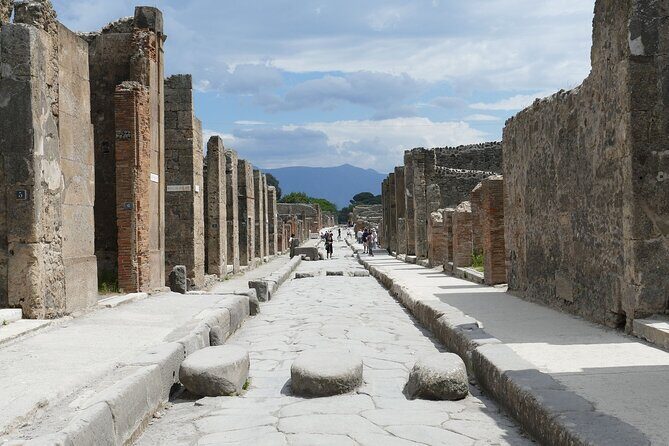
If you’re staying on the Sorrento side, this is one of the smarter ways to hit the two heavy hitters—Pompeii and Herculaneum—without losing your whole day to logistics. You start with the bigger, louder experience at Pompeii and then move to the smaller, more intimate feel of Herculaneum, which lets you compare how Romans lived right under Vesuvius’ shadow.
I like that this tour is built around the contrast. Pompeii is the “showpiece” with dramatic scale and standout public spaces. Herculaneum is the “details” stop, where preservation helps you see what daily life looked like from street level into homes and art.
Other Herculaneum guided tours and tickets we've reviewed at Vesuvius & the Bay of Naples

Pickup, timing, and how long you’re really out (6–9 hours)
You’re looking at about 6 to 9 hours on the clock, depending on timing, entry flow, and how your afternoon ends. The pickup window is tied to the start time (listed as 8:00 AM to 9:30 AM), so plan your morning around getting ready early and being on time.
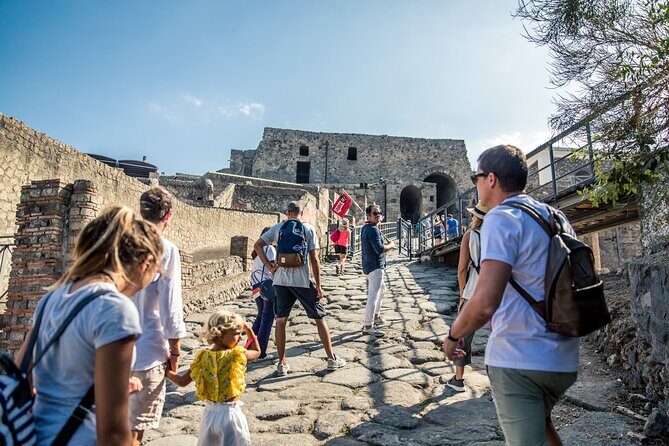
Also keep in mind this is set for moderate physical fitness. Pompeii and Herculaneum involve walking on uneven surfaces, climbing some steps, and moving between lots of points of interest. If you want lots of photo time and restroom breaks, you’ll feel it more at Pompeii than at Herculaneum.
Pompeii Archaeological Park: what to prioritize in limited time

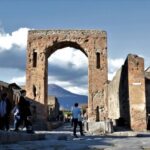
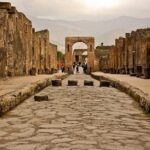
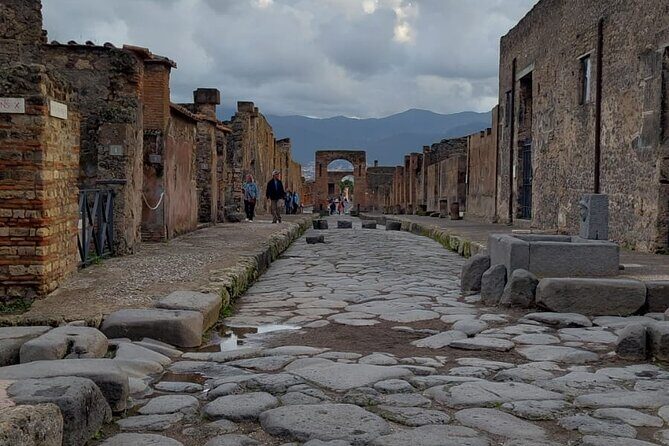
Pompeii is famous for a reason, but the best approach is to know your “must-see” targets before you walk in. This stop runs about 4 hours, which is enough time to hit the big zones without just drifting.
Here’s what you can expect to focus on:
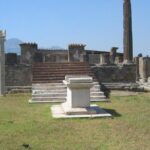
- Forum area: the civic heartbeat of the city—great for understanding how people organized public life.
- Theatres area: a reminder that Romans designed entertainment as a major social activity.
- Baths: even if you’re not into Roman plumbing, you’ll grasp how communal the culture was.
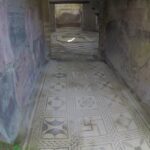
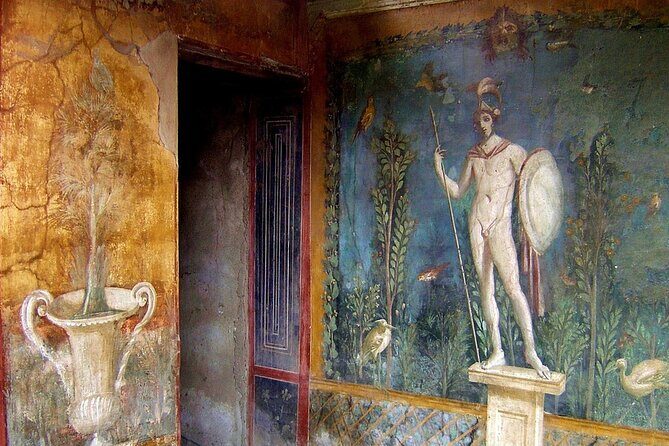
- Preserved houses: some interiors still show mosaic floors and frescoed walls, which helps you picture everyday spaces rather than just streets and ruins.
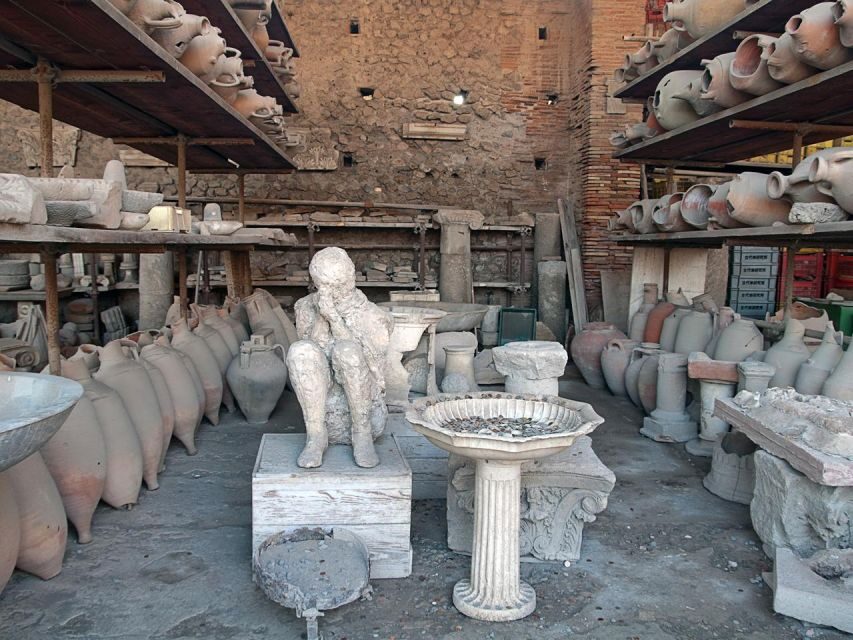
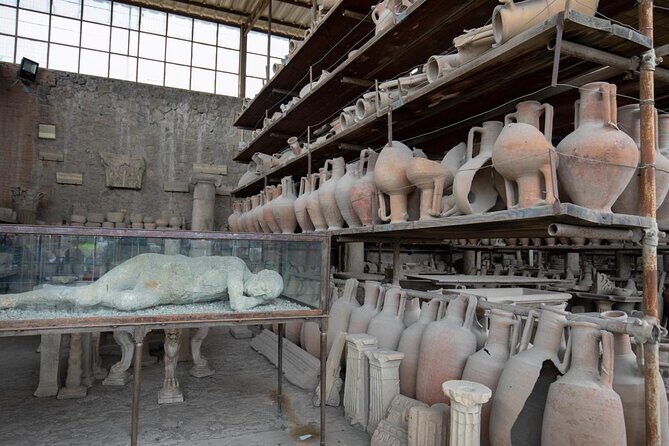
A detail I always find striking at Pompeii is how the preserved casts reflect the human scale of the tragedy. You may see plaster casts made from those who were caught by the eruption—an eerie reminder that this wasn’t a distant event, it was an immediate end.
Consideration: The Pompeii grounds are large, and you can burn time moving between areas. If you don’t have a guide, it’s worth planning a tight route in advance. If you do have a guide, ask them to keep you focused on the key zones so the time doesn’t slip away.
Herculaneum (Ercolano): smaller site, better preserved interiors
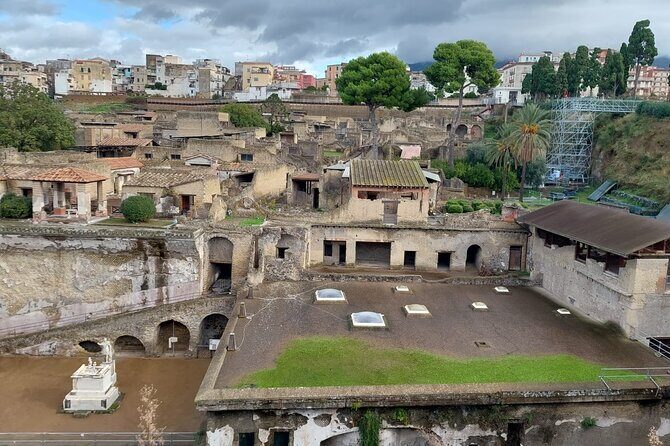
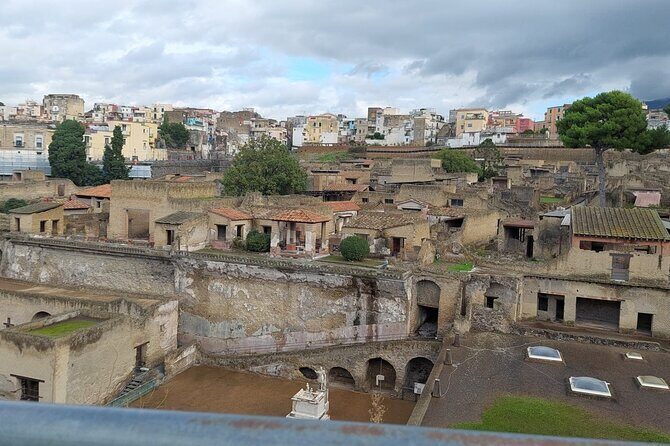
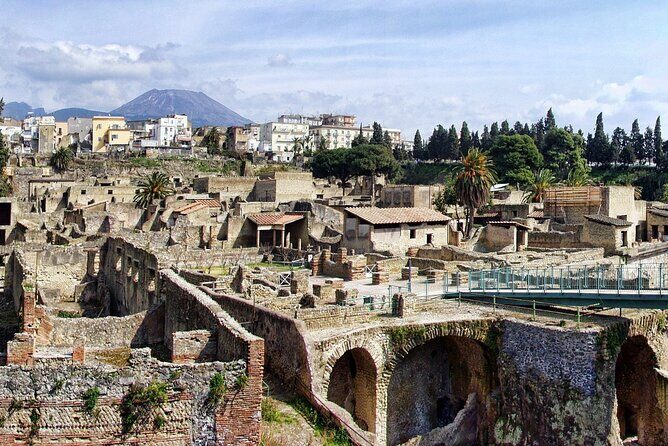
After Pompeii’s scale, Herculaneum often feels like a relief—less ground to cover, more intimate rooms and surfaces to notice. This stop is about 2 hours, which sounds short until you realize how much you can learn from better-preserved details.
What makes Herculaneum special here is preservation quality. You’re more likely to see:
- Mosaics and frescoes in clearer condition than you might expect
- Original timber elements from roof structures (a rare kind of survival)
It was buried by torrential lava of mud mixed with volcanic materials, and that mixture is part of why the site can feel so “readable.” You get a stronger sense of how homes looked and how decoration worked indoors, not just what stood in public squares.
Consideration: Because the site is smaller, it can tempt you to slow down too much. If you want the full comparison with Pompeii, aim to keep your time moving from one core cluster to the next rather than spending half the visit at a single room.
The Vesuvius-area wine stop: lunch, tastings, and timing reality
Your tour title points to a wine component, and the experience commonly ends with a winery-style lunch near Vesuvius. In the examples I saw, the team arranged time at Cantina del Vesuvio, described as a nearly century-old winery on a 16-hectare property on the slopes of Mount Vesuvius.
That kind of location makes the day feel like more than sightseeing. After Pompeii’s volcanic story, it’s a strange and fitting pairing to taste wines made in the same volcanic region. You can also find family-owned alternatives, and at least some days include a tour of the winery and tastings along with the meal.
One key thing to know: lunch isn’t listed as included in the tour info you provided. That means you should treat the winery meal and wine tasting as something that may be arranged but may carry an additional cost. If the winery is truly part of your package, it’ll be handled by the operator—still, ask your booking confirmation what’s included so there are no surprises.
Weather note: One review detail I found useful is that their driver/organizer worked around rainy conditions that could interrupt a Mount Vesuvius plan by finding an alternative activity. So if your day is weather-sensitive, you’re not necessarily stuck.
Other wine tasting and vineyard tours we've reviewed at Vesuvius & the Bay of Naples




Price and cost reality check: $423.99 plus tickets
At $423.99 per person, this isn’t a budget day trip. I’d frame it as a convenience and experience premium: you’re paying for air-conditioned vehicle comfort and private transportation, and that saves time and stress compared with shared tours.
But the real value math needs a ticket add-on:
- Pompeii Archaeological Park admission: €21.00 per person
- Herculaneum (Parco Archeologico di Ercolano) admission: €17.00 per person
That’s €38 total for the two sites, before any optional extras.
Also note: a private guide for Pompeii and Herculaneum is not listed as included. Yet in the examples you provided, people mention named guides (like Lucia and Giovanna). That suggests you may be able to add a guide through the operator or arrange it as part of the experience. If you care deeply about interpretation—politics, daily life, architecture, and what you’re actually looking at—confirm what guide support is included in your specific booking.
My practical take: If you’re the type who wants to understand what you’re seeing (and not just walk through), budgeting for guides and tickets makes this price feel more reasonable. If you’re happy wandering with minimal context, ask yourself whether you’re paying for comfort only—or for storytelling too.
Who guides the day best: what to ask for at Pompeii
Even without naming a specific guide in every booking, you can use the information from your materials to guide your planning. Guides named in your details—Lucia (Pompeii), Giovanna (Pompeii), and Connie (Pompeii)—are all described as engaging and strong with history.
When you’re standing in the Forum or staring at a preserved mosaic, the difference between a self-guided walk and a good guide is huge. The guide can point out what’s meaningful versus what’s just impressive.
So when you book, ask for:
- A guide who focuses on key highlights rather than spreading you thin
- Help navigating the ruins so you don’t waste time zigzagging
- A short route plan for Pompeii that hits Forum, theatres, baths, and at least one or two preserved house interiors
If you’re going without a guide, you’ll still get your tickets paid off—but you’ll want to come in with a rough map so you don’t spend your best energy just locating entrances.
Comfort and logistics that matter on ruin-heavy days
This is a long walking day, so comfort isn’t optional. The good news: air-conditioned vehicle and private transport help you reset between stops and handle the drive better than you would with a crowded group bus.
What you should bring:
- Comfortable shoes for uneven stone and steps
- Water (ruins days can mean limited opportunities to refill)
- A light layer if mornings feel cool
- Your ticket setup—this tour lists mobile tickets, which usually keeps things simple
One more practical point: because this is set up as only your group will participate, you can often get help with pacing, meeting points, and staying on schedule. That’s a real quality-of-life improvement when you’re dealing with large sites.
Best for couples, families, and history lovers with limited time
This kind of day works best if you want to prioritize two major sites but you don’t want to spend your vacation coordinating trains, transfers, and ticketing. It’s also a fit if you’re okay with moderate fitness and you like structured sightseeing rather than a free-for-all.
It’s also a good option if your group includes different energy levels. You can spend your time in Pompeii using the big highlights to ground the visit, then switch to Herculaneum’s more contained feel for a calmer, more detailed pace.
If you’re traveling with very young kids, anyone with mobility limits, or you hate walking long distances over uneven ground, you might want a different plan that reduces time in the ruins.
Should you book Pompeii and Herculaneum with a wine stop?
Yes, if you want a well-run, private day that pairs two different kinds of Pompeii tragedy and survival—with a finish that tastes like the region you just toured. The mix of Pompeii’s standout public spaces and Herculaneum’s preserved interiors is the real reason to do both in one trip.
I’d book it if:
- You’re staying in or near Sorrento and want easy logistics
- Your group values private transport and time efficiency
- You’re open to paying extra for admissions and possibly adding guide support
I’d pause before booking if:
- You’re trying to keep costs strictly low once you add €21 + €17 admissions
- You prefer fully self-guided travel and won’t use the guide-style value
- You need a day with minimal walking
FAQ
What’s included in the Pompeii and Herculaneum tour?
The tour includes air-conditioned vehicle service and private transportation. Site admission fees, lunch, and a private guide (if you want one) are listed as not included.
Are Pompeii and Herculaneum admission tickets included?
No. You’ll need to pay admission separately: Pompeii Archaeological Park €21.00 per person and Parco Archeologico di Ercolano €17.00 per person.
How long is the day trip?
The duration is listed as 6 to 9 hours total, with about 4 hours at Pompeii and about 2 hours at Herculaneum.
Is pickup offered from Sorrento?
Yes, pickup is offered, and the tour uses a mobile ticket format.
What if I want a guide at Pompeii and Herculaneum?
A private guide for Pompeii and Herculaneum is not included in the base listing you provided. In practice, the operator may arrange guide support, but you should confirm what’s included in your exact booking.
What’s the cancellation window?
You can cancel for a full refund if you cancel at least 24 hours before the experience starts. Cancellation within 24 hours of the start time isn’t refundable.