REVIEW · SORRENTO
From Sorrento: Half-Day Tour of Herculaneum
Book on GetYourGuide →Operated by TUI Italia · Bookable on GetYourGuide
Mud and ash froze a whole town in time. This half-day Herculaneum tour from Sorrento is interesting because you walk through a Roman neighborhood that still feels like a place people actually lived, right down to the preserved streets and building materials. I especially like the chance to tour the Villa of the Papyri and see the Central Thermae with their public-bath art, because it helps you understand daily life instead of just staring at ruins. The main drawback to plan around is that traffic and the morning start can make the day run a bit slow, and the guided portion is only about an hour once you’re on-site.
The payoff, though, is real. Herculaneum is one of those rare archaeology sites where the preservation is so strong you can picture the routines: shops, baths, and homes built for ordinary life, not just grand monuments. The tour structure also helps you avoid wasting time figuring things out on your own, which matters when you’re cramming this stop between other Sorrento activities.
One more consideration: it’s a half day, so you may want more time if you love ruins. Some people find the independent time at the end a bit short for revisiting favorite spots or slowing down for photos and details.
In This Review
- Key Things You’ll Love About Herculaneum (and This Tour)
- Herculaneum From Above: Why This Town Feels So Close
- From Sorrento to Herculaneum: Coach Ride, Headsets, and Getting There
- Paying Entrance Fees and Starting the Tour Smoothly
- The Guided Walk: How a One-Hour Tour Can Still Teach You a Lot
- Villa of the Papyri: A Home for the Educated and the Wealthy
- Central Thermae Baths: Public Life, Art, and Routine
- Walking the Former Streets: Where the City Feels Real
- What Else You’ll See: Shops, Gymnasium, and More
- Time on Your Feet: Heat, Pacing, and How to Plan Your Half Day
- Price and Value: Is $71 Worth a Half Day?
- Who This Tour Fits Best (and Who Might Want More)
- Quick Tips I’d Use Before You Go
- Should You Book This Herculaneum Half-Day Tour From Sorrento?
- FAQ
- How long is the Herculaneum half-day tour from Sorrento?
- Where do I meet for the tour?
- Is the entrance fee included?
- What language is the tour guide?
- Is lunch included?
- What major sights are covered during the visit?
Key Things You’ll Love About Herculaneum (and This Tour)
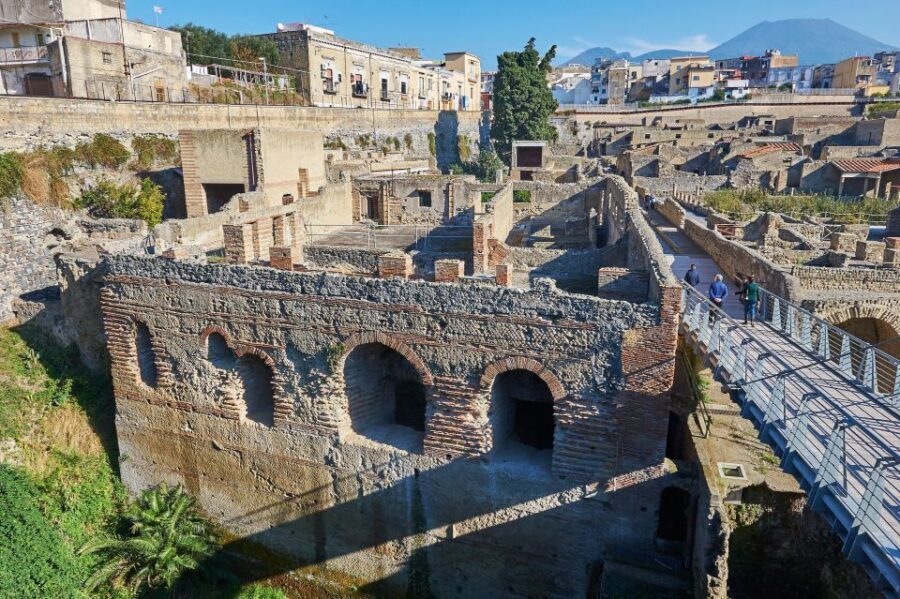
- Villa of the Papyri: a major residential stop that shows how wealthy Romans lived
- Central Thermae: public-bath spaces with wall art you can actually see and connect to daily life
- Preserved streets: you’ll walk through routes that existed in essentially the same way 2,000 years ago
- Headsets included: easier listening during the guided walk (helpful in a busy site)
- Smart timing: you get a quick top-of-site overview before going down into the town
Herculaneum From Above: Why This Town Feels So Close
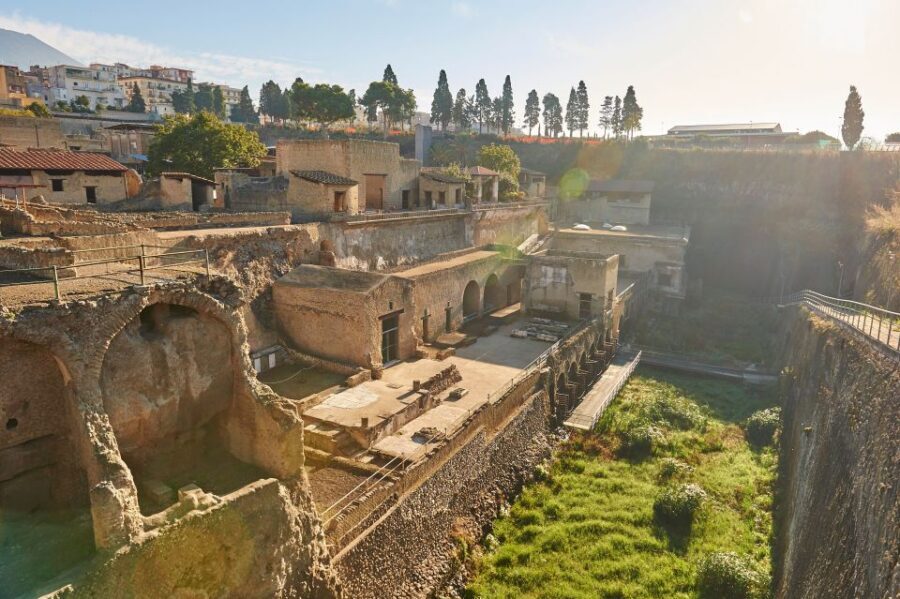
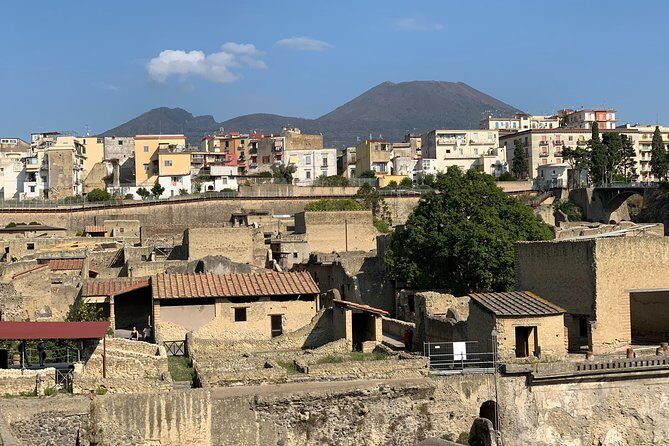
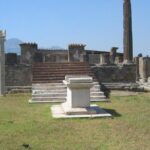
Herculaneum is covered by volcanic mud and ash from the eruption of Mount Vesuvius in 79 A.D. That cover is exactly what makes this place different from many other ruins: it preserved a residential coastal town in a way that’s easier to visualize. The tour starts with a morning ride out of Sorrento, then you move by coach to the Herculaneum area and down into the site.
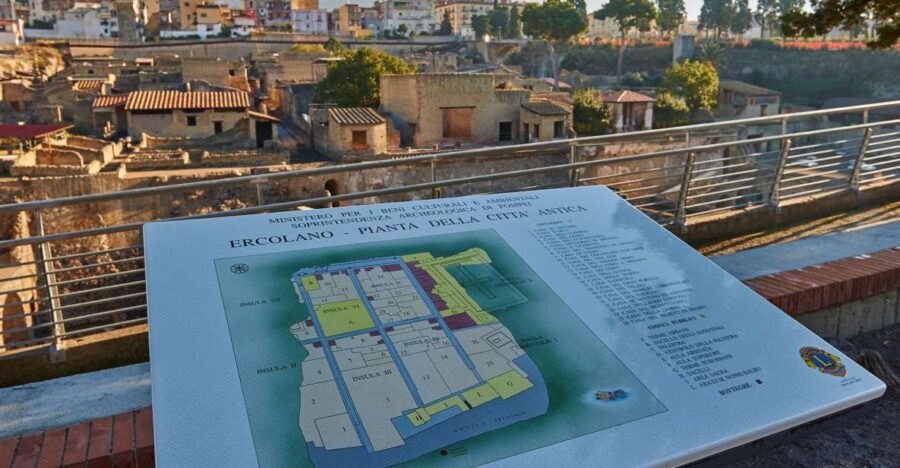
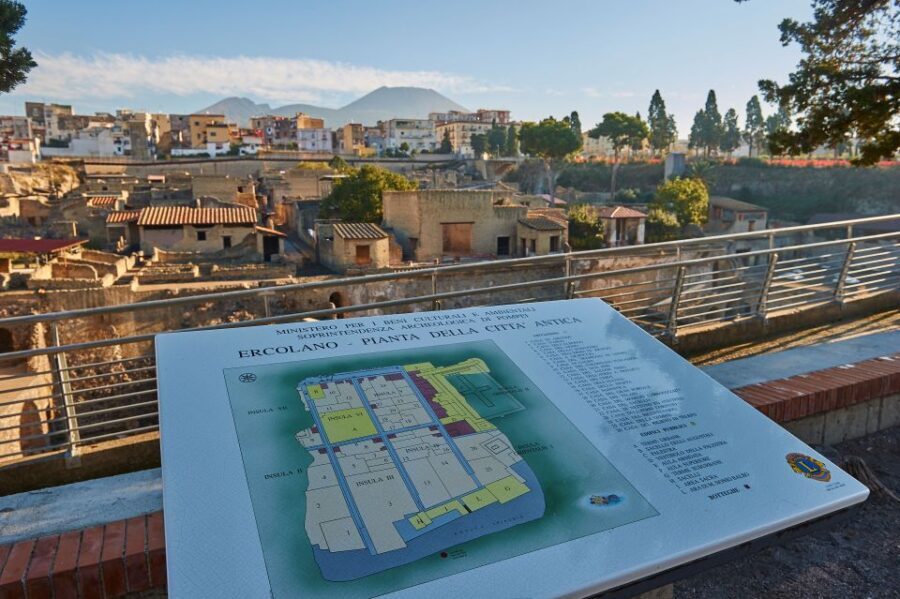
Before your main guided walk, you’ll get a view from higher up. This is more than a nice photo moment. It helps you understand how the town sits and how the excavated areas relate to the bigger layout, so the later street-level wander makes more sense.
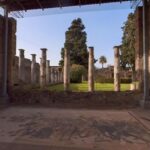
Once you begin descending, the scale shifts from “archaeology site” to “neighborhood.” You’re walking former streets with original-looking routes, and the buildings hold onto details like timbers and clay pots stored as they were at the time of the eruption. That kind of preservation is what makes Herculaneum feel strangely intimate.
Other Herculaneum guided tours and tickets we've reviewed at Vesuvius & the Bay of Naples

From Sorrento to Herculaneum: Coach Ride, Headsets, and Getting There
This tour runs as a morning half-day, and you’ll meet at 08:10 at the Achille Lauro parking area, opposite the Europa palace hotel. The transportation is a coach from Sorrento, and the route takes you via Castellammare and on toward Naples before reaching Herculaneum.
You’ll receive headsets on the coach. It’s a simple thing, but it matters because the Herculaneum site can get loud and busy. Clear audio makes the guide’s explanations easier to follow, especially when you’re standing still for a while to take in mosaics and fresco-like wall art.
The one logistics issue to take seriously is timing. A couple of experiences flagged delays and slow movement due to traffic. If you’re the kind of traveler who hates uncertainty, build in patience. This tour is short enough that being realistic about the bus schedule will make it feel smoother.
Paying Entrance Fees and Starting the Tour Smoothly
At the site entrance, your guide waits with you while you pay entrance fees before the tour begins. General admission is €11, and the data provided also notes that children under 18 and adults over 65 are free. The tour includes entrance fees as part of the package, so you’re not left hunting tickets or sorting payments at the gate.
One small practical plus: there’s mention that you can skip the ticket line. That’s useful in a place where your time-on-site is limited and every minute counts.
When you’re ready to start, you transition from logistics to story. This is where the guide becomes central—your job is to listen, look, and let the layout do the teaching.
The Guided Walk: How a One-Hour Tour Can Still Teach You a Lot
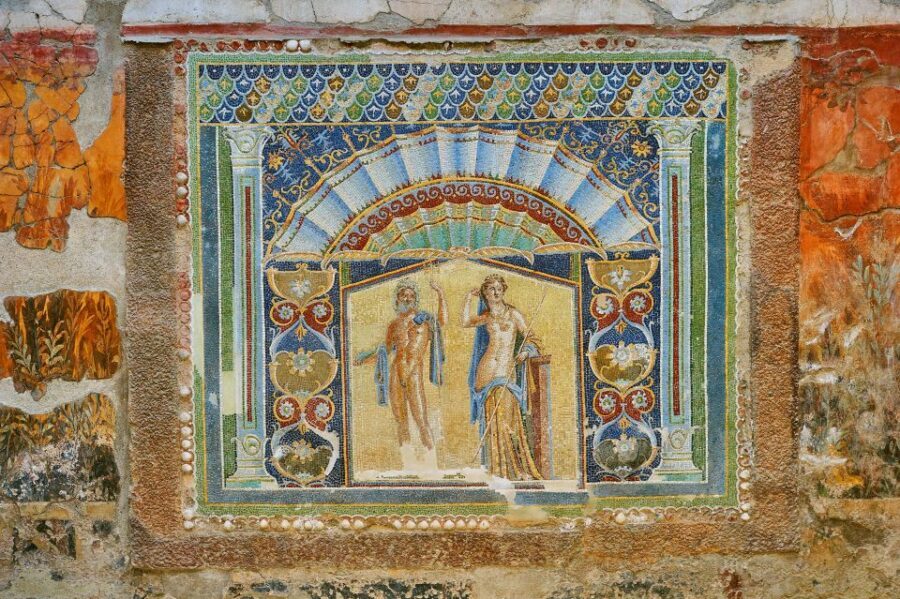
The guided tour inside Herculaneum lasts about an hour. That might sound brief, but the pacing is designed to hit the key areas without turning your half day into a marathon.
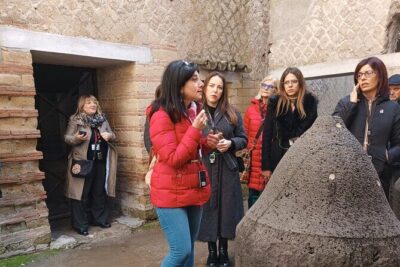
Your guide’s role is to connect what you’re seeing to what life probably looked like in the Roman period. In experiences shared with names like Eugene, Toni, Cynthia, and Dana, the most praised comments were about clarity, knowledge, and the ability to answer questions. If you enjoy learning while you walk, this is the part that can make or break the value.
A small caution: a couple of people noted occasional headset connection issues. In practice, that’s usually a quick fix—just raise your hand and ask the guide if you’re having trouble hearing. But it’s worth knowing that audio tech isn’t always perfect.
Also, keep expectations realistic. The tour is guided-first, then you get some independent time at the end. If you want to linger longer in the spots you love, you might end up wishing the last free walk were longer.
Villa of the Papyri: A Home for the Educated and the Wealthy
One of the highlights is the Villa of the Papyri, a luxurious residence tied to the idea of Roman wealth, leisure, and learning. You’re not just looking at walls—you’re looking at the footprint of a lifestyle.
Even if you’re not a “villa person,” the value here is how the site helps you understand class and daily routine. The villa style is built around comfort and display. You start seeing Herculaneum as more than a preserved disaster site—it becomes a functioning city with social layers.
This stop is also a good anchor point for your visit. Once you’ve seen a major residence, it’s easier to spot how other areas—like baths and street commerce—would have fit into the rhythm of life.
Other tours departing from Sorrento we've reviewed at Vesuvius & the Bay of Naples





Central Thermae Baths: Public Life, Art, and Routine
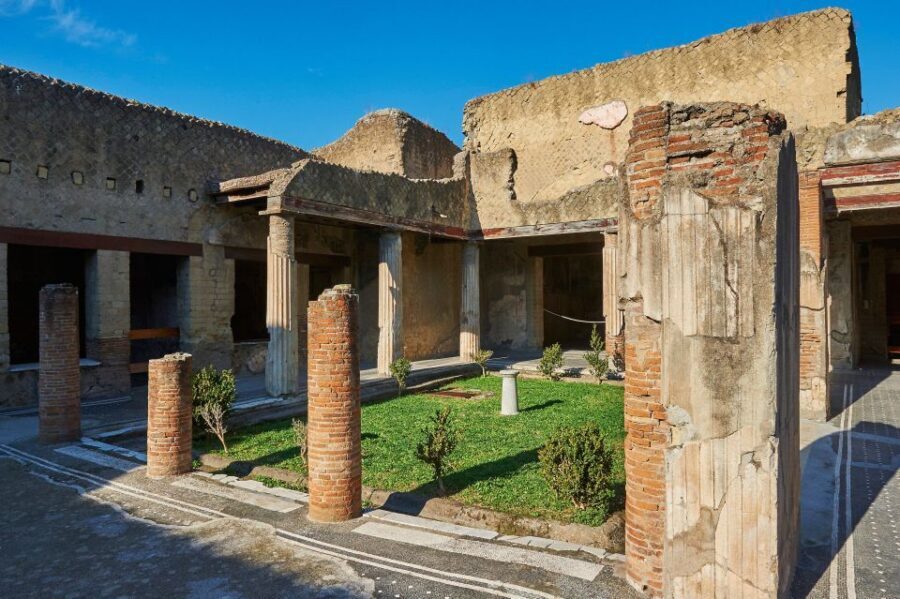
The Central Thermae (public baths) are a standout because they connect architecture to behavior. Public baths weren’t only about hygiene. They were meeting spaces, social spaces, and places where people spent time.
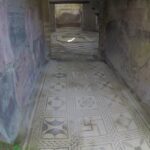
This tour focuses on the baths’ wall art, including frescoes and mosaics. Seeing these decorations helps you picture the atmosphere. Even though the rooms are quiet now, you’re looking at places designed for conversation, distraction, and relaxation.
If you like sites where you can “feel” the routine, this is one of the most satisfying areas. It’s harder to reduce the baths to a pile of stone when there’s visible artistic detail tied to public use.
Walking the Former Streets: Where the City Feels Real
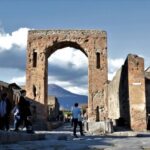
Herculaneum’s streets are one of the big reasons people remember it. The guide shows you major areas, but the real magic is how walkable it feels. The information you have says the streets exist almost as the Romans left them, which is exactly why this town can feel oddly personal.
You’ll also see preservation details that turn general “ruins” into something more specific: original timbers in buildings and clay pots stored as they were. That sort of everyday object preservation is what makes the tour stick in your mind, even after you’ve left the site.
And yes, there are skeletons preserved. This is where the experience stops being just visual. It becomes sobering. The tour context provided notes that many residents likely escaped compared to Pompeii, but the site still carries the weight of what happened.
If you’re visiting with kids or you’re sensitive to intense sights, consider preparing them gently beforehand. This is not a casual sightseeing stop.
What Else You’ll See: Shops, Gymnasium, and More
Beyond the headline attractions, the tour includes additional key sites like shops and a gymnasium. These stops are important because they broaden Herculaneum beyond homes and baths.
Shops help you picture economic life. A gymnasium helps you picture health, training, and social behavior in a city where people had routines beyond eating and sleeping.
The guide’s storytelling is what ties it together. Strong guides, like the ones named in shared experiences, seem to focus on day-to-day life: how people would move, gather, and use these public spaces.
Time on Your Feet: Heat, Pacing, and How to Plan Your Half Day
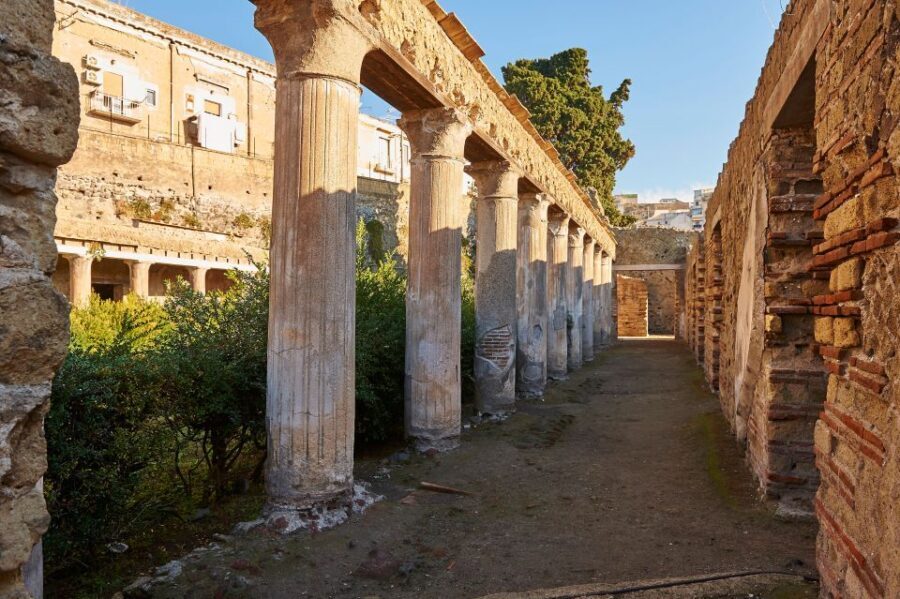
Herculaneum rewards slow looking, but this tour is structured for a half-day. That means you’ll likely be on your feet quite a bit without having hours to roam freely.
One review detail to take seriously: it can be very hot. If you’re going in summer, wear light layers, bring water, and accept that you may not want to stand and read every panel for long. Use your best energy on the stops the guide calls out and the objects that catch your eye.
The tour ends with a short independent window. Some people reported needing more time to revisit uncovered areas. If you’re the type who wants to linger, set aside a little extra patience and pick one or two areas you want to return to if you have energy.
Price and Value: Is $71 Worth a Half Day?
At $71 per person for a half-day, this tour can be a good value if you want three things handled for you: transportation, a guided interpretation, and admission included.
Here’s the value logic I’d use before booking:
- You’re paying for time saved. You don’t want to manage buses, entrance tickets, and interpretation with limited hours.
- The guide is the core product. When your guide is strong and clear, the tour feels like it “works.” Shared experiences praised guides like Eugene, Toni, Cynthia, and Dana for their explanations and passion.
- It’s short, so you’re buying focus. About an hour guided inside the site can be perfect if you want the highlights without draining your whole day.
What can lower the sense of value is if you’re expecting a long, unguided archaeological wander. This isn’t that. It’s a curated half-day, and if you’re the slow-linger type, you may want to follow up with additional independent time on another day.
Who This Tour Fits Best (and Who Might Want More)
This tour is a strong match if you:
- want a compact Roman ruins experience with key stops like the villa and baths
- like walking with an English-speaking guide
- value headsets so you can hear explanations without straining
- are visiting Sorrento and want a practical half-day plan without extra planning stress
It might be less ideal if you:
- need lots of independent time on-site to fully absorb details
- hate any uncertainty around timing, since traffic and pickup delays can happen
- are not comfortable with intense visual reminders of the eruption’s impact, including preserved skeletons
Quick Tips I’d Use Before You Go
- Wear shoes that work on outdoor archaeological paths and uneven ground.
- Bring water, especially if you’re going in warm months.
- During the guided hour, prioritize asking questions if you’re curious about what you’re seeing.
- Save your best photo time for the stops you care about most, because your independent window can be brief.
Should You Book This Herculaneum Half-Day Tour From Sorrento?
If you want a well-organized, English-guided introduction to one of Italy’s most powerfully preserved Roman towns, I think booking makes sense. You’re getting the essentials—Villa of the Papyri, Central Thermae, and walking the preserved street grid—with entrance included and headsets to keep you focused.
I’d say go for it if you like your ruins with context, not just contextless photos. If you’d rather wander for hours at your own pace, then you may want a longer, more flexible visit instead.
FAQ
How long is the Herculaneum half-day tour from Sorrento?
The tour duration is 4 hours.
Where do I meet for the tour?
You meet at 08:10 at the Achille Lauro parking area, opposite the Europa palace hotel.
Is the entrance fee included?
Yes. The tour includes the entrance fee to Herculaneum.
What language is the tour guide?
The live tour guide speaks English.
Is lunch included?
No. Lunch is not included.
What major sights are covered during the visit?
The tour highlights include the Villa of the Papyri, the Central Thermae (public baths with art), and walking through the preserved streets of Herculaneum.