REVIEW · SORRENTO
Private Pompeii & Herculaneum Tour from Sorrento
Book on Viator →Operated by IAMME IA! - Gray Line Amalfi Coast · Bookable on Viator
Ancient streets can feel close when you have a plan. This private day trip from Sorrento strings together Pompeii and Herculaneum with guided time at both sites, plus hotel pickup and skip-the-line tickets.
What I like most is the structure: you get a real guided walkthrough of Pompeii’s major spaces, then you move on to Herculaneum for a second focused tour. I also love that the schedule is built around seeing highlights without getting stuck in long lines, so your day stays mostly about ruins, not waiting.
One possible drawback: lunch is on your own, and with summer heat in play, you’ll want to plan for water and a quick meal so you do not lose momentum between sites.
In This Review
- Key highlights at a glance
- Why a private Pompeii and Herculaneum day from Sorrento makes sense
- Pickup in Sorrento, then straight inland to Pompeii
- Pompeii in two guided hours: how the Forum becomes daily life
- The big picture: why the AD 79 eruption still feels personal
- Civil Forum: where business, justice, and worship met
- Temple of Jupiter: the view and the power symbolism
- Macellum: the Roman market as a social machine
- Via dell’Abbondanza: the commercial artery you can still walk
- Stabian Baths: the health club and the hangout
- Lupanar: a darker window into entertainment
- Big-name private homes and public entertainment
- Basilica: administration and justice in one sumptuous block
- Lunch break between sites: use it to stay comfortable
- Herculaneum: the ruins feel different because they were preserved differently
- Start with the bigger context: pyroclastic destruction near Vesuvius
- Casa dei Cervi: a noble household with painted surfaces
- College of the Augustales: religious power in a practical building
- House of the Skeleton: what the timeline of death teaches you
- Central Thermae: public baths with gendered spaces
- Partem Domus lignea: the wooden door clue
- Salone della Barca di Ercolano: the boat that survived the disaster
- Transportation, tickets, and timing: what’s really included in your package
- Price and value: why $769.43 per person can still make sense
- Who this tour is best for (and who might want to skip it)
- Guides and the pacing: what to expect when the day flows
- Should you book this Pompeii & Herculaneum private tour from Sorrento?
- FAQ
- How long is the Pompeii and Herculaneum tour from Sorrento?
- Are hotel pickup and drop-off included?
- How much guided time do I get at each site?
- Are entrance tickets included?
- Is lunch included?
- What language is the tour guide?
- What is the meeting point?
- Do I receive a mobile ticket?
- Can I cancel for a full refund?
Key highlights at a glance
- Hotel pickup in central Sorrento by private air-conditioned vehicle to cut travel friction
- Skip-the-line tickets for both Pompeii and Herculaneum
- Two guided hours in Pompeii that focus on the Forum, major monuments, and daily-life clues
- Two guided hours in Herculaneum where mud-and-lava preservation changes how ruins look
- Free time for lunch and self-paced exploring so you can set your own pace
- A long list of planned stops that keeps you oriented instead of wandering aimlessly
Why a private Pompeii and Herculaneum day from Sorrento makes sense
If you base yourself in Sorrento, Pompeii and Herculaneum can feel like two separate projects. This tour bundles them into one day so you do not have to choose, or waste time planning multiple excursions.
You also avoid the biggest time sink in both places: lines. The tour includes skip-the-line entrance tickets, and that matters. Pompeii and Herculaneum are famous, so even a good weather day can mean slow entry if you show up without pre-booked access.
I also like that the day is not just a checklist. The guided time is framed around what the eruption changed overnight: Pompeii was buried under ash and pumice, while Herculaneum was encased in mud and lava. That difference affects the feel of what you see, and the guide is there to help you read the ruins like a snapshot of Roman life.
Other Herculaneum guided tours and tickets we've reviewed at Vesuvius & the Bay of Naples
Pickup in Sorrento, then straight inland to Pompeii
Your day starts with a pickup at your hotel or a central location in Sorrento, using a private air-conditioned vehicle. The meeting point is Piazza Torquato Tasso, 16, and the tour ends back at the same meeting point area, with a return transfer.
This portion matters because it controls your energy. Instead of juggling buses or trains, you get transportation that gets you from the coast area into the archaeological zone with fewer moving parts. It is the kind of convenience that lets you show up to Pompeii ready to walk.
You will also receive a mobile ticket. That is a small thing, but it reduces hassle at entry and helps your guide keep the day flowing.
Pompeii in two guided hours: how the Forum becomes daily life
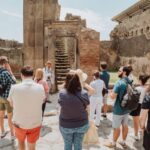
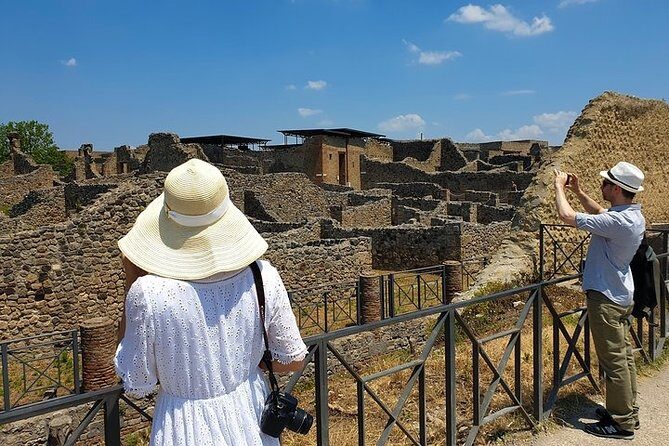
Pompeii is enormous. Even if you love ruins, showing up without a plan can mean aimless drifting from one wall to another. The tour solves this with a tight 2-hour guided Pompeii session that concentrates on the city’s main public spaces and major streets.
The big picture: why the AD 79 eruption still feels personal
Pompeii was a thriving Roman city near the Bay of Naples. In AD 79, Mount Vesuvius buried it under meters of ash and pumice. What you walk through today was preserved long enough for archaeologists to piece together how people cooked, shopped, bathed, prayed, and entertained themselves.
A good guide helps you understand that it is not just stone. It is a preserved routine.
Civil Forum: where business, justice, and worship met
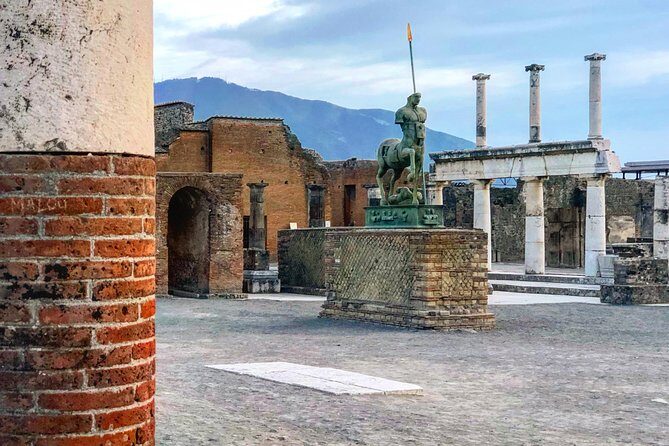
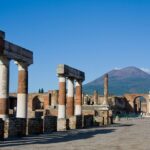
The stop at the Civil Forum (Foro de Pompeya) is short but important. The Forum was the city’s core: administration and justice, trade activity and markets, and places of citizen worship all clustered here.
In plain terms, this is where public life happened. You get a chance to orient your brain before you branch into more specific buildings.
Other tours departing from Sorrento we've reviewed at Vesuvius & the Bay of Naples



Temple of Jupiter: the view and the power symbolism
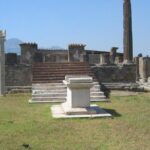
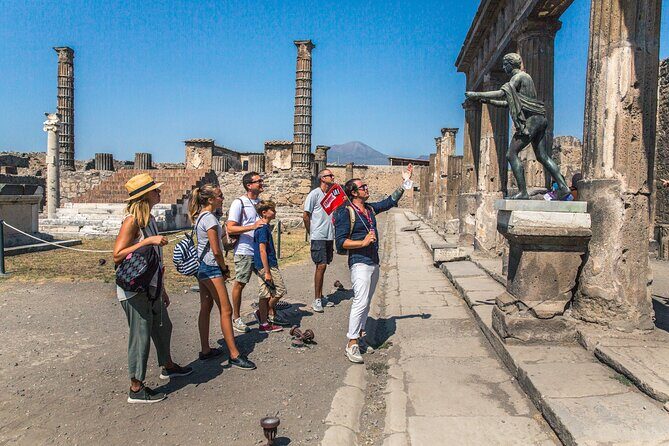
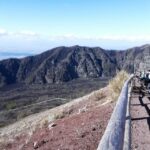
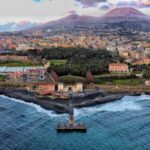
The Tempio di Giove Capitolino dominates the north side of the Forum, and the guide points out the stage-like setting with Mount Vesuvius rising in the background.
When the colony was founded (80 BC), the temple was renovated and became a Capitolium with cult statues tied to Jupiter, Juno, and Minerva. The design was meant to keep them visible to people passing through the Forum square. Even on a quick stop, it is a strong lesson in how architecture carried authority.
Macellum: the Roman market as a social machine
Next comes the Macellum, basically the market complex. The site included spaces for worship and areas that suggest how food and daily transactions worked. Even the arrangement of parts around the complex tells you something about how people moved through commerce.
If you like details, this is a stop where the ruins start to feel like a working city. If you do not, the guide still ties it back to daily routine.
Via dell’Abbondanza: the commercial artery you can still walk
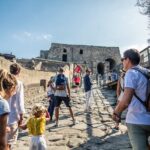
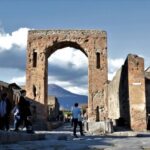
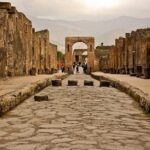
Via dell’Abbondanza is Pompeii’s main commercial artery, stretching from the Forum to the Sarno Gate. This is where you get the feeling of a city street: well-preserved shops and workshops, plus the kind of electoral graffiti that makes ancient Pompeii seem less like a museum and more like a neighborhood.
The street’s basalt stones and raised stepping stones are still visible. That is one of those tactile details that makes you slow down and look at how people once walked.
Stabian Baths: the health club and the hangout
The Stabian Baths (Terme Stabiane) are the oldest and largest public bathing complex in Pompeii. The guide’s focus here is smart because bathing is social, not just hygiene.
You learn about the hypocaust underfloor heating system and how the baths were organized with sections for men and women. The stucco decorations, open-air gymnasium (palaestra), and large swimming pool help you picture the baths as a wellness hub and a place to trade news.
Lupanar: a darker window into entertainment
The Lupanar is the famous brothel in Pompeii, known for erotic paintings on its walls. The stop is brief, but it offers a reminder that daily life includes commerce, leisure, and also exploitation.
If you prefer a lighter tone, you may want to brace yourself mentally. But it is part of the full picture of how Roman society worked.
Big-name private homes and public entertainment
The tour includes quick stops at a few standout buildings:
- Casa del Fauno (House of the Faun), one of the largest and most impressive residences in Pompeii, with major art pieces and aristocratic status cues.
- Teatro Grande, the horseshoe-shaped auditorium for roughly 5,000 spectators, built into a hillside and used for comedies, tragedies, and pantomimes.
These are short stops, but they help you see the social ladder: elite homes and major venues were not separate worlds from the public streets. They were connected by the city’s layout.
Basilica: administration and justice in one sumptuous block
The Basilica sits at the heart of the Forum and was the most sumptuous building there, used for business and administration of justice. Even with limited time, you get a sense of how official activity had its own architectural presence.
Lunch break between sites: use it to stay comfortable
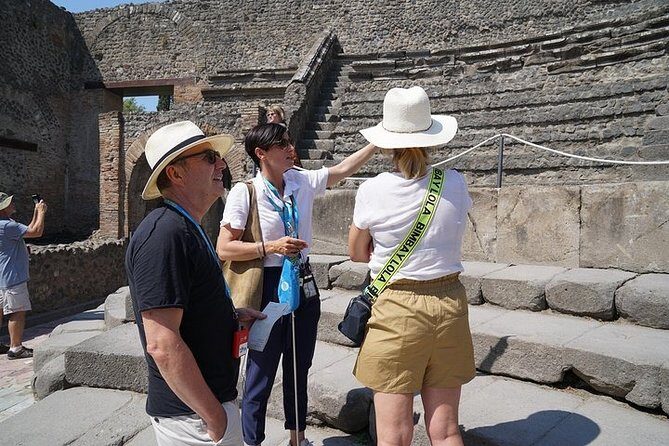
After Pompeii, you get free time for lunch (own expense). The tour does not include food, so budget for a meal where you can sit down, recharge, and then keep walking at Herculaneum without feeling rushed.
This is also when you should think about hydration. One review noted that water should have been provided, which makes sense: Pompeii and Herculaneum are walking-heavy and summer heat can be real. Pack water if you can, and wear comfortable shoes with good grip.
Herculaneum: the ruins feel different because they were preserved differently
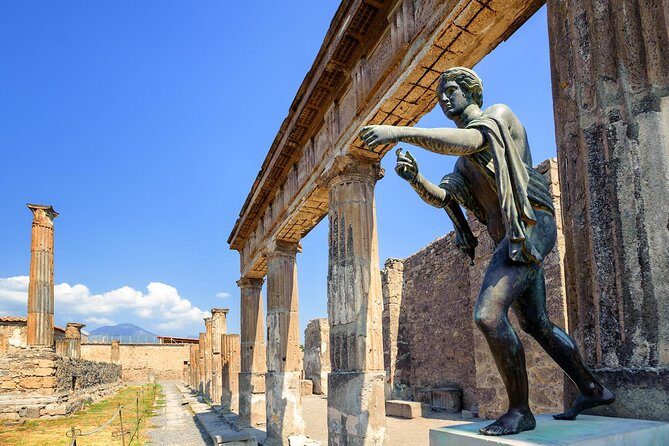
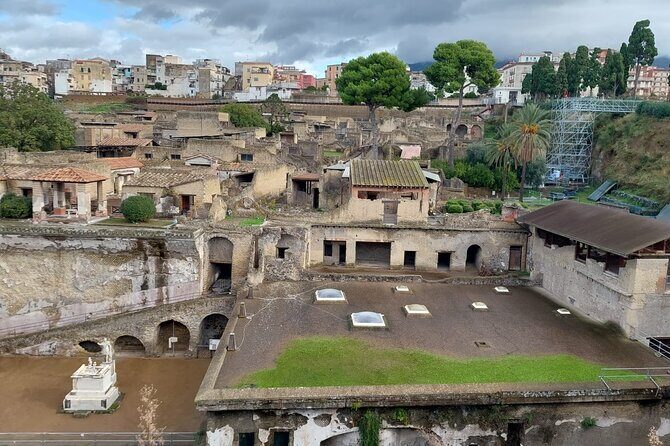
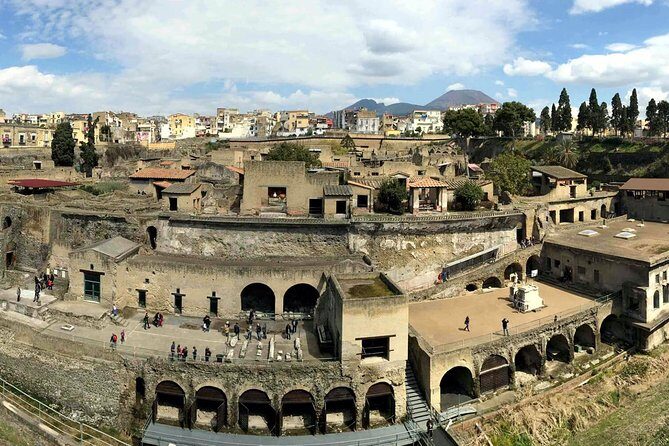
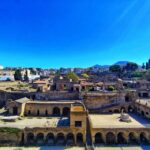
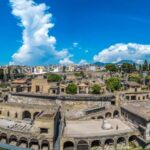
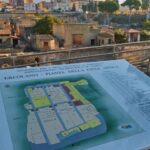
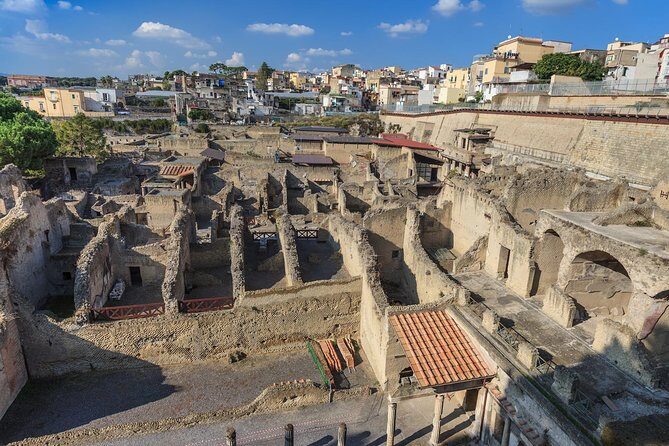
Then you head to Herculaneum for another guided session—about 2 hours—plus free time to explore at leisure. Herculaneum is often described as better preserved than Pompeii, and for a good reason: after Vesuvius, it was encased in mud and lava rather than ash and pumice.
That preservation style changes what you notice. Details that can be harder to make sense of at Pompeii often come through more clearly here, especially in building surfaces and smaller architectural elements.
Start with the bigger context: pyroclastic destruction near Vesuvius
Herculaneum, located in the comune of Ercolano, was destroyed by volcanic pyroclastic flows in AD 79. The guide’s job here is to help you connect that destruction to what you see on the ground.
When you understand the mechanism, the ruins stop being random rooms and become a pattern.
Casa dei Cervi: a noble household with painted surfaces
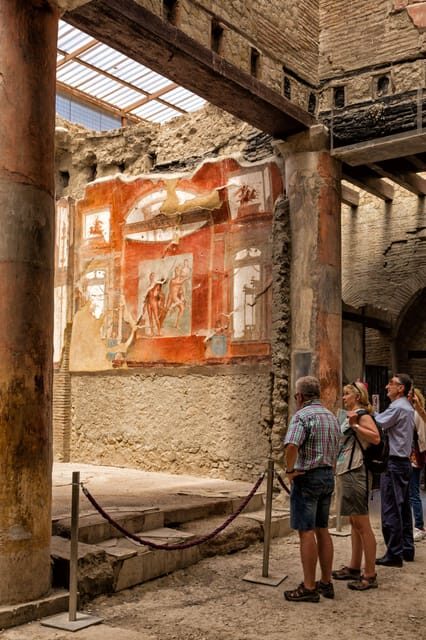
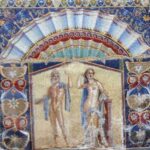
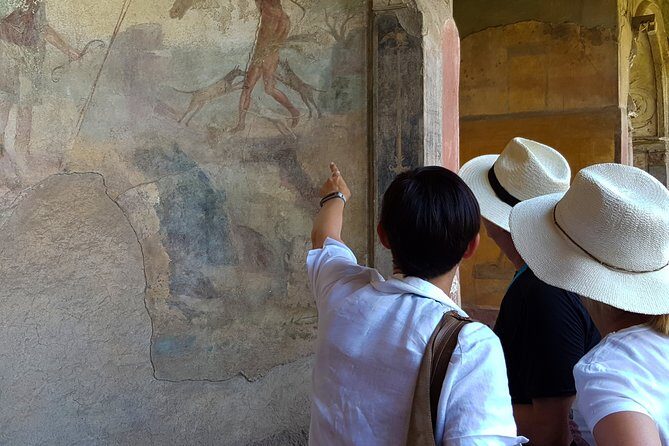
Casa dei Cervi is an imposing villa that once had a seafront address. Around a central courtyard, it had murals and still-life paintings before the mud slide. Even with short time blocks, this is the kind of stop where you feel the ambition of a Roman household.
College of the Augustales: religious power in a practical building
The College of the Augustales is thought to have been a center of the cult of Emperor Augustus, and possibly the headquarters of the local collegium. It is a reminder that politics and religion weren’t separate tracks.
Even a brief stop can help you see why the Romans built institutions that made imperial worship visible in everyday life.
House of the Skeleton: what the timeline of death teaches you
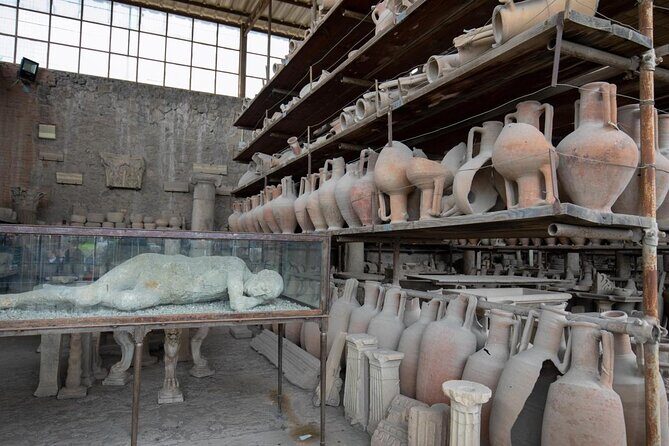
The House of the Skeleton got its name after human remains were discovered in a second-floor room in 1831. Some inhabitants shut themselves in their homes and died there, possibly from suffocation or extreme heat.
This is not a light stop. It is also one of the most haunting reminders that this was not just a “discovery moment.” It was a tragedy that froze real lives.
Central Thermae: public baths with gendered spaces
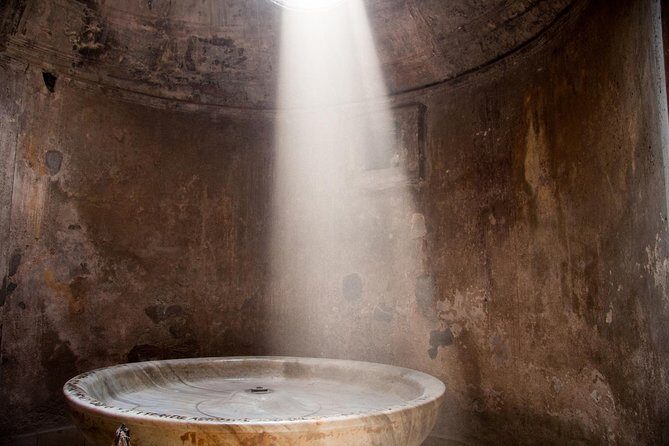
The Central Thermae were Herculaneum’s public baths, split into men’s and women’s sections. The tour includes an overview of the bath sequence—changing room, cold bath, tepid bath, and hot bath—with good preservation.
Bath culture connects the two sites. You see similar habits, but you also see differences in how preservation can make details feel clearer.
Partem Domus lignea: the wooden door clue
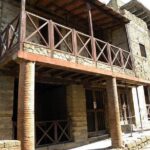
Partem Domus lignea (Casa del Tramezzo di Legno) owes its name to a folding wooden door discovered there. The stop also highlights the benches where clientes waited to be received by the owner.
That is a smart kind of ruin detail: it turns a room plan into an actual social process.
Salone della Barca di Ercolano: the boat that survived the disaster
One of the most memorable stops is the Salone della Barca di Ercolano. After the eruption, many fled toward the beach. The wooden boat was recovered, covered with resinous material for preservation, and returned to its position so visitors can admire it.
It is a rare, tangible object in a story dominated by walls and floors. It also links the eruption’s violence to a coastal escape attempt.
Transportation, tickets, and timing: what’s really included in your package
This is a full private-day experience in the sense that your transportation and guiding time are arranged for your group, with pickup and drop-off included.
What’s in the value bundle:
- Private transportation between Sorrento, Pompeii, and Herculaneum in an air-conditioned vehicle
- Skip-the-line entrance tickets for both sites
- 2 hours private guided Pompeii tour and 2 hours private guided Herculaneum tour
- Return transfer back to Sorrento around 4pm–5pm
You also get a planned set of stops within each guided segment. They are brief, but together they give you a sweep of major spaces in each city rather than a random walk.
What is not included:
- Food and drinks
And one practical note: in summer, you’ll likely want sunscreen and comfortable shoes. Pompeii and Herculaneum involve lots of walking on uneven ground.
Price and value: why $769.43 per person can still make sense

At $769.43 per person, this is not a budget tour. So the question is not whether it is expensive. It is whether it saves you time and stress enough to be worth it.
Here’s the value argument:
- You’re paying for private guidance time at both sites (Pompeii and Herculaneum), not just one.
- Tickets and skip-the-line entry are included, which can help you avoid hours of wasted day time.
- Pickup and return transfer are included, which matters if you want to avoid switching transport modes mid-day.
If you have only a day or two on the Amalfi Coast area, a priced private day can be a strong trade. If you are traveling in a group and want everyone to move together, that cost can feel more reasonable per person than splitting logistics across multiple tours.
On the other hand, if you love wandering on your own and you’re comfortable reading ruins without interpretation, you might decide the cost is not worth it.
Who this tour is best for (and who might want to skip it)
This tour fits best if you:
- want a structured day and hate wasting time on logistics
- like learning how everyday Roman life worked, from markets to baths to entertainment
- want both cities without committing to separate day trips
- appreciate skip-the-line access so your day stays focused
It may be less ideal if you:
- prefer long unstructured exploration with minimal guidance
- are sensitive to emotionally heavy subject matter, like the House of the Skeleton and the Lupanar
Guides and the pacing: what to expect when the day flows
The strongest parts of the experiences described in feedback tend to revolve around the guide and pacing. Guides named Connie, Ugo (Hugo), Nella (with Travel, Etc), and Carmela show up in write-ups as people who kept both sites interesting and readable.
That matters because the ruins can be disorienting. Even when you know the big names, it is the connections that make it click: why the Forum was the civic core, why bathing was social, and why Herculaneum can feel more detailed once you understand how it was buried.
The pacing is also a key benefit. You get short stops and then move on, which prevents the classic problem of seeing 20 highlights but remembering none because you ran out of attention or context.
Should you book this Pompeii & Herculaneum private tour from Sorrento?
Book it if you want a guided, high-efficiency day that covers both Pompeii and Herculaneum without wasting hours in transit or lines. The included skip-the-line tickets plus pickup and private guidance are the big reasons this can feel like good value even at a premium price.
Skip it if you’re perfectly happy doing Pompeii and Herculaneum on your own at a slower pace, or if paying for two guided sessions feels like overkill for your travel style.
If you do book, go in with two small prep moves: wear comfortable walking shoes and plan for hydration and lunch since food and drinks are on you.
FAQ
How long is the Pompeii and Herculaneum tour from Sorrento?
The tour runs about 8 hours (approx.), with the day structured around guided time at Pompeii and Herculaneum and a return trip to Sorrento around 4pm–5pm.
Are hotel pickup and drop-off included?
Yes. Pickup and drop-off from your hotel or central location in Sorrento area are included, using a private air-conditioned vehicle.
How much guided time do I get at each site?
You get 2 hours private guided tour in Pompeii and 2 hours private guided tour in Herculaneum.
Are entrance tickets included?
Yes. Skip-the-line entrance tickets in Pompeii and Herculaneum are included, and admission ticket details are built into the stops.
Is lunch included?
No. Lunch time is free, and food and drinks are not included, so you’ll pay for your own meal.
What language is the tour guide?
The tour is offered in English.
What is the meeting point?
The start point is Piazza Torquato Tasso, 16, 80067 Sorrento NA, Italy.
Do I receive a mobile ticket?
Yes. A mobile ticket is included.
Can I cancel for a full refund?
Yes, free cancellation is available. You can cancel up to 24 hours in advance for a full refund.