REVIEW · SORRENTO
Guided Tour of Pompeii and Herculaneum with Lunch and Ticket
Book on Viator →Operated by Buyourtour di Amo Italy Travel · Bookable on Viator
Pompeii and Herculaneum in one long day works. You get the full wow-factor of Roman streets and houses buried by Vesuvius, plus a scheduled lunch break so you’re not just marching from one ruin to the next. The big draw here is the pacing: Pompeii first, then a winery lunch, then Herculaneum for those perfectly preserved details.
I especially like the guided walkthroughs at both sites, with Pompeii handled by Celsestina and Herculaneum led by Diana. I also like that lunch at Sorrentino Winery isn’t an afterthought; it comes with a tasting (Prosecco, red, and white) and a set menu featuring local ingredients.
One thing to consider: Pompeii can be crowded, so even with advance planning, you may still hit slow entry moments. Add in the 9-hour walking day, and you’ll want comfortable shoes and a realistic expectation of “see a lot” versus “wander forever.”
In This Review
- Key things to know before you go
- Pompeii and Herculaneum: a smart way to see two buried cities
- Pompeii start: Forum life, Jupiter looming, and Via dell’Abbondanza
- Pompeii’s Stabian Baths: where politics, bathing, and architecture meet
- Lupanar in Pompeii: be ready for adult-themed ruins
- Teatro Grande: theatre, crowds, and why it survived
- Lunch and wine tasting at Sorrentino Winery
- Herculaneum second half: House of the Deer and mosaic-heavy rooms
- Sacello degli Augustali and the big houses of Herculaneum
- Casa del Salone Nero: black walls and personal documents
- How the guides, shade, and pacing shape your day
- Price and value: what $192.22 buys you
- Who should book this tour (and who should skip it)
- Should you book this Pompeii and Herculaneum day?
- FAQ
- How long is the tour?
- Where does this tour operate from?
- What language is the tour offered in?
- Is lunch included?
- Are admission tickets included for Pompeii and Herculaneum stops?
- Do I get a ticket on my phone?
- How large are the groups?
- Is there a confirmation at booking?
- What should I wear or bring?
- What’s the cancellation rule?
Key things to know before you go
- Two buried cities, different vibes: Pompeii gives you street life on a bigger scale; Herculaneum feels tighter and more preserved.
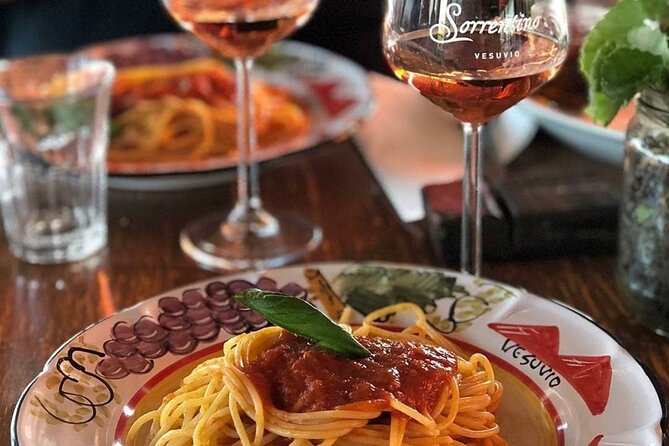
- Lunch with Vesuvius wine tasting: You stop at Sorrentino Winery for a sit-down meal and three wine tastes.
- Tickets are built in: Admission is included at the major stops, and you’ll receive a mobile ticket.
- Real guided focus: Named guides in English make comparisons clear between cities (especially daily life and preservation).
- Hot-day reality: Summer sun is a thing here, so shade stops and sunscreen matter.
- Max group size: The tour caps at 100 travelers, which helps, but you’re still in big-site crowds.
Pompeii and Herculaneum: a smart way to see two buried cities
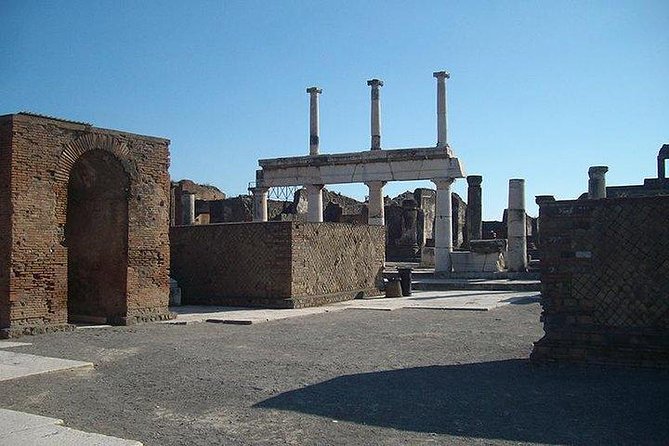
This is one of those days that makes sense on a tight schedule. Mount Vesuvius buried Pompeii and Herculaneum in 79 AD, but the two cities feel different once you’re walking among them. Pompeii’s footprint is larger and reads like a full city layout, while Herculaneum often feels like a snapshot—streets, houses, and rooms preserved with striking clarity.
Doing both in a single outing also helps you compare what was the same and what was different. That comparison is where the tour guidance pays off, especially when your guide points out how daily life shows up in the Forum, markets, baths, theatres, and private homes.
If you're still narrowing it down, here are other tours in Sorrento we've reviewed.

Pompeii start: Forum life, Jupiter looming, and Via dell’Abbondanza
Pompeii opens with the Archaeological Park ticket included, and you’ll get about two hours on the site early. This is the key moment to get your bearings: broad streets, house entrances, and the sense of how the city moved from public space to everyday life.
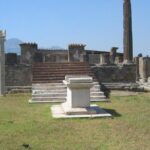
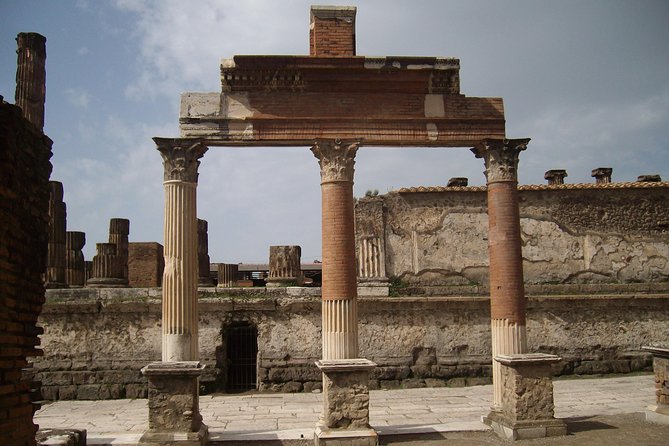
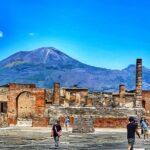
From there, the tour centers on the city’s core. The Forum (Foro de Pompeya) is the civil heart—administration, justice, business, commercial activity, and worship all gathered around one area. It’s also where you start to understand Pompeii as more than ruins: it functioned like a working city with systems, meetings, and markets.
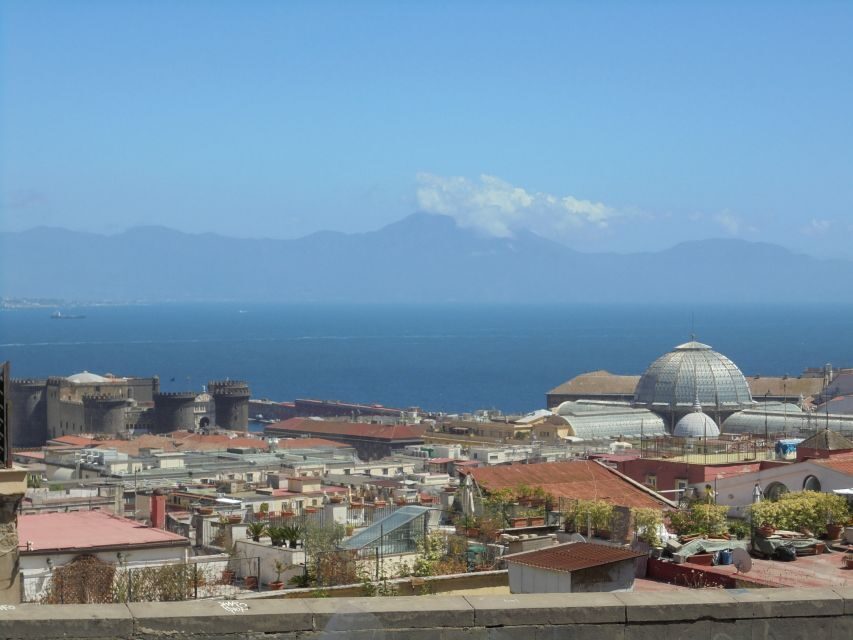
Next comes the Temple of Jupiter (Tempio di Giove Capitolino) on the northern side of the Forum. Your guide will point out the way the temple dominates the square, and how Vesuvius can loom behind it. It’s a strong “how power showed up in stone” stop, and it sets up later moments where religion and politics overlap.
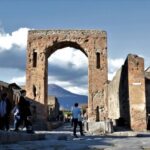
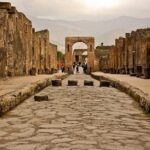
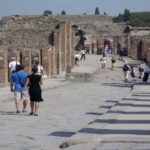
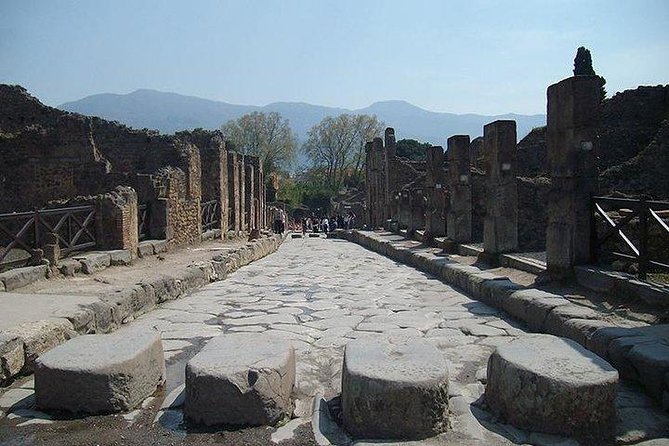
Then you’ll move into commerce and traffic. The Macellum was essentially the market—food shopping, with porticoes and decorative walls tied to everyday buying and mythological scenes. After that, Via dell’Abbondanza is the long main street connecting the Forum with the Amphitheatre. It’s one of the easiest places to imagine processions, deliveries, and crowds flowing through town.
Practical tip: on Pompeii’s main walking corridors, you’ll cover ground fast. If you want photos, be ready to shoot while you stop—don’t plan on long photo pauses every minute.
Pompeii’s Stabian Baths: where politics, bathing, and architecture meet
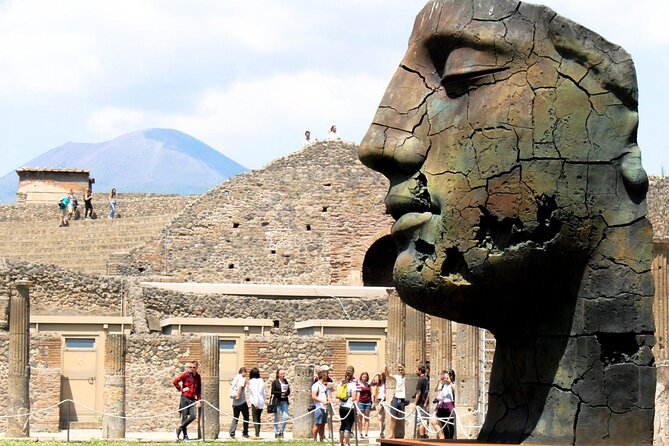
The Stabian Baths (Terme Stabiane) are included and they’re a standout for understanding Roman routine. These baths were built in phases starting as early as the 4th century BC, with the baths you’ll see today largely from the 2nd century BC. Pompeii went through major renovation during that period, and the baths reflect that.
Look for how the layout works: a large courtyard off via dell’Abbondanza, a pool, and colonnades leading to different areas. The tour focuses on the way heating worked—piping in walls, double floors that circulated hot air, furnaces, and mobile braziers. Even if you’re not an architecture fan, this stop makes the city feel practical. People weren’t just living; they were maintaining health, social routines, and status.
There’s also a social side to the baths. In Roman Pompeii, bathing wasn’t only about cleanliness. People debated politics, discussed battles and trials, and spent time with others. If you like “how people actually spent their day,” this is one of the best stops.
Lupanar in Pompeii: be ready for adult-themed ruins
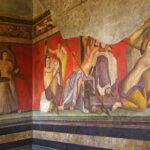
The Pompeii brothel (Lupanar) is one of the most famous buildings here, and it’s included on this tour. It has erotic paintings and built-in beds, and it ran as a two-floor business. The top level tied to the owner and slaves; the lower level contained rooms fitted for customers.
What matters for your expectations: this is not a subtle stop. If adult imagery or sexual content would make you uncomfortable, you’ll want to decide ahead of time whether you’re okay seeing it. For many adults, it’s historically valuable because it shows how everyday economies and power worked in the city. For others, it can feel like a jolt after the more “public” sites.
My practical advice: if you’re sensitive to this kind of content, ask yourself early and plan your pace. You can also take a slower step through the room areas rather than trying to rush to the next photo.
Teatro Grande: theatre, crowds, and why it survived
The Teatro Grande (Large Theatre) is included and built around the middle of the 2nd century BC, with restoration in Roman style. It hosted comedies and tragedies from Greek-Roman tradition, so it’s a useful contrast to the Forum and market stops. This is where you see entertainment as a civic function.
A key detail: this theatre was one of the first large public buildings freed from eruption deposits, so it’s clearer than some other structures. That preservation makes it easier for you to picture performances and how spectators would gather.
If you like architecture plus human drama, this is a satisfying stop. You get both the structure and the idea of what the space was for.


Lunch and wine tasting at Sorrentino Winery
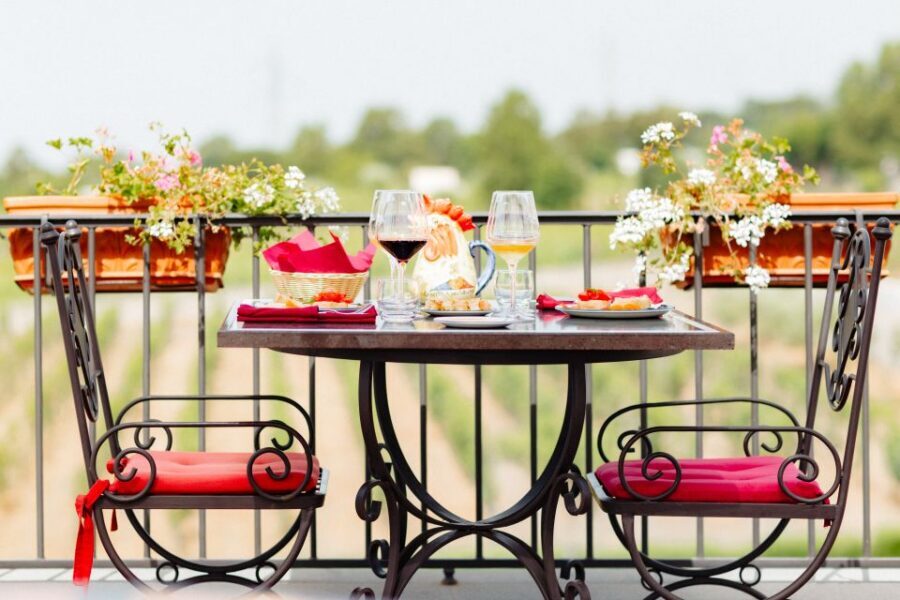
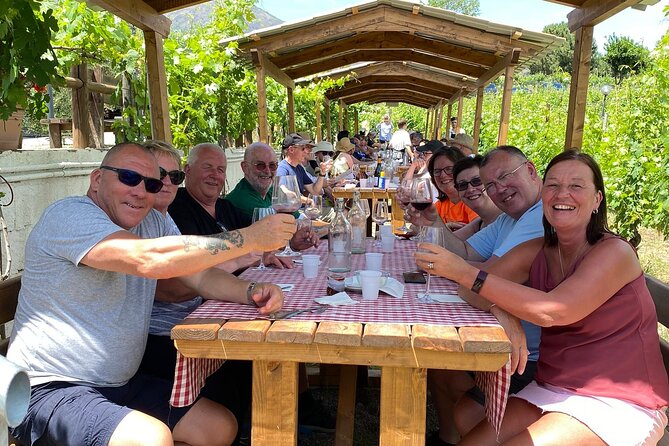
Between ruins, you’ll stop for lunch at Sorrentino Winery (admission included). This matters more than it sounds. After Pompeii crowds and walking, your energy needs a reset, and a scheduled break keeps the day from turning into pure fatigue.
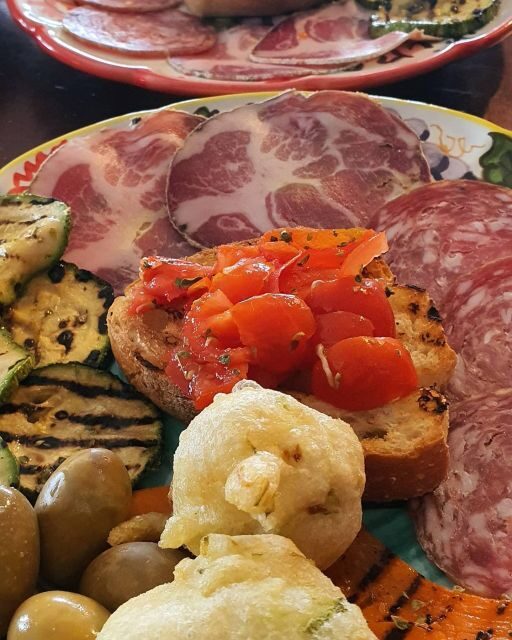
Lunch is built into the package with a set menu:
- Starter: bruschetta, cured meats, cheeses, and seasonal vegetables
- Wine tasting: Prosecco plus red and white
- Main: pasta with piennolo cherry tomatoes, a local specialty
- Dessert: traditional homemade dessert
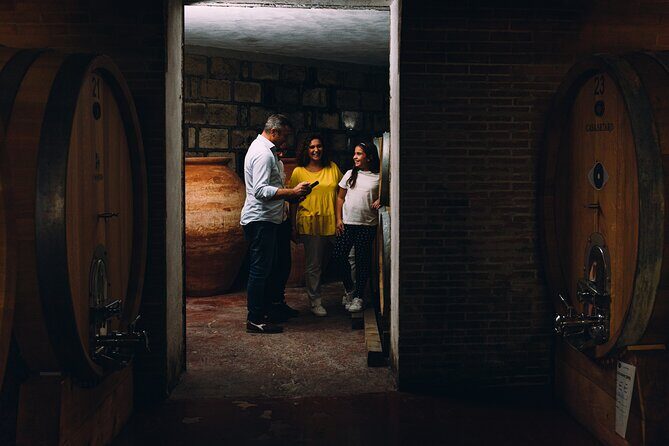
The winery itself ties to Vesuvius wine. Sorrentino Vini was founded in 1990, and the company has 35 hectares of property inside Vesuvius National Park. Their best-known wine is Lacryma Christi, described as the only DOC product made on Vesuvius.
Value check: for around $192.22 per person, you’re not only paying for guides and tickets; you’re also buying a meal plus a structured tasting. That can be a big deal if you’d otherwise spend time finding lunch and paying separately at peak season.
Herculaneum second half: House of the Deer and mosaic-heavy rooms
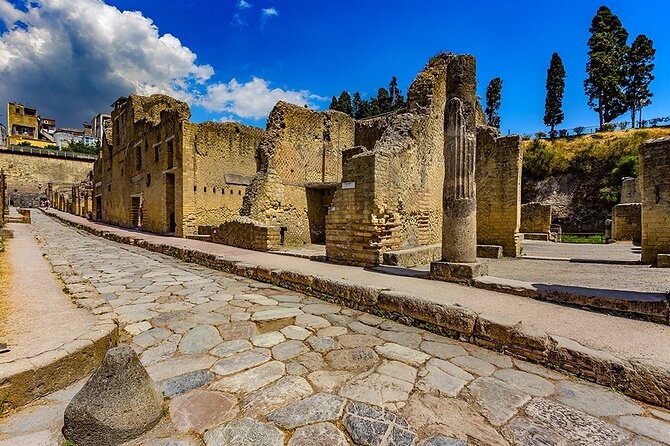
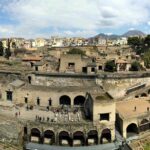
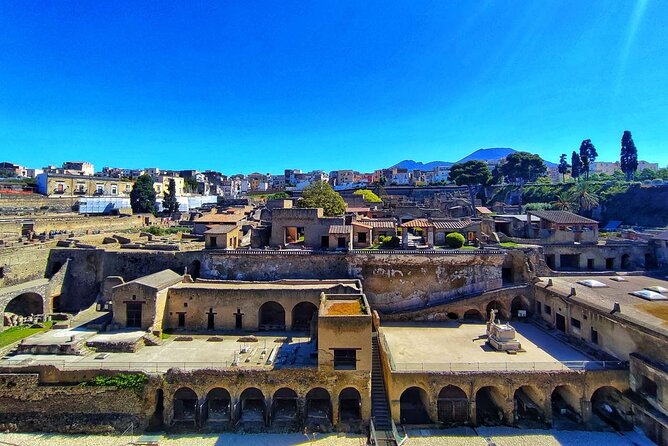
After Pompeii, you switch to Herculaneum for about two hours with admission included. Herculaneum tends to feel more preserved and less “open-air guesswork,” so it’s where you’ll see details that make the ancient life feel close.
The House of the Deer (House of the Deer) is a strong introduction. It has a sea-view terrace and belonged to Q. Granius Verus, a slave freed shortly before Herculaneum’s destruction. The name comes from deer statues in the garden attacked by a pack of dogs. It’s a great example of how decoration created meaning—names, stories, and status.
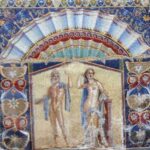
Next, Casa di Nettuno e Anfitrite is all about mosaics. You’ll see glass paste mosaics with floral and hunting scenes, plus a central image of Neptune and Amphitrite. This is where “preservation” becomes the point. The materials and the subject matter show how much people invested in their indoor visual world.
Then you’ll head to Casa dello Scheletro, the skeleton house. The name comes from discoveries of human remains in a second-floor room during the 1831 excavations. It’s a stark reminder that this wasn’t a staged set—it’s tragedy turned into archaeology.
Sacello degli Augustali and the big houses of Herculaneum
Sacello degli Augustali is included and located near the forum area. It preserves frescoes showing Hercules entering Olympus alongside Jupiter, Juno, Minerva, and Hercules against Achelous. There’s also a grim discovery tied to the janitor’s skeleton found in his room on the bed. Expect a solemn tone here, even if your guide keeps the pacing moving.
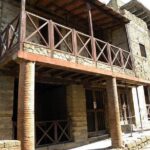
Then you’ll see why Herculaneum can feel like a place built for comfort and display. The House of the Hotel is the largest house of Herculaneum so far discovered, about 2,250 square meters. It sits on the edge of the hill with a panoramic position and is noted for having a spa district, which is why it was first considered a hotel. Seeing it helps you understand how big elite homes could be in smaller cities too.
Casa del Salone Nero: black walls and personal documents
Casa del Salone Nero (Casa del Salone Nero) is included and known for its black-painted party hall with geometric patterns. It’s not just “a cool room.” It signals taste, wealth, and a social life designed around gatherings.
This stop also ties to the discovery of waxed tablets connected to L. Venidius Ennychus, with notes about eligibility for Augustale, the purchase of a slave, and the birth of a daughter. Even if you don’t linger long on the documents themselves, the point is clear: private homes in Herculaneum held both luxury and administrative records.
If Pompeii gave you the city rhythm, these Herculaneum house stops show private rhythm—how people lived, hosted, and maintained household ties.
How the guides, shade, and pacing shape your day
The quality of your guide is a make-or-break factor on a day like this. In the best versions of this tour, you get a strong flow between sites without losing context.
Rosa is mentioned as a tour organizer who kept things on track without feeling overly rushed. Celsestina handled Pompeii and focused on daily activities of residents, which helps you understand why the buildings look the way they do. Diana led Herculaneum and highlighted differences between the two cities, with a lighter, fun sense of humor.
There’s also a hot-day tip worth stealing. When it’s warm, guides who actively manage shade can make the day feel doable instead of just exhausting. One experience specifically praised shade choices while explanations were happening. So if you book for summer, pack for heat even if the tour sounds “ruins only.”
One caution from a less perfect experience: some people want clearer visual guidance for finding the guide in crowds. Since Pompeii can be packed, do yourself a favor—agree on a specific spot if you pause, and keep an eye out for how your guide signals the group.
Price and value: what $192.22 buys you
At about $192.22 per person, you’re paying for a lot that would be harder to coordinate yourself: guided time in two major sites, plus included tickets at the listed stops and a winery lunch with wine tasting. You also get a mobile ticket, which reduces the hassle of paperwork during a busy day.
The tour is also offered in English, which is valuable if you want your explanation delivered rather than pieced together from signage. Group discounts are mentioned, and the tour’s popularity shows in booking timing—on average it’s booked 78 days in advance. In practice, that means planning ahead helps.
Is it worth it? For first-time visitors, I think it often is. You’re buying the structure of the day and the interpretation, not just access to ruins.
Who should book this tour (and who should skip it)
This tour fits best if you want:
- Both sites in one day and you don’t have time to split them across separate trips
- Guided context that connects buildings to real daily routines
- A built-in break for lunch and wine at Sorrentino Winery
- A comfort level with walking for roughly 9 hours, including time in hot sun
It may not fit as well if you:
- Need a slower pace to truly wander and stop often
- Want deep independent exploration without a schedule constraint
- Are sensitive to adult-themed content, since the Pompeii Lupanar is included
Also remember: the tour requires good weather. If conditions are poor, you’ll be offered a different date or a full refund.
Should you book this Pompeii and Herculaneum day?
If your goal is to see Pompeii and Herculaneum in a single, organized shot, this tour makes practical sense. The best part is the way it turns “ruins” into a day with clear stops—Forum life in Pompeii, baths and markets, then preserved house details and mosaics in Herculaneum. Add lunch plus wine tasting at Sorrentino Winery and you’ve got a day that doesn’t collapse into hunger and logistics.
If you hate crowds or you crave free wandering, you’ll feel the pinch. Pompeii is busy, and the schedule is structured enough that you’ll need to choose what you slow down for.
My bottom line: book it if you like guided focus and one-day efficiency. Go in with good shoes, sunscreen, and realistic expectations about time in packed ancient streets.
FAQ
How long is the tour?
The tour is about 9 hours.
Where does this tour operate from?
It’s listed with the starting location as Sorrento, Italy.
What language is the tour offered in?
The tour is offered in English.
Is lunch included?
Yes. Lunch is included at Sorrentino Winery, with a set menu and wine tasting (Prosecco plus red and white).
Are admission tickets included for Pompeii and Herculaneum stops?
Admission tickets are included for the listed Pompeii and Herculaneum site stops, and the winery admission is also included.
Do I get a ticket on my phone?
Yes, the tour includes a mobile ticket.
How large are the groups?
The tour has a maximum group size of 100 travelers.
Is there a confirmation at booking?
Yes, you receive confirmation at the time of booking.
What should I wear or bring?
Wear comfortable shoes, and bring sunglasses and sunscreen in the summer.
What’s the cancellation rule?
You can cancel for a full refund if you cancel at least 24 hours before the experience starts. If it’s canceled due to poor weather, you’ll be offered a different date or a full refund.