REVIEW · SORRENTO
Private Pompeii Tour with Archaeologist & Winery on Mt Vesuvius
Book on Viator →Operated by Fabrizio Belleni - Leisure Italy Private Guide · Bookable on Viator
Pompeii hits different with a guide in your corner. This private outing pairs an archaeologist-led walking tour of Pompeii’s big-name sights with a relaxed finish at Cantina del Vesuvio on Mount Vesuvius. I especially like how your route can be tuned to your pace, and I like that the day is built to reduce hassle with A/C Mercedes transfers and Pompeii Express skip-the-line entry.
One thing to think about: the winery lunch and tasting aren’t included in the base price, so you’ll need to budget the on-site add-on. Also, this outing does not go to the very top of Vesuvius, so it’s more about the views and wine day than the summit hike.
In This Review
- Key things to know before you go
- How the day works: private Mercedes pickup and Pompeii Express entry
- Pompeii with an archaeologist: a route designed around your pace
- Porta Marina and Antiquarium: your brain gets a map before the ruins
- Basilica Pompeiana and the Forum: where Roman power met everyday life
- Macellum and Forum Baths: food and routines, not just statues
- House of the Faun and House of the Vettii: Roman elite life in real rooms
- Insula dei Casti Amanti and Teatro Grande: research in progress plus Roman entertainment
- Cantina del Vesuvio: vineyard walk, set-menu lunch, and five wines
- Price and value: what $434.46 really covers
- Who should book this Pompeii + winery combo
- Should you book this Pompeii and Vesuvius winery tour?
- FAQ
- How long is the private Pompeii tour?
- Is this tour private or shared?
- Do you skip the ticket lines for Pompeii?
- Is the winery lunch and wine tasting included in the price?
- Does the tour go to the top of Mount Vesuvius?
- Is pickup included, and is it by car or van?
- What language is the tour offered in?
- What is the cancellation and refund timeline?
Key things to know before you go
- Fabrizio Belleni customizes your Pompeii route around your interests and physical pace
- Forum-focused touring means you see the most meaningful civic core without wandering endlessly
- Porta Marina + Antiquarium di Pompei help you understand what you’re looking at before you hit the streets
- Seven key Pompeii stops are built around daily life: courts, temples, baths, food markets, and elite homes
- Winery lunch pairs set menu food with five local wines (plus an easy vineyard walk)
- You get private, A/C Mercedes pickup and drop-off from Naples and Sorrento
How the day works: private Mercedes pickup and Pompeii Express entry
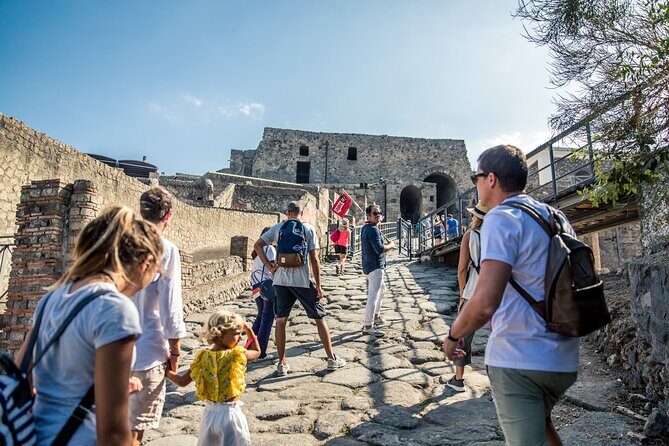
This is a private door-to-door style day. You meet up for pickup (from Naples or Sorrento) and ride in an A/C Mercedes minivan, then spend your morning and early afternoon in Pompeii with your official guide and archaeologist, Fabrizio Belleni. The overall duration runs about 4 to 7 hours, depending on your pace and how long you want to linger at each stop.
A big value point here is the Pompeii Express skip-the-line handling. You’re not standing in ticket lines while your time evaporates. Instead, the focus stays on walking, listening, and seeing key structures—especially around the Forum area, which is where Pompeii’s public life really snaps into focus.
If you're still narrowing it down, here are other tours in Sorrento we've reviewed.

Pompeii with an archaeologist: a route designed around your pace
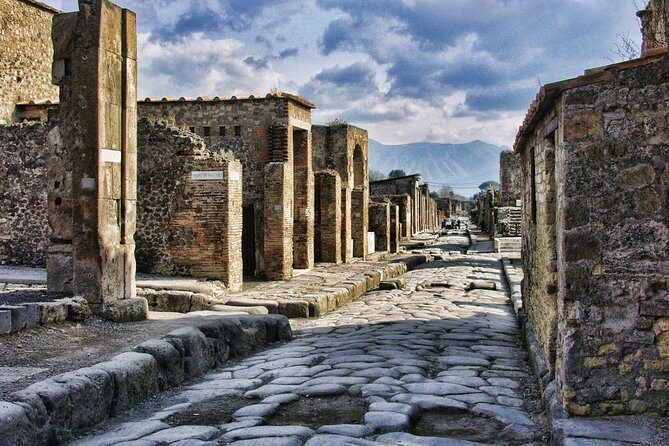
Pompeii sprawls across about 150 acres and once held around 18,000 residents. The trick is not trying to “do it all.” This tour keeps things manageable by building the walk around the Forum zone and the surrounding highlights.
The practical win is that Fabrizio tunes the plan to your will and physical attitude. In real terms, that means you’re not trapped in a rigid stamp-collecting order. If you want more context at one stop, or you need to slow down, this is the kind of day where your guide can adjust.
If you have “must-see” items—say, Roman courts, baths, markets, or a specific house—tell Fabrizio ahead of time. The tour is structured for flexibility within Pompeii’s top hits rather than trying to cover every street corner.
Porta Marina and Antiquarium: your brain gets a map before the ruins

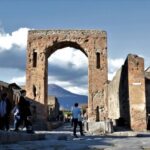
You start with Porta Marina, the city’s dramatic gateway into Pompeii from the direction of the sea. What I like about this stop is how it gives you Pompeii in layers: the gate itself, the dual-arched design for pedestrians and carts, and the way it ties into the defensive Cinta Muraria (fortification walls). From there, you’re guided along the slope of Via Marina toward the administrative and religious heart of the city.
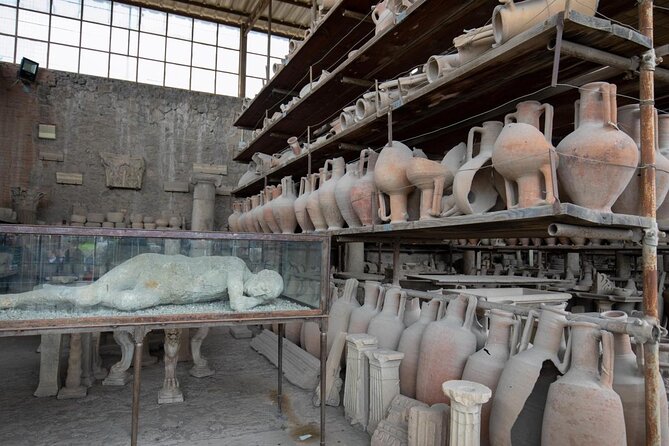
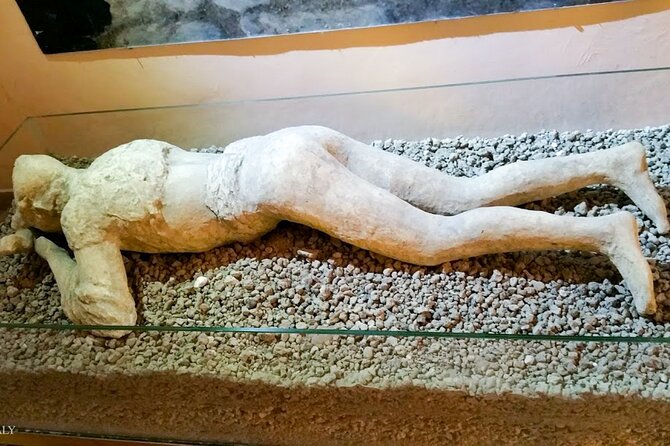
Right around this area is the Antiquarium di Pompei, the modern, climate-controlled museum that acts like your briefing room. Here you can see the most fragile treasures safely, including the Moregine silver treasure, the so-called sorcerer’s hoard of amulets, and fresco highlights connected to famous villas. One of the most moving parts of the museum is the display of world-famous plaster casts, including the Dog of Pompeii and victims frozen in their final moments.
For many people, this stop prevents the “I saw ruins, now what?” feeling. After this, the stone walls and room layouts start to make sense fast.
Basilica Pompeiana and the Forum: where Roman power met everyday life
Once you’re in the Forum core, the tour hits the big civic structures first—because these buildings tell you how Pompeii ran.
The Basilica Pompeiana is one of the key hits. This massive, three-aisled building dates to the 2nd century BC and was not a temple. It functioned as Pompeii’s primary courthouse and a major business center. Fabrizio points out how the space still reads like a courtroom: the grand central nave, the bases of 28 brick columns that once rose roughly 11 meters, and the raised tribunal platform where magistrates presided.
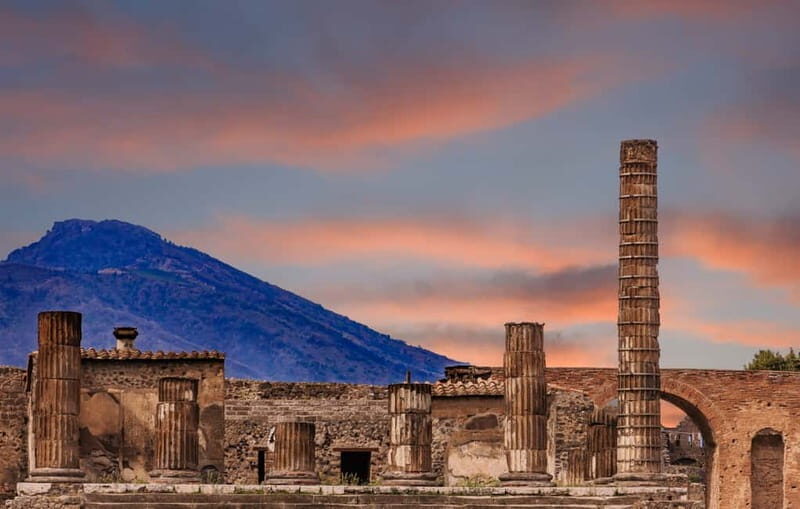
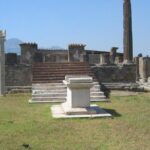
Next comes the Temple of Apollo, one of Pompeii’s oldest sacred spaces. The Temple of Apollo is a great stop for architecture geeks and regular visitors alike because it shows a Greek-Italic blend. It’s built around an elevated podium and originally had a portico of 48 columns. The guide also walks you through the details visitors often remember: replicas of bronze Apollo and Diana statues, a well-preserved white marble altar, and an Ionic column topped with a sundial. The cherry on top is the viewpoint—many days you’ll get an iconic line of sight toward Mount Vesuvius.
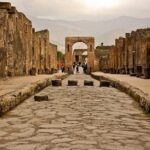
Then you’re back in the heart of it all: the Forum of Pompeii. This car-free plaza sat at the intersection of Via Marina and Vicolo delle Terme and served as the city’s political, commercial, and religious hub. You can still walk across the travertine paving stones and see remaining pedestals that once held statues of emperors and notable citizens. The best part is how the guide connects the Forum to everything around it—markets, ceremonies, and public business.
Macellum and Forum Baths: food and routines, not just statues
If you want to understand Pompeii as a working city, the Macellum is a must. This was the main covered food market, and it’s the perfect bridge between “big monuments” and daily life.
In the Macellum, Fabrizio shows you the central courtyard and the circular tholos pavilion. The drainage system evidence—fish scales and bones—helps explain how seafood was cleaned and sold here. You also see the perimeter shops (tabernae) built for meat, fruit, and vegetables, plus a shrine honoring the imperial family. This is where commerce and state religion meet in architecture, not in a lecture.
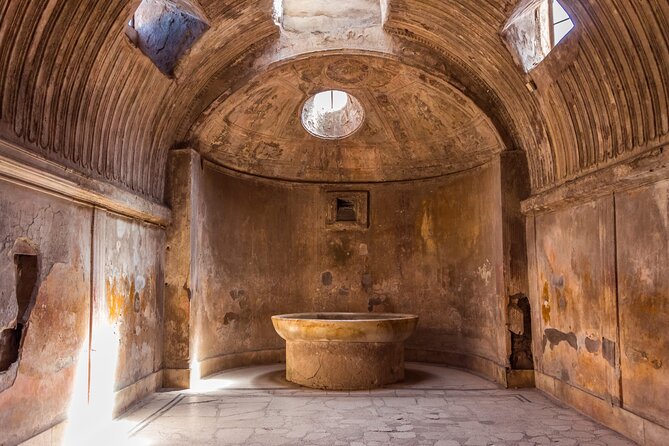
Right behind the Forum area is the Forum Baths (Terme del Foro), and this stop is a standout for people who like how technology shapes daily life. These baths were the only ones still fully operational during the 79 AD eruption, and that shows in the preservation. You’ll move room to room through the apodyterium (changing room), frigidarium (cold bath), tepidarium (warm room), and calidarium (hot room). You can also spot details tied to the heating system, including the hypocaust-style hollow walls and floors and the original bronze brazier used for heat. Restorations have also opened the women’s section, so you get a fuller view of social life around bathing.


House of the Faun and House of the Vettii: Roman elite life in real rooms
Pompeii’s houses are where the ruins stop feeling purely “public.” They become private stories.
The House of the Faun is one of the largest luxury residences in the park. It occupies an entire insula (city block) and spreads across two atriums and two peristyle gardens. The iconic artworks here are mostly known through replicas, including the bronze statue of the Dancing Faun and the Alexander Mosaic. Still, what matters is the scale: walking the layout helps you grasp how wealthy owners lived with space, gardens, and formal art display. Fabrizio ties the rooms to specific art styles, including Second Style frescoes and geometric floors, so you’re not just looking at pretty walls—you’re learning how taste and status were built into the architecture.
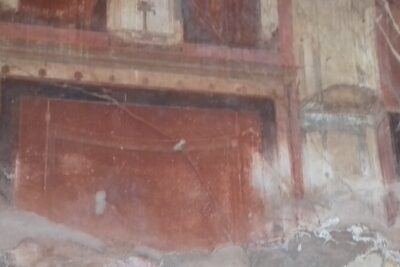
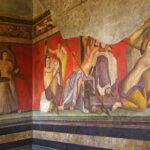
Then you move to the Casa dei Vettii, often described as the Sistine Chapel of Pompeii due to its wall paintings. This is a major favorite for people who love art details. The home belonged to two brothers who rose from slavery to become wealthy merchants, and you can feel their success in the Fourth Style frescoes. The entrance painting of Priapus signals prosperity right at the start. Inside, Fabrizio guides you through the Room of the Cupids and the dining spaces where mythological art takes center stage.
One of the most practical reasons to visit the Vettii house on this tour is the peristyle garden. It’s replanted according to ancient patterns and decorated with original-style fountain statues, so you get the household’s “outside room” feel, not just interior paintings.
Insula dei Casti Amanti and Teatro Grande: research in progress plus Roman entertainment
Pompeii isn’t just frozen. The Insula dei Casti Amanti area gives you a glimpse of archaeology happening in real time.
This block along Via dell’Abbondanza includes residential spaces and a bakery, and it recently reopened to the public with an elevated walkway system. That walkway is designed to give you a from-above view of architecture and the excavation below. It’s also specifically part of a barrier-free Pompeii for All style route, which matters if you’re trying to plan for easier movement through the site.
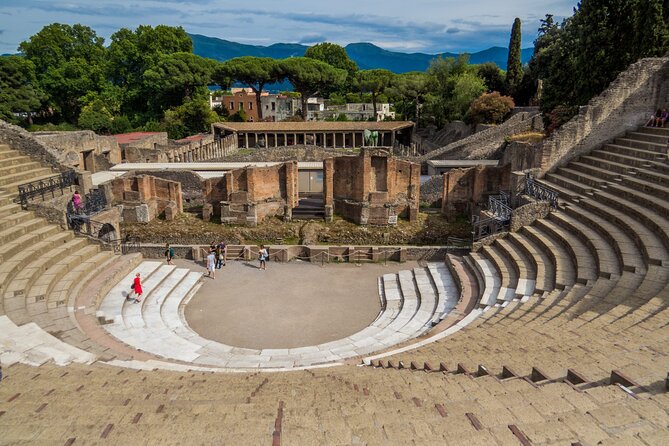
After that, you head to Teatro Grande. This large theatre is carved into a natural hillside and could seat around 5,000 spectators. The guide shows how seating reflects social order—think different levels for elites versus the general populace. Then there’s the fun part: the theatre’s acoustics are still strong enough that speaking from the orchestra area can carry. It’s one of those moments where Pompeii stops being a museum and becomes a place people once actually used.
If you’re there in the right season, the theatre also continues as a performance venue, with events like Pompeii Theatrum Mundi.
Cantina del Vesuvio: vineyard walk, set-menu lunch, and five wines
After Pompeii, you shift to a slower pace at Cantina del Vesuvio in Mt. Vesuvius National Park. It’s an organic winery setting with views over the Bay of Naples and the volcano’s crater area. The day doesn’t involve any summit push; it’s a winery experience, not a climb to the top.
Your visit begins with a guided 15-minute stroll through the vineyards, and you’ll hear about Lacryma Christi wines. Then comes the part most people remember: a set menu lunch paired with five separate local wines.
The meal is simple, local, and built for pairing:
- Starters like bruschetta, cheeses, and cured meats
- Spaghetti with Vesuvius cherry tomatoes (plus meatballs)
- Pastiera for dessert, with vegetarian/GF options available
Cost is extra and paid on-site. Depending on the option, expect an add-on around €50–€55 for the classic and €60–€65 for a superior wine upgrade. Fabrizio handles the reservation, and you pay by card or cash. They also mention you can ship wines and olive oils home if you want to extend the day.
Price and value: what $434.46 really covers
At $434.46 per person, you’re paying for the parts that usually eat time and energy: private transport, an expert-led route, and Pompeii entry handling.
Here’s what the base price covers:
- A/C Mercedes minivan transport with pickup and drop-off
- A private walking tour with an official guide/archaeologist
- Pompeii Express skip-the-line admission handling (and the admission tickets for the key Pompeii stops on the route)
- A reserved place for the winery experience on Mt Vesuvius
What’s not included:
- The winery lunch and tasting cost, which you pay on-site (classic vs superior option)
So the real comparison is not just against a cheaper group bus. This day is about time saved, stress reduced, and someone guiding you through the “why” of each building. It’s also about pacing: you’re not forced into a one-speed march. That matters in Pompeii, where a rushed visit can leave you with photos but no understanding.
The main drawback is the add-on cost for lunch/wine and the fact that this isn’t a summit tour. If your heart is set on reaching the very top of Vesuvius, this won’t be that day.
Who should book this Pompeii + winery combo
This tour is a great fit if you want:
- Private attention in Pompeii, not just a group lecture
- A guide who connects buildings to how people lived—courts, markets, baths, art, and daily routines
- A full day with a relaxed finish at a real winery, not a rushed “photo stop”
It’s also well-suited for people who appreciate pacing. Fabrizio adjusts the experience to the group’s physical needs, and he’s known for staying on time and making the day feel smooth from start to finish.
A couple notes from the tour’s rules: you should have moderate physical fitness for the walking, children must be with an adult, and service animals are allowed.
If you dislike walking at all or you only want the broadest, fastest highlights, you might feel like you’re paying for guide time you won’t use. But if you want to understand Pompeii while you’re standing in it, this structure works.
Should you book this Pompeii and Vesuvius winery tour?
Yes, if your goal is a guided Pompeii day that makes sense plus a wine-and-lunch finish with views. The big “yes” points are the combination of skip-the-line entry, an archaeologist guide who can tailor pacing, and the way the route mixes civic buildings (Forum, Basilica, Temple of Apollo) with daily life (Macellum, Baths) and then caps it with a winery meal paired with five wines.
Only hesitate if:
- You want to walk Pompeii completely on your own, without a curated focus
- You’re aiming for a Mt Vesuvius summit experience
- You’d rather control lunch yourself instead of using the set-menu winery format
If you book, send Fabrizio your must-see priorities and any pace concerns before the day. That’s how this tour turns into a personal day, not a generic checklist. And when you’re ready for a break, you’ll appreciate that the winery leg is planned and reserved, so you can relax instead of scrambling.
FAQ
How long is the private Pompeii tour?
It’s scheduled for about 4 to 7 hours, depending on your pace and how long you spend at each stop.
Is this tour private or shared?
It’s private. Only your group participates.
Do you skip the ticket lines for Pompeii?
Yes. Pompeii entry is handled with Pompeii Express skip-the-line tickets.
Is the winery lunch and wine tasting included in the price?
The reservation for the winery experience is included, but the lunch and wine tasting have an extra on-site cost depending on the option you choose.
Does the tour go to the top of Mount Vesuvius?
No. The experience does not reach the top of Mt Vesuvius.
Is pickup included, and is it by car or van?
Pickup and drop-off are included, with transport by A/C Mercedes minivan from Naples and Sorrento.
What language is the tour offered in?
The tour is offered in English.
What is the cancellation and refund timeline?
You can cancel for a full refund up to 24 hours before the experience starts.