REVIEW · ROME
From Rome: Pompeii and Herculaneum by High-Speed Train
Book on GetYourGuide →Operated by Askos Tours · Bookable on GetYourGuide
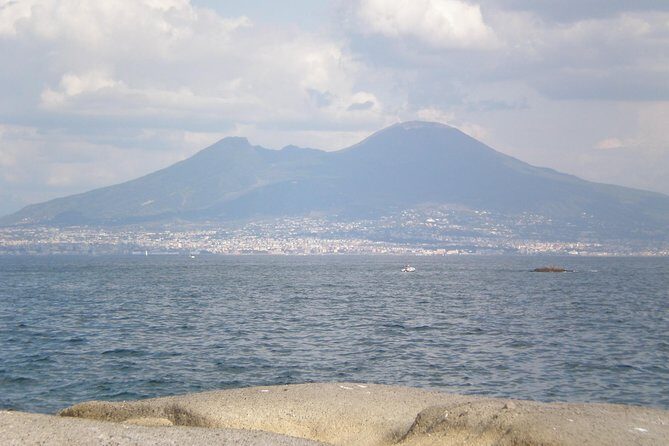
Two cities in one volcanic timeline.
This Rome-to-Campania day trip uses a high-speed train plus comfortable van rides so you can spend the day where it counts: the ruins of Pompeii and Herculaneum. I especially like that you get guided time with an archaeologist at both sites, and that you see major highlights without getting stuck in long lines. One watch-out: you’ll cover about one mile on uneven stone in Pompeii and about half a mile in Herculaneum, so it’s not ideal for limited mobility.
The experience also feels built for clarity. You’ll use provided headsets, follow one steady route with your group, and get enough context to understand what you’re looking at—houses, public spaces, and the tragic human story tied to Mount Vesuvius. Guides on this tour have included archaeologists such as Michele and Raphael, with other names like Jasmine, Mikel, and Sergio showing up as well, so you can expect the emphasis to stay on what the ruins mean, not just what they look like.
If you’re the type who likes a slow wander and long lunch, you may find the pacing a bit tight—especially at Pompeii. You do get free time, but the day is packed to fit both sites and the return train to Rome, so you’ll want to plan for quick decisions rather than browsing for ages.
In This Review
- Key highlights worth your attention
- Rome to Naples: the high-speed train advantage
- Where you meet the guide in Naples (and how not to waste time)
- Pompeii with an archaeologist: the stops that matter
- A practical note on pacing at Pompeii
- The plaster casts and what they teach you (without sugarcoating)
- Herculaneum’s smaller feel: House of Neptune and Amphitrite
- Why this second site is worth the extra effort
- Transport, walking, and what to wear (so the day stays fun)
- Your archaeologist guide and the “how” of the day
- Price and value: is $222.77 worth it?
- Who should book this Pompeii and Herculaneum day trip
- Should you book? My call
- FAQ
- How long is the Pompeii and Herculaneum day trip from Rome?
- How do I get from Rome to Naples?
- Where do I meet the guide in Naples?
- How much walking is involved?
- Is the tour guided in English?
- What should I bring or wear?
Key highlights worth your attention
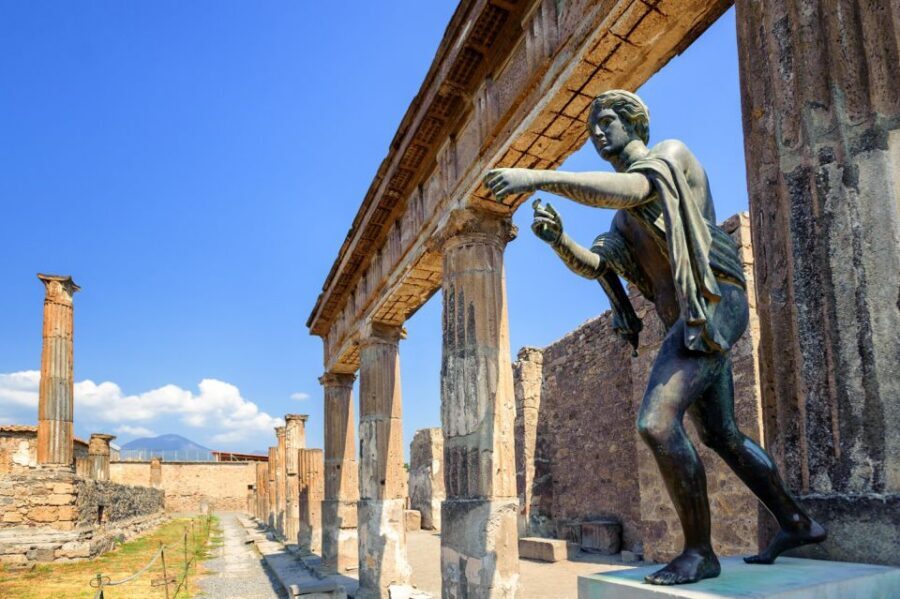
- Two sites, one day, tight logistics: high-speed train Rome–Naples, then van transfers to each ruin.
- Archaeologist-led walkthroughs in both places: guided time at Pompeii and Herculaneum with live English commentary.
- Pompeii’s emotional centerpiece: plaster casts of victims, plus major sights like the brothel.
- Herculaneum’s preservation factor: you’ll visit places like the House of Neptune and Amphitrite and the beach area with preserved skeletons.
- Headsets for the whole group: easier listening and fewer “can’t hear the guide” moments.
- Good shoes rule: no sandals/flip-flops; you’ll be on rough, ancient surfaces.
Rome to Naples: the high-speed train advantage
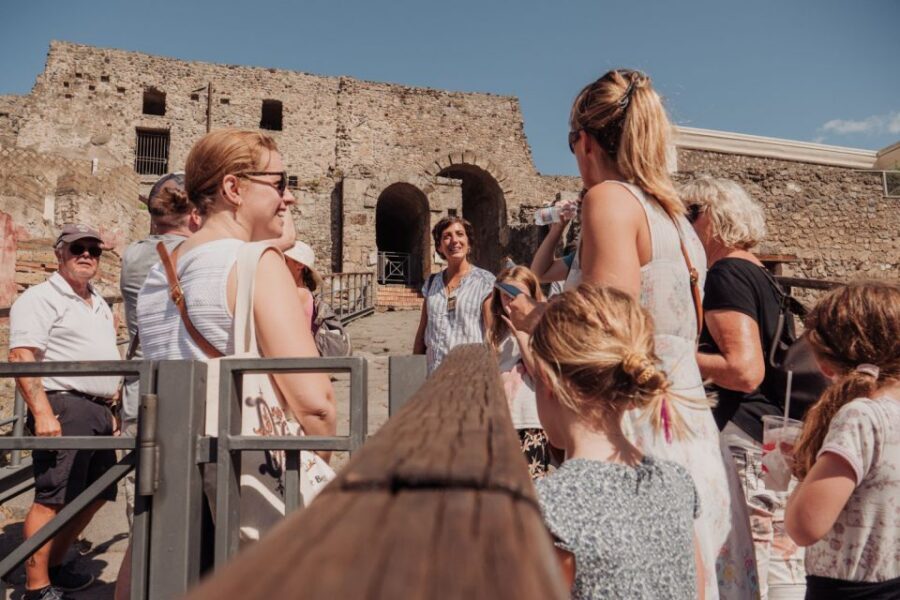
The real trick here is how you get out of Rome. Instead of a long bus ride, you take a fast train from Roma Termini to Naples in about 70 minutes. That does two things for your day:
First, it buys you more daylight inside the archaeological sites. Pompeii and Herculaneum are not short stops—this is a long, walking-heavy kind of outing—and the train helps keep the schedule from turning into a travel slog.
Second, it makes the day feel calmer. Naples can be chaotic, but the trip out is straightforward because your train tickets are prearranged and you’re not trying to piece together connections on your own.
The tour also builds in a practical plan: you travel back by fast train after the ruins, so you’re not stuck trying to manage a late return. If you hate gambling with train timing, this structure is a big plus.
Other Herculaneum guided tours and tickets we've reviewed at Vesuvius & the Bay of Naples



Where you meet the guide in Naples (and how not to waste time)
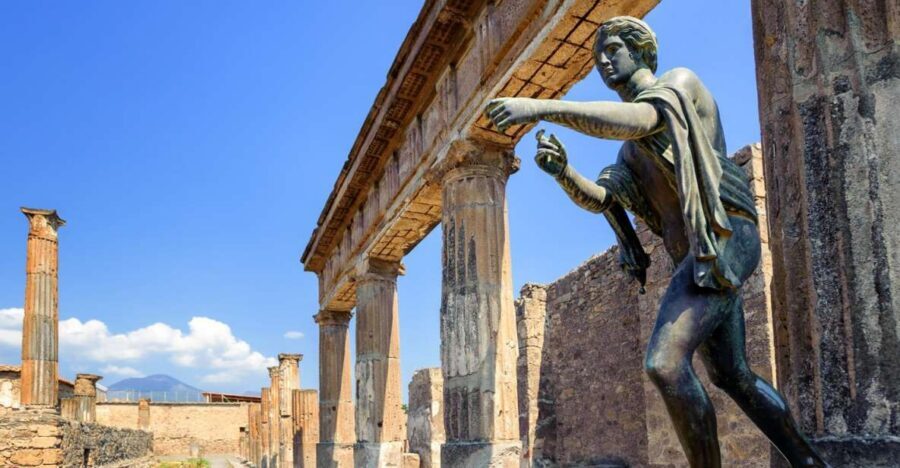
Your day starts at Roma Termini. You travel independently using the high-speed train tickets provided, and once you arrive in Naples Central Station, you meet the tour team in front of a specific landmark.
Look for your guide holding an ASKOS TOURS sign, in front of the STARHOTEL TERMINUS entrance, which is opposite the station. This detail matters. Termini and major stations can be confusing, and a clear meeting point saves you stress.
After you’re sorted, you take a short drive by minibus to Pompeii. This is the phase that turns “I want to see Pompeii” into “I can actually fit it into one day.” Without it, you’d lose too much time navigating local transport.
Pompeii with an archaeologist: the stops that matter
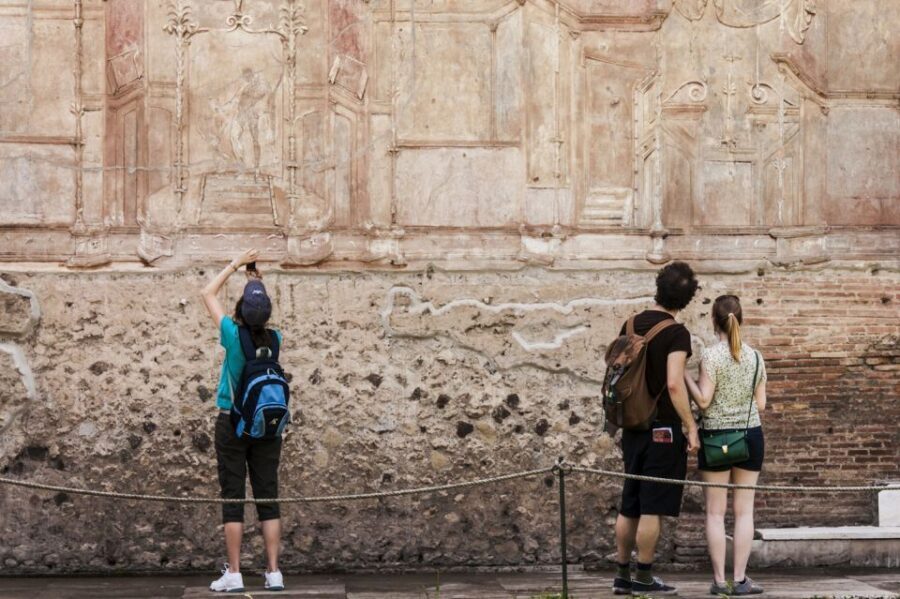
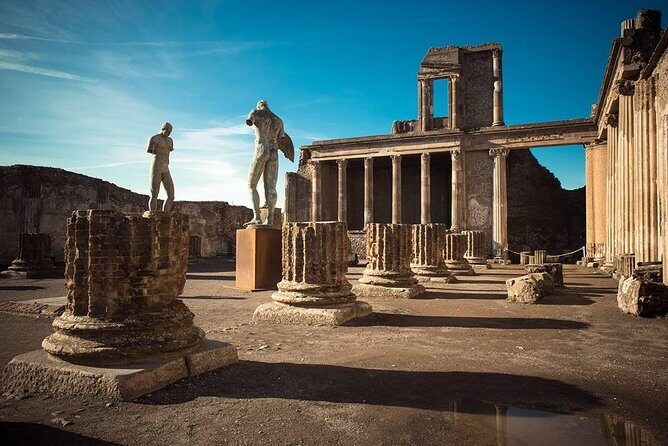
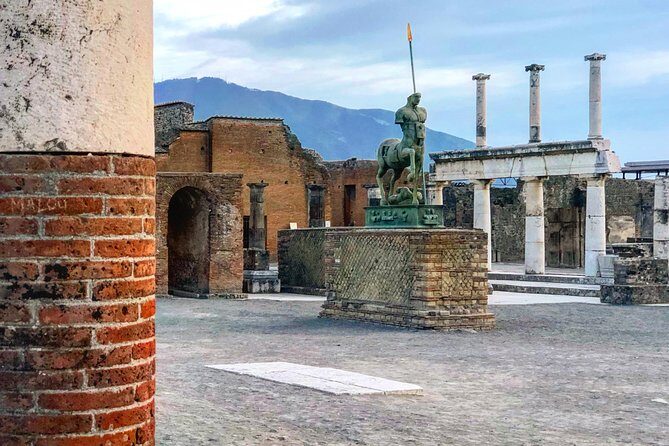
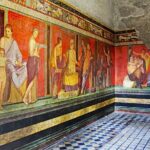
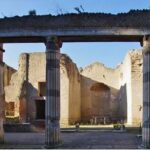
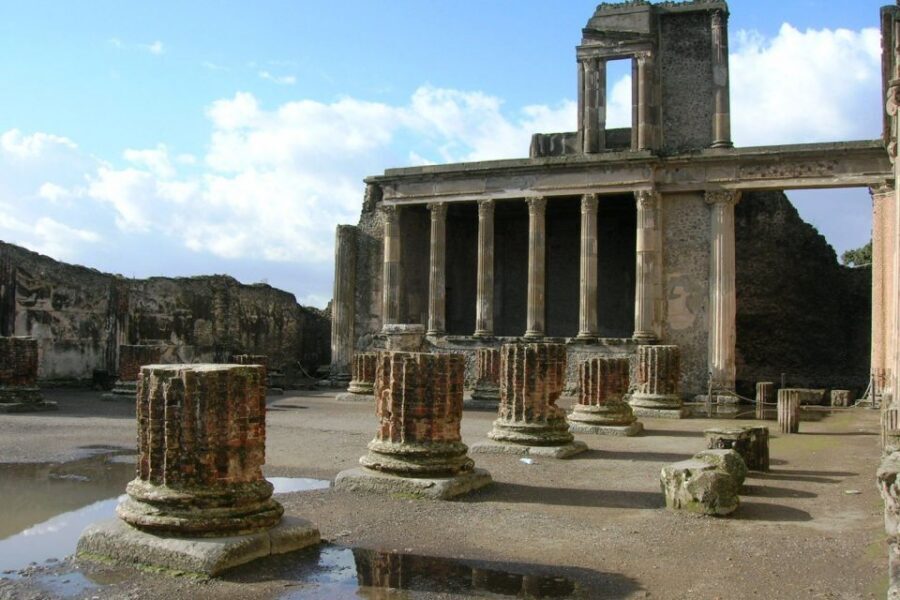
Pompeii is the headline for a reason. But it’s also huge, and it can be easy to wander into a random sequence of streets and call it a day. This tour fights that with a guided route that highlights what to look for—and why it’s significant.
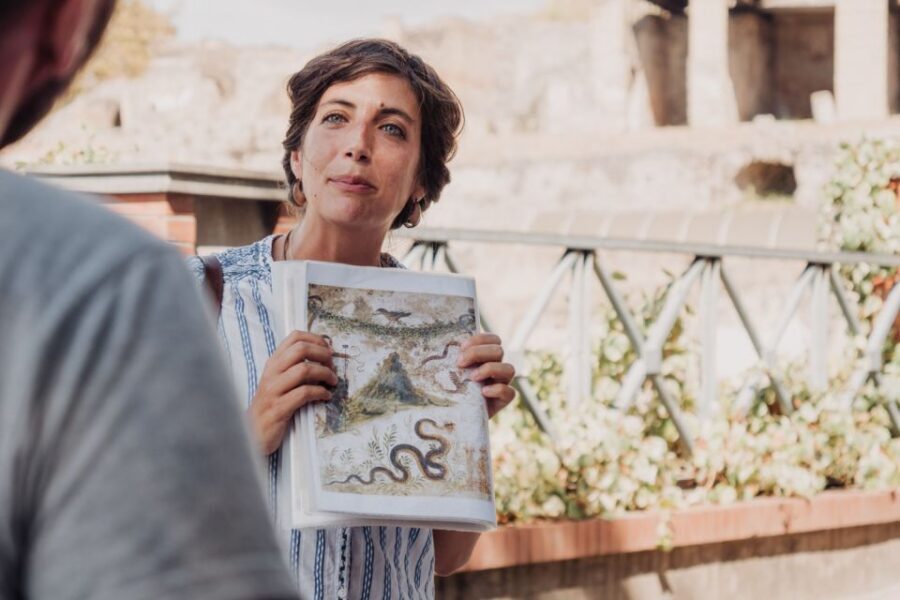
You’ll spend about two hours on the Pompeii guided portion. The plan includes a tour of the highlights such as:
- Newly opened areas (including houses that are part of the more current excavation story)
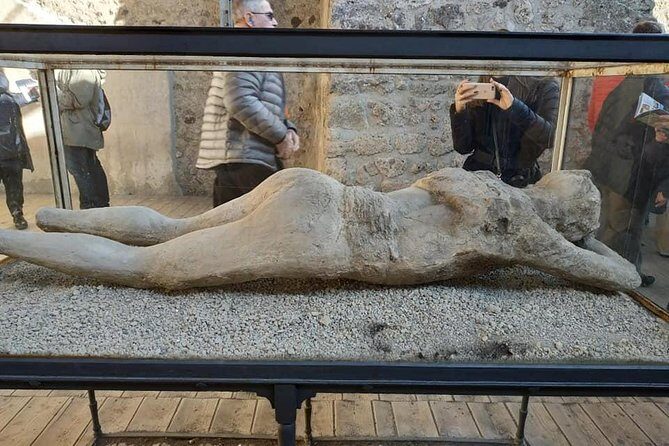
- The plaster casts of victims, which show where people were when the disaster unfolded
- The brothel, one of the many reminders that Pompeii wasn’t some “museum town,” but a place with everyday adult life
- Key buildings and city layout points your guide uses to explain how the Roman city functioned
You’ll also get a chance to reset. After the guided part, you have about 30 minutes of free time for shopping or lunch. That’s helpful, but it’s not “linger all you want” time.
A practical note on pacing at Pompeii
Pompeii is easy to love and hard to fully absorb in a short window. Even with guidance, you’ll move through a meaningful chunk of the site, then you get limited breathing room. If you want lots of photos of doorways, mosaics, and street scenes, you’ll have to hustle a bit during the guided time so you’re not scrambling later.
My advice for you: if you care about specific photos, pick your top targets before you arrive. Save those for the free-time window or for quick stops during the guided route—because the day still has Herculaneum waiting.
The plaster casts and what they teach you (without sugarcoating)
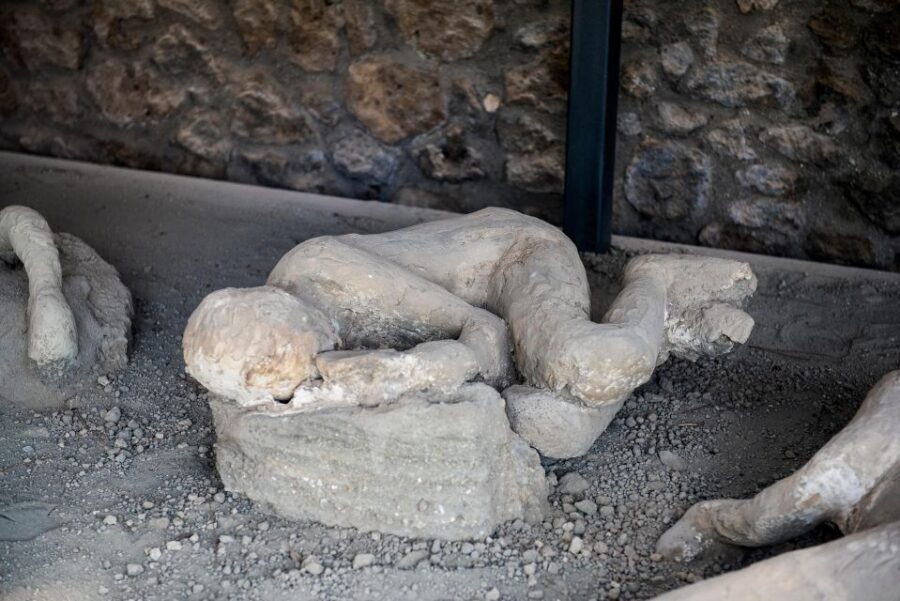
Pompeii isn’t only about stone and columns. The plaster casts add a very human layer, and this tour includes them on purpose.
You’ll see plaster casts of animals and people who died in the eruption. It’s not comfortable—no need to pretend it is—but it makes the story more concrete than any textbook diagram. Your guide ties the scene to the way the eruption affected the city, including how bodies were preserved in the aftermath.
This is one of the most praised parts of the experience because it changes the tone of the day. You stop looking at ruins as a static backdrop and start understanding them as a snapshot of interrupted lives.
If you’re sensitive to heavy history, plan your emotional pace. Take a breath when you need it, keep water handy, and don’t feel pressured to power through every exhibit moment.
Other tours departing from Rome we've reviewed at Vesuvius & the Bay of Naples






Herculaneum’s smaller feel: House of Neptune and Amphitrite
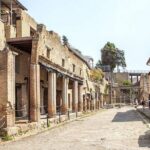
After Pompeii, you transfer by minibus to Herculaneum for a visit of about two hours. Herculaneum has a different vibe. It feels more compact and more intimate, and the preservation is a big part of why people fall for it.
You’ll visit well-known highlights including:
- The House of Neptune and Amphitrite, a standout because it helps you picture how wealthy residents lived
- The ruins and street-level layout that makes the town feel lived-in rather than “lost in time”
- The beach area where hundreds of skeletons are preserved, which delivers another sharp reminder of how the eruption changed everything
Where Pompeii can feel like a long walk through a massive urban plan, Herculaneum gives you the sense of turning a corner and stepping into a smaller world.
Why this second site is worth the extra effort
Many people visit Pompeii and stop there. But doing Pompeii and Herculaneum together changes your understanding of the disaster. You see two cities shaped by the same volcanic event, with very different archaeological “stories” written into what survived.
That’s the value of the one-day combo: you get comparison built in, not as homework.
Transport, walking, and what to wear (so the day stays fun)
This isn’t a sit-around tour. You’re touring open-air sites built on ancient streets and uneven surfaces.
Here’s what you should plan for:
- About one mile of walking in Pompeii
- About half a mile of walking in Herculaneum
- Rain or shine, so bring a raincoat if the forecast looks iffy
- No sandals or flip-flops
- No luggage or large bags
- No high-heeled shoes
The headsets are a nice touch because it lets you keep moving and still hear your archaeologist guide clearly. That matters because you’ll be walking and listening at the same time.
If you want this to feel easy: wear comfortable walking shoes with grip, and keep your day bag small. Even with a good plan, ancient surfaces don’t forgive sloppy footwear.
Your archaeologist guide and the “how” of the day
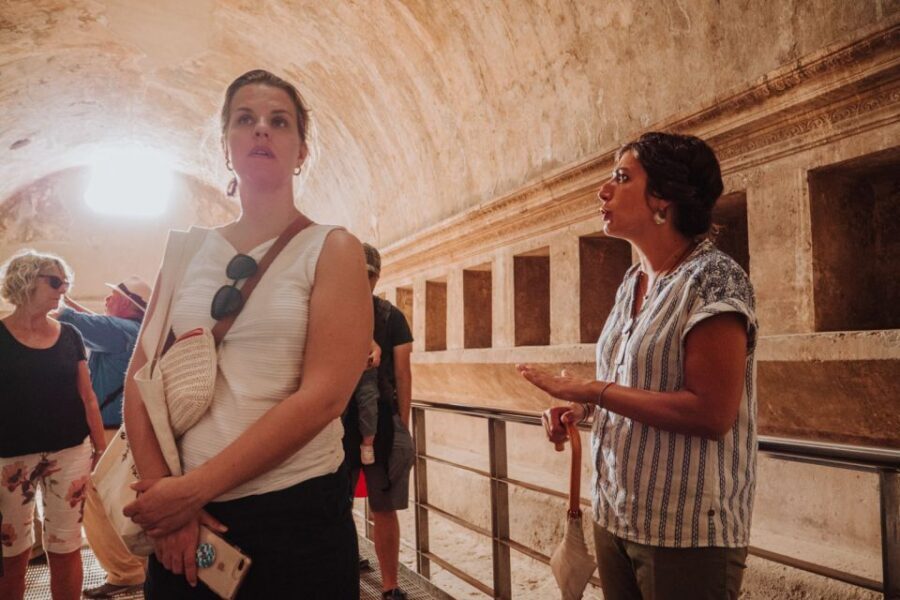
The biggest reason this tour works is that it’s not just a sightseeing route. It’s built around guided interpretation, with archaeologists leading you through both sites.
Guides you might encounter include people such as:
- Raphael
- Jasmine
- Mikel
- Michele (often mentioned with strong archaeological context)
- Sergio, Alfredo, Paolo, and others
That matters because your guide connects details—buildings, city systems, and the eruption story—so you’re not just looking at famous ruins. You understand how the city operated and what the preserved remains are telling you.
And yes, comedy and personality show up in the best versions of this tour. A lively guide helps you keep focus during a long day of walking and heavy subject matter.
Price and value: is $222.77 worth it?
At $222.77 per person, this is not a “cheap day out.” But when you compare what’s included, it starts to make sense.
What you’re paying for includes:
- Round-trip fast-train tickets between Rome and Naples
- Entry tickets for Pompeii (via Pompeii Express entry)
- Herculaneum entry tickets (listed as 16.00 euros each)
- Guided tours with an archaeologist at both Pompeii and Herculaneum
- Transportation from Naples to the sites and back by van/minibus
- Headsets for all participants
- Live English tour guide
Meals are not included, and you don’t get hotel pickup/drop-off. Still, the big expenses—transport + two sites + guided interpretation—are handled for you.
For me, the value case is strongest if:
- You want both Pompeii and Herculaneum in one day
- You don’t want to fight train schedules and local logistics
- You care about explanation, not just photos
If you’d rather go at your own pace, a self-guided plan can be cheaper. But you’ll sacrifice some of the time-saving structure that makes this day trip possible.
Who should book this Pompeii and Herculaneum day trip
Book it if you want:
- A guided experience with an archaeologist at both sites
- The one-day convenience of Rome–Naples by high-speed train
- A clear route through major highlights, including Pompeii’s plaster casts and Herculaneum’s preserved remains
Consider skipping it if:
- You have mobility issues. This tour is not recommended for people with limited mobility and is not suitable for wheelchair users.
- You hate walking on uneven stone surfaces. This is part of the charm and the challenge.
- You need lots of long lunch breaks. Pompeii’s free time is short, and the day is built around reaching Herculaneum and catching your return train.
This is also a good pick for first-timers. The guides help you grasp the scale and meaning quickly, so you don’t feel lost.
Should you book? My call
I think you should book this tour if your goal is to see both Pompeii and Herculaneum in a single day with expert-level explanation and built-in logistics. The fast train cuts down the boring travel time. The headsets and guided pacing cut down the confusion time.
Skip it if you’re hoping for a slow, leisurely stroll through Pompeii, or if walking distance and uneven ground will be an issue. In that case, your day will feel stressful, not special.
If you’re set on making the most of one day and you’re comfortable with real walking, this is a strong way to do it.
FAQ
How long is the Pompeii and Herculaneum day trip from Rome?
The tour duration is about 8.5 hours, depending on the starting time available for your date.
How do I get from Rome to Naples?
You take a pre-booked high-speed train from Roma Termini to Naples Central Station, then meet the tour team after you arrive.
Where do I meet the guide in Naples?
Meet the guide in front of the STARHOTEL TERMINUS entrance, which is opposite Naples Central Station. Look for the guide holding an ASKOS TOURS sign.
How much walking is involved?
Plan for about one mile of walking in Pompeii and about half a mile of walking in Herculaneum.
Is the tour guided in English?
Yes. The live tour guide commentary is in English.
What should I bring or wear?
Bring a passport or ID card. Wear closed-toe shoes with good grip and avoid sandals or flip-flops. The tour runs rain or shine, so a raincoat can help.